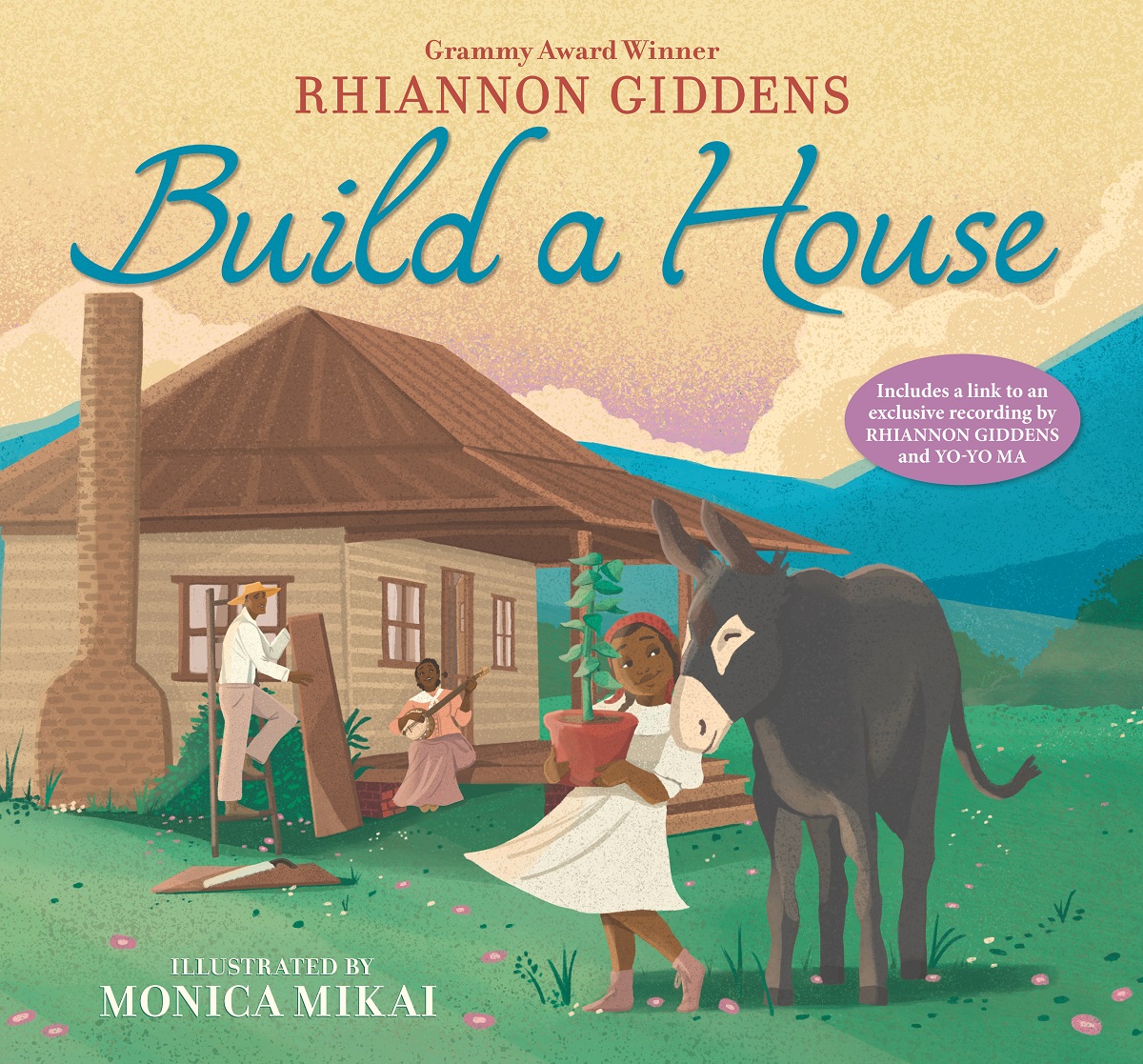
The Story of My Music: The Journey of Rhiannon Giddens
Rhiannon Giddens is a foundational figure in contemporary American music, blending classical training with a profound dedication to reclaiming the suppressed histories of Black string band traditions. Her music serves as a bridge betwe...
Rhiannon Giddens is a foundational figure in contemporary American music, blending classical training with a profound dedication to reclaiming the suppressed histories of Black string band traditions. Her music serves as a bridge between the past and present, utilizing the banjo and fiddle to narrate stories of resilience, migration, and justice.
Contents
The Foundations of a Musical Historian
The story of Rhiannon Giddens’ music does not begin with the folk revival, but rather with a rigorous classical foundation. Raised in Greensboro, North Carolina, Giddens grew up in a household where different cultures converged—her father is white and her mother is Black. This dual heritage became the bedrock of her artistic identity. She eventually attended the Oberlin Conservatory of Music, where she trained as an operatic soprano. While this formal training gave her the technical range and vocal control that define her today, it also created a tension that would eventually lead her back to her Appalachian roots.
Upon returning to North Carolina after her studies, Giddens found herself drawn to the "old-time" music of the Piedmont region. This wasn't a rejection of her classical roots but an expansion of them. She began attending the Black Banjo Gathering at Appalachian State University in 2005, a pivotal event that shifted her trajectory. It was here that she realized the banjo—an instrument often associated with white bluegrass—was originally an African-derived instrument. This revelation transformed her music from mere performance into a mission of historical restoration.
The Carolina Chocolate Drops and the String Band Revival
In 2005, Giddens co-founded the Carolina Chocolate Drops alongside Dom Flemons and Justin Robinson. The group was mentored by the legendary fiddler Joe Thompson, one of the last remaining links to the traditional Black string band music of the Piedmont. Under Thompson’s guidance, the group learned not just the notes, but the social function of the music—it was meant for dancing, community, and storytelling.
The Carolina Chocolate Drops brought this nearly forgotten history to a global stage. Their 2010 album, Genuine Negro Jig, won a Grammy Award for Best Traditional Folk Album, proving that there was a massive, untapped audience for authentic, historically grounded music. Through this project, Giddens’ music began to tell a specific story: that the roots of country, bluegrass, and folk are inextricably linked to the African American experience. This period established her as a preeminent instrumentalist on both the five-string banjo and the fiddle.
Solo Career and the Narrative of "Freedom Highway"
As Giddens moved into a solo career, the storytelling in her music became more explicit and politically resonant. Her 2015 solo debut, Tomorrow Is My Turn, produced by T Bone Burnett, showcased her versatility, covering everything from gospel to Dolly Parton. However, it was her 2017 album, Freedom Highway, that solidified her role as a musical chronicler of the American soul.
In Freedom Highway, Giddens used slave narratives and historical accounts to write original songs that felt like they had existed for centuries. The title track, a cover of the Civil Rights anthem by The Staples Singers, served as a rallying cry, but the original compositions were the heart of the record. Songs like "At the Purchaser's Option" were inspired by real 19th-century advertisements for enslaved people, highlighting the dehumanization inherent in the system. By 2026, this album is still cited by musicologists as a definitive work of "reclamation art," where music is used to give voice to those who were silenced by the historical record.
Technical Mastery and the Evolution of the Banjo
A critical part of the story of Giddens’ music is her relationship with her instruments. She does not play the banjo in the standard three-finger Scruggs style typical of modern bluegrass. Instead, she utilizes older techniques such as "clawhammer" and "up-picking," which are more closely related to the West African traditions from which the banjo originated.
| Instrument/Technique | Historical Context | Role in Giddens' Music |
|---|---|---|
| Gourd Banjo | Original African-descended design. | Used for early historical recreations and "earthy" tones. |
| Minstrel Banjo | Large-rimmed, gut-stringed 19th-century style. | Provides the deep, percussive drive in songs like "Julie." |
| Fretless Fiddle | Common in early rural Appalachian music. | Creates the "sliding" notes typical of Joe Thompson's style. |
| Operatic Vocals | European classical tradition (Bel Canto). | Allows for extreme dynamic range and clarity in storytelling. |
| Celtic Influence | Irish/Scottish immigrant traditions. | Explored in her work with Francesco Turrisi and her life in Ireland. |
Her collaboration with Italian multi-instrumentalist Francesco Turrisi further expanded this narrative. Their albums, there is no Other (2019) and They're Calling Me Home (2021), explored the intersection of Mediterranean and African sounds, demonstrating that the "story" of music is one of migration and cross-pollination. They used frame drums, cellos, and banjos to create a soundscape that transcends national borders.
Expanding the Canvas: Opera, "Omar," and Silkroad
By the mid-2020s, Giddens had moved beyond the confines of the folk genre. Her story came full circle when she composed the opera "Omar," alongside Michael Abels. The opera is based on the autobiography of Omar Ibn Said, a Muslim scholar who was enslaved and brought to South Carolina in 1807. The work was awarded the Pulitzer Prize for Music in 2023, marking a significant milestone in Giddens' career. It represented the ultimate synthesis of her operatic training and her commitment to Black history.
In addition to her compositional work, Giddens took on the role of Artistic Director of the Silkroad Ensemble in 2020, succeeding Yo-Yo Ma. Under her leadership, the ensemble has focused on "The American Silk Road," examining the impact of the transcontinental railroad and the diverse cultures (Indigenous, African, Irish, Chinese) that built the American landscape. As of 2026, her work with Silkroad continues to redefine how we view global musical connections, moving away from "world music" as a category and toward a more integrated understanding of human creativity.
Recognition and Institutional Impact
Rhiannon Giddens' impact is not just measured in album sales, but in the shifts she has forced within the music industry and academia. She is a recipient of a MacArthur "Genius" Grant and has been a frequent guest at the Library of Congress and the Smithsonian. Her 2023 album, You're the One, marked a pivot toward more contemporary, songwriter-focused material, proving that her storytelling is just as potent in a modern pop/soul context as it is in a historical one.
Her influence is visible in a new generation of musicians who feel empowered to explore the "messy" parts of American history. She has mentored numerous young artists and continues to serve as a public intellectual, frequently speaking on the importance of cultural contextualization.
Frequently Asked Questions
What kind of banjo does Rhiannon Giddens play?Giddens plays several types of banjos, but she is most famous for her use of the minstrel banjo. These instruments have a larger rim and are typically tuned lower than modern banjos, providing a deeper, more percussive sound. She also uses a reproduction of a 19th-century gourd banjo to honor the instrument's African origins.
Is Rhiannon Giddens still the director of the Silkroad Ensemble?Yes, as of 2026, Rhiannon Giddens remains the Artistic Director of the Silkroad Ensemble. She has steered the organization toward projects that explore the historical intersections of culture within the United States and along global trade routes.
Did Rhiannon Giddens win a Pulitzer Prize?Rhiannon Giddens won the 2023 Pulitzer Prize for Music for her opera, Omar. The work was recognized for its profound narrative and its innovative blend of classical and folk musical languages. You can view the citation on the official Pulitzer Prize website.
How did Rhiannon Giddens start her career?Giddens began her career in the world of classical opera but pivoted to folk music after discovering the Black string band tradition. Her breakthrough came with the formation of the Carolina Chocolate Drops in 2005, a group dedicated to preserving the musical legacy of North Carolina fiddler Joe Thompson.
What is the meaning behind the album "Freedom Highway"?Freedom Highway is a collection of songs that address the history of the Civil Rights movement and the broader Black experience in America. It mixes original compositions based on slave narratives with traditional civil rights anthems to highlight the ongoing struggle for justice.
Practical Recommendation for Listeners
To truly understand the story of Rhiannon Giddens’ music, one should listen chronologically. Start with the Carolina Chocolate Drops' Genuine Negro Jig to hear the foundation of the string band revival. Follow this with Freedom Highway to experience her historical songwriting. Finally, listen to Omar or her collaborative works with Silkroad to see how she has scaled these intimate stories into epic, orchestral narratives. Her work is best experienced not just as music, but as an ongoing dialogue with history.
Image Gallery