What Is ICE WTI and How Does It Affect Global Oil Markets?
ICE WTI refers to West Texas Intermediate crude oil futures contracts traded on the Intercontinental Exchange (ICE). Unlike traditional NYMEX WTI contracts tied to landlocked storage in Cushing, Oklahoma, ICE WTI contracts allow market...
ICE WTI refers to West Texas Intermediate crude oil futures contracts traded on the Intercontinental Exchange (ICE). Unlike traditional NYMEX WTI contracts tied to landlocked storage in Cushing, Oklahoma, ICE WTI contracts allow market participants to trade U.S. light sweet crude alongside global benchmarks like ICE Brent, offering enhanced liquidity, capital-efficient spread trading, and direct pricing for U.S. waterborne oil exports.
Contents
Disclaimer: Trading commodities, futures, and financial derivative contracts involves substantial risk of loss and is not suitable for every investor. The information provided in this article is for educational and informational purposes only and does not constitute financial, investment, or legal advice.
Understanding ICE WTI: Definition and Technical Core
To understand ICE WTI, one must first distinguish between the underlying commodity—West Texas Intermediate (WTI) crude oil—and the exchange venue where its financial derivatives trade.
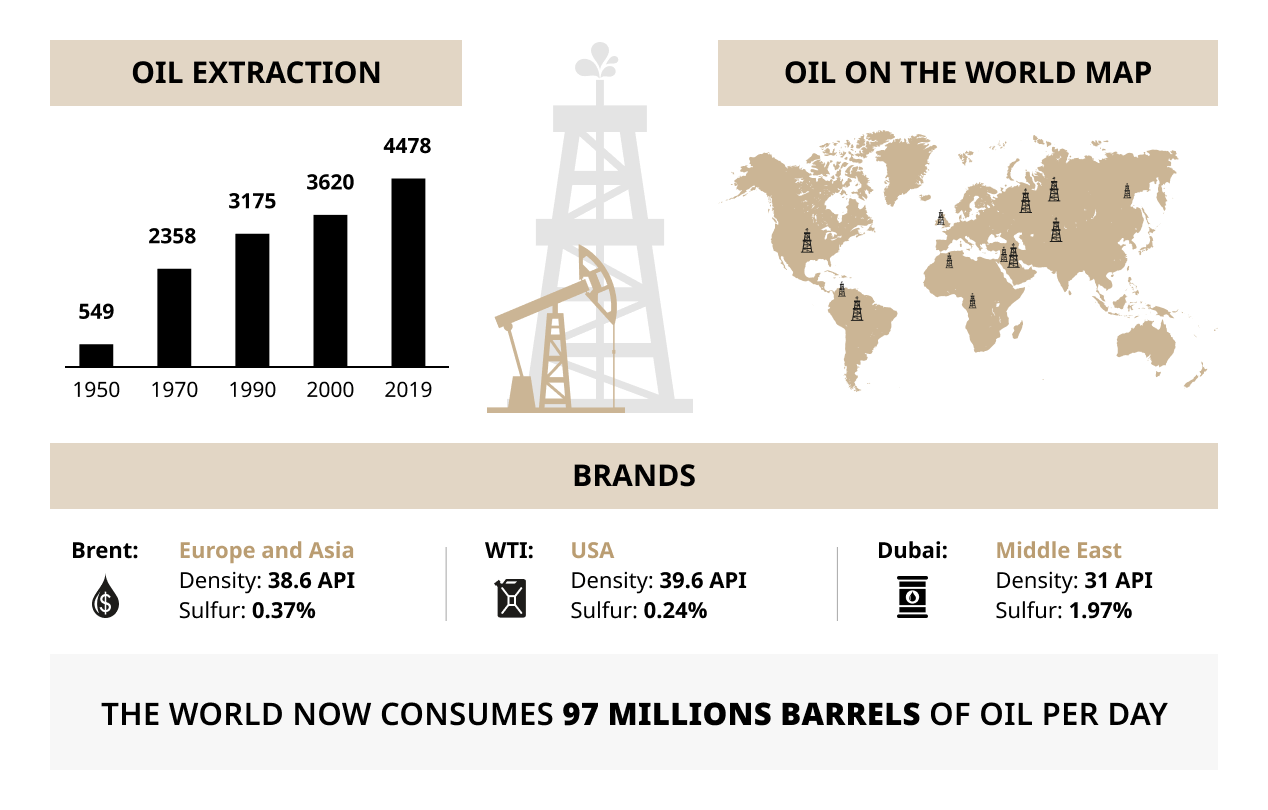
WTI is a light, sweet crude oil produced primarily in the United States, favored by refiners for its low density (API gravity around 39.6°) and low sulfur content (approximately 0.24%). Historically, the primary pricing mechanism for WTI was the Light Sweet Crude Oil futures contract (ticker: CL) traded on the New York Mercantile Exchange (NYMEX), which is owned by CME Group. Physical delivery for the classic NYMEX contract occurs in Cushing, Oklahoma, a major landlocked pipeline junction and storage hub.
ICE WTI refers to WTI crude oil futures contracts listed on the Intercontinental Exchange (ICE). ICE introduced WTI futures contracts to allow traders, refiners, and institutional investors to trade American crude oil on the same electronic platform that hosts ICE Brent—the dominant global crude benchmark for seaborne oil.
ICE offers key WTI-linked contracts, including:
- ICE WTI Crude Futures (Ticker: T): A financially settled contract linked directly to the daily settlement price of the NYMEX WTI futures contract.
- ICE WTI Houston Futures (Ticker: HOU): A physically delivered contract tied to light sweet crude located at major U.S. Gulf Coast terminals in Houston, Texas (such as the Magellan East Houston and Enterprise Crude Houston hubs).
By offering WTI contracts on its venue, ICE provides market participants with direct exposure to American crude oil while integrating it directly into international commodity trading workflows.
The Evolution of WTI Contracts: NYMEX Cushing vs. ICE WTI
For decades, the benchmark status of U.S. crude oil was dictated almost exclusively by NYMEX Cushing futures. However, structural changes in global energy infrastructure—most notably the U.S. Congress lifting the 40-year crude oil export ban in December 2015 and the explosive growth of Permian Basin shale production—created a need for new benchmark structures.
- Global Energy Flow Model
- Permian Basin Production
- Cushing Storage (Landlocked Hub)
- NYMEX WTI (CL) (US Domestic Focus)
- US Gulf Coast Ports (Waterborne Terminals)
- ICE WTI / HOU (Global Export Focus)
- Cushing Storage (Landlocked Hub)
- ICE Brent (Global Seaborne)
- Permian Basin Production
The landlocked nature of Cushing, Oklahoma, meant that regional supply bottlenecks could distort prices. If pipelines connecting Cushing to the U.S. Gulf Coast filled up, local WTI prices would plummet due to oversupply, even if international demand for oil was surging.
ICE WTI contracts addressed these structural limitations by connecting U.S. oil pricing directly to international trade routes. The table below outlines the major operational and technical differences between traditional NYMEX WTI contracts and ICE WTI contracts.
| Specification Feature | NYMEX WTI Crude Oil (CL) | ICE WTI Financial Futures (T) | ICE WTI Houston Futures (HOU) |
|---|---|---|---|
| Exchange Venue | CME Group (NYMEX) | Intercontinental Exchange (ICE) | Intercontinental Exchange (ICE) |
| Primary Delivery Point | Cushing, Oklahoma (Landlocked) | Financially settled against CME NYMEX | Magellan East Houston / Enterprise Houston (Waterborne) |
| Settlement Type | Physical pipeline delivery | Cash settlement | Physical terminal delivery |
| Contract Size | 1,000 U.S. Barrels (42,000 gallons) | 1,000 U.S. Barrels (42,000 gallons) | 1,000 U.S. Barrels (42,000 gallons) |
| Margin Offsets | Margin offset against CME contracts | Cross-margining against ICE Brent & Gasoil | Cross-margining against ICE Brent & Gasoil |
| Primary Market Role | U.S. Midcontinent physical benchmark | Financial hedging & Brent-WTI spread trading | U.S. Gulf Coast export pricing benchmark |
How ICE WTI Affects Global Oil Markets
The availability and liquidity of ICE WTI contracts have reshaped global energy markets in four major operational and structural ways.
1. Capital Efficiency and Brent-WTI Spread Trading
The price difference between Brent crude and WTI crude—known as the Brent-WTI spread—is one of the most actively traded arbitrage spreads in global finance. It reflects the supply-demand balance between European/international seaborne crude and domestic U.S. crude, as well as transatlantic shipping costs.
Prior to ICE WTI, trading the Brent-WTI spread required maintaining separate trading accounts and clearing capital across two distinct exchange operations: CME Group for WTI and ICE for Brent. This structure required market participants to post full margin capital at both clearinghouses.
By listing WTI directly alongside Brent, ICE enabled cross-margining and portfolio clearing offsets. According to the Intercontinental Exchange (ICE), trading both legs of the Brent-WTI spread on a single clearinghouse reduces total margin requirements for commercial entities and market makers. This capital efficiency vastly increased trading volume, reduced bid-ask spreads, and tightened the financial integration between U.S. and European crude markets.
2. Alignment with U.S. Oil Exports and Gulf Coast Pricing
Following the expansion of U.S. tight oil output from the Permian and Eagle Ford basins, the United States transformed into one of the world's largest oil exporters. However, foreign refiners in Asia and Europe buy crude loading onto ocean tankers at deepwater ports in Texas and Louisiana, not from inland tanks in Oklahoma.
ICE WTI Houston (HOU) introduced a physical benchmark that accurately reflects the value of crude delivered to U.S. Gulf Coast export terminals. By eliminating the basis risk associated with landlocked storage bottlenecks at Cushing, ICE WTI allows international buyers and domestic exporters to price physical cargos against a liquid, waterborne-aligned contract. The U.S. Energy Information Administration (EIA) regularly tracks how Gulf Coast pricing benchmarks correlate with international waterborne grades like Brent and Dubai crude.
3. Mitigation of Physical Storage Bottlenecks
The structural difference between inland delivery and exchange clearing mechanisms became strikingly evident during the historical market dislocation of April 2020. During that period, the front-month NYMEX WTI Cushing contract briefly traded into negative territory due to acute physical storage capacity constraints at Cushing.
Financial derivative instruments like ICE WTI (cash-settled) and ICE WTI Houston (waterborne-linked) offer alternative pricing mechanisms that insulate financial hedgers from hyper-local physical storage constraints. Because ICE WTI contracts trade on the same infrastructure as Brent, they absorb global market shifts without suffering from localized pipeline or tank farm bottlenecks to the same degree as inland-only contracts.
4. Expansion of Electronic Price Discovery and Liquidity
Global energy markets operate around the clock. The trading of ICE WTI on the ICE platform means that price discovery for American crude oil is fully synchronized with international refined products, such as ICE Low Sulphur Gasoil and ICE Brent.
This synchronization allows automated trading algorithms, macro hedge funds, and integrated oil majors to execute complex multi-leg strategies—such as crack spreads (the price difference between crude oil and refined petroleum products) and regional arbitrage trades—instantly across global time zones.
- ICE Multi-Leg Arbitrage Matrix
- ICE Brent Futures (North Sea Benchmark)
- ICE WTI / HOU Futures (US Export/Light Sweet)
- ICE LS Gasoil Futures (European Refined Fuel)
- Single Clearinghouse / Cross-Margined Execution
Practical Applications for Market Participants
Different segments of the energy value chain utilize ICE WTI to manage financial risk and optimize physical operations.
U.S. Exploration and Production (E&P) Companies
Producers operating in the Permian Basin of West Texas and New Mexico use ICE WTI contracts (specifically ICE WTI Houston) to lock in future sales prices. Hedging through Gulf Coast-aligned contracts ensures that the producer's realized revenue reflects the price at which their crude reaches export terminals, eliminating the risk that local pipeline transport discounts will erode profit margins.
International Refiners
Refine operations in Western Europe and East Asia frequently purchase U.S. light sweet crude grades to feed their distillation units. By using ICE WTI futures alongside ICE Brent, these refiners can lock in their crude input costs and hedge transatlantic shipping margins within a single trading account.
Institutional Investors and Macro Funds
Asset managers holding commodity indexes or executing relative-value strategies trade ICE WTI to express views on global macroeconomic trends, U.S. monetary policy, foreign exchange fluctuations (as crude is priced in U.S. dollars), and geopolitical disruptions. The liquidity of ICE WTI contracts allows large institutional positions to be established or liquidated with minimal market impact.
Common Misconceptions About ICE WTI
Misconception 1: "ICE WTI is a completely different physical oil grade than NYMEX WTI."
Reality: The underlying physical commodity for basic ICE WTI contracts is the exact same specification of domestic light sweet U.S. crude oil as that underlying NYMEX WTI. The core distinction lies in the exchange venue (ICE vs. CME/NYMEX), the clearing mechanism, and—in the case of specialized contracts like ICE WTI Houston—the specified delivery location (U.S. Gulf Coast terminals vs. Cushing tanks).
Misconception 2: "ICE Brent has been replaced by ICE WTI."
Reality: ICE Brent remains the primary international pricing benchmark for seaborne crude oil, underpinning roughly two-thirds of the world's internationally traded physical oil contracts. ICE WTI complements Brent by offering a liquid U.S. benchmark on the same platform, facilitating direct cross-commodity trading rather than displacing Brent.
Misconception 3: "Cash-settled ICE WTI contracts don't reflect real physical markets."
Reality: Cash-settled ICE WTI contracts derive their final settlement price directly from verified physical and exchange settlement data. Furthermore, physical delivery contracts on ICE, such as ICE WTI Houston (HOU), involve physical transfer of oil at deepwater export terminals, tying financial futures directly to ocean cargo markets.
Frequently Asked Questions
What is the main difference between ICE WTI and NYMEX WTI?
The primary difference is the exchange venue and delivery mechanism. NYMEX WTI (CL) is traded on CME Group and settles physically at a landlocked pipeline storage hub in Cushing, Oklahoma. ICE WTI trades on the Intercontinental Exchange and offers financially settled contracts linked to NYMEX prices, as well as physically delivered contracts (HOU) based at U.S. Gulf Coast marine terminals.
Why do traders watch the Brent-WTI spread on ICE?
Traders monitor the Brent-WTI spread because it measures the price difference between international seaborne crude oil (Brent) and U.S. domestic/export crude oil (WTI). A widening or narrowing spread signals shifts in shipping costs, U.S. export capacity, domestic production levels, or international demand trends. Trading this spread on ICE offers substantial capital and margin efficiencies.
How did lifting the U.S. crude export ban impact ICE WTI contracts?
Lifting the export ban in December 2015 transformed the United States into a global oil exporter. This structural shift created high demand for futures contracts that price U.S. crude at coastal export terminals (such as ICE WTI Houston) rather than landlocked storage hubs, making ICE WTI contracts central to international seaborne trade.
Can retail investors trade ICE WTI futures?
Yes, qualified investors can trade ICE WTI futures through brokerage firms that provide access to the Intercontinental Exchange. However, because futures contracts involve high leverage and financial risk, market participants must maintain adequate margin capital and understand the contract specifications before trading.
Strategic Takeaways and Actionable Next Steps
Understanding ICE WTI is essential for anyone analyzing energy commodities, macro market trends, or global supply chains. To apply this knowledge effectively, market participants should consider the following actions:
- Monitor Basis Differentials: Track the spread between Cushing-settled WTI and Houston-settled WTI (ICE HOU) to gauge pipeline congestion and export demand out of the U.S. Gulf Coast.
- Evaluate Margin Requirements: Commercial energy desks trading both Brent and WTI should analyze single-clearinghouse margin offsets on ICE to optimize working capital allocations.
- Assess Export Dynamics: Follow U.S. crude export data published weekly by the U.S. Energy Information Administration (EIA) to evaluate how shifts in physical tanker flows impact ICE WTI contract liquidity and price spreads.
Image Gallery