Essential Workers’ Compensation Terminology: A Comprehensive English-Spanish Guide
Workers’ compensation terminology in English and Spanish facilitates clear communication between injured employees, employers, insurance adjusters, and legal counsel. Accurate translation of terms like Maximum Medical Improvement (Mejo...
Workers’ compensation terminology in English and Spanish facilitates clear communication between injured employees, employers, insurance adjusters, and legal counsel. Accurate translation of terms like Maximum Medical Improvement (Mejoría Médica Máxima) and Temporary Total Disability (Incapacidad Total Temporal) ensures that Spanish-speaking claimants understand their rights, medical requirements, and financial benefits under state-specific labor laws.
Contents
The landscape of workplace safety and insurance in 2026 places a heavy emphasis on linguistic accessibility. With Spanish-speaking individuals making up a significant portion of the workforce across North America, the ability to navigate the complex vocabulary of workers’ compensation is not merely a convenience—it is a legal and procedural necessity. Misunderstanding a single term can lead to missed deadlines, denied claims, or inadequate medical treatment. This guide provides a detailed breakdown of essential terminology, legal definitions, and linguistic nuances used in the workers' compensation system.
The Importance of Precise Language in Claims Processing
In the context of insurance law, words are the foundation of eligibility. Workers’ compensation is a "no-fault" system, meaning employees are generally entitled to benefits regardless of who caused the accident, provided the injury occurred during the scope of employment. However, the process of proving that an injury is work-related (relacionado con el trabajo) requires specific documentation that must be accurately translated to maintain the integrity of the claim.
For an injured worker, the stress of a physical ailment is often compounded by the complexity of the legal system. When language barriers exist, the risk of "lost in translation" errors increases. For example, the English term "injury" is often translated as "lesión." However, in some legal contexts, "injuria" might be mistakenly used, which in many Spanish-speaking legal systems refers to an "insult" or "defamation" rather than a physical wound. Precision in these translations prevents administrative delays and ensures that the insurance carrier (compañía de seguros) receives the correct information to authorize treatment.
Comprehensive English-Spanish Terminology Table
The following table highlights the most frequently used terms in workers’ compensation cases, providing their Spanish equivalents and the functional context in which they are used.
| English Term | Spanish Translation | Definition/Context |
|---|---|---|
| Adjuster | Ajustador de reclamos | The insurance representative responsible for investigating and settling the claim. |
| Adjudication | Adjudicación | The legal process of resolving a dispute or deciding a case. |
| Appeals Board | Junta de apelaciones | The administrative body that hears disputes regarding workers' comp decisions. |
| Average Weekly Wage (AWW) | Salario semanal promedio | The basis for calculating disability benefit amounts. |
| Beneficiary | Beneficiario | A person designated to receive benefits (often in death benefit cases). |
| Claimant | Reclamante / Solicitante | The injured worker who is filing for benefits. |
| Cumulative Trauma | Trauma acumulado | Injuries that occur over time rather than from a single event (e.g., carpal tunnel). |
| Death Benefits | Beneficios por fallecimiento | Payments made to survivors of a worker killed on the job. |
| Deposition | Declaración jurada | Out-of-court testimony given under oath, recorded for use in legal proceedings. |
| Impairment Rating | Grado de menoscabo / Incapacidad | A percentage assigned to the permanent loss of body function. |
| Lump Sum Settlement | Liquidación en un pago único | A one-time payment that settles all or part of a workers’ comp claim. |
| Modified Duty | Tareas modificadas | Work tasks adjusted to accommodate a worker's medical restrictions. |
| Notice of Injury | Aviso de lesión | The formal notification given by an employee to an employer about an accident. |
| Ombudsman | Defensor del pueblo / Mediador | An official appointed to investigate complaints or mediate between parties. |
| Statute of Limitations | Estatuto de limitaciones | The legal timeframe within which a claim must be filed. |
Deep Dive: Disability Classifications and Medical Terms
One of the most complex areas of workers’ compensation involves the classification of disability. These terms determine how much money a worker receives and for how long. In 2026, medical providers and insurance companies use standardized metrics to evaluate these categories.
1. Temporary Total Disability (TTD) / Incapacidad Total Temporal
This status applies when a worker is completely unable to work for a limited period while recovering. In Spanish, it is often referred to as Incapacidad Total Temporal. During this time, the worker typically receives two-thirds of their average weekly wage, subject to state maximums.
2. Permanent Partial Disability (PPD) / Incapacidad Parcial Permanente
This is used when a worker has a permanent impairment (like the loss of a finger or reduced range of motion in a shoulder) but is still capable of performing some form of work. The translation Incapacidad Parcial Permanente is critical here because it impacts the long-term financial award the worker may receive after they have reached a plateau in their recovery.
3. Maximum Medical Improvement (MMI) / Mejoría Médica Máxima (MMM)
This is a pivotal point in any workers’ compensation case. MMI signifies that a patient's condition has stabilized and no further functional improvement is expected, even with more medical treatment. In Spanish, Mejoría Médica Máxima indicates that the primary treatment phase has ended, and the case will move toward a permanent disability rating or settlement.
4. Independent Medical Examination (IME) / Examen Médico Independiente
An IME is a medical evaluation performed by a doctor who is not the treating physician. The insurance company usually requests this to get a second opinion on the worker's status. It is translated as Examen Médico Independiente, though workers should be aware that the "independent" nature of the exam is often debated, as the insurance company selects and pays the doctor.
Navigating the Legal Process and Settlements
The transition from medical treatment to legal resolution involves specific vocabulary that defines how a case is closed. Understanding these terms prevents workers from inadvertently waiving their rights.
Compromise and Release (C&R) / Compromiso y Liberación This is a type of settlement where the injured worker receives a lump sum of money in exchange for releasing the insurance company from all future liability, including future medical care. In Spanish-speaking communities, this is often explained as Acuerdo de liquidación definitiva. It is vital for workers to understand that signing a C&R usually means they cannot reopen the claim if their condition worsens later.
Stipulated Findings and Award / Hallazgos Estipulados y Adjudicación Unlike a C&R, this settlement keeps the medical portion of the claim open. The parties agree (stipulate) on the percentage of disability, and the worker receives bi-weekly payments. This is known as Estipulaciones con Adjudicación. It is often preferred for workers who expect to need ongoing medication or therapy.
Vocational Rehabilitation / Rehabilitación Vocacional In 2026, as job markets shift toward automation and digital services, Rehabilitación Vocacional has become more prominent. This benefit provides retraining or job placement assistance for workers who cannot return to their previous occupation due to their injuries.
Linguistic Nuances and Regional Variations
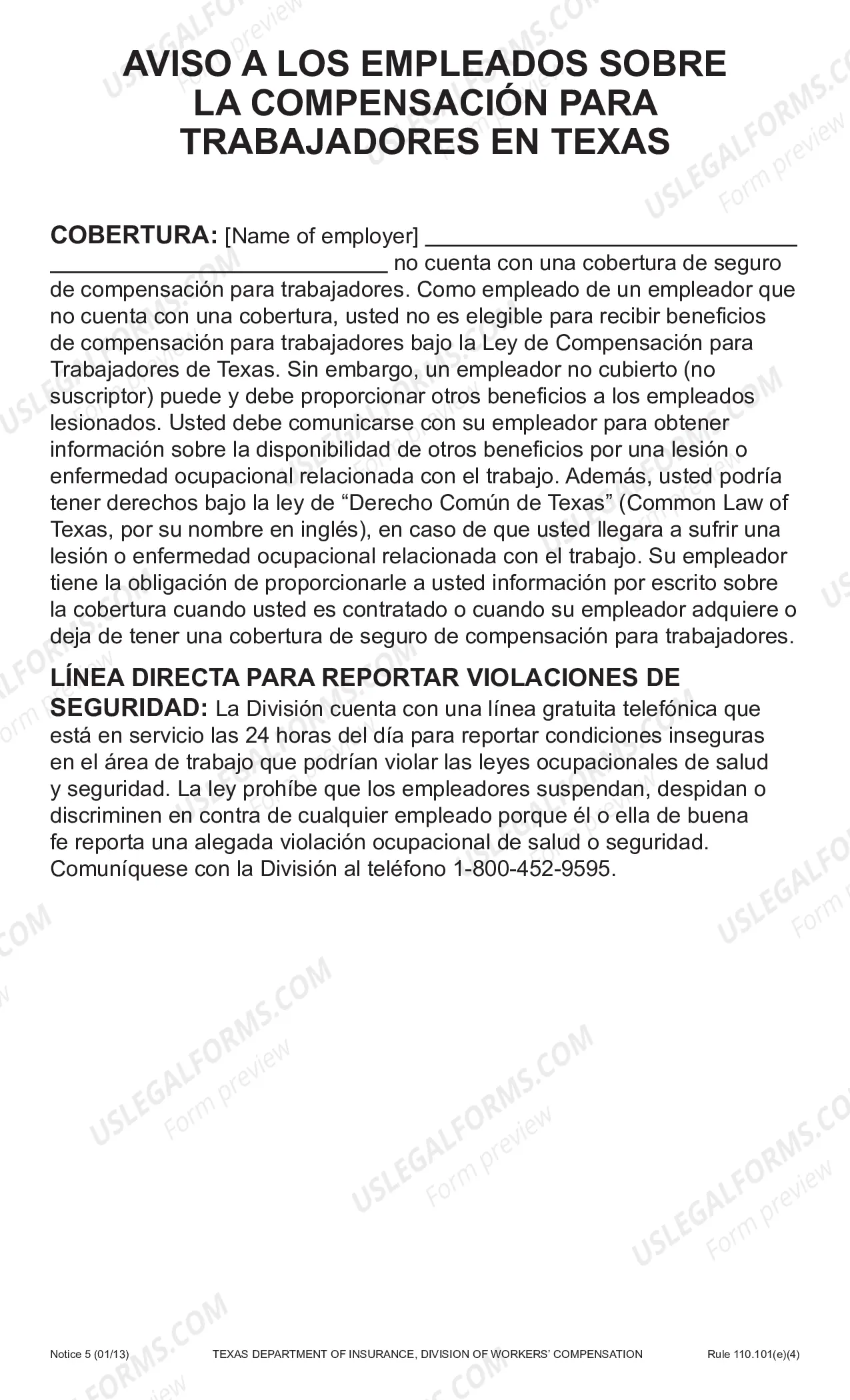
While "Spanish" is a single language, legal terminology can vary significantly based on the country of origin or the specific US state. In California, the system might use "Indemnización al Trabajador," while in Texas, "Compensación para Trabajadores" is more common.
Furthermore, the term "indemnity" (indemnización) in English refers to the money paid for lost wages or permanent disability. In Spanish, "indemnización" is a broader term that can mean compensation, reimbursement, or a severance payment. Clarifying whether a payment is for "lost wages" (salarios perdidos) or "permanent impairment" (menoscabo permanente) is essential for the claimant’s financial planning.
Statutory Requirements for Bilingual Access
Under federal guidelines, specifically Title VI of the Civil Rights Act, and various state-level labor codes (such as those in California, New York, and Florida), there are mandates regarding language access. As of 2026, many states require that:
- Medical Interpreters: Must be certified to ensure clinical accuracy during examinations.
- Written Notices: Essential documents like the Claim Form (Formulario de Reclamación) must be provided in the worker's primary language if a significant percentage of the workforce speaks that language.
- Qualified Evaluators: In states like California, a Qualified Medical Evaluator (QME) must utilize a certified interpreter if the worker is not fluent in English.
Failure to provide these services can be grounds for an appeal or the invalidation of a medical report.
Frequently Asked Questions
What is the difference between "Incapacidad" and "Discapacidad"?
In many legal contexts, Incapacidad refers specifically to the inability to work or perform job duties due to a medical condition (disability in the employment sense). Discapacidad is a broader term often used for a general physical or mental impairment. In workers' compensation, "Incapacidad" is the more common technical term for benefit eligibility.
Does "No-Fault" mean I can't be fired for a claim?
In English, the system is No-Fault (Sin Culpa). While you generally cannot be fired specifically for filing a claim (which would be Retaliation / Represalia), the "no-fault" aspect specifically refers to the fact that you get benefits even if the accident was your fault. Employers in 2026 are strictly monitored for retaliatory actions.
What should I do if the insurance company denies my claim in Spanish?
If you receive a Notice of Denial (Aviso de Rechazo), you have the right to file an Application for Adjudication of Claim (Solicitud de Adjudicación de Reclamo). You should seek a workers' compensation attorney (abogado de compensación de trabajadores) who speaks your language or provides a qualified translator.
Is an "Adjuster" the same as a "Lawyer"?
No. An Adjuster (Ajustador) works for the insurance company and manages the costs and logistics of the claim. A Lawyer (Abogado) represents either the worker or the employer. It is a common mistake for workers to think the adjuster is there to provide them with legal advice.
Moving Forward: Next Actions for Claimants
If you are navigating a workers’ compensation claim in 2026, the first step is to request all official forms in your preferred language. Ensure that you have a Notice of Injury filed in writing with your employer immediately. If you encounter terms you do not understand, refer to the U.S. Department of Labor or your specific state’s Division of Workers’ Compensation (DWC) websites, many of which now offer comprehensive bilingual glossaries and virtual assistants in Spanish.
Always verify that any interpreter used in a medical or legal setting is certified by the state. This certification ensures that the complex medical and legal terminology mentioned above is conveyed accurately, protecting your health and your financial future.
Image Gallery