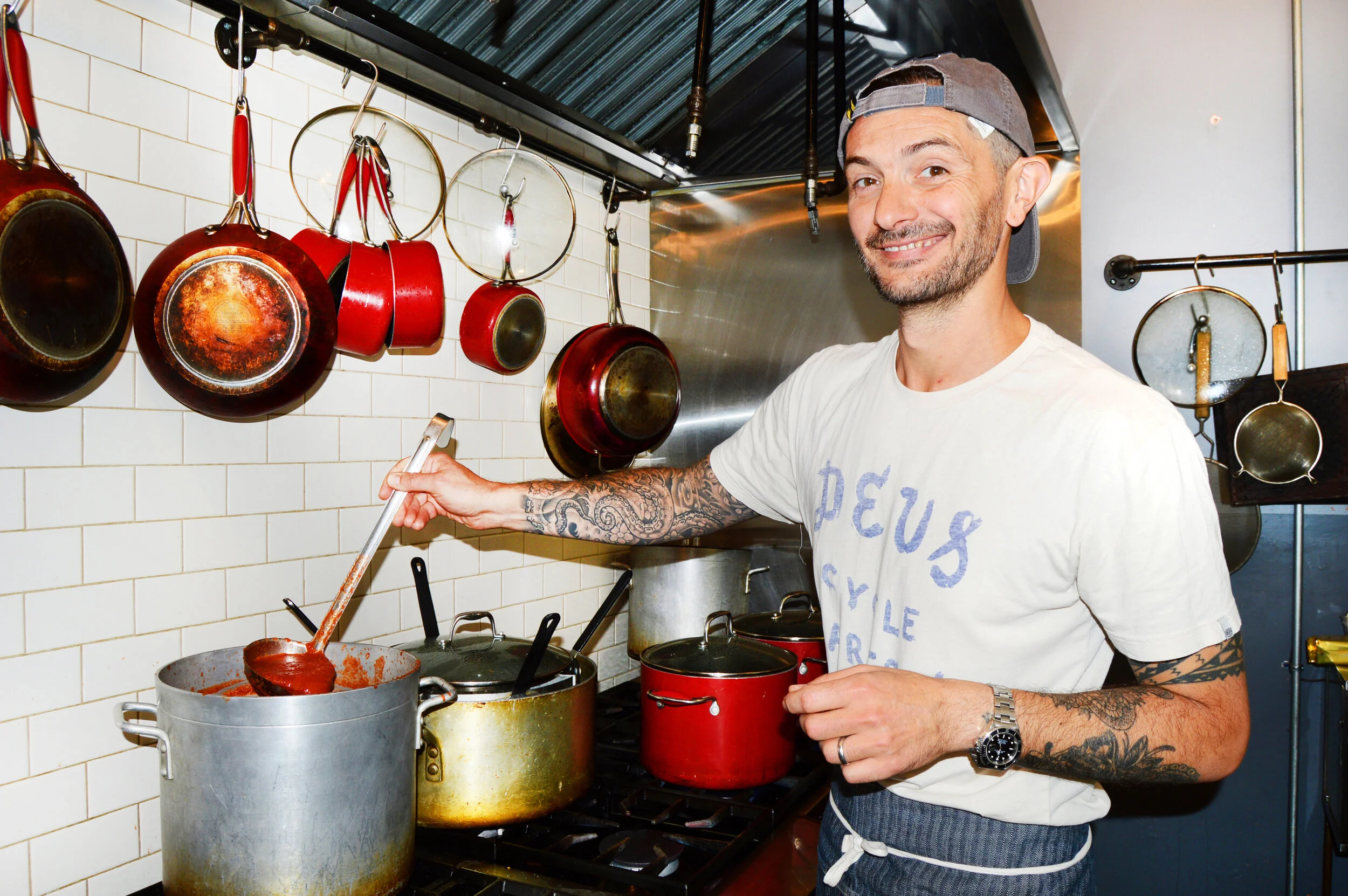
Understanding Gabriele Corcos: Career Trajectory and Financial Context
Gabriele Corcos is a renowned Italian chef, restaurateur, and media personality whose career spans culinary arts, television production, and entrepreneurship. While precise, real-time net worth figures for private individuals remain sp...
Gabriele Corcos is a renowned Italian chef, restaurateur, and media personality whose career spans culinary arts, television production, and entrepreneurship. While precise, real-time net worth figures for private individuals remain speculative, his financial standing is primarily attributed to his successful media ventures, restaurant ownership, and multi-platform culinary brand collaborations developed over several decades.
Contents
Professional Foundations and Culinary Evolution
Gabriele Corcos began his professional journey with a deep connection to his Tuscan roots, eventually bringing authentic Italian culinary traditions to a global audience. His rise to prominence was not immediate but rather the result of sustained effort in the competitive culinary and television industries. Unlike many celebrity chefs who operate solely within the confines of professional kitchens, Corcos utilized the digital landscape early on to establish his authority.
He gained widespread recognition through the Extra Virgin series on the Cooking Channel, which he co-hosted with his wife, actress Debi Mazar. This project served as a foundational pillar for his brand, blending authentic home cooking with high-production media value. The success of this series allowed Corcos to pivot from a niche chef to a recognizable public figure, increasing his leverage in subsequent commercial projects and endorsements.
Revenue Streams and Business Ventures
The financial profile of a high-profile chef like Corcos is typically composed of several diversified income streams rather than a single source of wealth. In the modern culinary economy, professional chefs derive their net worth from the following core areas:
- Media and Television Production: Payments derived from series production, hosting duties, and licensing of culinary content represent a significant portion of his professional earnings. Long-term contracts with food-focused networks provide both stability and residuals.
- Hospitality and Restaurant Operations: Corcos has been involved in the restaurant space, where revenue is generated through traditional dining operations. These ventures require substantial capital investment and carry operational risks, but successful establishments contribute significantly to long-term asset value.
- Brand Partnerships and Endorsements: Establishing a credible personal brand allows for collaborations with kitchenware manufacturers, food product companies, and lifestyle brands. These agreements often involve long-term promotional contracts that add consistency to annual income.
- Publishing and Digital Assets: As an author of culinary books and a creator of digital recipes and instructional content, Corcos maintains an ongoing revenue stream that functions independently of his physical location or restaurant hours.
The Impact of Culinary Branding
The valuation of a public figure’s "net worth" in the food industry is often inextricably linked to the strength and reach of their personal brand. In 2026, the marketplace for celebrity chefs is highly competitive. Success requires the ability to translate technical culinary skill into consumer-facing content that resonates across television, social media, and publishing.
Corcos distinguishes himself by maintaining a consistent narrative focused on "Tuscan table" cooking. This thematic clarity has allowed him to sustain long-term engagement with a specific audience demographic. When evaluating the economic stability of a personality in this sector, one must consider the cost of maintaining a public presence, including marketing expenses, production team overheads, and the capital expenditure required to keep physical restaurant locations current and competitive.
Comparing Income Models in the Culinary Industry
To understand the financial dynamics of a professional chef, it is helpful to contrast different modes of operation. While many chefs rely on a salary-based model, public figures like Corcos function more similarly to entrepreneurs.
| Model Type | Primary Revenue Source | Capital Requirement | Predictability |
|---|---|---|---|
| Traditional Chef | Executive Salary | Low (Employer-funded) | High |
| Restaurant Owner | Operating Profits | High (Self-funded) | Variable |
| Media Personality | Endorsements/Residuals | Moderate | Moderate |
| Hybrid Entrepreneur | Diversified Portfolios | High | Variable |
Gabriele Corcos operates largely within the Hybrid Entrepreneur category, which offers the highest potential for growth but necessitates significant management of personal and business liabilities.
Prerequisites and Barriers to Success
For those looking to understand how career paths like that of Corcos are built, it is essential to recognize the barriers to entry. Success in this field is rarely achieved without:
- Deep Subject Matter Expertise: Formal or informal mastery of a specific cuisine is the baseline requirement.
- Media Literacy: The ability to communicate effectively on camera is a specialized skill set distinct from cooking.
- Scalable Intellectual Property: Moving beyond manual labor (cooking in a kitchen) to passive income (books, media residuals, or proprietary product lines) is the key to building significant wealth in this sector.
- Operational Resilience: Navigating the cyclical nature of the hospitality industry requires the ability to absorb downturns in physical restaurant traffic by relying on digital or media-based income.
Managing Financial Expectations
It is important to emphasize that public estimations regarding the wealth of media personalities are often based on broad market averages rather than audited financial statements. The "net worth" of an individual in 2026 is a snapshot that accounts for assets (property, business equity, intellectual property) minus liabilities (business debts, loans, and operational costs).
Investors and individuals observing these career paths should note that celebrity chefs face the same financial risks as any business owner. The volatility of the restaurant industry, combined with the shifting trends of digital media, means that income can fluctuate significantly from one year to the next.
Frequently Asked Questions
What are the primary sources of income for Gabriele Corcos? Corcos derives income from multiple channels, including media production for television, cookbook publishing, brand endorsements, and the operation of culinary establishments. This diversification is standard for established industry professionals.
How does media presence impact a chef’s total assets? A strong media presence increases the valuation of a chef’s personal brand, allowing for more lucrative product collaborations and higher pay for media appearances. It effectively transforms culinary skill into a scalable, high-value asset.
Is owning a restaurant always profitable? Restaurant ownership is high-risk and requires significant capital. While it can be a major asset, it often comes with substantial overhead costs and operational liabilities. Most successful chefs diversify their portfolios to avoid relying solely on restaurant margins.
How is a celebrity chef's net worth calculated? Net worth is calculated by summing the total value of all assets (real estate, business holdings, investments) and subtracting total liabilities (outstanding business loans, mortgages, and operating expenses). Public estimates often lack access to these private financial details.
Does Gabriele Corcos rely solely on cooking? No. Corcos has successfully transitioned into a multi-hyphenate career that includes media production, authoring, and brand partnerships. This diversification is a key element of his career longevity and financial stability.
Strategic Considerations
For those observing the culinary business landscape, the takeaway is clear: success is rarely about a single achievement. Instead, it is the result of layering professional skills—culinary talent, media proficiency, and business management—into a cohesive personal brand. If you are tracking the career of a specific public figure, prioritize reports from industry-standard financial outlets rather than unverified aggregator sites, as the latter often overestimate wealth by failing to account for overhead and liabilities.
Image Gallery