How to Perform Dumbbell Lateral Raises Safely: A Complete Technical Guide
Performing dumbbell lateral raises safely requires lifting weights in the scapular plane—roughly 30 degrees in front of the torso—rather than directly out to the sides. This specific alignment reduces subacromial impingement risk and b...
Performing dumbbell lateral raises safely requires lifting weights in the scapular plane—roughly 30 degrees in front of the torso—rather than directly out to the sides. This specific alignment reduces subacromial impingement risk and better aligns with the shoulder’s natural anatomy. Maintain a slight elbow bend, lead with the knuckles, and avoid using momentum to protect the rotator cuff muscles.
Contents
The dumbbell lateral raise is a foundational isolation exercise designed to target the lateral head of the deltoid, the muscle responsible for the "width" of the shoulders. While the movement appears simple, it is one of the most frequently butchered exercises in the gym. Incorrect form not only reduces muscle activation but also places the delicate structures of the glenohumeral joint—specifically the supraspinatus tendon—at significant risk of injury. In 2026, sports medicine consensus continues to emphasize joint longevity over ego-driven loading, making technical precision more important than ever.
Anatomy of the Shoulder During Lateral Raises
To perform this move safely, one must understand the "why" behind the movement patterns. The shoulder is a ball-and-socket joint with the greatest range of motion of any joint in the human body, but this mobility comes at the cost of stability.
The Primary Mover: Lateral Deltoid
The deltoid consists of three distinct heads: the anterior (front), lateral (middle), and posterior (rear). The lateral raise specifically targets the middle head. However, the lateral deltoid does not work in isolation. During the first 15 to 30 degrees of the movement, the supraspinatus (one of the four rotator cuff muscles) is actually the primary initiator of abduction.
The Scapular Plane vs. The Frontal Plane
Most lifters attempt to raise the dumbbells directly out to their sides, staying strictly in the frontal plane. From an anatomical perspective, this is often suboptimal. The shoulder blade (scapula) does not sit flat against the back; it sits at an angle of about 30 to 45 degrees forward. By performing the raise in this scapular plane, you ensure that the humerus (upper arm bone) has the most space to move within the shoulder socket without pinching the soft tissues against the acromion process.
Step-by-Step Guide to Perfect Execution
Following a disciplined sequence ensures that the tension remains on the muscle fibers rather than the connective tissues.
1. The Setup and Stance
Stand with your feet shoulder-width apart. Maintain a "soft" knee—never lock your joints. A very slight forward hinge at the hips (about 5 to 10 degrees) can help engage the core and provide a more stable base. Hold the dumbbells at your sides with a neutral grip (palms facing your thighs).
2. The Initiation (The "Anti-Swing")
The most common error is using the hips or a "jerk" to start the movement. To prevent this, engage your glutes and core before moving the weights. Think about pushing the dumbbells away from your body toward the walls, rather than simply lifting them "up." This cue helps maximize the lever arm and increases tension on the lateral deltoid.
3. The Path of Ascent
As you raise the weights, keep a slight bend in the elbows (approximately 10 to 15 degrees). Lifting with completely straight arms puts excessive shearing force on the elbow joint and can lead to tendonitis over time. As the weights rise, ensure your hands remain slightly lower than or level with your elbows.
4. The Peak and Rotation
Stop the movement once your arms are parallel to the floor (shoulder height). Going higher than this shifts the load away from the deltoids and toward the upper trapezius muscles. In the past, trainers often recommended "pouring out a pitcher of water" at the top (internal rotation). Modern biomechanics research, such as that highlighted by the National Academy of Sports Medicine (NASM), suggests this "empty can" position can increase the risk of shoulder impingement. Instead, keep a neutral wrist or a very slight external rotation (the "full can" position) for maximum safety.
5. The Controlled Eccentric
The "lowering" phase is where most muscle growth occurs, yet many lifters simply drop the weights. Fight gravity on the way down, taking roughly two to three seconds to return to the starting position. Stop just before the dumbbells touch your thighs to maintain constant tension on the muscle.
Critical Safety Considerations and Impingement Prevention
Safety in lateral raises is largely about managing the subacromial space. This is the narrow corridor in the shoulder where tendons and bursa reside. When the arm is abducted (raised) in a compromised position, these tissues can become compressed.
Avoiding the "Shrug"
When the weight is too heavy, the body naturally compensates by shrugging the shoulders upward. This involves the upper trapezius and levator scapulae. Not only does this take the focus off the deltoids, but it also creates neck tension and can lead to cervicogenic headaches. Always keep your shoulder blades "depressed" or tucked into your back pockets throughout the set.
The Role of the Rotator Cuff
A weak rotator cuff is often the root cause of pain during lateral raises. If the rotator cuff cannot effectively pull the head of the humerus down into the socket, the bone will ride upward and strike the acromion. Incorporating external rotation warm-ups with light bands or cables before your lateral raises is a mandatory safety protocol for long-term shoulder health.
Comparing Lateral Raise Variations
Not all lateral raises are created equal. Depending on your injury history or equipment availability, certain variations may be safer or more effective.
| Variation | Primary Benefit | Safety Profile | Technical Key Cue |
|---|---|---|---|
| Standard Standing | Total body stability | Moderate | No hip momentum. |
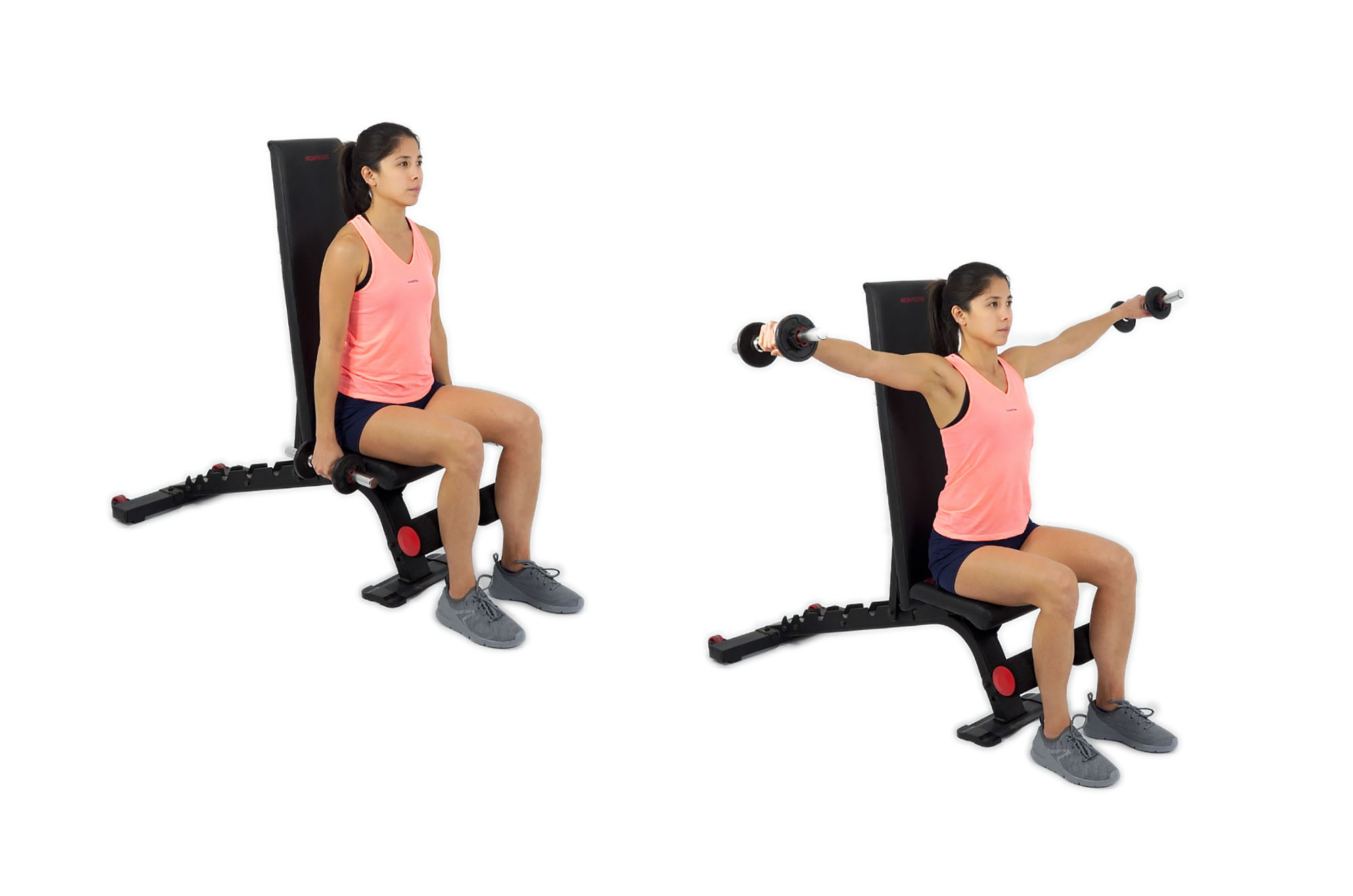
| Seated Dumbbell | Eliminates leg drive | High | Keep back flat against the bench. |
| Chest-Supported | Absolute isolation | Highest | Lean into an incline bench at 70°. |
| Cable Lateral Raise | Constant tension | High | Cable should pass behind the legs. |
| Leaning Lateral | Increased range of motion | Moderate | Hold a sturdy post for balance. |
Common Mistakes to Eliminate
To ensure you are performing dumbbell lateral raises safely in 2026, audit your form for these three frequent errors:
- Leading with the Hands: Many lifters raise their hands higher than their elbows. This creates internal rotation and shifts the load to the front deltoid. Always think of your elbows as the "hook" that is pulling the weight up.
- Using Excessive Weight: The lateral deltoid is a relatively small muscle group. Using 50lb dumbbells with "body English" is far less effective than using 15lb dumbbells with perfect, slow control. If you cannot pause for a split second at the top, the weight is too heavy.
- The "Forward Tilt": If you find yourself leaning too far forward, you turn the lateral raise into a hybrid of a row and a rear delt fly. While not inherently "dangerous," it defeats the purpose of targeting the medial head for shoulder width.
Recommended Programming for Safety
Because the shoulder joint is sensitive to high-intensity volume, a "low weight, high repetition" approach is generally safer and more effective for lateral raises.
- Frequency: 2 to 3 times per week, allowing at least 48 hours of recovery between sessions.
- Volume: 3 to 4 sets of 12 to 20 repetitions.
- Intensity: Train to "technical failure" (where form breaks down) rather than "absolute failure" (where you can no longer move the weight at all).
Professional Advice Limitation
The information provided in this guide is for educational purposes and is intended for healthy individuals. If you have a history of labral tears, rotator cuff surgery, or chronic impingement, consult with a physical therapist or a certified sports medicine professional before attempting these movements.
Frequently Asked Questions
Why do my shoulders click when I do lateral raises?
Clicking or "crepitus" in the shoulder can be caused by tendons snapping over bony prominences or minor labral irregularities. If the clicking is painless, it is often benign, but it may indicate that your arm is not in the scapular plane. Try shifting your arms slightly forward (30 degrees) to see if the noise subsides. If clicking is accompanied by sharp pain, stop the exercise and seek a medical evaluation.
Is it better to do lateral raises seated or standing?
Seated lateral raises are generally safer for those prone to "cheating" with their lower body. Sitting down removes the ability to use the legs and hips for momentum, forcing the lateral deltoids to do 100% of the work. Standing raises, however, engage more of the core and allow for a more natural "athletic" stance.
How heavy should my dumbbells be?
For most intermediate lifters, dumbbells ranging from 10lbs to 25lbs are sufficient. Because the lateral raise creates a long "moment arm" (the distance between the weight and the joint), a small amount of weight feels significantly heavier. Prioritize a weight that allows you to maintain a 2-second eccentric (lowering) phase.
Can I do lateral raises if I have a rotator cuff injury?
Generally, no. If you have an active rotator cuff tear or severe inflammation, the abduction movement required for a lateral raise can aggravate the injury. Once cleared by a professional, you should start with "isometric" holds or very light "full can" raises in the scapular plane to rebuild strength without risking further damage.
Should I lift the weights above shoulder height?
Lifting above 90 degrees (parallel to the floor) increases the involvement of the serratus anterior and the trapezius. For the specific goal of isolating the lateral deltoid, there is no significant benefit to going higher, and doing so increases the compression of the subacromial structures. Stick to shoulder height for maximum safety.
Final Recommendation
To master the dumbbell lateral raise safely, start your next workout by performing two sets with no weight at all. Focus entirely on the sensation of the shoulder blade staying down while the arm moves in the scapular plane (30 degrees forward). Once the mind-muscle connection is established, introduce light weights and prioritize a 3-second lowering phase. Consistency and technical discipline will yield far better results for shoulder width and joint health than heavy, uncontrolled lifting.
Image Gallery