The Impact of Mickey Harmon on Buffalo Art
Mickey Harmon’s impact on Buffalo art is defined by his ability to weave queer activism, local history, and a distinct "whimsical-macabre" aesthetic into the city’s visual identity. By bridging the gap between archival documentation an...
Mickey Harmon’s impact on Buffalo art is defined by his ability to weave queer activism, local history, and a distinct "whimsical-macabre" aesthetic into the city’s visual identity. By bridging the gap between archival documentation and public murals, he has transformed Buffalo from a city merely preserving its past into one actively illustrating its contemporary subcultures.
Contents
In the year 2026, the artistic landscape of Buffalo, New York, stands as a testament to a decade-long shift in how a Rust Belt city perceives itself. Central to this transformation is Mickey Harmon, an illustrator, muralist, and community advocate whose work has transcended traditional gallery walls to become part of the city’s infrastructure. Harmon’s influence is not merely aesthetic; it is structural, impacting how local history is recorded, how neighborhoods are branded, and how marginalized communities occupy public space. To understand the impact of Mickey Harmon is to understand the visual language of modern Buffalo—a blend of gritty realism, queer resilience, and historical reverence.
The Visual Language of "Whimsical-Macabre"
At the core of Mickey Harmon’s influence is a signature style often described as "whimsical-macabre." This aesthetic combines the clean, bold lines of comic book illustration with a dark, sophisticated sense of irony and detail. While many artists in the Buffalo scene previously focused on traditional landscapes or abstract industrialism—echoing the city's manufacturing roots—Harmon introduced a narrative-driven graphic style that felt both modern and deeply rooted in the local psyche.
His use of color and line work serves a specific purpose: making complex or "heavy" subjects accessible. Whether he is illustrating the architectural details of a crumbling grain elevator or the expressive face of a local drag performer, Harmon’s work maintains a high degree of technical precision. This style has influenced a younger generation of Buffalo illustrators who have moved away from purely digital, flat design toward a more textured, "hand-drawn" digital hybrid that prioritizes character and storytelling.
By 2026, the "Harmon style" has become a shorthand for Buffalo’s creative renaissance. It represents a departure from the "Old Buffalo" mindset of looking backward with nostalgia and instead looks at the city’s eccentricities with a sense of wonder and critical engagement. His ability to render the city's "ugly" or overlooked parts as beautiful has reshaped the local art market’s appetite for graphic illustration.
Archiving the Invisible: The Queer History Impact
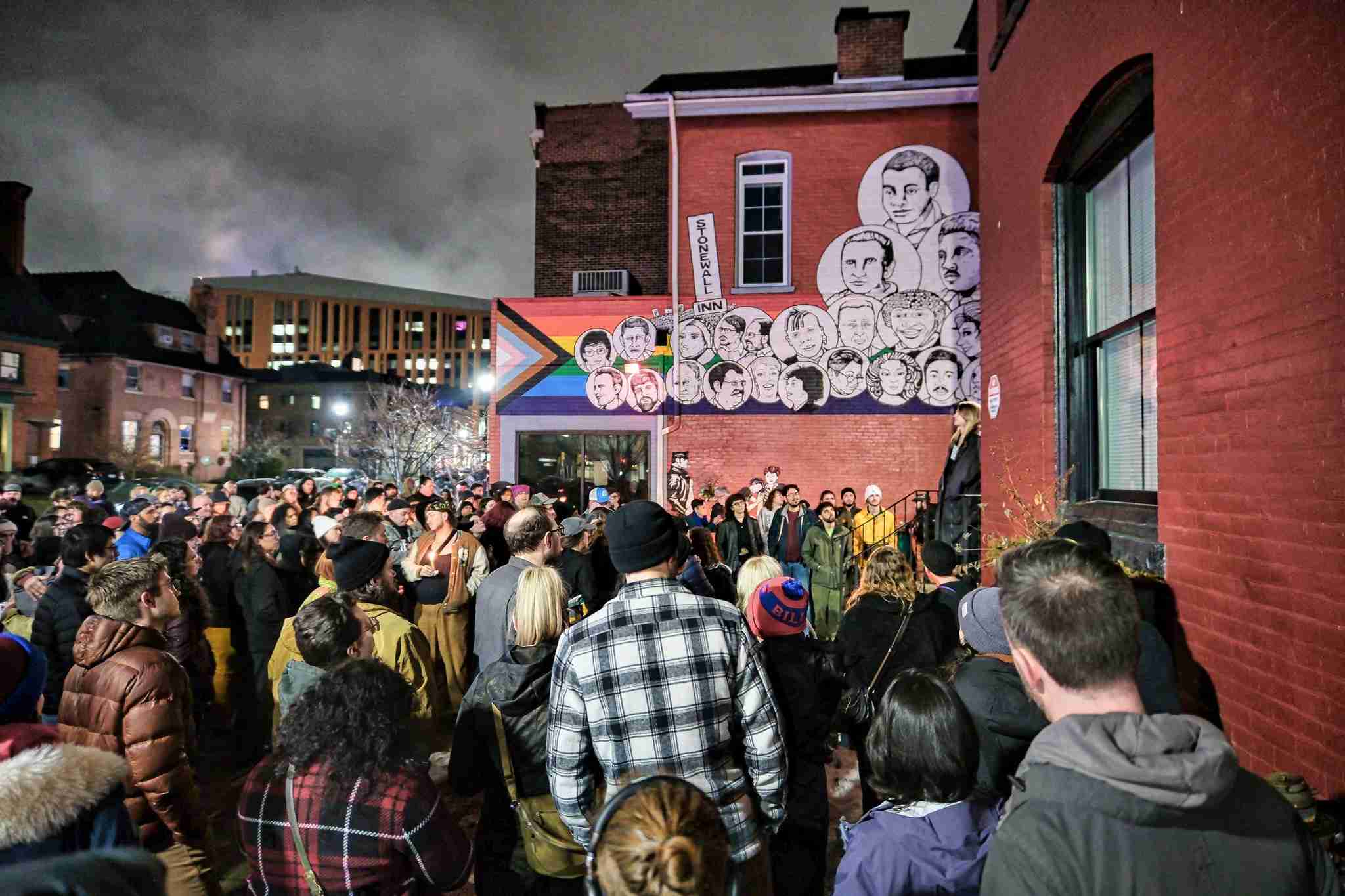
Perhaps the most enduring aspect of Mickey Harmon’s impact is his role as a visual historian for Buffalo’s LGBTQ+ community. In collaboration with the Madeline Davis LGBTQ Historical Collection at SUNY Buffalo State, Harmon has used his art to bring "invisible" histories to life. Before his involvement, much of this history was confined to text-heavy archives or oral histories that lacked a visual entry point for the general public.
Harmon’s work on projects like the "Living Queer History" series transformed archival research into vibrant, accessible comics and illustrations. By visualizing the locations of defunct gay bars, the protests of early activists, and the daily lives of queer Buffalonians from the mid-20th century, he effectively reclaimed the city's streets for these marginalized groups. This work did more than just decorate; it performed a civic service by validating the experiences of a community that had been systematically erased from official city histories.
This intersection of art and activism has set a new standard for how Buffalo institutions engage with artists. It moved the needle from commissioning art for "beautification" toward commissioning art for "reconciliation" and "education." The success of these projects encouraged other local organizations, such as the Buffalo History Museum, to adopt similar narrative-driven artistic approaches to reach diverse audiences.
Muralism and the Rebirth of Buffalo’s Streetscape
While his archival work is intellectually profound, Harmon’s most visible impact is found on the brick and mortar of Buffalo’s neighborhoods. As a central figure in the city’s mural boom of the late 2010s and early 2020s, Harmon helped pivot the city’s public art strategy toward local storytelling.
His murals, such as those found on Hertel Avenue and within the Buffalo Zoo, are characterized by their integration with their environment. Unlike generic street art that could exist in any city, Harmon’s murals are site-specific and hyper-local. They often feature local flora, fauna, and historical figures, creating a sense of place that resonates with residents.
Key contributions to the mural scene include:
- Neighborhood Identity: By placing high-quality art in commercial corridors like Allentown and North Buffalo, Harmon helped drive foot traffic and supported the economic revitalization of small business districts.
- Scale and Accessibility: He demonstrated that large-scale public art could be sophisticated and detailed, rather than just bright and abstract. This encouraged developers to see walls as canvases for community narratives.
- Collaborative Practice: Harmon frequently worked with other artists and community stakeholders, establishing a model for public art that is democratic rather than dictatorial.
Commercial Synergy and the Branding of a City
Beyond the fine art and non-profit sectors, Mickey Harmon’s impact extends into the commercial fabric of Buffalo. He redefined the relationship between local artists and the "small business" economy. In the past, many businesses relied on stock imagery or generic branding. Harmon provided an alternative: a visual identity that felt authentic to Buffalo.
His work with Community Beer Works, Buffalo Spree, and various local festivals showed that an artist’s personal brand could enhance a commercial brand. By 2026, this "artist-led branding" has become the gold standard in Buffalo. Small businesses now actively seek out illustrators to create bespoke labels, posters, and interior art that tells a story. Harmon’s success proved that an artist could maintain their integrity while being a prolific commercial force, providing a blueprint for sustainable artistic careers in a mid-sized city.
| Aspect of Impact | Primary Contribution | Long-term Effect (2026) |
|---|---|---|
| Visual Identity | Introduced "Whimsical-Macabre" graphic style. | Defined the "New Buffalo" aesthetic for a generation. |
| Social Activism | Visualized the Madeline Davis LGBTQ Collection. | Mainstreamed queer history in public discourse. |
| Public Art | Large-scale site-specific murals (Hertel, Allen St). | Shifted mural focus from abstract to narrative-driven. |
| Economic | Commercial branding for local breweries and media. | Normalized artist-business partnerships as a growth model. |
| Institutional | Collaborative projects with museums and archives. | Integrated contemporary art into historical preservation. |
Mentorship and the Future of the Buffalo Scene
As we look at the Buffalo art scene in 2026, Harmon’s influence is also felt through his mentorship and his role in fostering a collaborative environment. He has consistently used his platform to highlight emerging artists, particularly those from the queer and BIPOC communities. By sharing technical skills—such as navigating the transition from traditional ink to digital tablets—and business acumen, he has helped build a more resilient creative class.
The "Mickey Harmon effect" is visible in the way Buffalo artists now organize. There is a greater emphasis on collective action, pop-up markets, and self-publishing (zines and independent comics). Harmon’s involvement in the Pine Hill series and other collaborative publications showed that artists didn't need to wait for a New York City gallery’s approval; they could build their own ecosystems within the Queen City.
Addressing the "Rust Belt Noir" Narrative
Harmon’s work has also been instrumental in refining the "Rust Belt Noir" narrative. Buffalo often struggles with its identity—caught between its gilded age past and its industrial decline. Harmon’s art navigates this tension by embracing the "decay" as a source of mystery and beauty. His depictions of the city’s Victorian architecture often include elements of the supernatural or the surreal, suggesting that Buffalo is a place where the past is never truly gone, but rather coexists with the present in a strange, beautiful harmony.
This philosophical shift has impacted how the city is marketed to tourists and potential residents. Instead of hiding the city’s eccentricities, Harmon’s work celebrates them, making Buffalo appear as a vibrant, creative hub for those who appreciate character over polish.
Frequently Asked Questions
How did Mickey Harmon influence the LGBTQ+ community in Buffalo?
Harmon influenced the community by providing a visual language for its history. Through his work with the Madeline Davis archives, he turned hidden histories into public art and accessible illustrations, fostering a sense of pride and visibility for LGBTQ+ residents across generations.
What is the "whimsical-macabre" style?
It is an artistic approach that blends playful, cartoon-like illustrations with darker, gothic, or surreal themes. In Harmon’s case, this often involves detailed line work that captures the grit and mystery of Buffalo’s urban and historical landscapes.
Where can I see Mickey Harmon’s murals in Buffalo?
As of 2026, his major murals are located on Hertel Avenue, in the Allentown neighborhood, and at the Buffalo Zoo. His smaller-scale works and branding can be seen on the packaging of various local craft breweries and in the pages of Buffalo Spree magazine.
Has Mickey Harmon’s work won any awards?
Yes, throughout his career, Harmon has been recognized by local arts councils and historical societies for his contributions to community storytelling and public art, including accolades for his work in preserving Buffalo’s queer heritage.
How does Mickey Harmon’s work impact the local economy?
His work impacts the economy by increasing the "cultural capital" of neighborhoods, which drives tourism and supports local businesses. His branding work also helps small Buffalo companies differentiate themselves in a crowded market through unique, localized visual identities.
Final Recommendation for Art Enthusiasts
For those looking to engage with Mickey Harmon’s impact firsthand, the best next step is to participate in a walking tour of Buffalo’s murals or visit the Buffalo History Museum’s rotating exhibits featuring local illustrators. Observing his work in situ provides the necessary context to understand how his art breathes life into the city’s architectural bones. To support the continued growth of the scene he helped build, consider purchasing work directly from local artist collectives or independent bookstores that stock Buffalo-centric zines and graphic novels.
Image Gallery