Understanding the Reality of a Typical Life Insurance Death Benefit
The reality of a typical life insurance death benefit is that while it serves as a tax-free financial safety net for beneficiaries, the actual payout often differs from the policy’s face value due to loans, riders, or administrative ad...
The reality of a typical life insurance death benefit is that while it serves as a tax-free financial safety net for beneficiaries, the actual payout often differs from the policy’s face value due to loans, riders, or administrative adjustments. Processing typically requires 30 to 60 days, provided there are no contestability issues or misrepresentations.
Contents
While many policyholders view life insurance as a simple contract—pay premiums, and the insurer pays a fixed sum upon death—the mechanical reality is far more nuanced. By 2026, the landscape of claim settlements has become more digitized, yet the fundamental legal and financial hurdles remain consistent. Understanding these realities ensures that beneficiaries are not caught off guard during an already difficult period of loss.
The Discrepancy Between Face Value and Actual Payout
The most common misconception regarding a death benefit is that the "face amount" listed on the policy's first page is the exact amount the beneficiary will receive. In practice, the final check issued by the insurance company is the result of several additions and subtractions.
Deductions from the Death Benefit
Several factors can reduce the final payout. If the policyholder took out a loan against the cash value of a permanent life insurance policy and did not repay it before death, the outstanding balance—plus accrued interest—is deducted from the death benefit. Similarly, if the insured passed away during a "grace period" while a premium was overdue, the insurer will deduct that unpaid premium from the total payout.
Additions to the Benefit
Conversely, some policies may pay out more than the face value. This occurs most frequently in "participating" whole life policies where dividends were used to purchase "paid-up additions." These are essentially mini-policies that increase the total death benefit over time. Additionally, if the policy has a "Double Indemnity" or Accidental Death Benefit rider, the payout could be significantly higher if the cause of death meets specific accidental criteria.
The Claims Process: Timelines and Requirements
In 2026, many insurers have streamlined the claims process through online portals, but the requirement for "proof of death" remains the primary bottleneck. The reality is that a death benefit is not triggered automatically; it requires active participation from the beneficiaries.
The standard requirement for any claim is a certified copy of the death certificate. In cases where the cause of death is under investigation (such as an accident or homicide), the insurer may wait for a completed coroner's report before processing the claim. Once all documentation is received, most state regulations in the U.S. require insurers to pay out within 30 to 60 days. Delaying beyond this period often requires the insurer to pay interest on the benefit amount, a protection overseen by the National Association of Insurance Commissioners (NAIC).
Common Documentation Requirements
- Official Claim Form: Completed by the named beneficiary.
- Certified Death Certificate: Often required to show the "cause and manner" of death.
- The Original Policy Document: While many companies no longer require the physical paper policy, it is helpful for verification.
- Beneficiary Identification: Verification of the claimant’s identity to prevent fraudulent payouts.
The Contestability Period and Material Misrepresentation
One of the most sobering realities of life insurance is the "contestability period," which typically lasts for the first two years of a policy's life. During this window, if the insured dies, the insurance company has the legal right to investigate the original application for "material misrepresentation."
If the insurer finds that the policyholder lied about a medical condition, tobacco use, or a high-risk hobby (like skydiving), they can deny the claim entirely. In such cases, the reality is that the insurer usually refunds the premiums paid to the beneficiary, but the death benefit itself is voided. Even after 2026's advancements in medical data sharing, the burden of honesty remains with the applicant at the time of inception.
The Suicide Clause
Similar to the contestability period, most policies contain a suicide clause. If the insured takes their own life within the first two years of the policy, the death benefit is generally not paid. Instead, the premiums are returned to the beneficiaries. After the two-year mark, deaths by suicide are typically covered, though policies vary by state and carrier.
Tax Realities: When the Government Intervenes
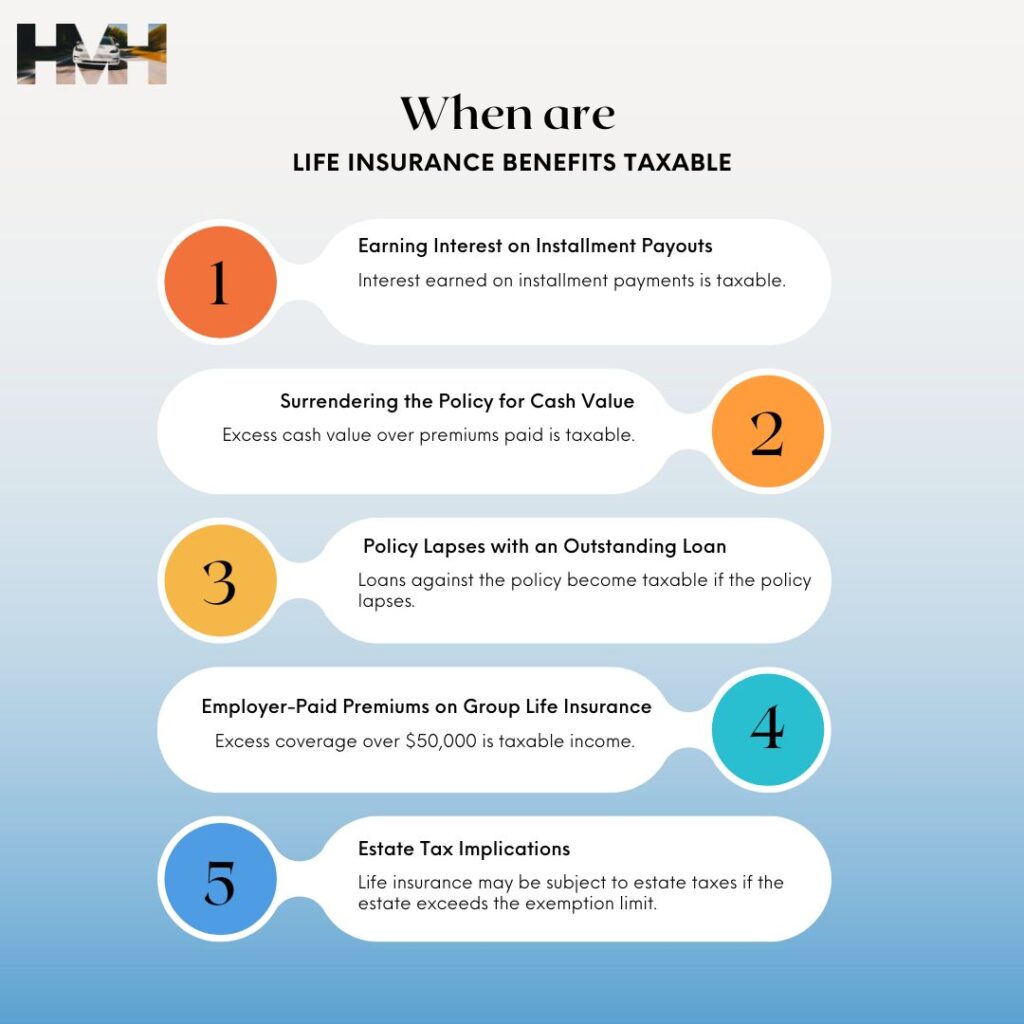
Under IRS Revenue Code Section 101(a)(1), life insurance death benefits are generally received income tax-free by the beneficiary. However, there are specific scenarios where taxes can erode the value of the benefit.
Estate Taxes
If the deceased owned the policy at the time of death, the value of the death benefit is included in their gross estate. In 2026, for high-net-worth individuals, this could trigger federal or state estate taxes if the total estate exceeds the prevailing exemption limits. To avoid this, many individuals use an Irrevocable Life Insurance Trust (ILIT) to "own" the policy, effectively removing it from their taxable estate.
Interest Earned on Payouts
If a beneficiary chooses to leave the death benefit with the insurance company to earn interest—or if there is a delay in payment that results in interest being added—that interest portion is considered taxable income. The principal remains tax-free, but the growth is not.
Settlement Options and Payout Structures
Beneficiaries often assume they must take the death benefit as a single lump-sum check. While this is the most common choice, the reality is that insurers offer several settlement options that can affect how the money is managed.
| Settlement Option | How It Works | Best Used For |
|---|---|---|
| Lump Sum | Entire benefit paid at once via check or direct deposit. | Immediate needs: debt payoff, funeral costs, or large investments. |
| Interest Income | Insurer holds the principal and pays interest to the beneficiary. | Beneficiaries who don't need the money yet but want a safe return. |
| Fixed Period | Benefit and interest are paid out over a set number of years. | Providing a steady income for a specific timeframe (e.g., until a child turns 18). |
| Life Income | Beneficiary receives a guaranteed payment for the rest of their life. | Replacing the deceased's salary for a surviving spouse. |
| Retained Asset Account | Funds are placed in a checkbook-style account held by the insurer. | Flexibility for beneficiaries who need time to decide on long-term plans. |
The Impact of Accelerated Death Benefits
By 2026, many "modern" policies include Living Benefits or Accelerated Death Benefit (ADB) riders as standard features. These allow a policyholder to access a portion of the death benefit while still alive if they are diagnosed with a terminal or chronic illness.
The reality here is a trade-off. Any dollar accessed through an ADB rider is deducted from the final amount the beneficiaries receive. Furthermore, these payments may be subject to administrative fees or "actuarial discounting," meaning the amount received while alive might be slightly less than the amount reduced from the future death benefit. It is a vital tool for medical expenses, but it fundamentally alters the "legacy" aspect of the policy.
Frequently Asked Questions
What happens if the beneficiary dies before the insured?
If a primary beneficiary predeceases the insured and no contingent beneficiary is listed, the death benefit typically defaults to the insured's estate. This reality can lead to the funds being tied up in probate court, subjected to creditors, and potentially taxed. It is critical to keep beneficiary designations updated.
Can creditors take a life insurance death benefit?
In many jurisdictions, life insurance death benefits are protected from the deceased's creditors. However, once the money is in the hands of the beneficiary, it is generally treated like any other asset and can be seized by the beneficiary’s creditors unless it is held within a protective trust.
How long does a beneficiary have to claim the benefit?
There is no universal "expiration date" for a life insurance claim, but it is best to file as soon as possible. If a policy remains unclaimed for several years and the insurer cannot locate the beneficiaries, the funds are eventually turned over to the state’s unclaimed property department (escheatment).
Is the death benefit affected by the cause of death?
Generally, no, unless the death occurs during the contestability period or falls under a specific exclusion like a "war clause" or "aviation exclusion" (for private pilots). For most standard policies in 2026, deaths by natural causes, illnesses (including pandemics), and most accidents are covered in full.
Does the death benefit change if I stop paying premiums?
If you have a term policy and stop paying, the coverage lapses and there is no death benefit. If you have permanent insurance, the "reality" is more complex; the policy may use its cash value to pay premiums (Automatic Premium Loan), or it may convert to a "reduced paid-up" status with a much smaller death benefit.
Practical Recommendations
To ensure the reality of your life insurance death benefit aligns with your expectations, take the following steps:
- Conduct an Annual Review: Check your policy's "annual report" to see how loans or interest might be affecting the net death benefit.
- Verify Beneficiaries: Ensure your primary and contingent beneficiaries are correctly identified with current contact information.
- Organize Documentation: Store a copy of the policy and a list of the insurer’s contact information in a place accessible to your family.
- Disclose the Policy: Inform your beneficiaries that the policy exists. Millions of dollars go unclaimed every year simply because families were unaware that a policy was in force.
- Consult a Tax Professional: If your total estate is nearing federal or state exemption limits, discuss ownership structures like ILITs to protect the death benefit from estate taxes.
Image Gallery