Mastering AP Gov Past FRQs for the 2026 Exam Administration
Navigating AP Government past Free-Response Questions (FRQs) is the most effective study strategy for mastering the exam format, understanding historical scoring rubrics, and securing a top score on test day. This guide details how to...
Navigating AP Government past Free-Response Questions (FRQs) is the most effective study strategy for mastering the exam format, understanding historical scoring rubrics, and securing a top score on test day. This guide details how to leverage official College Board prompts, apply structural writing formulas, and avoid common traps to maximize your performance.
Contents
Understanding the Structure of AP U.S. Government FRQs
The Advanced Placement United States Government and Politics exam features four distinct free-response questions, each designed to test specific analytical, legal, and communicative skills. Recognizing the structural layout of these prompts is the first step toward efficient preparation using past materials.
The exam format requires students to complete all four FRQs within a strict 100-minute window, demanding both deep conceptual knowledge and disciplined time management. The questions evaluate your ability to connect foundational documents, analyze quantitative data, apply Supreme Court rulings, and construct a persuasive argument essay.
- Question 1: The Concept Application: Requires you to analyze a political scenario, scenario-based event, or hypothetical situation and apply course concepts, processes, or policies.
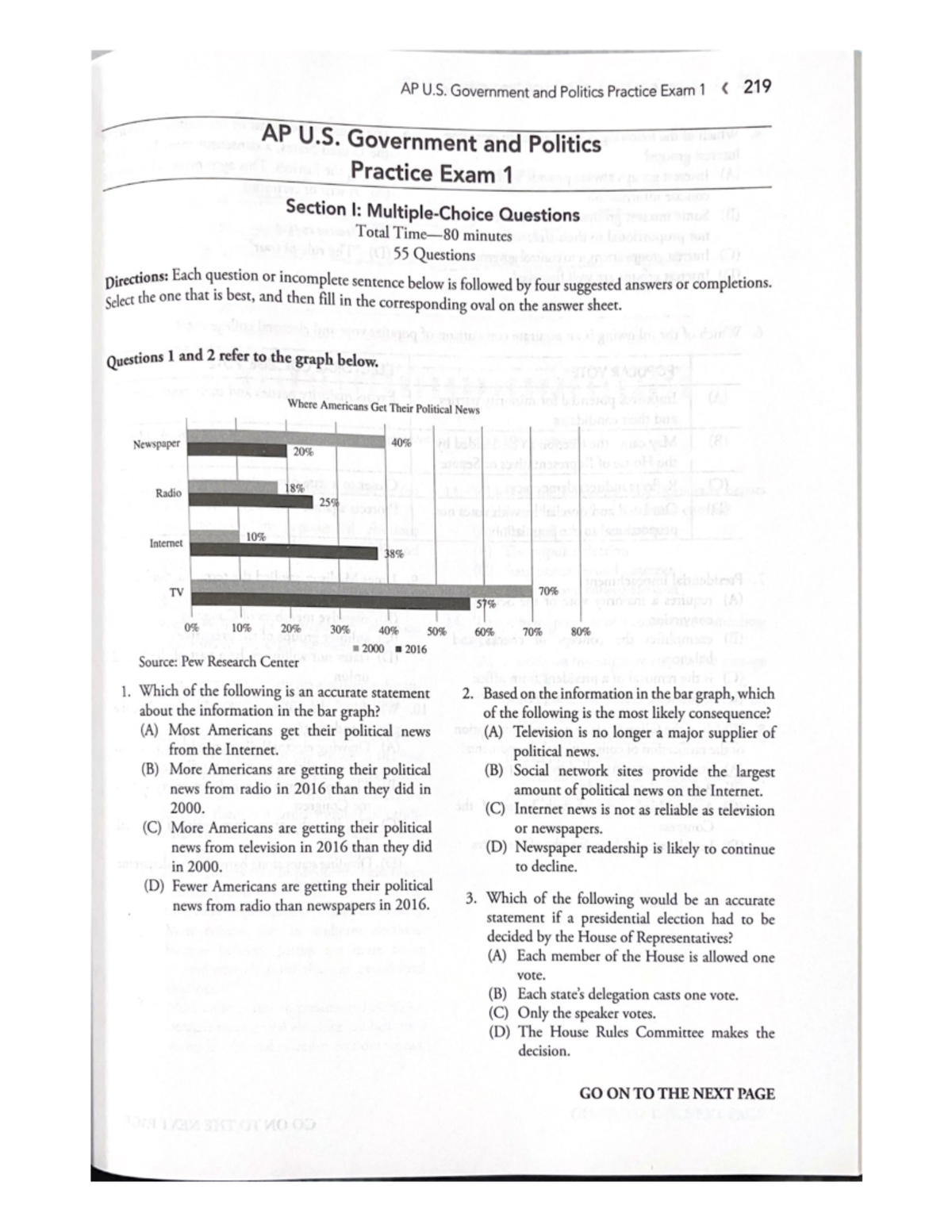
- Question 2: Quantitative Analysis: Presents visual data such as bar charts, line graphs, or tables derived from polling data, election outcomes, or government budgets, requiring you to analyze trends and explain political implications.
- Question 3: SCOTUS Comparison: Asks you to compare a non-required Supreme Court case from a provided summary with a foundational, required Supreme Court case, explaining how a constitutional principle applies to both.
- Question 4: Argument Essay: Requires you to construct an evidence-based argumentative essay that defends a thesis using at least one required foundational document and specific factual evidence.
Where to Find Official College Board AP Gov Past FRQs
Accessing authentic, officially released past FRQs ensures that your practice aligns directly with the standards enforced by actual AP exam graders. The College Board makes years of historical prompts publicly available alongside scoring guidelines and sample student responses.
The primary and most reliable repository for these materials is the official AP Central website managed by the College Board. Every exam administration from recent years, including scoring rubrics (which detail exactly how points are earned) and reader commentaries, can be retrieved without cost.
| Resource Source | Document Type | Best Used For |
|---|---|---|
| AP Central Question Bank | Individual FRQs by Topic | Targeted practice on specific units like Federalism or Civil Liberties |
| Released Exam PDFs (2019-2025) | Full 4-Question Sets | Practicing under authentic 100-minute time constraints |
| Scoring Guidelines (Rubrics) | Official Point Allocation Guides | Self-grading and understanding grader expectations |
| Sample Student Responses | Annotated Student Answers with Scores | Identifying the difference between high-scoring and low-scoring essays |
A Step-by-Step Framework for Practicing with Past FRQs
Practicing past FRQs haphazardly yields limited improvements. To maximize your study sessions, implement a structured, repetitive workflow that simulates test conditions and forces active error correction.
- Timed Execution: Set a timer for the recommended pacing (roughly 20 minutes for Questions 1, 2, and 3; 40 minutes for Question 4) and write your answers without looking at notes.
- Strict Rubric Grading: Use the official College Board scoring guidelines to evaluate your response. Be ruthless; if you did not explicitly name the required constitutional clause or link the evidence to the prompt, do not award yourself the point.
- Error Categorization: Track whether you missed points due to a content knowledge gap, a misinterpretation of the prompt's task verbs (e.g., confusing "describe" with "explain"), or poor time management.
- Targeted Review: Read through the annotated sample student responses to see how high-scoring writers structured their arguments and incorporated required foundational documents.
Deep Dive into Specific FRQ Types and Common Pitfalls
Each FRQ type demands a unique cognitive approach. Mastering the specific task verbs and structural expectations of each question prevents avoidable point losses.
Mastering the Concept Application (Question 1)
This prompt tests your ability to take a textbook definition and apply it to a real-world scenario. Task verbs such as "describe," "explain," or "develop" dictate the depth required.
When a prompt asks you to describe, you must provide the characteristics or details of a political institution, behavior, or process. When it asks you to explain, you must provide how or why something occurs, typically establishing a cause-and-effect relationship. Avoid writing vague generalities; tie your response directly to the specific actors and institutions mentioned in the prompt's scenario.
Decoding Quantitative Analysis (Question 2)
Quantitative prompts test your statistical literacy within a political science context. You will be asked to identify a trend from a chart or graph, describe data, and explain how that data relates to a political institution, process, or behavior.
A frequent error is misreading the axes or misinterpreting the direction of a trend line. Always spend the first two minutes analyzing the labels, units of measurement, and source notes of the provided graphic before attempting to write your response.
Conquering the SCOTUS Comparison (Question 3)
The SCOTUS comparison requires precise knowledge of the 15 required foundational Supreme Court cases. You must be able to state the core facts, constitutional issue, and holding of required cases like McCulloch v. Maryland, Citizens United v. FEC, or Tinker v. Des Moines.
Your response must compare the provided non-required case to the required case by pointing out a specific similarity or difference regarding constitutional clauses, amendments, or legal doctrines. Memorize the specific amendments and clauses (such as the Establishment Clause, Equal Protection Clause, or Necessary and Proper Clause) associated with every required case.
Structuring the Argument Essay (Question 4)
The argument essay is the most heavily weighted FRQ. A successful essay follows a precise structural formula:
- The Thesis Statement: Must be defensible, take a clear position, and establish a line of reasoning in the introductory paragraph.
- Evidence Paragraphs: Must use at least one required foundational document from the official College Board list and integrate specific, relevant factual information from course concepts.
- The Concession: Briefly acknowledge and refute an alternative perspective or opposing viewpoint to demonstrate sophisticated political analysis.
Comparison of FRQ Strategies and Time Allocations
| FRQ Number | Recommended Time | Core Task Verbs | Essential Preparation Focus |
|---|---|---|---|
| Question 1 (Concept App) | 20 Minutes | Identify, Describe, Explain | Memorizing core political concepts, theories, and institutional behaviors |
| Question 2 (Quantitative) | 20 Minutes | Describe, Compare, Explain | Practicing data literacy, graph interpretation, and trend analysis |
| Question 3 (SCOTUS) | 20 Minutes | Identify, Compare, Explain | Mastering the 15 required Supreme Court cases and constitutional clauses |
| Question 4 (Argument) | 40 Minutes | Articulate, Defend, Refute | Practicing thesis generation, document integration, and essay outlining |
Troubleshooting Common FRQ Mistakes
- Failing to Name Required Documents: Forgetting to explicitly name and use a required foundational document in the argument essay caps your maximum possible score. Always keep a mental checklist of the required documents, such as Federalist No. 10, Brutus 1, and the Declaration of Independence.
- Overwriting Introductions and Conclusions: FRQs are not traditional literature essays. Do not write creative hooks or summary conclusions. Dive straight into answering the prompt's specific lettered parts (Part A, Part B, Part C) to save time and ensure graders can easily award points.
- Ignoring Task Verbs: Writing a descriptive paragraph when the prompt asks for an explanation will result in zero points for that section. Train yourself to underline task verbs during your initial reading of the exam.
Practical Recommendations for Exam Success
To maximize your score on the AP Government exam, integrate past FRQs into your weekly study routine starting months before the exam administration. Begin by untimed practice to understand rubric language, then transition to strict, timed conditions as the test date approaches. Combine this FRQ practice with multiple-choice question reviews to solidify your content mastery across all five foundational course units.
Image Gallery