How to Generate and Interpret an Astrology Cafe Free Birth Chart
Generating a free birth chart on Cafe Astrology requires your exact birth date, birth time, and birth city. The platform calculates your natal chart using astronomical ephemeris data to map the positions of the Sun, Moon, planets, and...
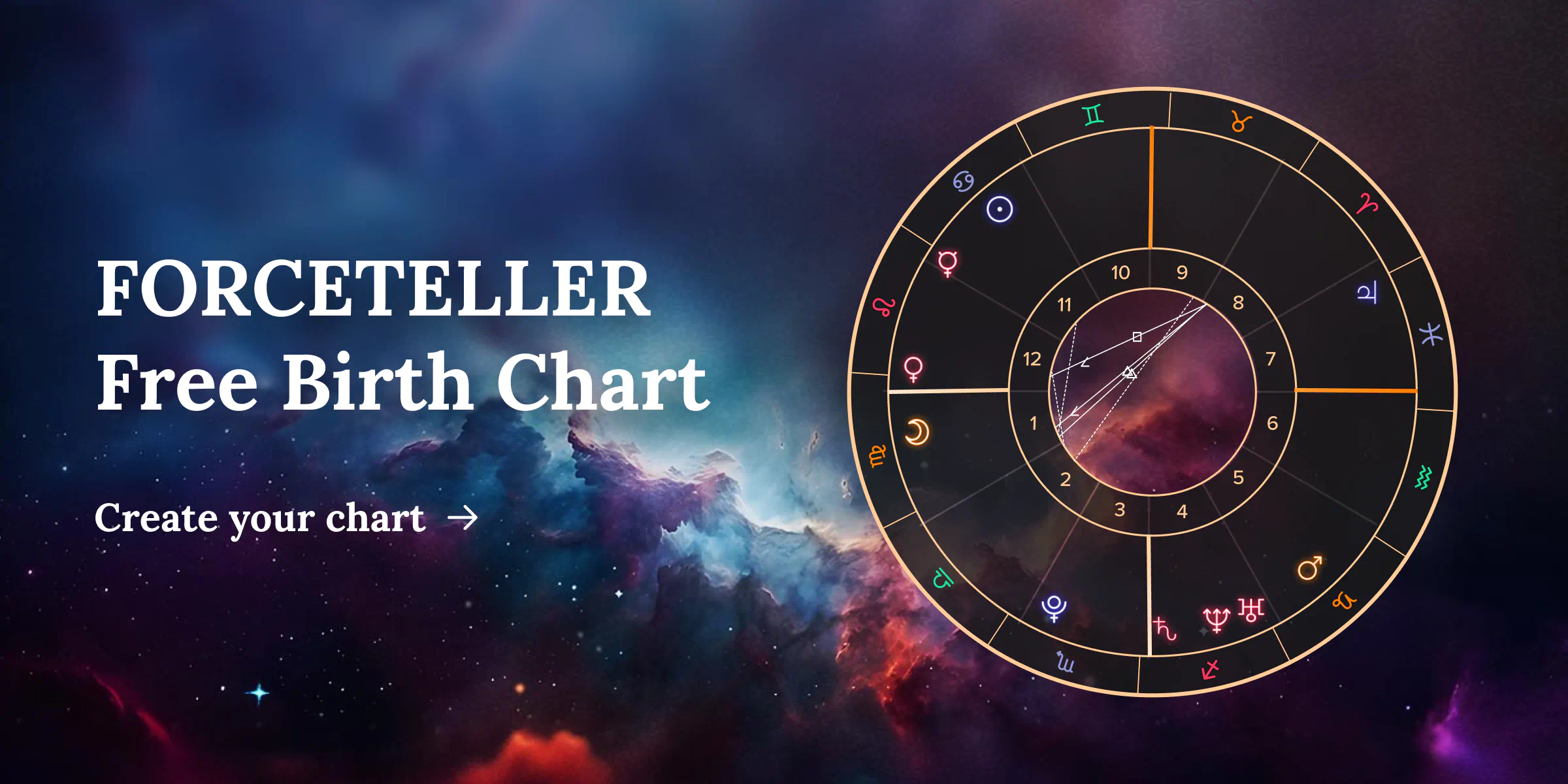
Generating a free birth chart on Cafe Astrology requires your exact birth date, birth time, and birth city. The platform calculates your natal chart using astronomical ephemeris data to map the positions of the Sun, Moon, planets, and celestial angles at the precise moment of your birth, delivering an instant full-wheel diagram and detailed written interpretation.
Contents
Core Inputs Required for High-Accuracy Natal Calculations
An astrological birth chart, or natal chart, functions as a celestial snapshot of the sky taken from the specific geographical coordinates of your birth location. To generate an accurate natal report using Cafe Astrology's free chart tools, three primary data points are required:
- Exact Date of Birth: Day, month, and year establish the fundamental astronomical positions of the slower-moving outer planets (Jupiter, Saturn, Uranus, Neptune, and Pluto) as well as the Sun.
- Exact Time of Birth: Recorded to the exact minute whenever possible. The exact time fixes the local horizon, establishing the Ascendant (Rising Sign), the Midheaven (MC), and the boundaries of the twelve astrological houses. Because the Earth rotates 360 degrees every 24 hours, the Ascendant changes signs approximately every two hours, and house cusps shift by one degree every four minutes.
- Birth City and Country: Geographical coordinates (latitude and longitude) determine the exact angle of the local sky at the moment of birth. Cafe Astrology utilizes an automated atlas lookup system that converts location names into precise geographical coordinates and automatically adjusts for historical Daylight Saving Time (DST) regulations applicable to the specified year and region.
Crucial Consideration for Unknown Birth TimesIf an exact birth time is unavailable on an official birth certificate, selecting the unknown time option on Cafe Astrology generates a Solar Chart with the Sun placed on the Ascendant at 0 degrees. While this provides accurate sign positions for the planets, house placements and angle-dependent sensitive points like the Ascendant and Midheaven cannot be determined without rectified or confirmed timing.
Deconstructing the Cafe Astrology Free Birth Chart Report
The Cafe Astrology report breaks down complex astronomical data into organized, readable components. Understanding how these elements interact allows you to move beyond surface-level sun-sign astrology into comprehensive natal analysis.
The Big Three: Sun, Moon, and Ascendant
- The Sun Sign: Represents core identity, ego structure, vital life energy, and overarching purpose. It indicates the primary motivation driving an individual's conscious personality.
- The Moon Sign: Reflects emotional architecture, subconscious instincts, felt needs, personal habits, and responses to stress. It describes how one processes feelings and seeks psychological security.
- The Ascendant (Rising Sign): Represents the physical appearance, initial outward demeanor, perspective on the environment, and the filter through which life experience is initially processed. It establishes the cusp of the First House.
Planetary Placements and Esoteric Significance
Each celestial body in the natal chart governs specific psychological functions and archetypal energies:
- Mercury: Communication style, intellectual processing, learning patterns, and technical analysis.
- Venus: Relational values, aesthetic taste, financial instincts, personal boundaries, and attachment mechanisms.
- Mars: Assertiveness, physical drive, motivation, boundary enforcement, and conflict resolution style.
- Jupiter: Belief systems, expansion, higher education, personal philosophy, and areas of inherent optimism.
- Saturn: Structure, discipline, long-term commitment, perceived limitations, duty, and developmental boundary challenges.
- Outer Planets (Uranus, Neptune, Pluto): Transpersonal drivers, generational cultural shifts, psychological transformation, intuition, and paradigm shifts.
Technical Frameworks: House Systems and Orbs
When generating a free birth chart on Cafe Astrology, the platform defaults to standard astronomical calculation systems. Understanding these parameters helps clarify why different astrology websites might display slight variations in house placements or aspect listings.
[Note: Cafe Astrology utilizes the Placidus quadrant house system by default, which divides the celestial sphere based on equal intervals of time rather than spatial degrees.]
Placidus vs. Whole Sign House Systems
The calculation method chosen alters how the 360-degree zodiacal circle is divided into twelve sectors (houses):
- Placidus House System: The default system on Cafe Astrology. Placidus is a time-proportional quadrant system that calculates house sizes based on the time it takes for degree points on the ecliptic to rise from the horizon to the meridian. In extreme northern or southern latitudes, Placidus produces intercepted signs (where an entire zodiac sign is contained within a single house without touching a cusp).
- Whole Sign House System: An ancient Hellenistic system where the entire sign containing the Ascendant becomes the First House (0° to 30°), and every subsequent sign occupies an entire 30-degree house sequentially. This system removes interceptions and simplifies house ownership.
Aspect Orbs and Angular Metrics
Aspects represent geometric angles formed between planets along the ecliptic. Cafe Astrology applies calibrated orb limits—the allowable margin of deviation from an exact geometric angle—to calculate active aspectual relationships:
- Conjunction (0°): Blending and intensification of two planetary energies (Standard Orb: 8°–10°).
- Opposition (180°): Polarization, relational dynamic, awareness through contrast, and tension (Standard Orb: 8°–10°).
- Trine (120°): Dynamic harmony, innate talents, smooth energy flow, and ease of expression (Standard Orb: 6°–8°).
- Square (90°): Internal friction, developmental hurdles, action-oriented tension, and growth catalyst (Standard Orb: 6°–8°).
- Sextile (60°): Opportunities, intellectual synthesis, supportive alignment requiring active engagement (Standard Orb: 4°–6°).
Comparative Matrix: Popular Free Birth Chart Calculators
The table below contrasts the features, calculation engines, and default settings of major online chart calculation platforms:
| Platform | Ephemeris Engine | Default House System | Customization Options | Primary Interface Output | Target User Level |
|---|---|---|---|---|---|
| Cafe Astrology | Swiss Ephemeris Standard | Placidus | Moderate (Aspect orbs, node settings) | Detailed written narrative report + full visual wheel | Beginner to Intermediate |
| Astro.com (Astrodienst) | Swiss Ephemeris Advanced | Placidus (User selectable) | Extensive (20+ house systems, custom aspect orbs) | High-precision vector wheel graphic + analytical tables | Advanced to Professional |
| Astro-Charts | Standard Astronomical Data | Placidus | Limited | Visual pattern analysis (Grand Trines, T-Squares, Yods) | Visual / Beginner |
| Astro-Seek | Swiss Ephemeris Standard | Placidus & Whole Sign easily toggled | High (Traditional, Vedic, Progressive tools) | Interactive wheel, transit calendars, detailed tables | Intermediate to Advanced |
| TimePassages | Proprietary Software Engine | Placidus | Moderate | Categorized interpretation lists + color wheels | Beginner |
Step-by-Step Guide to Reading Your Cafe Astrology Report
Generating your report is simple; synthesis requires systematic analysis. Follow this practical framework to extract meaningful insights from your generated birth chart.
Step 1: Identify the Angles and Quadrants
Locate the horizontal axis (Ascendant/Descendant) and the vertical axis (Midheaven/Imum Coeli):
- Ascendant (AC): The Eastern horizon point marking self-expression, vitality, and physical approach.
- Descendant (DC): The Western horizon point marking one-on-one relationships and external partnerships.
- Midheaven (MC): The highest point of the ecliptic, representing public reputation, career trajectory, and mastery.
- Imum Coeli (IC): The lowest point, representing ancestry, psychological roots, home life, and foundational security.
Step 2: Evaluate Element and Modality Balance
Examine the distribution of planets across the four elements and three modalities in the summary tables provided by Cafe Astrology:
- Elements: Fire (action, enthusiasm), Earth (practicality, physical stability), Air (intellect, communication), Water (emotion, intuition).
- Modalities: Cardinal (initiating action, pioneering), Fixed (sustaining effort, stability), Mutable (adaptability, transition).
A concentration of planets in a single element or modality indicates a dominant personal drive, while a missing element highlights areas where conscious development is beneficial.
Step 3: Analyze House Placements
Examine which houses contain clusters of planets (stelliums, defined as three or more planets in a single house or sign). Planets highlight where your energy concentrates in life experience:
- Angular Houses (1st, 4th, 7th, 10th): Primary life focus, immediate impact, public presence.
- Succedent Houses (2nd, 5th, 8th, 11th): Resource management, personal assets, deep commitments, social integration.
- Cadent Houses (3rd, 6th, 9th, 12th): Learning, practical routines, mental synthesis, spiritual integration.
Step 4: Map Major Planetary Aspects
Review the aspect grid below the chart wheel to identify major geometric connections:
- Focus first on exact aspects (orbs under 2 degrees), as these represent the strongest psychological drivers.
- Differentiate between hard aspects (Squares, Oppositions) that demand resolution and soft aspects (Trines, Sextiles) that represent innate talents.
Common Mistakes When Reading Online Birth Charts
- Mistaking the Sun Sign for the Entire Identity: Focusing solely on the Sun sign ignores crucial nuances introduced by the Moon, Ascendant, planetary ruler, and house placements.
- Ignoring the Chart Ruler: The planet that rules the sign of your Ascendant is your Chart Ruler. Its sign, house placement, and aspects significantly influence the entire chart's orientation.
- Confusing House Cusps with Sign Boundaries: Zodiac signs are fixed 30-degree segments of the ecliptic, whereas house sizes in quadrant systems like Placidus vary based on latitude and time of year.
- Viewing Hard Aspects as Inherently Bad: Squares and oppositions generate dynamic tension, providing the momentum needed for accomplishment, personal growth, and resilience.
- Misinterpreting Retrograde Planets: Natal planets in retrograde (appearing to move backward across the sky) do not indicate a lack of function; rather, their energy is processed internally before expressing outwardly.
Frequently Asked Questions
Is the Cafe Astrology free birth chart accurate?
Yes, Cafe Astrology uses accurate ephemeris algorithms to calculate planetary positions and astronomical points based on your input data. Provided your birth date, precise minute of birth, and location are correct, the resulting chart calculations match professional software standards.
What if I do not know my exact birth time?
If your birth time is unknown, select the unknown time option to generate a Solar Chart. While this places the Sun on the 0° Ascendant and accurately reports planetary signs, it cannot reliably calculate house placements or time-sensitive angles like the Ascendant and Midheaven.
Why does my birth chart look different on another website?
Variations usually stem from different default house systems (such as Placidus versus Whole Sign) or different aspect orb limits. Planetary positions in signs remain consistent across platforms using standard tropical zodiac ephemerides, but house boundaries shift depending on the house calculation model applied.
What is the difference between a tropical chart and a sidereal chart?
Cafe Astrology generates charts using the Tropical Zodiac, which aligns 0° Aries with the Vernal Equinox. Sidereal Astrology (used in Vedic astrology) calculates positions based on the actual astronomical constellations, accounting for the axial precession of the Earth (shifting calculations by approximately 24 degrees).
Can I save or print my birth chart from Cafe Astrology?
Yes, the generated report includes a printable view and direct image files for the chart wheel. You can bookmark the unique URL of your generated report or export the page to PDF format for future reference.
Strategic Recommendations for Deepening Your Chart Analysis
To extract maximum value from your free birth chart reading:
- Verify Official Documentation: Confirm your exact birth time using an official birth certificate or hospital record before analyzing house placements.
- Synthesize the Chart Ruler: Identify your Ascendant sign, locate its ruling planet elsewhere in the chart, and evaluate its house placement to uncover your primary life focus.
- Cross-Reference House Systems: If house placements seem ambiguous in Placidus (especially if you were born at high latitudes), toggle to the Whole Sign house system using a secondary calculator like Astro-Seek to assess structural differences.
- Track Active Transits: Use your baseline natal positions to observe how current planetary movements (transits) activate specific houses and birth planets over time.
Image Gallery