Why Residential Solar Panel Installation in Reston Works
Residential solar panel installation in Reston works because it leverages Virginia’s favorable net metering policies, the 30% federal tax credit, and a high number of peak sun hours. Reston’s unique community design and the Reston Asso...
Residential solar panel installation in Reston works because it leverages Virginia’s favorable net metering policies, the 30% federal tax credit, and a high number of peak sun hours. Reston’s unique community design and the Reston Association’s modernized guidelines further streamline the transition, making solar a high-yield financial investment and a viable environmental solution for Northern Virginia homeowners in 2026.
Contents
The Economic Foundation: Incentives and ROI in 2026
The primary reason solar energy has become a standard feature of the Reston housing market is the robust financial framework supporting it. As of 2026, the economics of solar are driven by three distinct pillars: federal tax credits, state-level performance incentives, and the rising cost of traditional utility power.
The Investment Tax Credit (ITC) remains the most significant driver. Under the current federal guidelines, homeowners can deduct 30% of the total cost of their solar energy system—including equipment, labor, and even battery storage—from their federal income taxes. This credit is not merely a deduction but a dollar-for-dollar reduction in tax liability. For a typical $25,000 installation in Reston, this results in a $7,500 direct saving, significantly lowering the "break-even" point.
Beyond the federal level, Virginia's Solar Renewable Energy Certificates (SRECs) have matured into a reliable secondary income stream. Under the Virginia Clean Economy Act (VCEA), utilities are required to meet specific renewable energy targets. To do this, they purchase SRECs from residential producers. In Reston, a standard 8kW system can generate several SRECs per year, which are then sold on the open market, providing homeowners with annual passive income that helps offset the initial capital outlay.
Finally, the localized inflation of electricity rates in Northern Virginia has shortened the payback period. As Dominion Energy continues to invest in grid modernization and offshore wind, retail rates have trended upward. By "locking in" a fixed cost of power through a solar installation, Reston residents protect themselves against future utility rate hikes, often achieving full ROI within 7 to 9 years.
Geographical and Climatic Advantages of Reston
A common misconception is that Northern Virginia does not receive enough sunlight to justify solar. However, the technical data for Reston tells a different story. Reston receives an average of approximately 4.5 to 4.8 peak sun hours per day. Peak sun hours do not represent the total daylight hours, but rather the intensity of sunlight that equals 1,000 watts of energy per square meter.
Reston’s latitude (approximately 38.9° N) is well-suited for solar harvesting, particularly for south-facing roofs. Even east and west-facing roofs in neighborhoods like North Point or South Lakes can achieve 80-85% of the efficiency of a perfectly southern exposure. Furthermore, solar panels actually perform more efficiently in the cooler, crisp temperatures of a Virginia autumn or spring compared to the extreme heat of the desert southwest, where high temperatures can lead to voltage drops.
The seasonal variance in Reston is managed effectively through Net Metering. In Virginia, Dominion Energy is required to credit solar owners for the excess electricity they send back to the grid during the sunny summer months. These credits are stored in a virtual "energy bank" and can be used to offset electricity costs during the shorter, cloudier days of winter. This year-round balance ensures that the system works efficiently regardless of the month.
Navigating the Reston Association (RA) Guidelines
Reston is a planned community, and most residential properties fall under the jurisdiction of the Reston Association (RA) and its Design Review Board (DRB). In the past, aesthetic concerns were a hurdle for solar adoption, but in 2026, the DRB process is highly standardized and supportive of renewable energy.
The Virginia State Code (Section 67-701) provides significant protections for homeowners seeking solar installations, preventing community associations from outright banning solar panels. The Reston Association has embraced this by creating clear "Design Guidelines for Solar Arrays." These guidelines focus on:
- Low-Profile Mounting: Panels must be installed flush against the roofline to maintain the architectural integrity of the home.
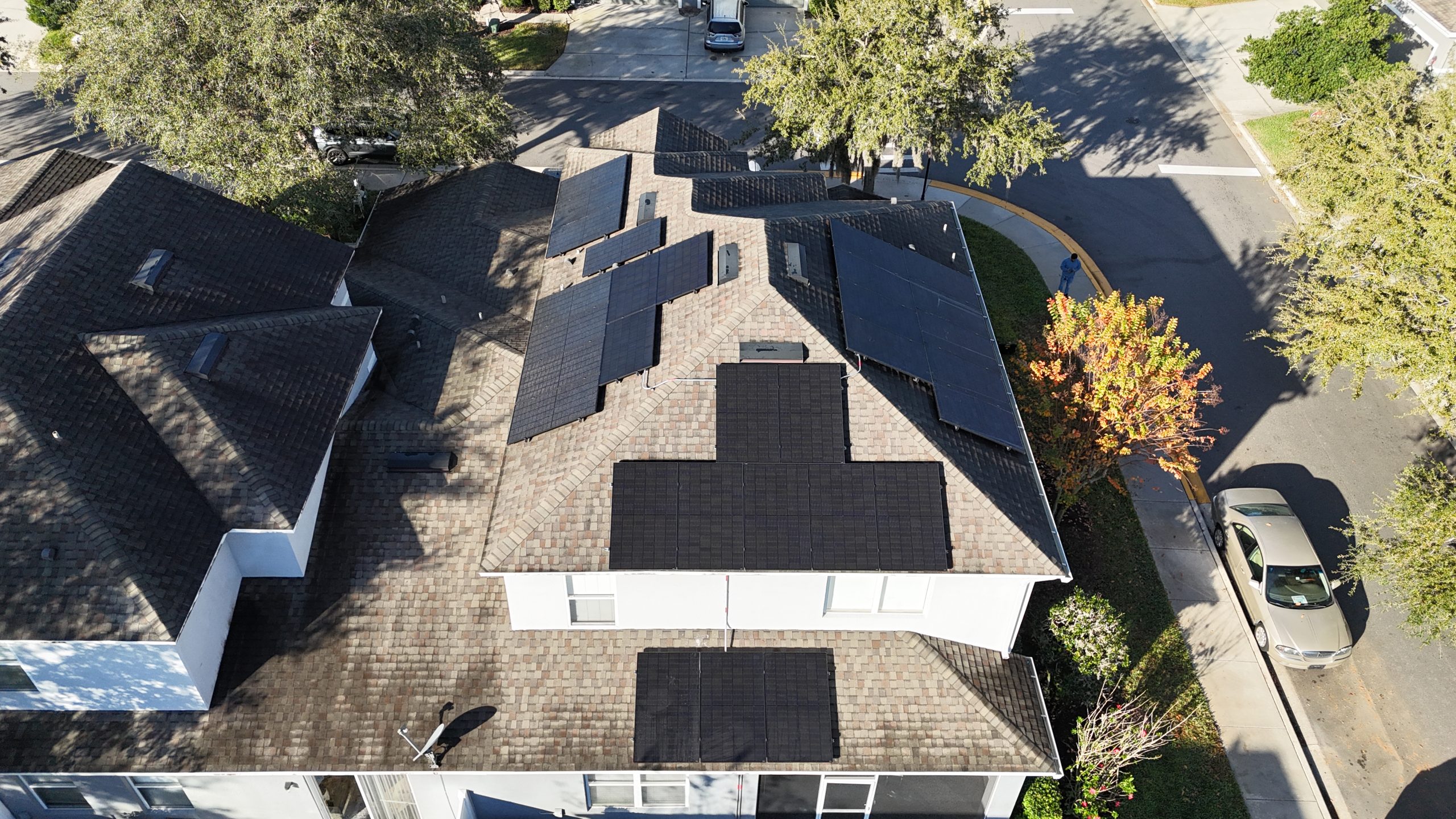
- Color Uniformity: The use of "all-black" or "monocrystalline" panels is preferred to ensure the array blends with dark asphalt shingles common in many Reston clusters.
- Conduit Placement: Guidelines require that electrical conduits be hidden or painted to match the trim or siding of the house.
Because these rules are clearly defined, reputable local installers in the Reston area are well-versed in the application process. Most installers now include the DRB application as part of their standard service package, ensuring that the installation meets both county safety codes and community aesthetic standards.
Technical Specifications: The 2026 Solar Standard
The technology available for Reston homes in 2026 has significantly advanced from the early iterations of solar. The transition from P-type to N-type solar cells (such as TOPCon or Heterojunction technology) has pushed residential panel efficiency toward the 23-25% range.
Modern System Components
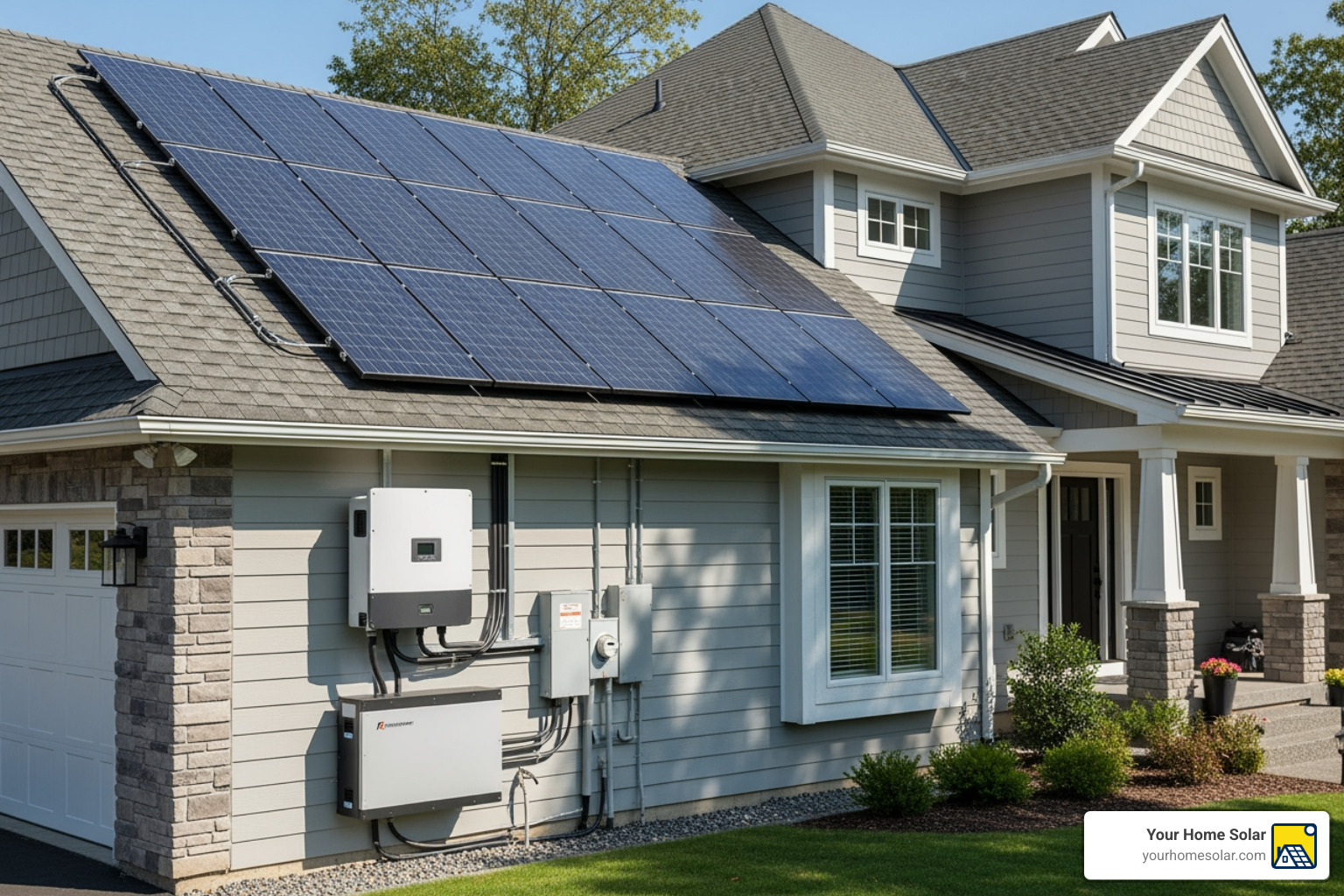
- Microinverters: Unlike older "string" inverters, microinverters are placed under each individual panel. This is crucial for Reston’s wooded lots. If a stray branch from a tall oak tree shades one panel, the rest of the system continues to produce power at 100% capacity.
- Bifacial Panels: While primarily used in ground mounts, some Reston homes with flat roofs or specific architectural overhangs use bifacial modules that capture sunlight on both the front and back of the panel, increasing yield by up to 10%.
- Smart Energy Management: Systems are now integrated with AI-driven software that monitors Reston’s local weather forecasts. If a summer storm is predicted, the system can prioritize charging the home's battery storage to ensure backup power is available if the local grid experiences a flicker.
Comparative Analysis of Solar Implementation in Reston
To understand why this works for different types of residents, it is helpful to look at the scale of installations.
| System Size | Typical Home Type | Est. Annual Production | Federal Tax Credit (30%) | Est. Monthly Savings |
|---|---|---|---|---|
| 5 kW | Reston Townhome | 6,500 kWh | $4,500 | $85 - $110 |
| 8 kW | Small Single-Family | 10,400 kWh | $7,200 | $140 - $180 |
| 12 kW | Large Single-Family | 15,600 kWh | $10,800 | $210 - $270 |
| 15 kW+ | Estate Home w/ EV | 19,500+ kWh | $13,500+ | $280 - $350 |
Note: Estimates are based on average 2026 Reston utility rates and standard panel efficiency.
Integration with the Virginia Clean Economy Act (VCEA)
The success of solar in Reston is not an accident; it is a result of state-level policy. The Virginia Clean Economy Act mandates that Virginia’s energy grid be 100% carbon-free by 2045 (Dominion Energy) or 2050 (Appalachian Power). This has created a "pro-solar" regulatory environment in the state capital, Richmond, which trickles down to Reston.
One of the most important aspects of the VCEA for Reston residents is the protection of net metering rights. While other states have seen "Net Metering 3.0" policies that reduce the value of exported energy, Virginia’s current framework maintains a 1-to-1 credit for residential systems up to a certain capacity. This means a kilowatt-hour (kWh) produced by your roof is worth exactly the same as a kWh purchased from the utility, maximizing the "economic work" the panels do for the homeowner.
Detailed information on these state mandates can be found through the Virginia Department of Energy, which tracks the progress of renewable integration across the Commonwealth.
Practical Steps for Reston Homeowners
For a solar installation to "work," the execution must be precise. The process in Reston typically follows a five-step path:
- Site Assessment: A technician uses LiDAR (Light Detection and Ranging) data to map the shade patterns of nearby trees and the pitch of the roof.
- Engineering & Design: CAD drawings are created to show panel placement. In Reston, this must include the specific aesthetics required for RA/DRB approval.
- Permitting: Applications are filed with the Fairfax County Land Development Services. Fairfax has streamlined solar permitting, often granting approvals in a fraction of the time required for major structural renovations.
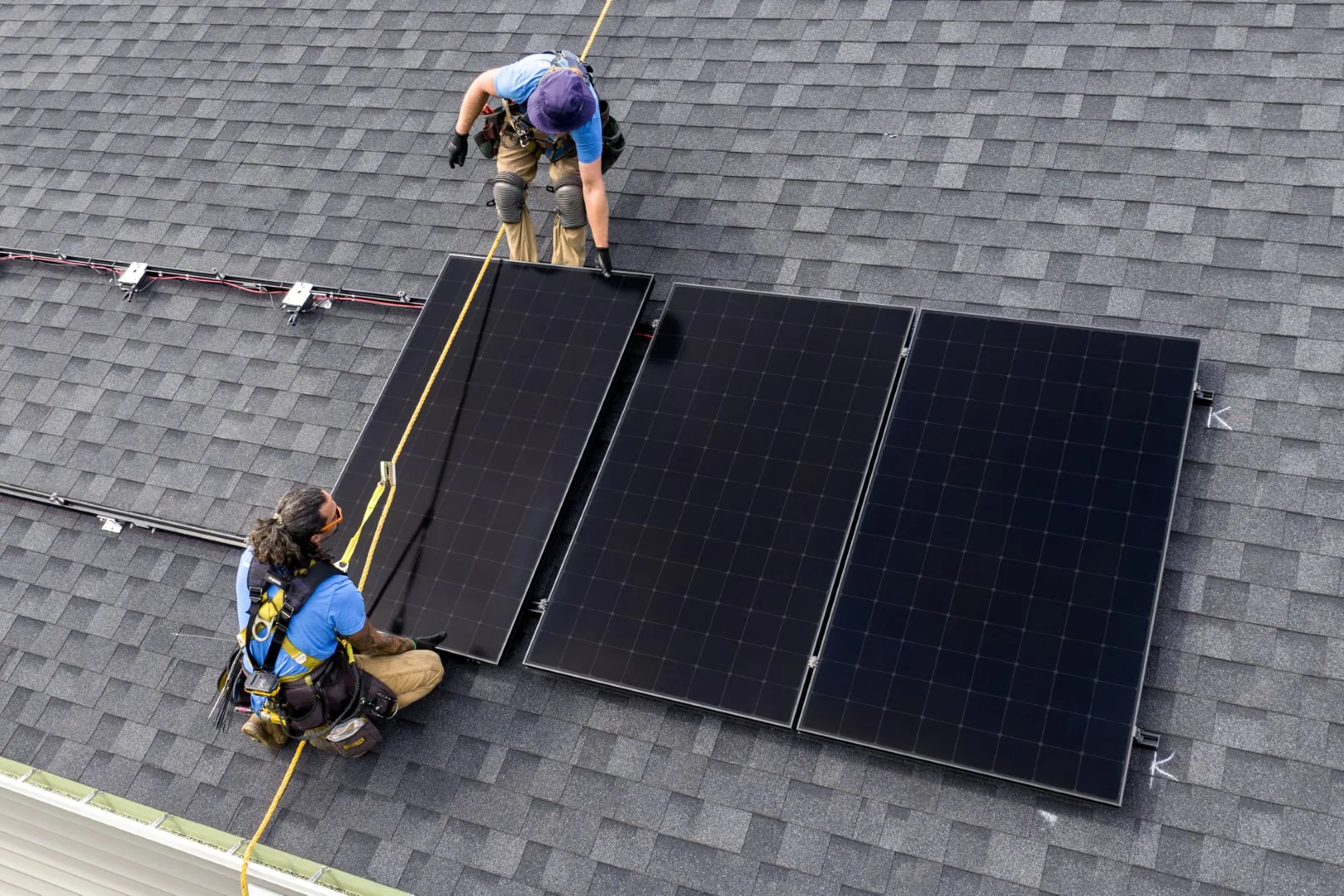
- Installation: The actual physical work usually takes 1 to 2 days. This includes mounting the racking system, laying the panels, and installing the inverter system and optional battery storage.
- Permission to Operate (PTO): After a final county inspection, Dominion Energy installs a bidirectional meter, and the system is officially energized.
Common Questions Regarding Reston Solar Projects
Will solar panels work during a Northern Virginia winter?
Yes, solar panels work in the winter. While the days are shorter, the cold air actually improves the conductivity of the silicon cells, making them more efficient at converting whatever light is available. Snow usually slides off the tempered glass surfaces quickly, or melts due to the heat generated by the cells.
How does the Reston Association’s Design Review Board affect my timeline?
The DRB typically meets twice a month. While this adds a step to the process, the Reston Association has modernized its Design Review process to allow for "administrative approval" of standard solar designs that meet all pre-set criteria, which can cut weeks off the waiting time.
What happens if I want to sell my Reston home?
Homes with solar in Northern Virginia typically see a value increase. According to studies by the Office of Energy Efficiency & Renewable Energy (EERE), buyers are often willing to pay a premium for homes with lower operating costs. In Reston’s competitive market, a "net-zero" or low-utility home stands out as a premium listing.
Is battery storage necessary for a system in Reston?
While not strictly necessary for the solar panels to function, battery storage is becoming the norm in 2026. Reston’s power lines are often subject to tree-related outages during summer thunderstorms or winter ice storms. A battery allows the solar system to continue powering the home during a grid failure, which is a significant resilience benefit.
Do I need to replace my roof before installing solar?
If your roof has less than 5 to 10 years of life remaining, it is generally recommended to replace it before or during the solar installation. Since solar panels are designed to last 25+ years, it is most cost-effective to install them on a fresh surface. Some homeowners can even roll the cost of a roof replacement into their solar financing, though tax credit eligibility for the roof portion should be discussed with a tax professional.
Recommendation for Next Actions
For Reston residents considering the switch, the first step is to obtain a Solar Solar Irradiance Report for your specific address. This report will calculate your roof’s "Solar Score" based on local shading and orientation.
Once you have the data, compare at least three quotes from installers who have specific experience with the Reston Association’s DRB requirements. Ensure the quotes include a detailed breakdown of the 30% federal tax credit and an estimate of your SREC earnings based on current Virginia market rates. Given the 2026 energy landscape, prioritizing a system with high-efficiency N-type panels and smart battery integration will provide the greatest long-term resilience and financial return.
Image Gallery