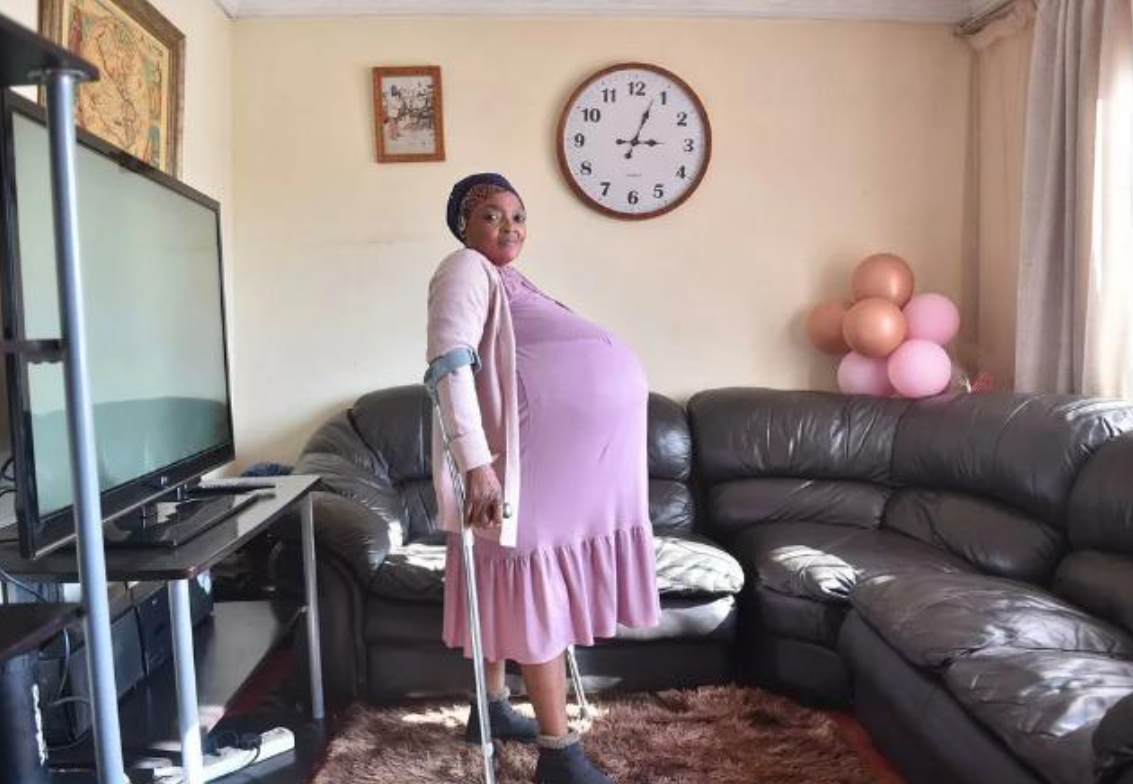
Exploring the World Record for the Most Pregnant Woman Ever
The world record for the woman who gave birth to the most children belongs to the first wife of Feodor Vassilyev, a Russian peasant who lived in the 18th century. She reportedly gave birth to a total of 69 children across 27 pregnancie...
The world record for the woman who gave birth to the most children belongs to the first wife of Feodor Vassilyev, a Russian peasant who lived in the 18th century. She reportedly gave birth to a total of 69 children across 27 pregnancies, including twins, triplets, and quadruplets.
Contents
When discussing the record for the "most pregnant woman," the term typically refers to two distinct categories: the highest number of children born to a single woman over her lifetime and the highest number of babies delivered in a single birth. As of 2026, these records remain some of the most analyzed and debated feats in human biology and historical documentation.
The Historical Record: Mrs. Vassilyev and the 69 Children
The most prolific mother in history, according to the Guinness World Records, was the first wife of Feodor Vassilyev (1707–1782), a peasant from Shuya, Russia. While her given name is often cited as Valentina in various non-contemporary sources, historical records from the era primarily identify her through her husband’s name.
Between 1725 and 1765, Mrs. Vassilyev underwent 27 separate labors. The biological breakdown of these births is staggering:
- 16 pairs of twins
- 7 sets of triplets
- 4 sets of quadruplets
This totals 69 children. Remarkably, historical accounts submitted to the Imperial Academy of Sciences in St. Petersburg and reported by the Monastery of Nikolsk indicate that 67 of these children survived infancy. In an era where infant mortality was high, this survival rate is as noteworthy as the number of births themselves.
Verification of the Vassilyev Record
Skeptics often question the biological possibility of 69 children. However, the record was documented by the Monastery of Nikolsk on February 27, 1782, and subsequently published in The Gentleman's Magazine in 1783. The report stated that Feodor Vassilyev was still alive at the time and had a second wife, with whom he had another 18 children (6 sets of twins and 2 sets of triplets), making him the father of 87 children in total.
From a medical perspective, the "Vassilyev case" suggests a genetic predisposition to hyperovulation, a condition where the body releases multiple eggs during a single menstrual cycle. While 27 pregnancies over 40 years is physically demanding, it is not mathematically impossible, though it represents the extreme upper limit of human reproductive capacity.
The Record for the Most Children in a Single Birth
While the Vassilyev record covers a lifetime of pregnancies, many people searching for the "most pregnant woman" are interested in the highest number of babies carried simultaneously. As of 2026, the verified record for the most children delivered at a single birth where all babies survived is held by Halima Cissé.
Halima Cissé and the Nonuplets (2021)
On May 4, 2021, Halima Cissé, a woman from Mali, gave birth to nine babies—five girls and four boys—at the Ain Borja clinic in Casablanca, Morocco. This birth set the Guinness World Record for the most children delivered at a single birth to survive.
The delivery was performed via cesarean section and involved a massive medical team of over 30 doctors and paramedics. Initially, ultrasounds in Mali had suggested Cissé was carrying septuplets (seven babies), but the two additional infants were "hidden" during the scans. The nonuplets were born prematurely at 30 weeks, weighing between 500 grams and 1 kilogram each. After months of intensive care, all nine children and their mother returned home in good health, a feat that would have been impossible without modern neonatal technology.
Comparison of High-Order Multiple Births
Before Halima Cissé, the record was held by Nadya Suleman, famously known as "Octomom," who gave birth to eight surviving children (octuplets) in California in 2009.
| Mother | Year | Number of Babies | Location | Status |
|---|---|---|---|---|
| Halima Cissé | 2021 | 9 (Nonuplets) | Morocco/Mali | All Survived |
| Nadya Suleman | 2009 | 8 (Octuplets) | USA | All Survived |
| Nkem Chukwu | 1998 | 8 (Octuplets) | USA | 7 Survived |
| Annamaria Mazzwi | 1996 | 12 (Dodecaplets) | Italy | None Survived |
Cases like the 1996 Italian dodecaplets (12 babies) highlight the extreme risks associated with high-order multiples. In many historical cases of 10 or more babies, the infants did not survive the birth or died shortly thereafter due to extreme prematurity and undeveloped lungs.
The Biological Limits of Pregnancy
To understand how a woman could be "the most pregnant," one must look at the physiological constraints of the human body. Multiple pregnancies, especially those involving more than three fetuses, place an extraordinary strain on the mother’s cardiovascular, respiratory, and musculoskeletal systems.
Hyperovulation and Genetics
The primary driver behind the record-breaking number of children in the Vassilyev case or the Cissé case is often biological or assisted. Natural high-order multiples (triplets or more) are rare. However, hyperovulation can be hereditary. Women who carry the gene for hyperovulation are more likely to release multiple eggs, leading to fraternal twins or triplets in every pregnancy.
The Role of Fertility Treatments
In the 21st century, many records for multiple births are linked to Assisted Reproductive Technology (ART), such as In-Vitro Fertilization (IVF) or ovulation-stimulating drugs. In the case of Nadya Suleman, the octuplets were the result of IVF. However, in the case of Halima Cissé, the nonuplets were reportedly a natural conception, making the event even more statistically improbable.
The Longest Pregnancy Record: A Different Kind of "Most"
Another interpretation of the "most pregnant" woman involves the duration of the pregnancy. While the standard human gestation period is approximately 280 days (40 weeks), there is a historical record for the longest pregnancy.
In 1945, Beulah Hunter gave birth to a daughter in Los Angeles after a reported pregnancy of 375 days—nearly 100 days longer than the average. While modern doctors are skeptical of this claim and would typically induce labor long before that point to avoid complications, Hunter’s case was documented by her physician at the time, who used menstrual cycle tracking and fetal heartbeat detection to support the claim.
Medical Risks and Management of Extreme Pregnancies
Carrying a record-breaking number of children is a high-risk medical event. For the mother, the risks include:
- Preeclampsia: Life-threatening high blood pressure.
- Gestational Diabetes: High blood sugar that can affect the health of all fetuses.
- Postpartum Hemorrhage: The uterus becomes so distended that it struggles to contract after birth, leading to severe bleeding.
For the infants, the primary risk is preterm birth. Almost all quadruplets and higher-order multiples are born before 32 weeks. This leads to a higher incidence of Respiratory Distress Syndrome (RDS), cerebral palsy, and developmental delays. The success of the Cissé nonuplets in 2021 is considered a milestone in global neonatal medicine, proving that with enough resources, even nine-fold pregnancies can result in healthy outcomes.
How World Records Are Verified
The Guinness World Records (GWR) maintains strict protocols for verifying these claims. For historical records like the Vassilyevs, they rely on contemporary documents, such as parish registers or government reports. For modern births, they require:
- Official birth certificates for all children.
- Statements from the attending medical team and hospital administrators.
- Independent witness verification.
Without these documents, many claims—such as a 2021 report of a South African woman giving birth to 10 babies (decuplets)—are ultimately debunked or labeled as "unverified" when no medical evidence is produced to support the story.
FAQ: Frequently Asked Questions
Who is currently the most pregnant woman alive?
As of 2026, there is no single woman who holds a "current" pregnancy record for volume. However, Halima Cissé remains the mother of the largest surviving group of children from a single birth (nonuplets). In terms of lifetime births, no modern woman is known to have approached the 69-child record of Mrs. Vassilyev.
Is it biologically possible to have 69 children?
Yes, it is theoretically possible but requires a specific set of circumstances: starting childbearing very young, having a genetic predisposition to multiple births (twinning), and having a high survival rate for the mother across many labors. In the case of Mrs. Vassilyev, her 27 pregnancies yielded 69 children because she never had a "singleton" (one baby) birth in those recorded instances.
What is the record for the most babies born in one year to one woman?
The record for the most babies in a single calendar year to one woman would typically be held by mothers of high-order multiples, such as Halima Cissé (9 babies in 2021). It is physically impossible for a woman to have two separate full-term pregnancies in a single year.
Has anyone ever had 10 babies at once and survived?
There have been reports of decuplets (10 babies), most notably a widely circulated story from South Africa in 2021. However, after investigation by health officials and journalists, that specific claim was found to be fabricated. As of now, nonuplets (9) is the highest number of surviving infants from a single birth.
What is the "most pregnant" a woman can look?
This is subjective, but "fundal height" is the medical measurement used. In a nonuplet pregnancy, the abdomen distends significantly more than a singleton pregnancy. By the time of delivery, Halima Cissé’s abdomen was under such extreme pressure that she required specialized care to prevent skin and muscle rupture.
Summary of Next Actions
For those interested in the limits of human reproduction or researching genealogical records, the primary source for verified data remains the Guinness World Records database and the American Society for Reproductive Medicine (ASRM) for modern multiplicity statistics. If you are a student or researcher, focusing on the evolution of neonatal care will provide context on why modern records (like the Cissé nonuplets) have higher survival rates compared to historical anomalies.
Guinness World Records: Most Children Born to One Mother Mayo Clinic: Multiple Pregnancy Risks and Management
Image Gallery