Navigating Workers’ Comp Exemption: The Complete 2026 Guide to Eligibility and Compliance
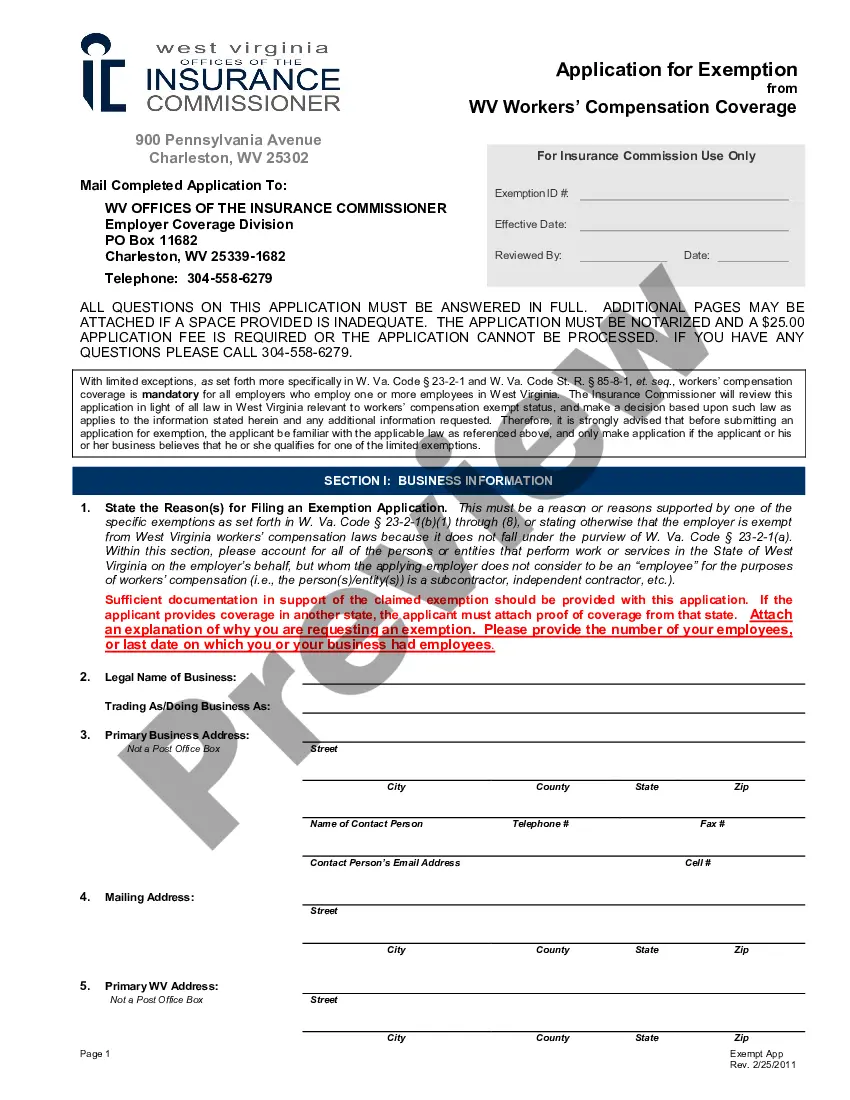
A workers’ comp exemption is a legal status that allows specific individuals, typically business owners, corporate officers, or LLC members, to opt out of workers' compensation insurance coverage for themselves. In 2026, this process r...
A workers’ comp exemption is a legal status that allows specific individuals, typically business owners, corporate officers, or LLC members, to opt out of workers' compensation insurance coverage for themselves. In 2026, this process remains governed by individual state statutes, requiring a formal filing with state labor departments to waive the right to benefits in exchange for excluding their wages from premium calculations. While it reduces insurance costs, an exempted individual forfeits all medical and wage-replacement benefits if they sustain a work-related injury.
Contents
Workers’ compensation systems were designed as a grand bargain: employees receive guaranteed benefits for injuries regardless of fault, and employers receive immunity from most personal injury lawsuits. However, for the person running the business, the high cost of premiums sometimes outweighs the perceived benefit of coverage, especially if they have robust private health and disability insurance. As we navigate the regulatory landscape of 2026, understanding the nuances of "WC exemption" is critical for maintaining compliance while optimizing operational overhead.
Identifying Eligibility for Workers’ Comp Exemption in 2026
Eligibility for an exemption is not universal; it is a privilege granted based on ownership status and business structure. The state seeks to ensure that only those with a genuine financial stake in the company—and the authority to make such a decision—are removing themselves from the safety net.
Corporate Officers and Board Members
In most jurisdictions, corporate officers (Presidents, Vice Presidents, Secretaries, and Treasurers) are the primary candidates for exemption. Most states require that these individuals own a minimum percentage of the corporation—often 10% or more—to qualify. In 2026, several states have tightened these requirements to prevent "paper officers" from being created solely to circumvent insurance costs.
LLC Members and Managers
For Limited Liability Companies (LLCs), the rules mirror those of corporations but focus on "members" or "managers." Because LLCs are flexible entities, state regulators look for active participation or significant ownership. It is important to note that in many states, LLC members are automatically excluded unless they opt-in, whereas corporate officers are often automatically included unless they opt-out via an exemption.
Sole Proprietors and Partners
By default, sole proprietors and partners in a partnership are generally not considered employees of their own businesses and are thus exempt from needing coverage for themselves. However, they may still need a formal Certificate of Election to be Exempt to satisfy the requirements of General Contractors or clients who demand proof of compliance before allowing them onto a job site.
The Construction Industry Exception
If your business operates within the construction industry, the rules are significantly more stringent. Due to the high risk of injury, states like Florida and Tennessee have specific registries and higher fees for construction-related exemptions. In 2026, construction exemptions often require more frequent renewals (every two years) and stricter verification of the applicant's ownership interest via Secretary of State records.
The Strategic Process: How to File for Exemption
Securing a WC exemption is a formal legal process that must be completed through the state’s Department of Labor or Workers’ Compensation Division. It is not something that can be handled solely through an insurance agent; the state must issue the final certificate.
- Verify Entity Status: Ensure your business is "Active" and in "Good Standing" with the Secretary of State. Regulators will check these databases instantly during your application.
- Determine Ownership Percentage: Have your stock certificates or operating agreement ready. If the state requires 10% ownership, you must be able to prove it through legal documentation.
- Complete the State-Specific Form: Each state has its own nomenclature. For example, Florida uses the DWC-250, while other states may refer to it as a "Notice of Election to be Exempt."
- Pay the Filing Fee: Fees in 2026 vary. Non-construction exemptions are often free or low-cost ($20–$50), while construction industry exemptions can range from $50 to $150 depending on the state.
- Receive and Distribute the Certificate: Once approved, you will receive a formal certificate. This document is vital; you must provide copies to your insurance carrier and any upstream contractors to ensure your payroll is not included in your next audit.
Financial Analysis: Inclusion vs. Exemption
Deciding whether to exempt yourself is a financial and risk-management calculation. It is not merely about the "cost" of the policy, but the value of the protection versus the risk of a catastrophic medical event.
| Feature | Workers' Comp Inclusion (Covered) | Workers' Comp Exemption (Opt-Out) |
|---|---|---|
| Premium Cost | Based on officer payroll (often capped). | Zero premium for the exempted individual. |
| Medical Benefits | 100% coverage for work-related injuries. | No coverage; must rely on private health insurance. |
| Wage Replacement | Typically 66.6% of average weekly wage. | No disability or wage replacement benefits. |
| Audit Impact | Wages are included in the annual audit. | Wages are excluded from the annual audit. |
| Lawsuit Protection | Business is protected by "Exclusive Remedy." | Potential for complex legal disputes over liability. |
| State Filing Required | No, coverage is standard. | Yes, requires state-issued certificate. |
Critical Note on Private Health Insurance: Many business owners mistakenly believe their personal health insurance will cover them if they are injured on the job and exempt from workers' comp. In 2026, most private health insurance policies contain "Work-Related Injury Exclusions." This means if you are injured while performing business duties, your health insurer may legally deny your claims, leaving you with 100% of the medical bills.
Risks and Common Pitfalls of WC Exemptions
While the premium savings are attractive, several pitfalls can cause significant financial distress or legal non-compliance.
The "Ghost Policy" Trap
Small contractors often get an exemption for themselves and then purchase a "Ghost Policy" (a minimum premium policy with no employees) to get onto job sites. The danger arises when that contractor hires "1099 workers" who are legally classified as employees. If an un-exempted sub-contractor gets hurt, the "Ghost Policy" will not cover them, and the business owner becomes personally liable for the medical costs.
Misclassification Audits
Insurance carriers conduct annual audits. If you claim an exemption but fail to produce a valid, state-issued certificate covering the entire policy period, the auditor will add your entire salary to the payroll. This results in a massive, unexpected "Audit Premium" bill at the end of the year. In 2026, digital tracking between state labor departments and insurance carriers has become more integrated, making it harder to hide un-exempted officers.
Lapse in Renewal
Exemptions are not permanent. Most expire every two years. If you forget to renew, you are legally considered an "employee" again. If your insurance policy is still active, your premium will spike. If you have no insurance because you thought you were exempt, you are now in violation of state law, which can lead to "Stop Work Orders" and heavy daily fines.
Regional Variations: State-Specific Standards in 2026
The definition of a "WC Exemption" changes the moment you cross state lines. For businesses operating in multiple states, this is the most common source of non-compliance.
- Florida: Remains one of the most robust systems. Construction officers must own 10% of the company and are limited to three exempt officers per corporation. The filing fee is $50.
- Tennessee: Uses a specific "Workers’ Compensation Exemption Registry." To be on the registry, you must meet specific ownership requirements and pay a fee that varies by industry.
- Georgia: Generally allows up to five officers to be exempt, but they must be "Active" officers. The process is handled through the Georgia State Board of Workers' Compensation (SBWC).
- California: Extremely strict. California typically requires an officer to own 15% of the company to be exempt and has specific language that must be included in the corporate minutes or operating agreement to make the waiver valid.
Best Practices for Maintaining Compliance
To ensure your exemption works for you rather than against you, follow these SME-recommended protocols:
- Document Everything: Keep a copy of your exemption certificate in a dedicated "Compliance Folder." Ensure it is readily available for both General Contractors and Insurance Auditors.
- Review Private Insurance Policies: Consult with your health and disability insurance agent. If you are exempting yourself from WC, you must ensure your private policies do not exclude "occupational" or "work-related" injuries.
- Monitor Expiration Dates: Set a calendar alert 90 days before your exemption expires. Processing times in 2026 can still take 2–4 weeks, and you do not want a gap in your exempt status.
- Update During Corporate Changes: If you bring on a new partner or change your corporate structure (e.g., switching from a S-Corp to an LLC), your existing exemption may become void. You must file a new application reflecting the new entity.
Frequently Asked Questions
Can I get a workers’ comp exemption if I have employees? Yes. You can exempt yourself (the owner) while still maintaining a workers’ compensation policy for your employees. The exemption only removes you from the coverage and the premium calculation; it does not relieve your legal obligation to provide insurance for your staff.
Does a WC exemption cover my 1099 independent contractors? No. An exemption is individual. It only covers the person named on the certificate. In 2026, most states apply the "ABC Test" or similar strict criteria to determine if a 1099 worker is actually an employee. If the state or an auditor determines your contractors are employees, your exemption will not protect you from the resulting fines or premium charges.
Can I cancel my exemption mid-year? Yes, you can "Revoke" an exemption if you decide you want coverage. This usually requires filing a Revocation Form with the state. Once the state acknowledges the revocation, you must inform your insurance carrier so they can add your payroll back to the policy and provide coverage.
Is an exemption the same as a waiver of subrogation? No. These are entirely different insurance concepts. An exemption removes an individual from coverage. A waiver of subrogation is an agreement where an insurance carrier gives up its right to seek recovery from a third party for a loss it paid out. One is about who is covered; the other is about legal recovery rights.
What happens if I am injured on the job while exempt? You are responsible for all medical costs and receive no disability payments from workers’ compensation. You cannot sue your own company in most cases because you voluntarily waived your rights. You must rely on personal savings, private health insurance (if it covers work injuries), or private disability insurance.
Final Strategic Recommendation
For the high-income business owner in 2026, a WC exemption is often a sound financial move, provided it is backed by a comprehensive private disability policy that fills the coverage gap. However, for those in high-risk trades—such as roofing, tree trimming, or structural steel—the risk of a work-related injury often exceeds the premium savings. Always conduct a "Gap Analysis" between your WC premium and the potential out-of-pocket medical costs of a major accident before filing your election to be exempt.
Image Gallery