Bubba Watson: Golfer Profile, Career Achievements, and Cultural Influence
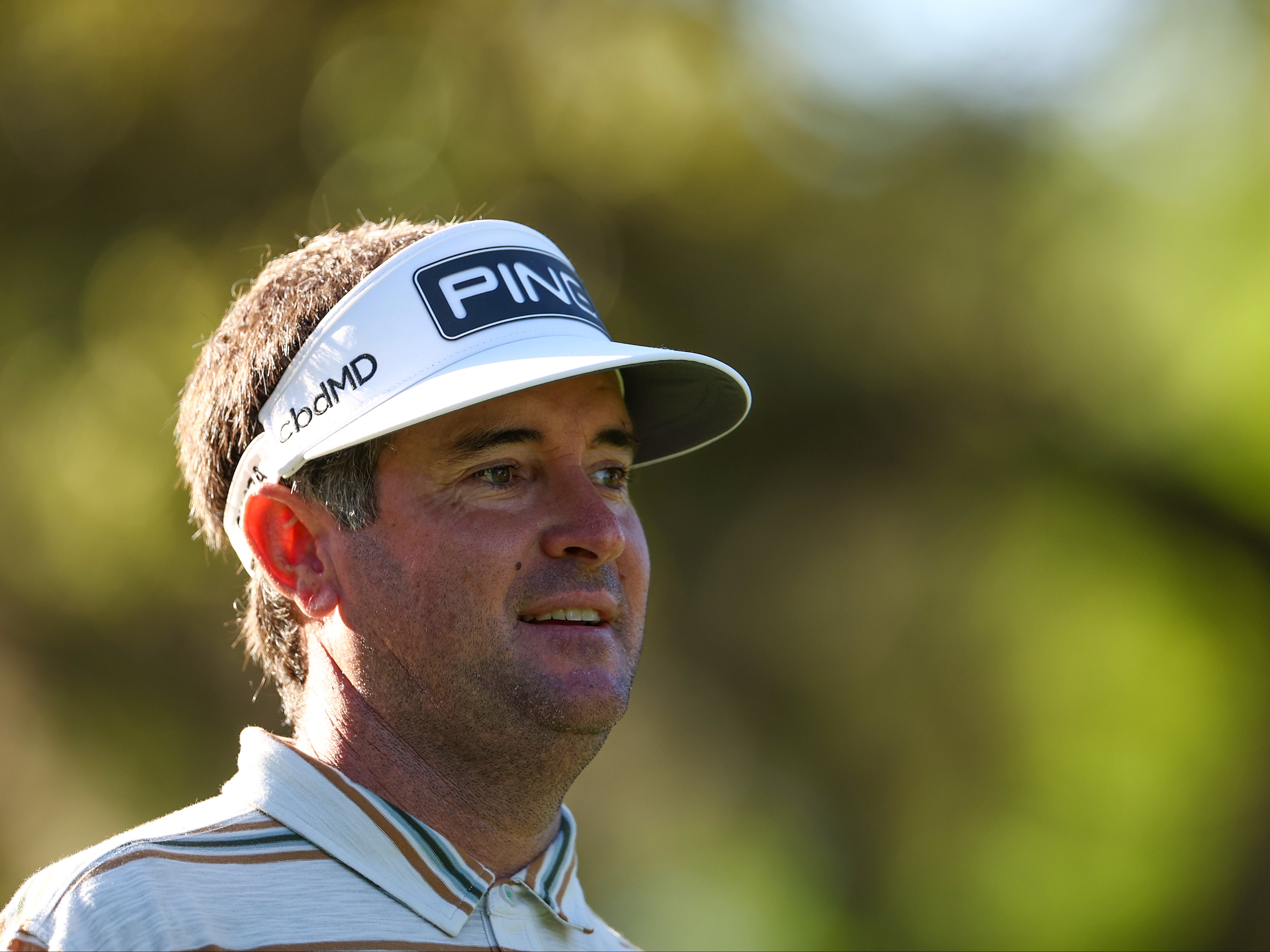
Bubba Watson is a two-time Masters champion, multi-time PGA Tour winner, and RangeGoats GC captain whose unorthodox, self-taught left-handed swing reshaped professional golf. Renowned for dramatic shot-shaping, raw driving power, and c...
Bubba Watson is a two-time Masters champion, multi-time PGA Tour winner, and RangeGoats GC captain whose unorthodox, self-taught left-handed swing reshaped professional golf. Renowned for dramatic shot-shaping, raw driving power, and candid discussions about mental health, Watson transformed how modern audiences view golf creativity, player entrepreneurship, and alternative tour structures.
Contents
Golfer Profile: The Foundations of "Bubba Golf"
Gerry Lester "Bubba" Watson Jr. was born on November 5, 1978, in Bagdad, Florida. Unlike modern elite golfers developed in high-tech academies with continuous video analysis and biomechanical coaching, Watson never took a formal golf lesson. He developed his swing as a child by hitting plastic balls around his family home, shaping shots through narrow corridors of trees and windows. This unstructured environment fostered an intuitive, creative approach to ball-striking that became known as "Bubba Golf."
Name: Gerry Lester "Bubba" Watson Jr. Turned Professional: 2002 Handedness: Left-handed Alma Mater: Faulkner State Community College, University of Georgia Primary Tours: PGA Tour (2006–2022), LIV Golf (2022–present) Major Championships: 2 (2012, 2014 Masters Tournament) PGA Tour Victories: 12 Peak Official World Golf Ranking: No. 2 (2015)
Watson played collegiate golf first at Faulkner State Community College, where he was a junior college All-American, before transferring to the University of Georgia. He helped the Georgia Bulldogs win the Southeastern Conference (SEC) title in 2000. Turning professional in 2002, Watson competed on the Nationwide Tour (now the Korn Ferry Tour) from 2003 through 2005. He earned his PGA Tour card for the 2006 season by finishing 21st on the money list.
Upon his PGA Tour arrival, Watson immediately led the tour in driving distance as a rookie, averaging 319.6 yards per drive. His left-handed, high-flying, sweeping ball flight made him an instant draw for fans who valued aggression and creativity over mechanical uniformity.
Professional Career Milestones and Major Championships
Watson's early career on the PGA Tour featured high-profile near misses and blistering power, but his breakthrough victory came at the 2010 Travelers Championship. Watson overcame a six-shot deficit on Sunday to enter a playoff with Corey Pavin and Scott Verplank, winning on the second extra hole. That victory established a career-long affinity for TPC River Highlands, an event he would win three times (2010, 2015, and 2018).
The 2012 Masters: The Hook from the Pine Straw
Watson entered international sports lore on April 8, 2012, at Augusta National Golf Club. Tied with South African Louis Oosthuizen after 72 holes of regulation, the two returned to play the sudden-death playoff. On the second playoff hole (the dogleg-right 10th), Watson drove his tee shot deep into the trees right of the fairway.
Facing an obstructed line to the green, Watson possessed 164 yards to the pin off a bed of pine straw. Instead of chipping back into the fairway, he visualized a dramatic hooking shot. Using a 52-degree gap wedge, Watson curved the ball roughly 40 yards from right to left around the tree line, landing the ball safely on the green and stopping it 15 feet from the hole. Two putts secured his first major championship and the green jacket. The shot remains one of the most famous recovery shots in the history of golf.
The 2014 Masters and Dominance on Tour
Watson demonstrated that his first major was no fluke when he won the Masters Tournament again in 2014. Starting the final round tied with Jordan Spieth, Watson relied on calculated aggression and superior length. On the par-5 13th hole, Watson hit a 366-yard drive around the corner of the dogleg, leaving only a short wedge into the green to secure a decisive birdie. He finished the tournament at 8 under par, winning by three shots.
Watson’s resume extends well beyond Augusta National. Over his PGA Tour tenure, he accumulated 12 official victories, including:
- Two World Golf Championships: The 2014 WGC-HSBC Champions in Shanghai, China (featuring a holed bunker shot for eagle on the 72nd hole) and the 2018 WGC-Dell Technologies Match Play.
- Three Genesis Invitational (formerly Northern Trust Open) titles at Riviera Country Club (2014, 2016, 2018).
- Three Travelers Championship titles (2010, 2015, 2018).
- Appearances on four United States Ryder Cup teams (2010, 2012, 2014, 2018) and two Presidents Cup teams (2011, 2015).
Technical Analysis of "Bubba Golf": Equipment and Swing Mechanics
Watson’s approach to ball-striking defies traditional biomechanical paradigms. While modern instruction prioritizes staying on plane, shallowing the club, and matching spine angles, Watson relies on dynamic timing, foot movement, and radical clubface manipulation.
| Technical Variable | Traditional Modern Profile | Bubba Watson Profile | Practical Impact on Ball Flight |
|---|---|---|---|
| Footwork at Impact | Ground-force connection, stable lead foot | Active "jumping," airborne lead foot | Generates extreme vertical thrust and clubhead speed |
| Backswing Path | On-plane, parallel shaft at top | Highly upright, high hands, across the line | Creates immense potential energy and steep descent |
| Clubface Control | Neutral face throughout swing arc | Extreme opening/closing via wrist action | Enables curvature exceeding 40 yards in either direction |
| Grip Specification | Standard to Midsize, neutral wraps | 10 to 15 tape wraps beneath the lower hand | Eliminates right hand rolling over; controls radical cuts |
| Driver Configuration | 9.0° to 10.5°, stock lengths, neutral bias | Low loft (often 8.0° or 8.5°), long, ultra-stiff | Produces launch angles over 13° with low spin at 125+ mph |
Watson’s visual imagination guides his mechanics. Before addressing the ball, he mentally selects a trajectory, launch window, and curvature shape. He deliberately opens or closes his stance relative to the target line to dictate path, altering his wrist hinges to produce high cuts, low runners, or looping hooks.
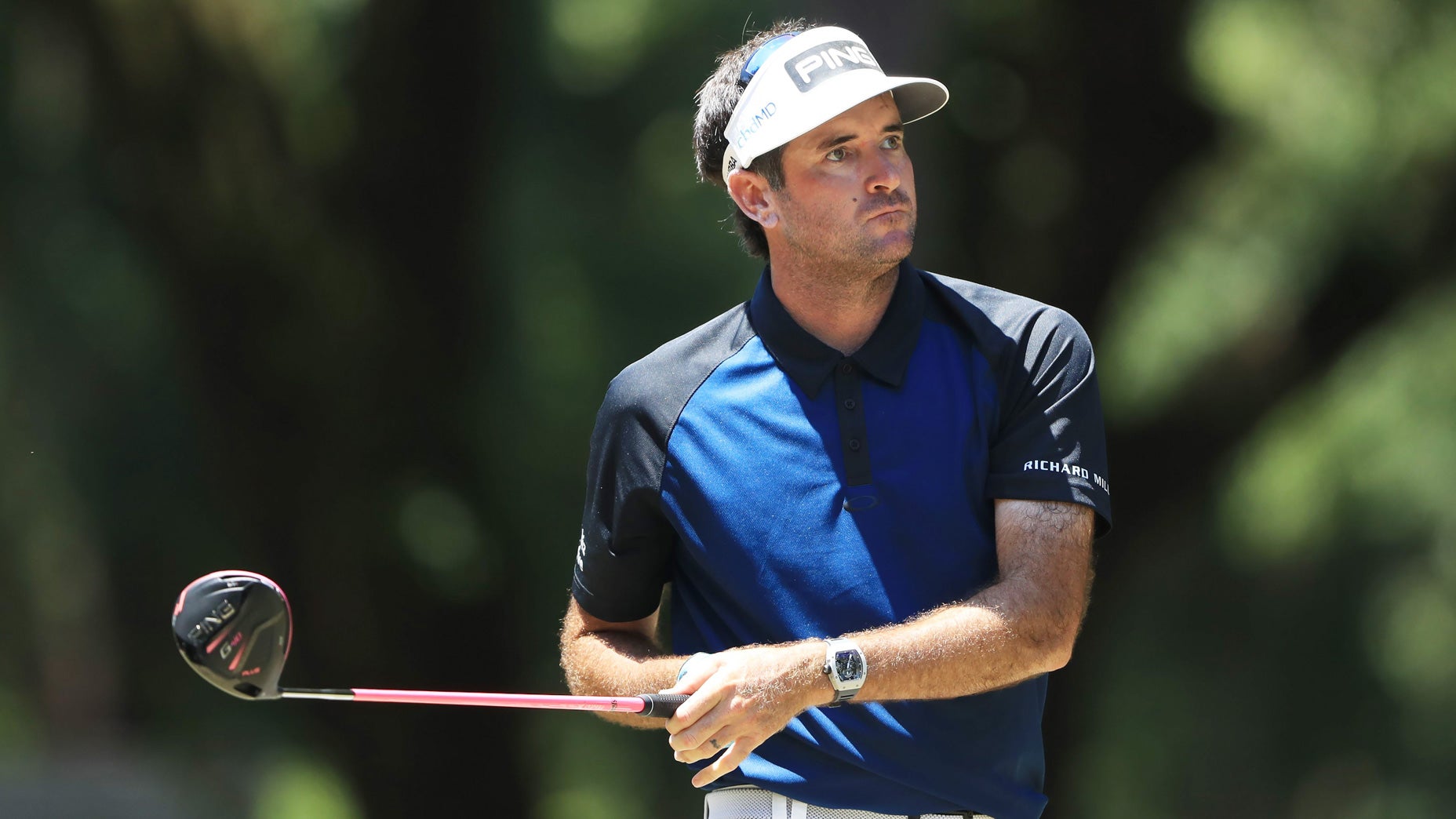
His equipment reflects this unconventional method. Watson spent much of his prime using custom pink-headed Ping drivers (most notably the G-series lines), generating funds for charity while swinging a club with a custom-painted head and a specialized multi-layer grip built to prevent his lower hand from flipping through impact.
Transition to LIV Golf and Team Leadership
In July 2022, Watson announced his departure from the PGA Tour to join LIV Golf. Initially sidelined due to a torn meniscus that required surgery and extensive rehabilitation, he debuted as an off-course non-playing captain before returning to full competitive action in 2023.
Watson assumed the captaincy and equity ownership of RangeGoats GC, one of LIV Golf's 12 original franchises. Under his leadership, the RangeGoats built an aggressive, youth-oriented identity, acquiring prominent players such as Talor Gooch (the 2023 LIV Golf Individual Champion) and later Matthew Wolff and Peter Uihlein. Watson utilized his marketing instincts to turn RangeGoats GC into one of the league's most recognizable commercial merchandise brands.
His move to LIV Golf also placed him at the center of the broader professional golf divide. Watson consistently advocated for team-based formats, global sports expansion, and greater player agency in competitive schedules, while continuing to play the Masters Tournament under his lifetime exemption as a past champion.
Cultural Impact, Business Ventures, and Mental Health Advocacy
Watson's influence reaches far outside the ropes of the golf course, spanning charity, pop culture, sports franchise ownership, and public health awareness.
Candid Openness on Mental Health
Long before professional sports normalized discussions of athlete psychology, Watson spoke openly about his battles with severe anxiety, panic attacks, and self-doubt. Following a dramatic, unintended weight drop in 2017—where he lost over 20 pounds due to stress-induced gastrointestinal distress—Watson publicly addressed how the pressures of fame, expectation, and fear of failure affected his overall health. In his 2021 memoir, Up and Down: Victories and Struggles in the Course of Life, he detailed how therapeutic support, faith, and family helped him build coping mechanisms. This vulnerability earned broad praise across sports media for demystifying mental illness in high-performance athletics.
Entrepreneurship and Community Investment
Watson has channeled his tournament earnings into diverse business ventures, with an intense focus on Pensacola, Florida:
- Minor League Baseball: He is a co-owner of the Pensacola Blue Wahoos, the Double-A affiliate of the Miami Marlins, contributing to downtown waterfront revitalization.
- Retail and Hospitality: Watson opened Bubba's Sweet Spot (a candy and ice cream shop) and invested in car dealerships, driving ranges, and local real estate in Northwest Florida.
- Charitable Giving: Through the Bubba Watson Foundation, he has directed millions of dollars to pediatric medical care, including substantial contributions to the Studer Family Children’s Hospital at Sacred Heart in Florida. His partnership with equipment manufacturer Ping routinely raised hundreds of thousands of dollars through his signature pink driver campaigns.
Frequently Asked Questions
Did Bubba Watson ever take golf lessons?
No. Watson is entirely self-taught. He learned to play by hitting plastic practice balls around obstacles in his yard, developing a swing based on feel, imagination, and natural trial and error rather than mechanical instruction.
Why did Bubba Watson use a pink driver?
Watson partnered with equipment company Ping to create custom pink drivers starting in 2012. Ping contributed a portion of the proceeds from retail sales of the pink drivers, alongside Watson’s own direct donations, to various charities, most notably cancer research and pediatric health initiatives.
How many major championships has Bubba Watson won?
Watson has won two major championships: the 2012 Masters Tournament and the 2014 Masters Tournament. Both victories occurred at Augusta National Golf Club.
What is Bubba Watson's current status on the professional circuit?
As of 2026, Watson continues as captain of RangeGoats GC in LIV Golf. He retains a lifetime exemption into the Masters Tournament as a past champion and competes annually at Augusta National.
What is the specific shot Bubba Watson is most famous for?
His most famous shot came on the second playoff hole of the 2012 Masters against Louis Oosthuizen. From deep inside the trees on hole 10, resting on pine straw, Watson hit a sweeping 40-yard hook with a 52-degree wedge from 164 yards out, landing the ball on the green to set up the tournament-winning par.
Key Takeaway and Practical Application
Bubba Watson's career demonstrates that elite performance does not require rigid adherence to conventional technical molds. For competitive players, teaching professionals, and casual golfers looking to apply his methods, prioritize target visualization and ball-shaping practice over obsessive mechanical corrections:
- Develop Shot Variety: Dedicate range sessions to hitting deliberately curved shots (drastic slices, low hooks, high punch cuts) to cultivate clubface awareness and hand-eye coordination.
- Focus on Athletic Release: Allow natural footwork and hip rotation to drive speed rather than artificially anchoring the lower body.
- Prioritize Mental Well-Being: Recognize that physical performance is inextricably tied to psychological health, and seek dedicated support systems for performance stress.
Image Gallery