Understanding Life Insurance and Suicide Claims: Provisions, Timelines, and Legal Requirements
Most life insurance policies cover death by suicide, but coverage is subject to a specific waiting period known as the suicide clause. If the policyholder dies by suicide after this period—typically two years from the policy’s effectiv...
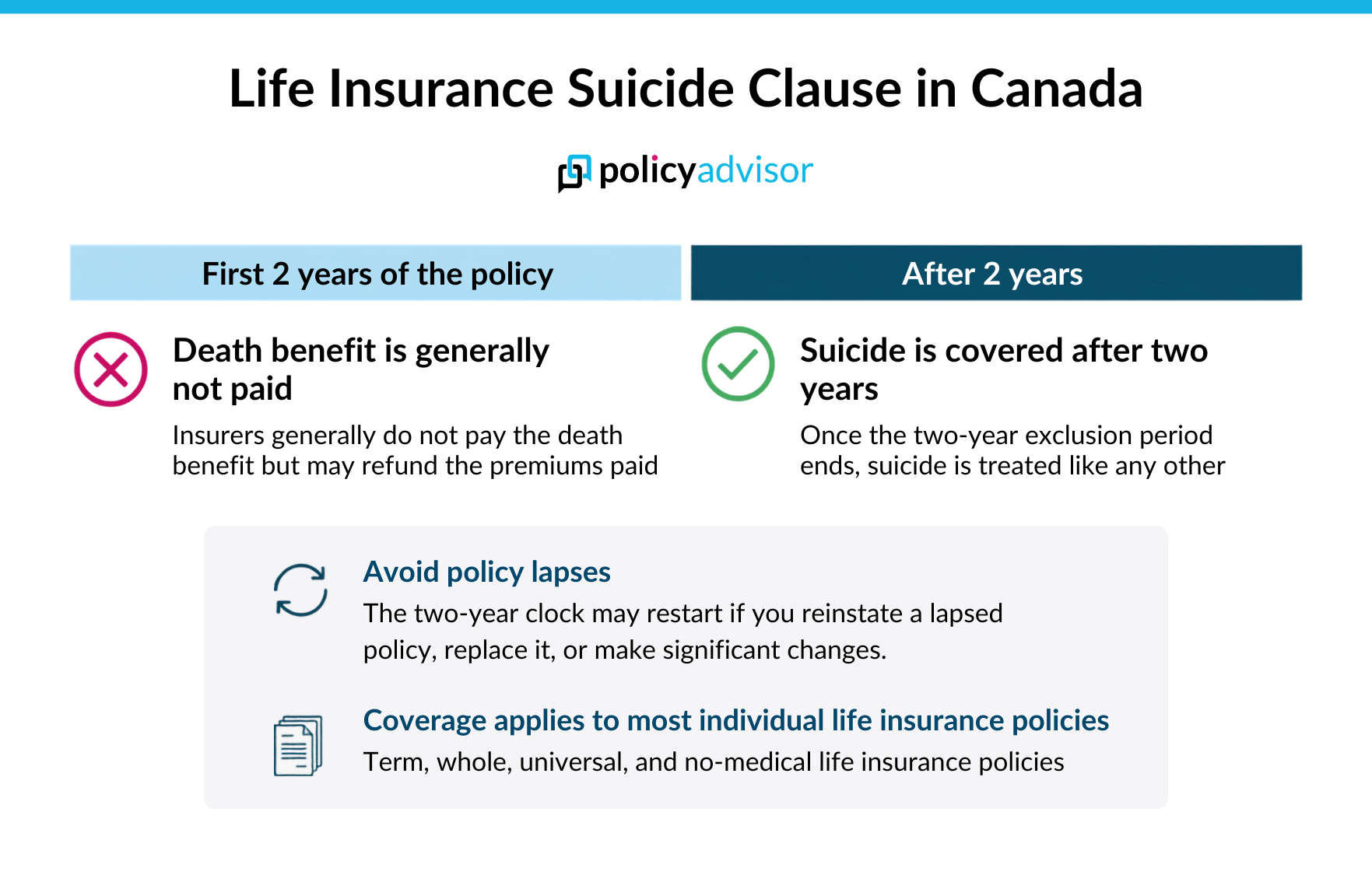
Most life insurance policies cover death by suicide, but coverage is subject to a specific waiting period known as the suicide clause. If the policyholder dies by suicide after this period—typically two years from the policy’s effective date—the death benefit is paid to beneficiaries. If the death occurs within the exclusion period, the claim is denied, though insurers generally refund the premiums paid.
Contents
The intersection of life insurance and suicide is governed by strict contractual language and state-specific regulations designed to balance the insurer's risk with the financial protection promised to policyholders. For beneficiaries navigating a claim during an already difficult time, understanding the nuances of the suicide clause, the contestability period, and the documentation required by insurance companies is essential for a successful filing.
The Suicide Clause: Purpose and Function
The suicide clause is a standard provision in nearly every individual life insurance contract. Its primary purpose is to protect the insurance company from "adverse selection." In actuarial terms, adverse selection occurs when an individual purchases a policy with the specific intent of ending their life shortly thereafter to secure a financial windfall for their heirs.
As of 2026, the standard duration for a suicide clause in most U.S. jurisdictions remains two years, though some states and specific policy types may use a one-year limit. During this period, the insurer is not obligated to pay the face value of the policy if the cause of death is determined to be suicide.
The "Sane or Insane" Provision
Modern life insurance policies almost universally include the phrase "suicide, while sane or insane." This legal language is critical because it prevents beneficiaries from arguing that the deceased was not legally responsible for their actions due to a mental health crisis or temporary insanity. By including this clause, insurers establish that the act of suicide itself triggers the exclusion, regardless of the policyholder's mental state at the time of death.
Refund of Premiums
If a policyholder dies by suicide within the two-year exclusion window, the insurer does not simply pocket the money. Instead, they are typically required to return the total amount of premiums paid into the policy to the named beneficiaries or the estate. While this is significantly less than the death benefit (the "face amount"), it ensures that the family receives the funds the policyholder contributed.
The Contestability Period vs. The Suicide Clause
While often confused, the contestability period and the suicide clause are two distinct legal mechanisms.
- The Contestability Period: This is a two-year window starting from the policy's effective date during which the insurer can investigate the original application for "material misrepresentations." If an insurer discovers that a policyholder lied about a history of clinical depression, previous suicide attempts, or substance abuse, they may deny a claim even if the death was not a suicide.
- The Suicide Clause: This focuses specifically on the cause of death. Even if the application was 100% honest, the suicide clause remains in effect to prevent immediate payouts for self-inflicted death.
If a suicide occurs within the first two years, the insurer will often trigger a full contestability investigation. They will scrutinize medical records and pharmacy histories to see if the policyholder withheld information about mental health treatments. If they find such omissions, they can deny the claim based on misrepresentation, which may, in some cases, even jeopardize the refund of premiums depending on the severity of the fraud.
Variations by Policy Type
The rules regarding suicide claims vary significantly depending on whether the coverage is an individual policy, a group plan, or an accidental death rider.
Individual Life Insurance
Whether it is term life, whole life, or universal life, individual policies almost always carry the standard two-year suicide exclusion. If you switch policies or "replace" an existing policy with a new one from a different company, the two-year clock typically restarts. This is a critical consideration for those looking to change insurers; the new policy will have its own period of contestability and its own suicide clause.
Group Life Insurance (Employer-Sponsored)
Group life insurance provided by an employer is often governed by the Employee Retirement Income Security Act (ERISA). Many basic group life policies do not have a suicide clause. Because the coverage is provided to a large group of employees regardless of individual health status, the risk of adverse selection is lower. However, "supplemental" life insurance—additional coverage an employee pays for out of pocket—may still include a suicide exclusion.
Accidental Death and Dismemberment (AD&D)
AD&D policies and "double indemnity" riders are strictly limited to deaths caused by unforeseen accidents. Suicide is never covered under AD&D. Because suicide is an intentional act, it does not meet the legal definition of an "accident." If a policyholder has both a standard life insurance policy and an AD&D rider, and dies by suicide after the two-year mark, the standard death benefit will be paid, but the AD&D portion will be denied.
State-Specific Legal Frameworks
In the United States, insurance is regulated at the state level, leading to variations in how suicide claims are handled.
- Missouri: Historically, Missouri has had the most consumer-friendly suicide laws. Under Missouri Revised Statutes Section 376.620, suicide cannot be used as a defense against payment unless the insurer can prove the insured intended to commit suicide at the time they applied for the policy. Effectively, this often reduces the exclusion period or places a much higher burden of proof on the insurer.
- North Dakota and Others: Some states have moved toward a one-year standard for the suicide clause in specific types of life insurance products.
Beneficiaries should consult the National Association of Insurance Commissioners (NAIC) or their state's Department of Insurance to verify the specific statutes governing their policy's jurisdiction.
The Claims and Investigation Process
When a death claim is filed, and the cause of death is suicide or appears to be "undetermined," the insurance company will conduct a thorough investigation. This is not necessarily an attempt to avoid payment, but a required step in their fiduciary duty to verify that the claim meets the contract's terms.
Required Documentation
To process a claim involving suicide, the insurer will typically require:
- The Official Death Certificate: This must state the cause and manner of death. If the manner of death is listed as "Suicide," the insurer will immediately check the policy's effective date against the date of death.
- The Coroner’s or Medical Examiner’s Report: This provides the forensic details surrounding the death.
- Police Reports: Insurers review these to ensure there was no foul play and to understand the circumstances.
- Medical and Attending Physician Statements: To check for pre-existing conditions that might have been omitted during the application (contestability).
Payout Scenarios for Suicide Claims
The following table illustrates how different variables impact the final payout for a beneficiary in 2026.
| Scenario | Policy Type | Timing | Payout Result |
|---|---|---|---|
| Suicide within 2 years | Individual Term/Whole | Month 14 | Claim Denied; Premiums Refunded |
| Suicide after 2 years | Individual Term/Whole | Year 5 | Full Death Benefit Paid |
| Suicide (any time) | Basic Group Life (ERISA) | Any time | Full Death Benefit Paid (usually) |
| Suicide (any time) | AD&D Policy | Any time | Claim Denied; No Payout |
| Suicide (misrepresented depression) | Individual Policy | Month 22 | Claim Denied; Potential Fraud Dispute |
Common Challenges and Claim Denials
Even after the two-year period has passed, claims can still be complex. One common challenge arises when the manner of death is "undetermined." For example, if a policyholder dies of a drug overdose, the medical examiner may not be able to definitively state whether it was accidental or intentional.
In such cases, the burden of proof is generally on the insurance company. If they wish to deny a claim based on the suicide clause within the first two years, they must provide clear evidence that the death was intentional. If they cannot prove intent, the court may rule in favor of the beneficiary, classifying the death as accidental.
Another challenge involves policy lapses and reinstatements. If a policyholder stops paying premiums and the policy lapses, but they later "reinstate" it by paying back-premiums and proving insurability, the two-year suicide clause and contestability period often restart from the date of reinstatement.
Practical Steps for Beneficiaries
If you are a beneficiary filing a claim for a death by suicide, follow these steps to ensure the process moves as smoothly as possible:
- Locate the Policy Document: Determine the "Issue Date" or "Effective Date." Compare this to the date of death to see if the suicide clause has expired.
- Request Multiple Death Certificates: You will need "long-form" certificates that list the cause of death for the insurance company.
- Be Transparent: If the insurer requests medical records or authorization to speak with doctors during the contestability period, providing these promptly can speed up the decision.
- Consult Legal Counsel if Denied: If a claim is denied despite the suicide clause having expired, or if the insurer is claiming "misrepresentation" unfairly, consult an attorney specializing in life insurance claims or ERISA law.
The emotional toll of a suicide is immense. While the financial aspect of life insurance cannot mitigate the loss, knowing that the policy provides for the survivors after the initial exclusion period can offer some stability. As long as the policy was held beyond the 24-month window (in most states) and the application was truthful, the death benefit remains a guaranteed protection for the family.
Frequently Asked Questions
1. Does life insurance cover physician-assisted suicide?
As of 2026, the coverage for physician-assisted suicide (often called Medical Aid in Dying or MAID) depends on the state where the act occurs and the language of the policy. In many states where MAID is legal, such as Oregon or Washington, state law prohibits life insurers from classifying legal medical aid in dying as "suicide" for the purposes of insurance claims. Therefore, these claims are often paid even if the policy is within the two-year suicide clause period.
2. What happens if the policy was a "reinstated" policy?
If a life insurance policy lapses due to non-payment and the owner reinstates it, most contracts state that a new two-year suicide and contestability period begins on the date of reinstatement. This is to prevent someone from reinstating a lapsed policy specifically because they intend to commit suicide.
3. Does the suicide clause apply to accidental death?
The suicide clause does not "apply" to accidental death because suicide is not an accident. Accidental Death & Dismemberment (AD&D) insurance specifically excludes self-inflicted injuries and suicide. Even if a standard life insurance policy pays out because the two-year period has passed, a separate AD&D policy or rider will almost certainly deny the claim.
4. Can the insurer deny a claim if the suicide note mentions the insurance?
If the suicide occurs within the two-year exclusion period, a suicide note mentioning insurance may be used by the insurer as additional evidence of intent, though the cause of death on the death certificate is usually sufficient for denial. If the suicide occurs after the exclusion period, a note mentioning insurance typically does not invalidate the claim, as the contractual waiting period has already been satisfied.
5. Are there any states where the suicide clause is shorter than two years?
Yes. Missouri is the most notable example, where the exclusion is highly restricted. Some other states may have one-year limits for specific types of policies, such as industrial life insurance or certain group certificates. Always check the "General Provisions" section of your specific policy for the "Suicide" heading to see the exact timeframe.
Image Gallery