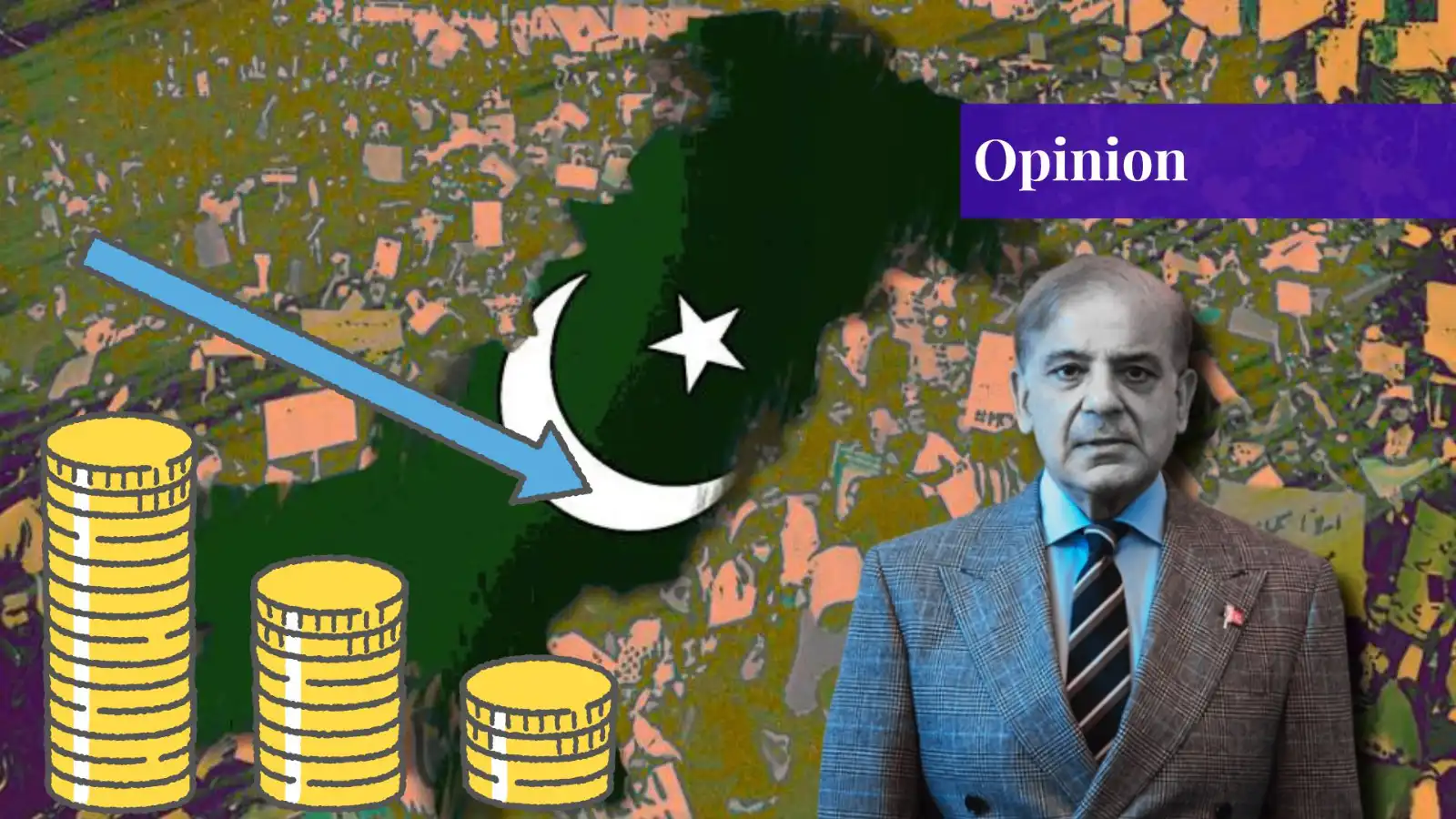
Do Pakistan Loans Really Help the Economy?
Pakistan’s reliance on international and domestic loans has long been a subject of intense debate among economists, policymakers, and the public. To understand whether these financial obligations genuinely help the economy, one must lo...
Pakistan’s reliance on international and domestic loans has long been a subject of intense debate among economists, policymakers, and the public. To understand whether these financial obligations genuinely help the economy, one must look beyond simplistic narratives and examine the structural realities of sovereign debt. Sovereign borrowing can act as a crucial stabilization tool during acute fiscal crises, preventing catastrophic economic collapse, stabilizing foreign exchange reserves, and maintaining the flow of vital imports like energy and medicine. However, when loans are continuously deployed to finance structural trade deficits rather than high-return capital investments, they often create a compounding debt trap. This dynamic forces consecutive governments into stringent fiscal consolidation programs that suppress domestic demand, elevate inflation, and constrain long-term productivity growth.
Contents
The Mechanics of Sovereign Borrowing in Pakistan
To evaluate the economic impact of loans in Pakistan, one must first understand why the country borrows and how these financial inflows operate within its macroeconomic framework. Pakistan has historically maintained a structural trade deficit, meaning the value of its imported goods and services consistently outstrips its export earnings. This imbalance leads to a chronic depletion of foreign exchange reserves, leaving the state vulnerable to balance-of-payments crises.
When reserves drop to levels insufficient to cover a few weeks of imports, the government must secure external financing to avoid a sovereign default. These loans typically arrive from two primary sources: multilateral institutions like the International Monetary Fund (IMF), the World Bank, and the Asian Development Bank, and bilateral partners such as China, Saudi Arabia, and the United Arab Emirates. While multilateral loans are generally tied to rigorous structural reform programs, bilateral loans and commercial credits often serve as immediate balance-of-payment supports to artificially prop up currency values and stabilize external accounts.
- [Chronic Trade Deficit]
- [Depleted Foreign Reserves]
- [External Sovereign Borrowing (IMF / Bilateral)]
- Short-Term Stabilization: Prevents Default, Secures Energy Imports
- Long-Term Burden: High Debt Servicing, Austerity, Inflationary Pressure
- [External Sovereign Borrowing (IMF / Bilateral)]
- [Depleted Foreign Reserves]
Short-Term Relief Versus Long-Term Structural Stability
The core argument in favor of Pakistan’s borrowing is that it provides essential life support to a strained economy. Without emergency financing packages, particularly from the IMF, Pakistan would likely face severe currency depreciation, hyperinflation, and a total inability to purchase essential commodities on the global market.
Preventing Sovereign Default
The most immediate and tangible benefit of international loan programs is the prevention of sovereign default. A default would cut Pakistan off from international financial markets, paralyze its banking sector, and trigger an unprecedented social crisis. By securing tranches of financial assistance, the state maintains its creditworthiness for ongoing trade transactions and reassures global markets of its basic solvency.
The Cost of Conditionality
However, these relief measures come at a steep price. IMF and multilateral loans are invariably conditioned on stabilization policies that prioritize macroeconomic correction over growth. These conditions typically include:
- Substantial hikes in energy tariffs (electricity and gas) to eliminate circular debt.
- Broadening the tax base and increasing General Sales Tax (GST) rates to improve revenue collection.
- Market-based exchange rate determination, leading to sharp currency devaluations.
- Tight monetary policy, featuring elevated interest rates to cool down aggregate demand and curb inflation.
While these measures successfully reduce current account deficits and satisfy lenders, they simultaneously impose heavy burdens on domestic industries and everyday citizens. High interest rates choke private sector investment, while soaring utility prices and inflation erode purchasing power, leading to widespread economic stagnation.
Sectoral Breakdown: Where Do the Funds Go?
Not all loans affect the economy in the same way. The macroeconomic outcome depends heavily on whether borrowed capital is utilized for consumptive expenditure or productive capacity-building.
| Loan Type / Source | Primary Purpose | Economic Impact | Sustainability Risk |
|---|---|---|---|
| Multilateral (IMF) | Balance of payments support, structural adjustment | Stabilizes foreign reserves, forces fiscal discipline | High social cost, contractionary in the short term |
| Multilateral (World Bank / ADB) | Infrastructure, social protection, institutional reform | Enhances long-term productivity, poverty alleviation | Implementation delays, governance bottlenecks |
| Bilateral (China - CPEC) | Energy projects, transport infrastructure, connectivity | Relieves energy bottlenecks, lowers logistics costs | High external debt servicing obligations, currency risks |
| Commercial / Eurobonds | Immediate budget financing, debt refinancing | Quick liquidity injection | High interest rates, refinancing vulnerability |
As the comparative table illustrates, project-specific development financing from institutions like the World Bank or bilateral partners under frameworks such as the China-Pakistan Economic Corridor (CPEC) offers clearer pathways to economic enhancement. By building highways, port facilities, and power plants, these loans aim to address supply-side bottlenecks. Conversely, commercial borrowing and short-term balance-of-payment support merely service older liabilities or finance immediate consumption, creating a vicious cycle of borrowing to repay previous debt.
The Burden of Debt Servicing
The most critical factor undermining the utility of loans in Pakistan is the staggering volume of debt servicing. A significant portion of federal tax revenues is swallowed up entirely by interest payments, leaving minimal fiscal space for critical public investments such as education, healthcare, and climate resilience infrastructure.
When debt servicing consumes over half of national revenues, the government is forced to run primary budget surpluses through aggressive taxation or borrow further just to pay the interest on existing obligations. This crowds out private credit, as commercial banks prefer risk-free investment in high-yielding government securities over lending to small and medium enterprises (SMEs) or industrial expansion. Consequently, the economy remains trapped in a low-growth equilibrium where wealth generation cannot keep pace with population growth and compounding debt liabilities.
Alternative Paths and Economic Self-Reliance
Addressing whether loans help the economy ultimately requires examining structural alternatives to continuous borrowing. Economists and policy experts widely agree that sustainable economic health in Pakistan depends on shifting away from debt-fueled consumption toward production-led growth. Key structural changes include:
- Export Diversification: Moving beyond traditional textile exports into higher-value engineering, information technology, and agricultural processing to organically earn foreign exchange.
- Tax Reform: Dismantling structural exemptions, capturing undocumented sectors of the economy, and shifting the tax burden from withholding taxes on formal businesses to progressive income and property levies.
- State-Owned Enterprise (SOE) Reform: Stopping the massive financial drain caused by loss-making public sector corporations like Pakistan International Airlines and power distribution companies.
- Foreign Direct Investment (FDI): Fostering a stable regulatory and legal environment that attracts genuine FDI rather than speculative hot money or debt-financed ventures.
Frequently Asked Questions
Why does Pakistan continuously need IMF bailouts?
Pakistan faces a recurring balance-of-payments crisis because its imports consistently exceed its exports, and domestic tax revenues fail to cover government expenditures. When foreign exchange reserves drop to critically low levels, the country requires emergency IMF programs to stabilize its external accounts and avoid default.
Do loans from China under CPEC benefit Pakistan's economy?
CPEC-related loans and investments have helped alleviate severe electricity shortages and improved transport infrastructure, addressing major supply-side bottlenecks. However, they also add to Pakistan's external debt burden, requiring careful long-term management to ensure projects generate sufficient returns to service the liabilities.
What is circular debt and how does it relate to national loans?
Circular debt is a cascading buildup of unpaid dues within Pakistan’s power sector, stemming from inefficiencies, line losses, and subsidized tariffs. Because the energy sector cannot pay its fuel suppliers, the government often takes on domestic and international loans to bail out the system, compounding the national fiscal deficit.
How do high interest rates tied to loan programs affect ordinary citizens?
To meet stabilization criteria set by lenders, the central bank often raises interest rates to curb inflation. While this helps stabilize the currency, it increases borrowing costs for businesses, halts industrial expansion, reduces employment opportunities, and raises the cost of living for consumers.
Can Pakistan completely eliminate its reliance on foreign loans?
Eliminating foreign loans entirely in the short term is virtually impossible given the scale of existing external debt obligations. Achieving true economic self-reliance requires a multi-year structural transformation focused on boosting exports, increasing tax collection, and attracting non-debt-creating foreign investment.
Conclusion and Next Actions
Ultimately, Pakistan’s loans act as a double-edged sword: they provide indispensable short-term relief that wards off immediate economic collapse, but they fail to generate long-term prosperity unless paired with deep structural reforms. For policymakers, investors, and citizens analyzing economic developments, the focus must shift from securing the next financing tranche to demanding fiscal discipline, export-oriented industrialization, and transparent governance. Evaluating economic health requires looking past headline loan approvals to measure genuine improvements in domestic productivity, tax documentation, and export competitiveness.
Image Gallery