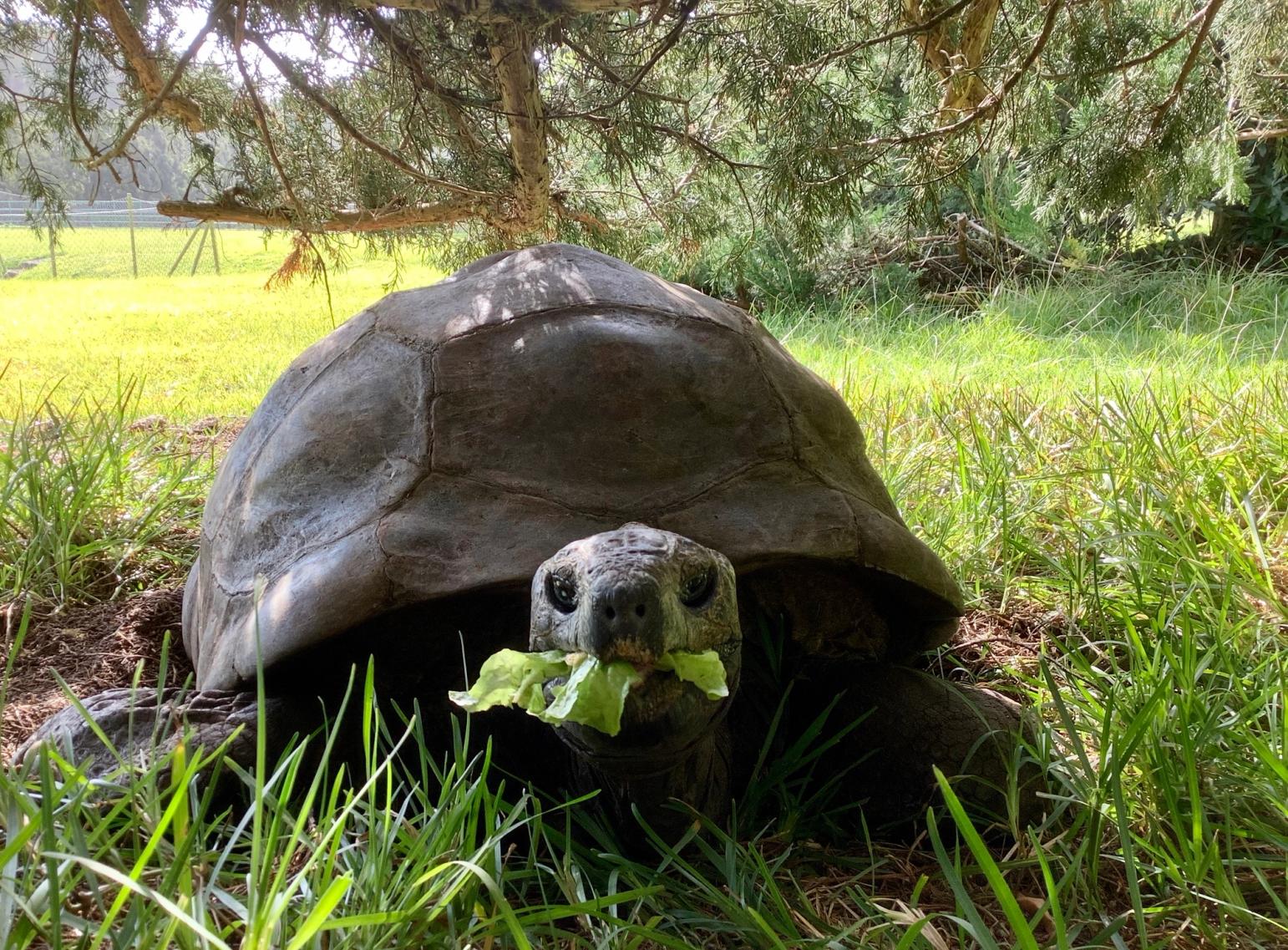
Jonathan the Tortoise: Assessing the World’s Oldest Land Animal in 2026
As of 2026, Jonathan the tortoise remains alive and continues to reside at Plantation House on the island of St. Helena. Now approximately 194 years old, Jonathan holds the Guinness World Record for the oldest living land animal and th...
As of 2026, Jonathan the tortoise remains alive and continues to reside at Plantation House on the island of St. Helena. Now approximately 194 years old, Jonathan holds the Guinness World Record for the oldest living land animal and the oldest chelonian ever recorded, having successfully navigated the milestone of 2025 in stable health.
Contents
Jonathan’s presence on St. Helena is more than just a biological anomaly; it is a living link to the 19th century. Estimated to have been hatched around 1832, he has survived through the reign of eight British monarchs, the invention of the lightbulb, the first powered flight, and the entirety of the digital revolution. While his physical senses have declined with age, his resilience remains a subject of global fascination and scientific study regarding animal longevity.
The Historical Journey of a Living Legend
Jonathan is a Seychelles giant tortoise (Aldabrachelys gigantea hololissa), a subspecies once thought to be extinct until modern taxonomic research clarified the lineage of various giant tortoise populations. His journey to St. Helena, a remote British Overseas Territory in the South Atlantic, began in 1882.
When Jonathan arrived on the island, he was described as being "fully grown," which, for his species, implies an age of at least 50 years. This estimation is the basis for his 1832 birth year. One of the most compelling pieces of evidence for his age is a photograph taken between 1882 and 1886, showing Jonathan on the lawn of Plantation House—the official residence of the Governor of St. Helena—looking remarkably similar in size to his current state.
Why St. Helena?
St. Helena’s isolated geography and temperate climate provided a sanctuary for Jonathan. Unlike many of his counterparts in the Indian Ocean, who were hunted to near extinction by sailors for meat during the 17th and 18th centuries, Jonathan was brought to the island as a gift for the governor. This transition from a wild habitat to a protected, monitored environment is a primary reason he has been able to reach such an unprecedented age.
The Biological Mechanisms of Longevity
Jonathan’s survival into 2026 prompts significant questions about how a complex organism can maintain life for nearly two centuries. The longevity of Seychelles giant tortoises is attributed to several evolutionary and biological factors.
1. Metabolic Rate and "Slow Living"
Giant tortoises possess an incredibly slow metabolism. Their energy expenditure is minimal, and their heart rates are significantly lower than those of mammals. This slow "pace of life" reduces the accumulation of metabolic waste products and oxidative stress, which are primary drivers of cellular aging.
2. Genetic Resilience and DNA Repair
Recent genomic studies on giant tortoises suggest they possess extra copies of genes related to immune response and DNA repair. These genetic "redundancies" allow their bodies to identify and fix cellular damage more efficiently than shorter-lived species. This capability is particularly effective in suppressing the development of tumors and age-related systemic failures.
3. Negligible Senescence
Tortoises are often cited as examples of organisms that exhibit "negligible senescence." This means that their functional capabilities—such as their ability to move, eat, and reproduce—do not decline drastically with chronological age until the very end of their life cycle. While Jonathan does show signs of aging, such as cataracts, his core biological functions remain intact.
Health Status and Daily Care in the 2020s
While Jonathan has proven to be incredibly hardy, his advanced age requires specialized geriatric care. Since the early 2010s, his diet and medical monitoring have been overseen by dedicated veterinary staff, most notably Dr. Joe Hollins.
Sensory Decline
Jonathan is now completely blind due to cataracts and has lost his sense of smell. These losses would be fatal in the wild, as he would be unable to locate food or detect predators. However, in the controlled environment of Plantation House, these deficiencies are managed through human intervention. His hearing remains excellent, and he responds acutely to the voice of his keepers, associating specific sounds with feeding times.
Dietary Adjustments
In his younger years, Jonathan grazed primarily on the grass of the Plantation House paddock. However, as his beak softened and his ability to forage declined, he began to suffer from malnutrition. To combat this, his veterinary team implemented a high-calorie, nutrient-dense supplemental feeding program.
Jonathan’s Weekly Supplement Diet:
- Apples and Pears: Sources of vitamins and hydration.
- Cucumbers and Carrots: Essential for moisture and beta-carotene.
- Bananas: High energy and potassium (provided in moderation).
- Guava and Seasonal Greens: Diversified nutrient profile.
This diet is hand-fed to him once a week, ensuring he receives the necessary vitamins, minerals, and calories that his natural grazing no longer provides.
| Aspect | Status in 2026 | Notes |
|---|---|---|
| Estimated Age | 194 Years | Based on 1832 hatching estimate. |
| Mobility | Active | Moves across the paddock on sunny days. |
| Vision | Blind | Affected by bilateral cataracts. |
| Smell | Lost | Does not respond to food aromas. |
| Hearing | Excellent | Responds to keepers' voices. |
| Diet | Managed | Supplemental fruit and vegetable feedings. |
| Social | Gregarious | Lives with three other tortoises. |
Social Dynamics and Companionship
Jonathan does not live in isolation. He shares his paddock with three other giant tortoises: David, Emma, and Fred. These companions provide essential social stimulation, which is believed to contribute to his mental well-being and continued activity levels.
One of the most famous aspects of Jonathan's social life involves his relationship with Fred (originally thought to be Frederica). For decades, the two were inseparable companions, only for keepers to later discover that Fred was a male. Regardless of gender, the bond between the tortoises remains a key element of Jonathan’s daily routine. He is often observed basking in the sun alongside his peers or engaging in communal resting behaviors.
Verification of Records
The Guinness World Records (GWR) officially recognizes Jonathan as the "Oldest Land Animal" and the "Oldest Chelonian." The verification of such records is rigorous, relying on historical documents, photographic evidence, and expert testimony.
The previous record-holder for the oldest chelonian was Tu'i Malila, a radiated tortoise that was given to the royal family of Tonga by Captain James Cook. Tu'i Malila died in 1966 at the age of approximately 188. Jonathan surpassed this record in 2021, and every year he survives further extends a record that may not be broken for centuries.
The Significance of Conservation
Jonathan serves as a global ambassador for conservation. His species, the Seychelles giant tortoise, faced near extinction due to over-exploitation by humans. Jonathan's longevity is a stark reminder of the long-term impact of human interaction with wildlife. While Jonathan himself is safe, his wild relatives in places like the Aldabra Atoll continue to face threats from climate change, rising sea levels, and habitat loss.
His presence on St. Helena is a major driver of local pride and tourism. He appears on the island’s five-pence coin and several postage stamps. For the people of St. Helena, Jonathan is more than a pet; he is a national icon.
Frequently Asked Questions
Is Jonathan the tortoise still alive in 2026?
Yes, Jonathan is still alive as of 2026. He resides at Plantation House on St. Helena under the care of the island’s veterinary team. Despite his advanced age of approximately 194 years, he remains stable and active within his paddock.
What does Jonathan eat to stay healthy?
Jonathan receives a weekly supplement of fresh fruits and vegetables, including apples, pears, cucumbers, bananas, and carrots. This diet is necessary because his aging beak makes it difficult for him to get enough nutrition from grazing on grass alone.
Can Jonathan still see or smell?
Jonathan is functionally blind due to cataracts and has lost his sense of smell. However, he has retained a sharp sense of hearing and is highly responsive to the voices of his caretakers, which allows him to navigate his environment and feeding schedule effectively.
How do we know Jonathan is actually 194 years old?
His age is an estimate based on the fact that he was "fully grown" (at least 50 years old) when he arrived on St. Helena in 1882. Historical photographs from the 1880s confirm he was an adult at that time, making 1832 the most conservative estimate for his birth.
Who takes care of Jonathan?
Jonathan is cared for by the St. Helena government's veterinary department. His long-term veterinarian, Dr. Joe Hollins, has been instrumental in modernizing Jonathan’s diet and medical care, which is credited with extending his life over the last two decades.
Current Status and Looking Ahead
In 2026, Jonathan continues to defy biological expectations. His health is monitored daily, and while he spends more time resting than he did in previous decades, he still shows a zest for life, particularly during his weekly feeding sessions. The "Jonathan" project on St. Helena isn't just about record-keeping; it is a masterclass in geriatric animal care.
For those interested in following Jonathan’s journey, the St. Helena Island Government periodically releases updates on his well-being. Visitors to the island can observe him from a respectful distance at the Plantation House paddock, where he remains the undisputed "Grand Old Man" of St. Helena.
Image Gallery