Navigating How California Observes Daylight Saving Time: History, Mechanics, and Modern Debates
California observes Daylight Saving Time (DST) by advancing clocks by one hour on the second Sunday in March and returning them to standard time by setting them back one hour on the first Sunday in November. This twice-annual routine a...
California observes Daylight Saving Time (DST) by advancing clocks by one hour on the second Sunday in March and returning them to standard time by setting them back one hour on the first Sunday in November. This twice-annual routine affects energy usage, transportation schedules, public health, and commerce across the state, even as legislative efforts attempt to establish a permanent time system.
Contents
Understanding how California manages its clocks requires looking at federal mandates, state history, practical operational impacts, and the ongoing legal hurdles preventing year-round daylight saving time. While citizens across the Golden State frequently debate the merits of changing their clocks, the federal framework established by the Uniform Time Act of 1966 strictly governs when and how these shifts occur.
The Legal and Regulatory Framework of Time in California
Timekeeping in the United States is not entirely up to individual states. The federal government maintains authority over standard time zones and daylight saving observance schedules through specific legislative acts.
The Uniform Time Act of 1966
Enacted by the United States Congress, the Uniform Time Act of 1966 (15 U.S.C. § 260 et seq.) was designed to eliminate the confusing patchwork of time changes that previously existed across different municipalities and states. The law mandated a uniform system of daylight saving time across the country, establishing specific start and end dates.
However, the Uniform Time Act includes a vital provision: it allows individual states to exempt themselves entirely from observing Daylight Saving Time, provided the state remains on standard time year-round. Hawaii and most of Arizona took advantage of this provision decades ago and do not change their clocks. Crucially, the federal statute does not permit states to remain on Daylight Saving Time year-round without explicit congressional authorization or a change to federal law.
Proposition 7 and the Legislative Push for Change
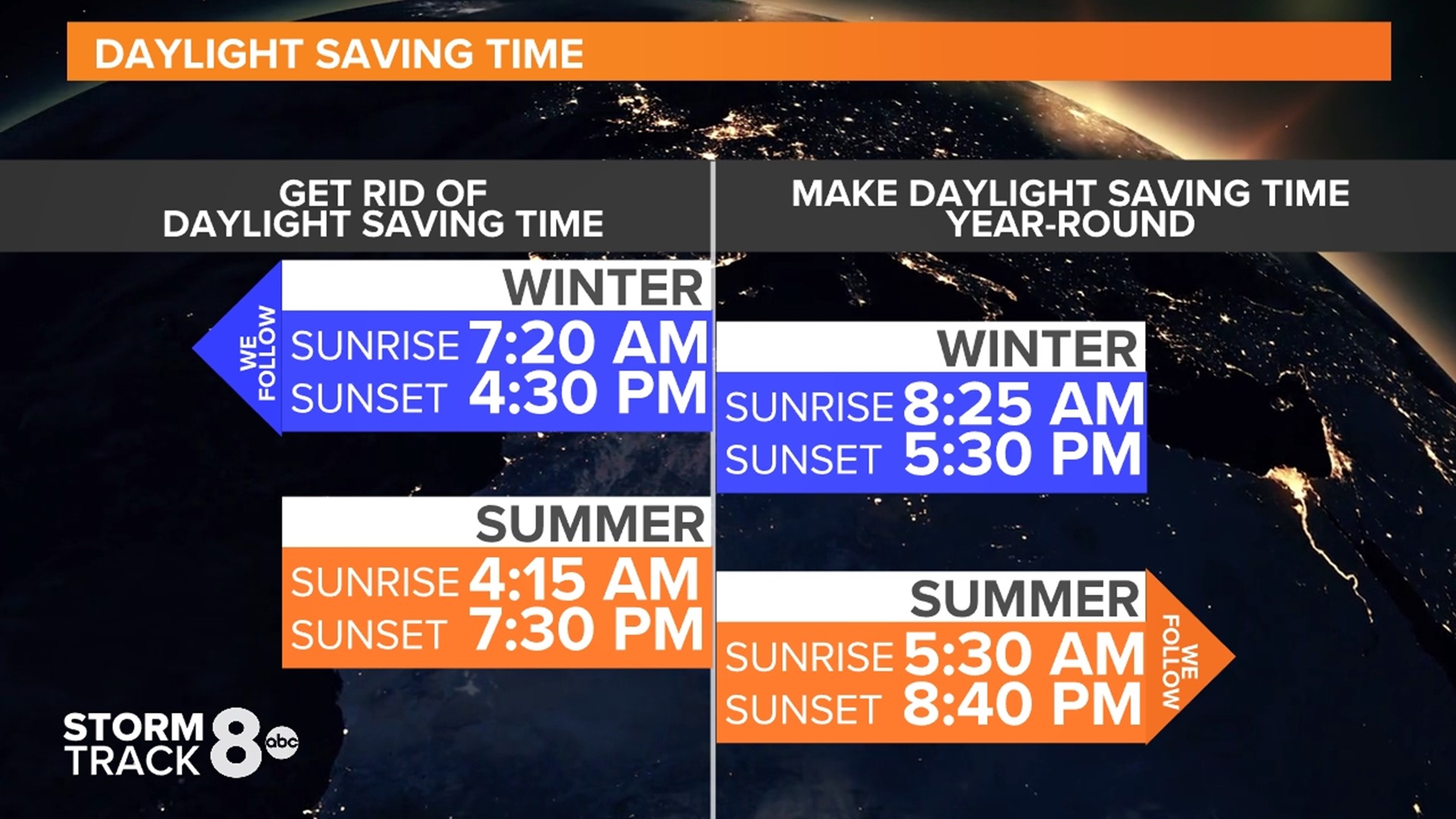
California voters expressed widespread dissatisfaction with the biannual clock change in November 2018 by passing Proposition 7 with roughly 60% of the vote. This ballot measure was a non-binding advisory measure that authorized the state legislature to establish year-round Daylight Saving Time if permitted by federal law.
Following Proposition 7, the California State Legislature passed Assembly Bill 7 (AB 7) in 2019, which aimed to implement year-round daylight saving time should the federal government amend the Uniform Time Act. Despite these efforts, federal legislation—such as the periodically proposed Sunshine Protection Act—has consistently stalled in Congress. Consequently, California remains legally bound to follow the traditional biannual transition schedule.
The Mechanics of the Clock Change: Spring Forward and Fall Back
The logistics of transitioning time twice a year involve synchronized coordination across transportation networks, financial institutions, telecommunications, and digital infrastructure.
| Transition Event | Calendar Timing | Clock Adjustment |
|---|---|---|
| Spring Forward | Second Sunday in March | Move clocks FORWARD 1 hour |
| Fall Back | First Sunday in November | Move clocks BACK 1 hour |
Spring Forward (March)
On the second Sunday in March at 2:00 a.m. local time, clocks are advanced forward by one hour to 3:00 a.m. This transition marks the beginning of Daylight Saving Time in California, shifting an hour of daylight from the morning to the evening. While evening commuters enjoy extended daylight, residents lose one hour of sleep on that specific weekend night. Public safety campaigns often use this weekend to remind homeowners to check and replace the batteries in their smoke detectors and carbon monoxide alarms.
Fall Back (November)
On the first Sunday in November at 2:00 a.m. local time, clocks are turned backward one hour to 1:00 a.m. This transition returns California to Pacific Standard Time (PST). Residents gain an hour of sleep, but evenings grow darker significantly earlier as sunset shifts earlier into the late afternoon hours.
Operational, Economic, and Social Impacts
The practice of observing Daylight Saving Time generates significant debate regarding its actual utility versus its unintended consequences on daily life.
Energy Consumption and Conservation
The original justification for implementing Daylight Saving Time centered on energy conservation—specifically, reducing the need for artificial lighting by extending evening daylight during warmer months. However, modern studies present a mixed picture. While lighting electricity use may decrease, increased reliance on residential air conditioning during longer, hotter summer evenings often offsets those energy savings.
Public Health and Safety Considerations
Medical researchers and chronobiologists have documented various disruptions associated with the abrupt shift in time. The transition in March, which results in sleep deprivation, is frequently linked to short-term spikes in traffic accidents, workplace injuries, and even acute cardiovascular events like heart attacks during the initial days following the change. Conversely, the autumn transition back to standard time generally aligns with a temporary reprieve in sleep debt, though the sudden darkening of afternoons presents its own seasonal challenges for pedestrian safety and driver visibility.
Transportation and Global Commerce Coordination
California serves as a massive hub for international trade, aviation, and technology. Because major financial markets on the East Coast and international trading partners operate on their own time schedules, the misalignment caused by differing adoption dates or time zones can create temporary scheduling friction. However, because California synchronizes its transitions with the vast majority of U.S. states, domestic scheduling remains consistent nationwide.
Common Misconceptions About California Time Laws
Numerous myths persist regarding how time is managed within the state, often fueled by viral social media posts or misunderstood legislative proposals.
- Myth: California abolished Daylight Saving Time after Proposition 7 passed.
- Fact: Proposition 7 only gave the state legislature permission to pursue year-round daylight saving time if the federal government changes federal law. California still changes its clocks twice a year.
- Myth: States can choose to stay on Daylight Saving Time whenever they want.
- Fact: Under the Uniform Time Act, states may opt out of DST entirely (staying on standard time year-round like Arizona), but federal law explicitly prohibits states from adopting permanent daylight saving time unilaterally.
- Myth: Farmers requested Daylight Saving Time.
- Fact: Agricultural organizations historically opposed DST because it disrupted milking schedules, harvesting logistics, and livestock management. The primary historical drivers were industrial energy conservation and wartime measures.
Frequently Asked Questions
Does all of California observe Daylight Saving Time?
Yes. Every county, city, and municipality in California observes Daylight Saving Time on the exact same schedule dictated by federal law. Unlike Arizona, which maintains a year-round standard time exemption, California does not have internal geographic exceptions for timekeeping.
What happens if Congress passes the Sunshine Protection Act?
If Congress passes the Sunshine Protection Act—or similar legislation amending the Uniform Time Act—and the President signs it into law, California's AB 7 would automatically trigger. This would allow California to remain on Pacific Daylight Time (PDT) year-round, eliminating the need to turn clocks back in November.
Why do we still change our clocks if studies question its benefits?
Changing clocks remains mandatory because altering the system requires a complex legislative consensus at the federal level. While public opinion heavily favors ending the biannual change, lawmakers remain divided on whether year-round Daylight Saving Time or year-round Standard Time is the healthier and more economically advantageous choice.
How do digital devices handle the time change?
Modern smartphones, computers, operating systems, and smart home devices automatically adjust their internal clocks based on network time protocol (NTP) servers. Users rarely need to manually reset digital devices, though analog clocks, wristwatches, and older vehicle dashboard clocks still require manual adjustment.
Next Steps for Residents and Businesses
While legislative efforts to alter California's time observance continue to surface in Washington, D.C., residents and business operators should plan around the established biannual schedule. Ensuring that HVAC timers, security systems, and automated industrial machinery are properly updated during the spring and fall transitions prevents operational disruptions and maintains scheduling accuracy across all personal and professional engagements.
Image Gallery