Understanding the Definition of a Narcissistic Person: Clinical Insights and Behavioral Traits
A narcissistic person is defined by a persistent pattern of grandiosity, an overwhelming need for admiration, and a profound lack of empathy for others. While often used colloquially to describe vanity, the clinical definition involves...
A narcissistic person is defined by a persistent pattern of grandiosity, an overwhelming need for admiration, and a profound lack of empathy for others. While often used colloquially to describe vanity, the clinical definition involves a complex psychological structure where an inflated self-image masks a fragile sense of self-worth and a deep-seated vulnerability to criticism.
Contents
The term "narcissism" originates from the Greek myth of Narcissus, who fell in love with his own reflection. However, in modern psychology as of 2026, narcissism is viewed as a spectrum. At one end lies "healthy narcissism," which contributes to self-confidence and resilience. At the other end is Narcissistic Personality Disorder (NPD), a mental health condition officially recognized in the Diagnostic and Statistical Manual of Mental Disorders, Fifth Edition, Text Revision (DSM-5-TR). Understanding the definition of a narcissistic person requires distinguishing between occasional self-centered behavior and the rigid, pervasive personality traits that disrupt relationships, careers, and social functioning.
The Spectrum of Narcissism: From Healthy to Pathological
Narcissism is not a binary state; it is a dimensional construct. Most individuals possess some narcissistic traits, which can be adaptive in specific contexts, such as competitive business environments or public performance. However, a narcissistic person in the clinical sense is defined by the degree to which these traits are maladaptive and inflexible.
Healthy Narcissism
Healthy narcissism involves having a realistic sense of self-worth, the ability to take pride in one's accomplishments, and a stable ego that does not collapse under criticism. People with healthy narcissism can pursue their goals effectively while maintaining genuine concern for the welfare of others. They do not require constant external validation to feel "whole."
Subclinical Narcissism
Subclinical narcissists exhibit higher-than-average levels of self-importance and vanity but do not meet the full diagnostic criteria for a personality disorder. These individuals may be charismatic and successful, but their interpersonal relationships often suffer due to their tendency to prioritize their own needs and a relative lack of emotional depth in their connections.
Narcissistic Personality Disorder (NPD)
NPD represents the pathological end of the spectrum. As defined by the American Psychiatric Association, NPD is a "pervasive pattern of grandiosity (in fantasy or behavior), need for admiration, and lack of empathy, beginning by early adulthood and present in a variety of contexts." For a person to be clinically defined as narcissistic, their behavior must be consistent across different situations and persist over time, leading to significant distress or impairment in social, occupational, or other important areas of functioning.
Clinical Criteria: The Nine Traits of a Narcissistic Person
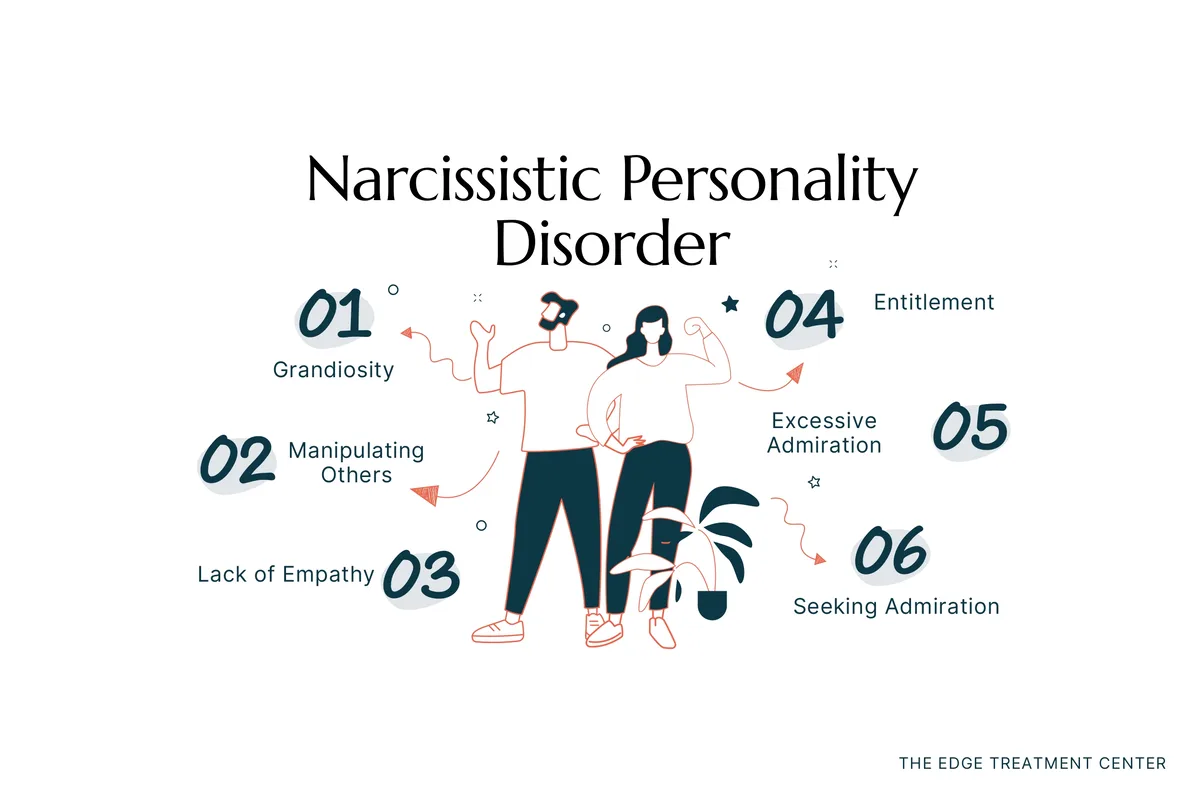
To provide a standard definition, the American Psychiatric Association outlines nine specific criteria for Narcissistic Personality Disorder. A clinical diagnosis typically requires the presence of at least five of these traits:
- Grandiose Sense of Self-Importance: The individual exaggerates achievements and talents and expects to be recognized as superior without commensurate achievements.
- Preoccupation with Fantasies: They are often consumed by thoughts of unlimited success, power, brilliance, beauty, or ideal love.
- Belief in Uniqueness: The person believes they are "special" and can only be understood by, or should associate with, other special or high-status people or institutions.
- Requirement for Excessive Admiration: They have an insatiable "narcissistic supply"—a constant need for praise, attention, and validation to bolster their ego.
- Sense of Entitlement: This involves unreasonable expectations of especially favorable treatment or automatic compliance with their expectations.
- Interpersonally Exploitative Behavior: They take advantage of others to achieve their own ends, often viewing people as tools rather than individuals with their own needs.
- Lack of Empathy: They are unwilling or unable to recognize or identify with the feelings and needs of others. This is a hallmark of the narcissistic definition.
- Envy of Others: They are frequently envious of others or believe that others are envious of them.
- Arrogant and Haughty Behaviors: They demonstrate snobbish, disdainful, or patronizing attitudes toward people they perceive as inferior.
The Two Primary Subtypes: Grandiose vs. Vulnerable
While the DSM-5-TR provides a unified set of criteria, researchers and clinicians commonly identify two distinct presentations of the narcissistic person. Distinguishing between these is essential for accurate identification and treatment.
Grandiose (Overt) Narcissism
The grandiose narcissist is the "classic" version of the personality. These individuals are characterized by extraversion, arrogance, and an obvious sense of entitlement. They tend to be socially bold, charming on the surface, and highly resilient to stress. They rarely experience shame and are more likely to exhibit aggressive behavior when their ego is challenged. In professional settings, they may rise to leadership positions through sheer confidence, though their lack of empathy often leads to high turnover in the teams they manage.
Vulnerable (Covert) Narcissism
The vulnerable or covert narcissist is more difficult to define at first glance. These individuals share the same core feelings of entitlement and grandiosity but mask them with a veneer of modesty or victimhood. Instead of overt arrogance, they may exhibit hypersensitivity to criticism, social withdrawal, and a quiet sense of "neglected genius." They often feel that the world has failed to recognize their brilliance. Vulnerable narcissists are more prone to anxiety and depression because their self-esteem is highly unstable and easily bruised.
| Feature | Grandiose Narcissism | Vulnerable Narcissism |
|---|---|---|
| Primary Affect | Confidence, Arrogance | Anxiety, Defensiveness |
| Social Presence | Extraverted, Charismatic | Introverted, Hypersensitive |
| Self-Esteem | Stable but inflated | Fragile and fluctuating |
| Reaction to Criticism | Anger, Aggression | Shame, Withdrawal |
| Interpersonal Style | Dominant, Exploitative | Avoidant, Passive-Aggressive |
| Relationship Pattern | Short-term, high intensity | Long-term "victim" narrative |
The Psychodynamics: Why Narcissistic People Behave This Way
The definition of a narcissistic person is incomplete without exploring the underlying psychological mechanisms. At the heart of narcissism is a phenomenon known as narcissistic injury. Because the narcissist's self-image is built on a false "grandiose self" rather than a stable internal identity, any perceived slight, failure, or criticism is experienced as a devastating threat to their existence.
Narcissistic Supply
Narcissistic supply refers to the external validation that a narcissistic person requires to maintain their self-esteem. This can take the form of praise, money, status, or even negative attention, such as fear or conflict. Without a steady stream of supply, the narcissistic person may experience "narcissistic collapse," a state of severe depression or rage where they can no longer maintain their facade.
Lack of Empathy: Affective vs. Cognitive
A critical nuance in the definition of narcissism is the type of empathy involved. Most narcissistic people possess cognitive empathy—the ability to intellectually understand what someone else is feeling. This allows them to be highly manipulative, as they can "read" people to determine their weaknesses. However, they typically lack affective empathy, which is the ability to actually feel or care about the emotional state of another person. This deficit is what allows them to act in exploitative ways without feeling guilt.
Identifying Narcissistic Behavior in Relationships
In real-world interactions, a narcissistic person is often identified not by a checklist of traits, but by the pattern of their interpersonal relationships. These patterns often follow a predictable cycle that can be psychologically damaging to those around them.
The Idealization-Devaluation Cycle
Relationships with a narcissistic person often begin with love bombing. This is a period of intense attention, flattery, and affection designed to hook the other person. Once the narcissist feels secure in the relationship or finds a flaw in the partner, the devaluation phase begins. The partner is criticized, ignored, or mocked. Eventually, the narcissist may discard the partner when they are no longer a useful source of supply, or they may keep the partner in a state of perpetual instability.
Common Behavioral Red Flags
- Gaslighting: A manipulation tactic where the narcissist makes the other person doubt their own reality, memory, or perceptions.
- Projection: Attributing their own negative traits or behaviors to others. For example, a narcissistic person who is being unfaithful may accuse their partner of cheating.
- Boundary Violations: They treat others' time, space, and emotions as their own, showing little respect for personal limits.
- Monopolizing Conversations: Discussions are steered back to the narcissist’s achievements or problems, regardless of the original topic.
Etiology: What Causes a Person to Become Narcissistic?
Research into the origins of narcissism suggests a biopsychosocial model. According to the Mayo Clinic, there is no single cause, but rather a combination of factors:
- Environment: Parenting styles play a significant role. This includes "over-valuation" (constantly telling a child they are better than others) or extreme neglect and emotional abuse, which forces the child to create a grandiose false self as a survival mechanism.
- Genetics: Studies of twins suggest a moderate heritability for narcissistic traits, indicating a biological predisposition.
- Neurobiology: Emerging research in 2026 continues to investigate the connection between narcissism and structural differences in the brain, particularly in the regions responsible for empathy and emotional regulation, such as the prefrontal cortex and the insula.
Diagnostic Limitations and Professional Assessment
It is important to note that a "narcissistic person" cannot be officially diagnosed by a layperson. While behavioral patterns may be evident, a formal diagnosis of Narcissistic Personality Disorder must be conducted by a licensed mental health professional, such as a psychologist or psychiatrist.
The diagnostic process involves clinical interviews, psychological testing (such as the Narcissistic Personality Inventory or MMPI), and a review of the individual's long-term history. Diagnosing NPD is notoriously difficult because many narcissistic people do not believe they have a problem and rarely seek treatment unless they are experiencing a secondary issue like depression or substance abuse.
Frequently Asked Questions
Can a narcissistic person change?
Change is possible but rare and typically very slow. Because a core feature of the disorder is the belief that they are not the problem, narcissistic people are often resistant to therapy. Improvement usually requires long-term, specialized treatment like Dialectical Behavior Therapy (DBT) or Mentalization-Based Therapy (MBT), and it hinges on the individual's genuine desire to change, which is often only triggered by a major life crisis.
Is narcissism the same as sociopathy?
No, though they share some traits. Both involve a lack of empathy and exploitative behavior. However, the primary motivation for a narcissistic person is the need for admiration and the protection of a fragile ego. A sociopath (clinically referred to as having Antisocial Personality Disorder) is more motivated by personal gain or the thrill of breaking rules and may not care about being admired or liked at all.
How do I deal with a narcissistic person at work?
The best strategy is "Grey Rocking"—making yourself as uninteresting as a grey rock. Provide short, factual answers, avoid sharing personal information, and do not react emotionally to their provocations. This denies them the "narcissistic supply" they crave, often causing them to move on to a different target. Documentation of all interactions is also vital in professional settings.
Are all successful people narcissistic?
While some narcissistic traits—like confidence and high ambition—can help people succeed in certain fields, not all successful people are narcissistic. True leadership involves the ability to inspire and empathize with others, qualities that a pathologically narcissistic person lacks. High-achieving individuals with healthy self-esteem can accept feedback and acknowledge the contributions of their team.
Is narcissism on the rise?
Cultural critics often argue that social media has created a "narcissism epidemic." While digital platforms encourage self-promotion, psychologists distinguish between increased vanity and a rise in Narcissistic Personality Disorder. While behaviors may change with technology, the underlying prevalence of the clinical disorder has remained relatively stable in psychiatric populations.
Next Actions and Recommendations
If you suspect you are dealing with a narcissistic person, prioritize your own mental health and safety. The primary goal when interacting with someone high on the narcissistic spectrum is to establish firm boundaries.
- Educate Yourself: Understanding the mechanics of narcissism can help you depersonalize their behavior. Recognize that their insults and manipulations are a reflection of their internal state, not your worth.
- Seek Professional Support: If you have been in a long-term relationship with a narcissistic person, you may experience "narcissistic abuse syndrome." A therapist specializing in trauma or personality disorders can help you process the experience.
- Establish Boundaries: Be clear about what behavior you will and will not tolerate. If a narcissistic person violates a boundary, follow through with a predetermined consequence, such as ending the conversation or leaving the room.
- Avoid Jargon-Based Labeling: While the term "narcissist" is common, focus on specific behaviors. In legal or workplace settings, describing specific actions (e.g., "This person took credit for my work") is more effective than applying a psychological label.
Image Gallery