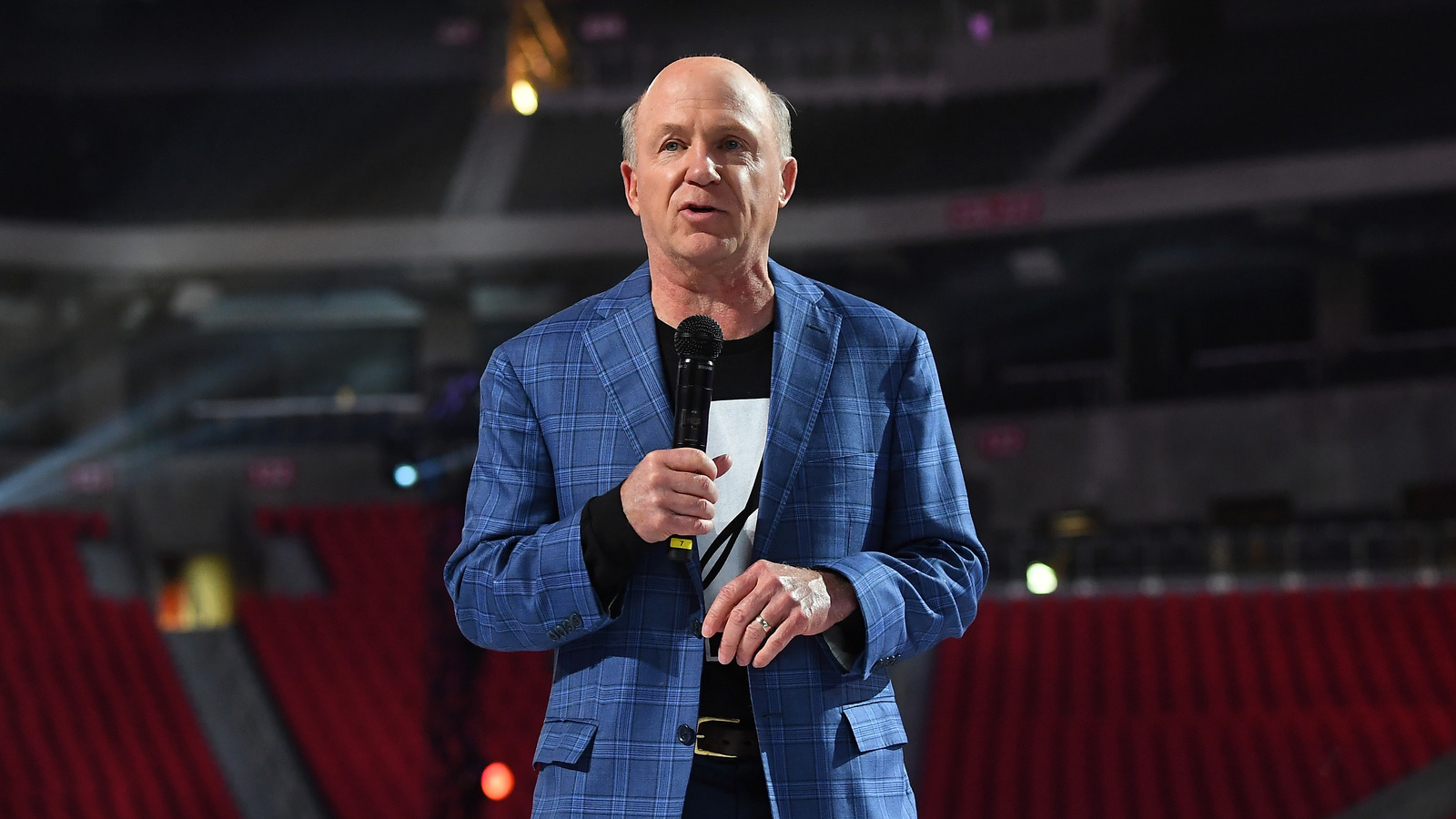
Jimmy Collins Chick-fil-A Net Worth Overview: The Legacy of the First Employee
Jimmy Collins, the former President and Chief Operating Officer of Chick-fil-A, had an estimated net worth of $10 million to $20 million at the time of his passing in 2020. As of 2026, his financial legacy is defined by his 32-year ten...
Jimmy Collins, the former President and Chief Operating Officer of Chick-fil-A, had an estimated net worth of $10 million to $20 million at the time of his passing in 2020. As of 2026, his financial legacy is defined by his 32-year tenure as the company's first employee and his influential role in shaping the chain's operational success.
Contents
The story of Jimmy Collins is not merely a tale of executive compensation but a masterclass in "creative followership." Unlike the Cathy family, who own the private multi-billion-dollar enterprise, Collins built his wealth as a high-level executive and a strategic architect of the brand's early expansion. To understand his net worth overview, one must examine the intersection of his corporate leadership, his literary contributions, and the unique profit-sharing structure of one of America’s most successful private companies.
The Architectural Role of Jimmy Collins at Chick-fil-A
Jimmy Collins’ journey with Chick-fil-A began long before the company became a household name. In the early 1960s, Collins was working as a consultant and a food service designer. His first interaction with S. Truett Cathy involved designing the kitchen for the very first Chick-fil-A unit at the Greenbriar Mall in Atlanta, which opened in 1967.
Cathy recognized Collins’ operational genius and invited him to join the company full-time in 1968. As the first official employee, Collins was instrumental in transforming a single mall-based unit into a national powerhouse. His role was to take Truett Cathy’s vision and build the systems, processes, and corporate culture required to scale it. This foundational role placed him in a unique position regarding executive compensation. While he did not hold equity in the Cathy family-owned business, his seniority and impact ensured a compensation package that reflected his status as the "right-hand man" to a billionaire founder.
Breaking Down the Components of Jimmy Collins' Net Worth
Because Chick-fil-A is a private company, the exact financial details of executive contracts are not public record. However, based on industry standards for COOs of major QSR (Quick Service Restaurant) brands and Collins’ own disclosures in his memoirs, we can analyze the primary sources of his wealth.
Executive Compensation and Performance Bonuses
During his tenure as COO (1968–2001), Chick-fil-A experienced unprecedented growth. The company’s model of focusing on shopping malls in the 70s and 80s, followed by the aggressive rollout of stand-alone units in the 90s, occurred under Collins’ operational watch. High-level executives in private firms of this scale typically receive:
- Base Salary: Commensurate with the size of the enterprise.
- Performance Bonuses: Tied to the system-wide sales growth and profitability.
- Deferred Compensation: Standard for long-term executive retention.
The Impact of "Creative Followership" and Authorship
Post-retirement, Jimmy Collins became a sought-after speaker and author. His book, Creative Followership: In the Shadow of Greatness, published in 2013, became a staple in leadership circles. The royalties from this book, along with his speaking engagements at corporate events and universities, provided a steady stream of income well into his later years. Unlike many retirees, Collins leveraged his professional identity to create a personal brand that contributed significantly to his estate's valuation.
Real Estate and Personal Investments
Over his 32-year career and two decades of retirement, Collins managed his earnings with the same discipline he applied to Chick-fil-A’s operations. His estate included residential properties and likely a diversified portfolio of private investments. Being based in the Atlanta area, he was part of a business community that saw immense real estate appreciation over forty years.
Comparing Executive Wealth vs. Founder Wealth
It is a common point of confusion for those researching "Jimmy Collins Chick-fil-A net worth" to conflate his wealth with that of the Cathy family. S. Truett Cathy’s heirs, including Dan and Bubba Cathy, are consistently ranked among the wealthiest individuals in the world, with net worths in the billions.
Jimmy Collins, however, represented the pinnacle of the "professional executive" class. In a private company where stock options are not available to employees (as Chick-fil-A famously does not offer public shares), wealth is accumulated through high-earning years and smart reinvestment. Collins’ wealth was substantial—allowing for significant philanthropy—but it was an employee-scale fortune, not a founder-scale fortune.
| Financial Category | Estimated Impact (Historical/2026 Legacy) | Primary Source |
|---|---|---|
| Core Executive Earnings | High | 32 years of salary and COO bonuses |
| Literary Royalties | Moderate | Creative Followership and speaking fees |
| Investment Portfolio | High | Long-term capital appreciation in Atlanta |
| Equity/Ownership | Zero | Chick-fil-A remains 100% Cathy family-owned |
| Philanthropic Outlay | Significant | The Collins Family Foundation and various charities |
The Operational Philosophy That Drove Financial Success
The growth of Jimmy Collins' net worth was a direct result of his "Followership" philosophy. He argued that to be a great leader, one must first be a great follower of a worthy vision. By dedicating his career to S. Truett Cathy’s vision, he made himself indispensable.
This dedication led to the development of the Chick-fil-A "Operator" model, which Collins helped refine. Unlike traditional franchises where the franchisee owns the equipment and real estate, Chick-fil-A retains ownership. This model ensures the company remains highly profitable and centralized, which in turn allowed for higher executive bonuses for those at the top, like Collins. His ability to maintain a 95% operator retention rate was perhaps his greatest financial contribution to the firm, indirectly securing his own compensation through the company's stability.
Philanthropy and the Collins Family Foundation
A significant portion of Jimmy Collins’ net worth was directed toward the Collins Family Foundation. Jimmy and his wife, Bette, were deeply committed to Christian education and youth development.
In 2026, the foundation continues to reflect his financial legacy. Much of the wealth he accumulated during the "Golden Age" of Chick-fil-A expansion has been redistributed to:
- Educational Scholarships: Supporting students at institutions like Berry College and Georgia State University.
- Community Development: Funding local Atlanta initiatives that focus on leadership training for underserved youth.
- Religious Organizations: Consistent with the corporate values of Chick-fil-A, Collins was a major donor to various church-related projects.
Common Misconceptions Regarding His Wealth
When reviewing the net worth of early Chick-fil-A pioneers, several myths frequently surface.
Did Jimmy Collins own Chick-fil-A franchises? No. Chick-fil-A corporate employees, especially at the executive level, generally do not operate individual units to avoid conflicts of interest. Collins’ wealth came from his corporate role, not from owning specific restaurant locations.
Did he have a stake in the company's 2020s valuation? Because Chick-fil-A is a private, family-owned business, there are no "shares" that Collins could have held and passed down. His financial benefits were realized during his active years and through his retirement pension/agreements.
Was he a billionaire? There is no evidence to suggest Jimmy Collins reached billionaire status. His wealth was consistent with that of a successful COO of a major American corporation, placing him firmly in the top tier of American earners but not in the ranks of the global elite billionaires.
Frequently Asked Questions
What was Jimmy Collins' role in Chick-fil-A's growth?
Jimmy Collins was the "architect" of Chick-fil-A's operations. While Truett Cathy provided the vision and the recipe, Collins built the corporate structure, the training systems, and the logistics that allowed the company to scale from a single mall unit to thousands of locations.
Is Jimmy Collins still alive in 2026?
No, Jimmy Collins passed away on September 4, 2020, at the age of 86. His net worth and legacy are now managed through his estate and the Collins Family Foundation.
How did Jimmy Collins meet S. Truett Cathy?
They met in the early 1960s when Collins was working for a food service equipment company. He was hired to design the kitchen for the first Chick-fil-A in Greenbriar Mall. Cathy was so impressed by his work that he convinced him to become the company's first employee.
What is the book "Creative Followership" about?
The book details Collins’ philosophy that leadership is not just about being "in charge," but about serving a mission and a leader with excellence. It explains how he helped build Chick-fil-A by being a "creative follower" to Truett Cathy.
Did Jimmy Collins receive a pension from Chick-fil-A?
As a long-term executive who retired as President and COO, Collins likely received a significant executive retirement package, though the specific details of such private agreements remain confidential.
Final Perspective on the Jimmy Collins Legacy
Jimmy Collins’ net worth overview is a reminder that significant wealth can be built through corporate loyalty and operational excellence. He was a prime example of an executive who maximized his financial potential not by jumping between companies, but by dedicating over three decades to a single, growing brand. For those looking to understand the financial history of Chick-fil-A, Collins represents the bridge between a small family business and the global behemoth it is today.
His wealth allowed him to live a life of influence and generosity, proving that being "second in command" at the right company can be just as rewarding—financially and personally—as being the founder.
Image Gallery