Garlic Cake Weed Strain: Comprehensive Profile, Effects, and Cultivation Guide for 2026
Garlic Cake, also widely known in the cannabis community as GMO Cookies or Garlic GMO, is a potent indica-dominant hybrid strain bred by crossing the legendary Girl Scout Cookies (GSC) and Chemdawg. Celebrated for its intensely savory,...
Garlic Cake, also widely known in the cannabis community as GMO Cookies or Garlic GMO, is a potent indica-dominant hybrid strain bred by crossing the legendary Girl Scout Cookies (GSC) and Chemdawg. Celebrated for its intensely savory, pungent aroma profile dominated by notes of diesel, garlic, and earth, this strain delivers heavy-hitting physical relaxation alongside cerebral euphoria, making it a staple for experienced cannabis consumers and medical patients alike in 2026.
Contents
Lineage and Genetic Origins of Garlic Cake
Understanding the genetic backbone of the Garlic Cake weed strain requires examining two of the most influential cultivars in modern cannabis breeding: Girl Scout Cookies and Chemdawg. Originally popularized by breeders under the moniker GMO (often playfully expanded to mean "Garlic, Mushroom, and Onion" due to its distinct savory terpene profile), Garlic Cake inherits a complex chemical makeup that defies traditional sweet or fruity expectations.
The Girl Scout Cookies parent contributes dense, resin-coated bud structures, a heavy coat of trichomes, and a deeply relaxing body stone. Meanwhile, Chemdawg infuses the cross with its unmistakable chemical, diesel-like sharpness and a soaring, intensely cerebral psychoactive onset. When combined, these genetics produce a plant that routinely tests with exceptionally high tetrahydrocannabinol (THC) percentages, frequently ranging from 25% to over 30% under optimal indoor cultivation conditions.
Key Genetic Characteristics
- Dominance: Indica-dominant hybrid (typically 80% indica / 20% sativa)
- Parent Strains: Girl Scout Cookies x Chemdawg
- Breeder Origin: ChemDog / Skunkmasterflex (widely popularized by Mamiko Seeds)
- Primary Cannabinoid: THC (average 26%-32%), with minor traces of CBG and CBD (under 1%)
Terpene Profile and Sensory Experience
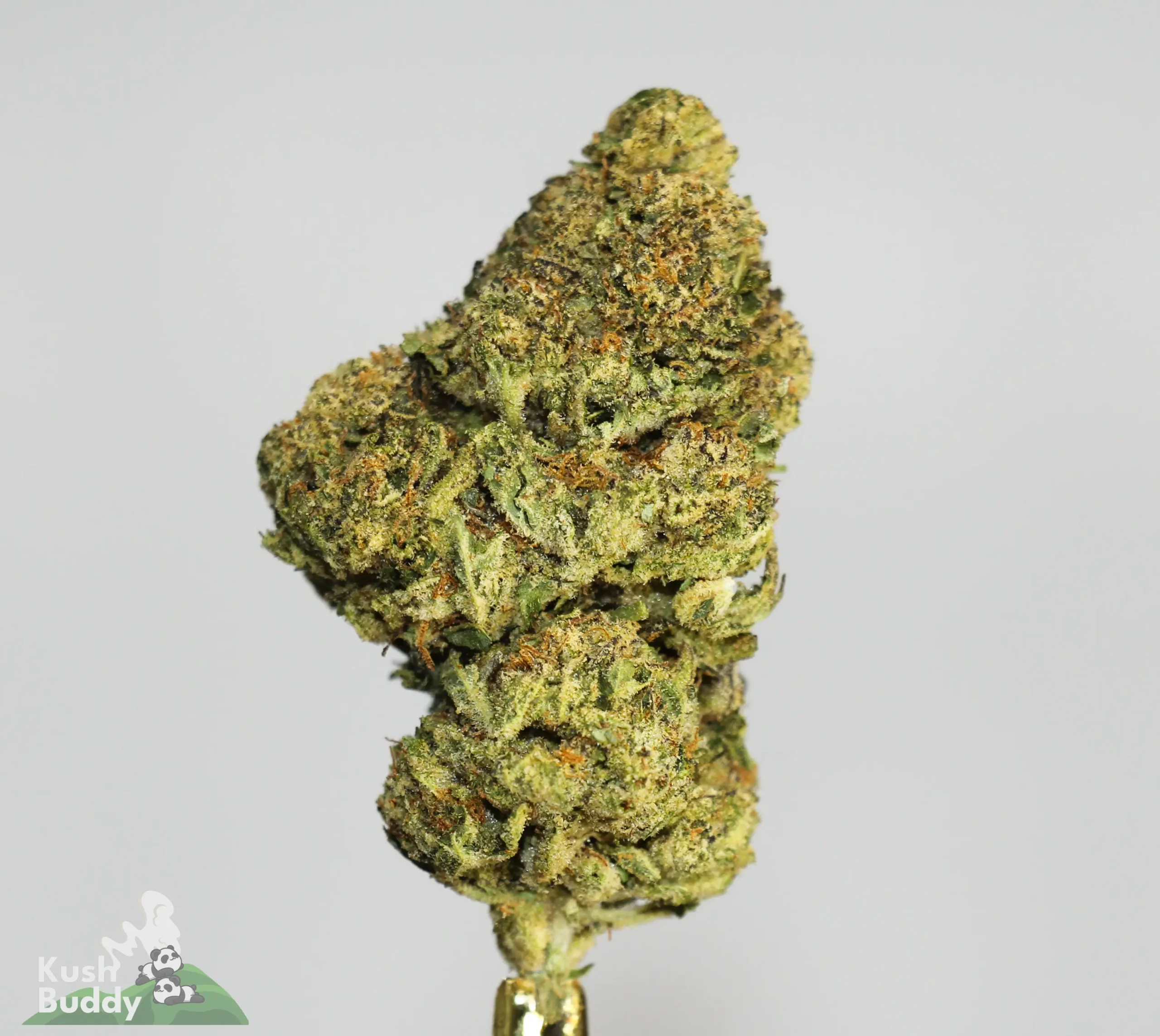
The sensory profile of Garlic Cake is its defining characteristic, setting it apart from fruit-forward or dessert strains. Its aroma is deeply polarizing yet universally respected by connoisseurs for its complexity. Opening a jar releases an immediate wave of sharp garlic, rotting onions, wet earth, and pungent diesel fuel, underpinned by subtle hints of spice and citrus rind.
This heavy aroma translates directly to the flavor profile upon inhalation. Consumers often report a savory, garlic-forward smoke with heavy chemical and mushroom undertones, leaving a lingering, palate-coating pungency that stays long after the exhale.
The chemical complexity is driven by a dominant terpene profile rich in compounds known for their strong therapeutic and aromatic properties:
- Caryophyllene: The most abundant terpene in Garlic Cake, providing the spicy, peppery kick and interacting directly with CB2 receptors to offer potential anti-inflammatory benefits.
- Myrcene: Contributes earthy, herbal depths while enhancing the sedative, couch-lock qualities associated with heavy indica strains.
- Limonene: Present in smaller quantities, adding a sharp citrus edge that cuts through the heavier diesel and garlic notes.
Cannabinoid Potency and Physical Effects
Because Garlic Cake routinely tests at the higher end of the potency spectrum, it is generally recommended for consumers with established THC tolerance. The high onset is typically felt rapidly, beginning as a noticeable pressure behind the eyes and a mild cerebral tensing that clears daily mental clutter.
Within thirty minutes, the experience shifts downward, blanketing the body in a warm, heavy physical relaxation. Limbs feel weightless, tension melts from the shoulders and lower back, and a profound sense of tranquility settles in. Due to these heavy sedative properties, Garlic Cake is best reserved for evening or late-afternoon consumption when productive tasks have concluded.
Potential Benefits and Common Side Effects
| Category | Description / Symptom | Clinical Relevance |
|---|---|---|
| Primary Benefits | Chronic pain management, muscle spasms, severe stress, insomnia | High myrcene and caryophyllene content synergize to soothe physical discomfort. |
| Mental Effects | Euphoria, deep relaxation, mood elevation, mental unwinding | Effectively silences racing thoughts and promotes a tranquil mindset. |
| Common Side Effects | Dry mouth (cottonmouth), dry eyes, temporary dizziness | Standard for high-THC cultivars; mitigated by proper hydration. |
| Adverse Possibility | Transient paranoia, heightened anxiety | May occur in low-tolerance users due to extreme THC potency. |
Cultivation Requirements and Yield Expectations
Cultivating the Garlic Cake weed strain requires intermediate to advanced gardening knowledge. The plant exhibits typical hybrid vigor during the vegetative stage, growing into a bushy, medium-to-tall structure with wide fan leaves that can obscure lower bud sites if not properly managed.
Growers must pay close attention to humidity levels and airflow, especially during the late flowering phase. Because the buds are exceptionally dense and tightly packed, trapped moisture can quickly lead to bud rot (botrytis) or powdery mildew.
Essential Cultivation Parameters
- Flowering Time: 9 to 10 weeks indoors; harvest ready by mid-to-late October in Northern Hemisphere outdoor climates.
- Indoor Yield: 500 to 600 grams per square meter under high-intensity LED or HPS lighting.
- Outdoor Yield: 600 to 800 grams per plant in warm, Mediterranean-style climates with ample sunlight.
- Training Techniques: Responds exceptionally well to Screen of Green (Scrog), Low-Stress Training (LST), and regular defoliation to maximize light penetration and air circulation.
Cultivator Advisory: Due to the intensely pungent aroma emitted during late flower and curing, carbon filtration systems are virtually mandatory for indoor grows to maintain discretion and control odor output.
Medical Applications and Therapeutic Uses
Medical cannabis patients frequently turn to Garlic Cake to manage stubborn symptoms that do not respond well to lower-potency or sativa-dominant strains. Its robust analgesic properties make it a favored option for individuals dealing with neuropathic pain, arthritis, fibromyalgia, and chronic muscle stiffness.
Furthermore, the profound physical relaxation induced by the strain makes it an effective natural sleep aid for those suffering from chronic insomnia or disrupted sleep architectures. By calming both the nervous system and the physical body, it helps users transition into deep, restorative rest without relying on pharmaceutical interventions.
Comparison: Garlic Cake vs. Traditional Kush Strains
To fully understand where Garlic Cake fits in the modern cannabis landscape, comparing its traits against classic indica-dominant strains provides valuable context.
| Feature | Garlic Cake (GMO Cookies) | Classic OG Kush | Granddaddy Purple |
|---|---|---|---|
| Dominant Aroma | Garlic, diesel, onion, earth | Pine, lemon, fuel, spice | Sweet grape, berry, floral |
| Average THC | 26% - 32% | 20% - 25% | 17% - 23% |
| Primary Terpene | Caryophyllene | Myrcene | Myrcene |
| Primary Use Case | Deep physical sedation, severe pain | Balanced euphoria, stress relief | Insomnia, muscle relaxation |
| Grow Difficulty | Intermediate to Advanced | Moderate | Beginner-friendly |
Frequently Asked Questions
What does the Garlic Cake weed strain taste and smell like?
Garlic Cake features a pungent, savory aroma profile dominated by sharp garlic, wet earth, diesel fuel, and onions. Its flavor mirrors this nose, delivering a heavy, chemical-infused smoke that leaves a long-lasting, savory impression on the palate.
Is Garlic Cake an indica or a sativa?
Garlic Cake is an indica-dominant hybrid strain derived from a genetic cross of Girl Scout Cookies and Chemdawg. It leans heavily toward indica traits, offering powerful body relaxation and sedative effects.
What is the average THC level of Garlic Cake?
This strain is renowned for its high potency, with THC levels typically ranging between 26% and 32%. Because of this elevated concentration, novice consumers should approach it with caution.
How long does it take for Garlic Cake to flower indoors?
When grown indoors under controlled conditions, Garlic Cake requires a flowering period of approximately 9 to 10 weeks before it reaches peak maturity and trichome cloudiness.
What medical conditions is Garlic Cake commonly used for?
Medical cannabis patients frequently utilize Garlic Cake to manage chronic pain, muscle spasms, severe stress, inflammation, and sleep disorders such as insomnia due to its strong analgesic and sedative properties.
Cultivating Quality and Responsible Consumption
The Garlic Cake weed strain stands as a testament to modern cannabis breeding, merging the genetic prowess of Girl Scout Cookies and Chemdawg into a uniquely pungent, highly potent cultivar. Whether appreciated by recreational connoisseurs for its complex, savory terpene profile or relied upon by medical patients for heavy-duty symptom relief, understanding its cultivation needs, potency, and effects ensures an optimal experience. Always source your genetics or flower from licensed, reputable dispensaries and cultivators to guarantee purity, safety, and lab-verified cannabinoid accuracy.
Image Gallery