The IS 100 C Introduction to the Incident Command System
The IS 100 C Introduction to the Incident Command System is an online training course provided by the Federal Emergency Management Agency's Emergency Management Institute that teaches the foundational management concepts, organizationa...
The IS 100 C Introduction to the Incident Command System is an online training course provided by the Federal Emergency Management Agency's Emergency Management Institute that teaches the foundational management concepts, organizational structure, and operational principles of the Incident Command System for personnel responding to routine and complex emergencies.
Contents
Emergency response requires a standardized, predictable management approach to ensure the safety of personnel and the effective mitigation of incidents. Whether dealing with a localized hazardous material spill, a multi-agency wildfire, or a large-scale community disaster, disparate organizations must be able to work together seamlessly. The IS 100 C: Introduction to the Incident Command System course serves as the foundational building block for this interoperability across the United States.
Understanding the architecture of this course, its target audience, and the core management principles it introduces is essential for anyone pursuing a role in public safety, emergency management, industrial safety, or municipal response. This comprehensive overview examines the curriculum, operational utility, and strategic value of the IS 100 C training program.
Understanding the Incident Command System (ICS)
Before diving into the specifics of the IS 100 C course, it is vital to understand what the Incident Command System is and why it exists. Developed in the 1970s following catastrophic wildfires in Southern California, ICS was created to address recurring management problems during multi-agency responses—such as unclear chains of command, poor communication, and unstructured resource tracking.
ICS is a standardized, on-scene, all-risk management concept. It is designed to enable effective and efficient domestic incident management by integrating a combination of facilities, equipment, personnel, procedures, and communications operating within a common organizational structure.
The system is built on the principle of scalability. The same organizational framework used to manage a single-engine fire or a minor traffic accident can be expanded seamlessly to coordinate a multi-state hurricane response or a major national security event. This flexibility prevents chaos by ensuring that every responder knows who is in charge, what their specific role is, and how information flows through the command structure.
Core Purpose and Objectives of IS 100 C
The IS 100 C course is part of the broader National Incident Management System (NIMS) training program administered by the Federal Emergency Management Agency (FEMA) Emergency Management Institute (EMI). The "C" designation indicates the current version of the curriculum, which incorporates updated guidance aligned with NIMS doctrine.
The primary objective of IS 100 C is to introduce participants to the Incident Command System and enable them to review basic provisions relating to incident management. By completing this training, learners gain a foundational understanding of how ICS functions within the context of overall emergency management.
Specifically, the course is designed to meet the following learning objectives:
- Explain the principles and basic structure of the Incident Command System.
- Identify the relationship between NIMS and ICS.
- Describe the management characteristics that are the foundation of ICS.
- Identify the functional areas of the ICS organization (Command, Operations, Planning, Logistics, and Finance/Administration).
- Recognize the role of the Incident Commander and the steps involved in transferring command.
Target Audience and Prerequisites
The IS 100 C course is intended for personnel who require a foundational understanding of the Incident Command System to perform their emergency response duties. This includes, but is not limited to:
- Emergency management personnel at local, tribal, state, and federal levels.
- First responders, including firefighters, law enforcement officers, emergency medical services (EMS) personnel, and public works employees.
- Private sector security and disaster recovery teams.
- Non-governmental organization (NGO) volunteers involved in disaster relief.
- Healthcare workers and hospital emergency preparedness staff.
There are no strict educational prerequisites required to take IS 100 C. However, because it builds upon basic emergency management concepts, learners will benefit from a baseline familiarity with public safety operations. The course is entirely web-based, hosted on the FEMA Independent Study program platform, and is available at no cost to the public.
Structure of the IS 100 C Curriculum
The IS 100 C curriculum is divided into specific, sequential modules that guide the learner from high-level management concepts down to the tactical application of ICS roles. Each lesson includes instructional text, interactive knowledge reviews, and a final comprehensive exam.
1. Course Orientation and Overview
This initial section introduces the purpose of the course, navigational instructions for the online learning management system, and an introduction to the history and evolution of the Incident Command System. It establishes why standardization is critical when multiple agencies respond to a single incident.
2. Basic Features of ICS
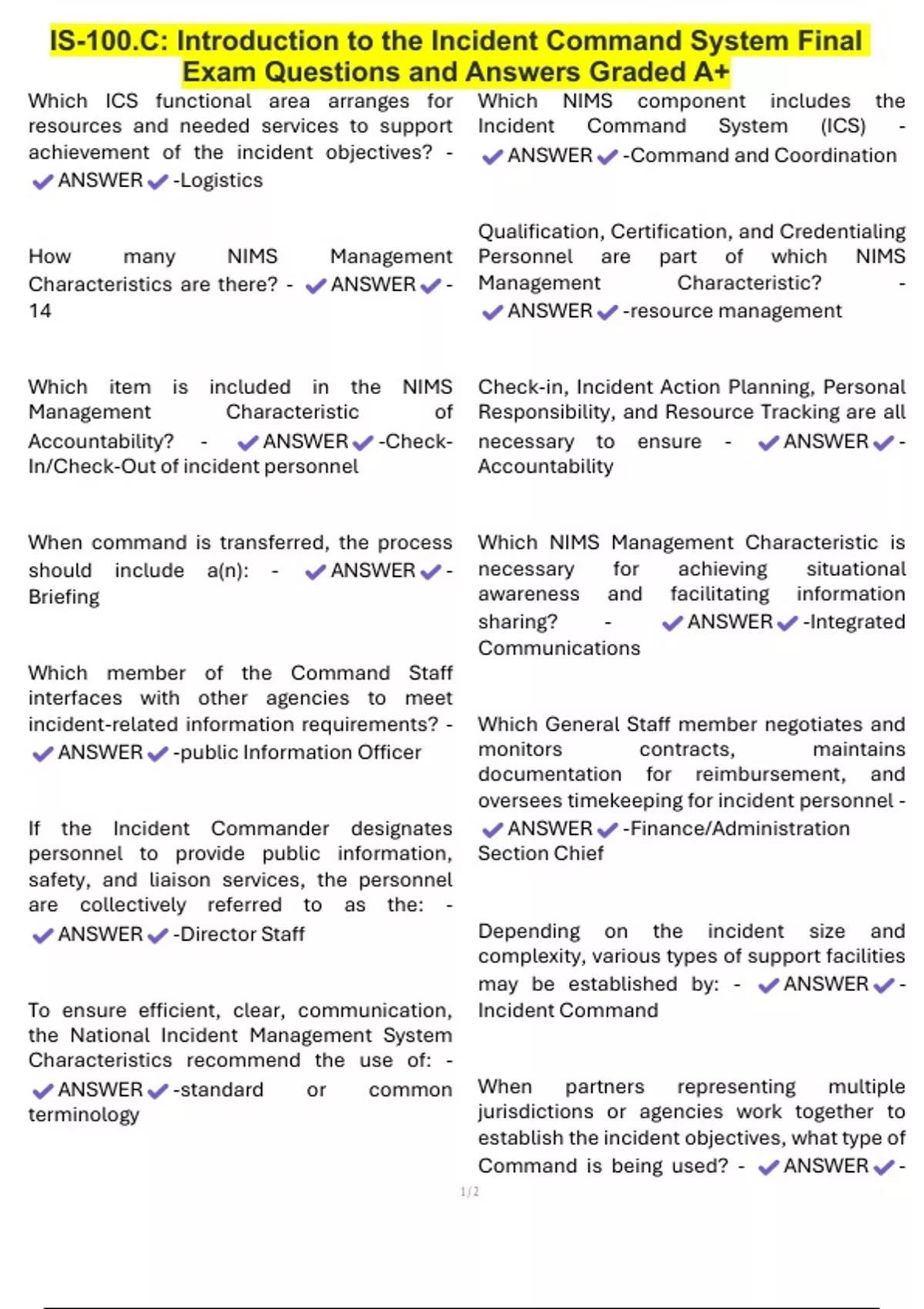
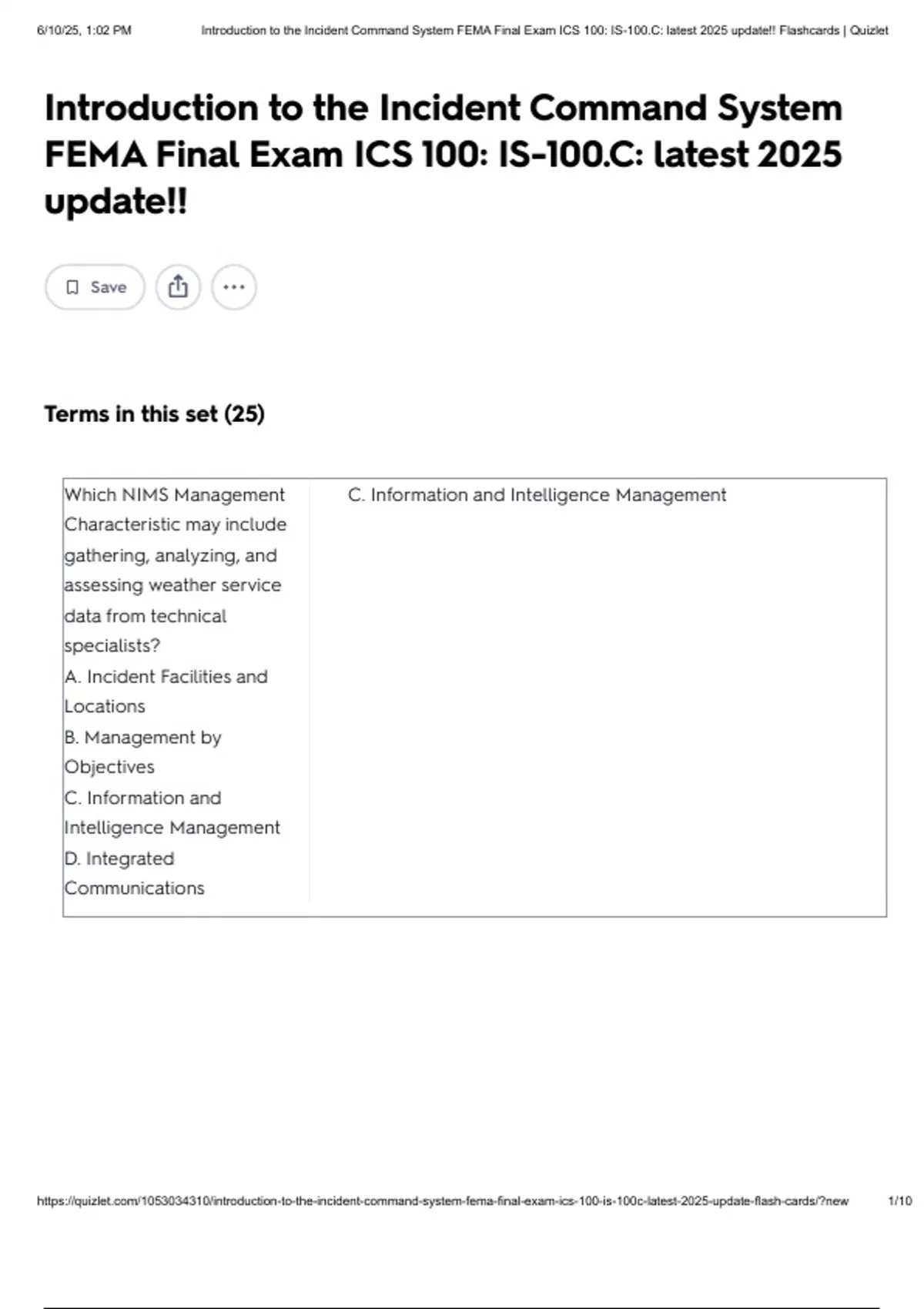
ICS relies on fourteen core management characteristics that ensure its operational success. This module breaks down these characteristics, which include:
- Common Terminology: Using clear, plain English and avoiding agency-specific jargon or radio codes to ensure multi-agency clarity.
- Modular Organization: Establishing functional elements only as needed based on the scale and complexity of the incident.
- Management by Objectives: Establishing overarching incident objectives, tactical objectives, and support operations.
- Chain of Command and Unity of Command: Ensuring every individual has a designated supervisor they report to, preventing conflicting orders.
- Manageable Span of Control: Maintaining an optimal supervisor-to-subordinate ratio, typically ranging from three to seven subordinates per supervisor, with five being optimal.
3. Incident Commander and Command Staff
Leadership is the cornerstone of ICS. This module details the responsibilities of the Incident Commander (IC)—the individual responsible for all incident activities, including the development of strategies and tactics. It also introduces the Command Staff, which supports the Incident Commander directly. The Command Staff consists of:
- Public Information Officer (PIO): The conduit for information to the media, public, and other agencies.
- Safety Officer: Monitors incident operations and advises the IC on hazardous situations, possessing the authority to halt unsafe operations immediately.
- Liaison Officer: The primary contact point for representatives from cooperating or assisting agencies.
4. General Staff Functional Areas
As incidents grow in size and complexity, the Incident Commander delegates tactical and logistical responsibilities to the General Staff. This module explores the four primary sections of the General Staff:
| ICS Section | Primary Responsibility | Key Functions |
|---|---|---|
| Operations | Directs tactical actions to meet incident objectives. | Manages tactical resources, staging areas, and branch/division/group operations. |
| Planning | Collects, evaluates, and disseminates incident information. | Prepares the Incident Action Plan (IAP), maintains resource status, and documents documentation. |
| Logistics | Provides facilities, services, and material support. | Manages communications, medical support, food, supplies, and facility setup. |
| Finance / Administration | Tracks costs and manages financial and legal aspects. | Handles procurement, time tracking, compensation claims, and cost analysis. |
5. Incident Facilities and Common Responsibilities
Incidents require designated workspaces to function efficiently. This section outlines the physical infrastructure established under ICS, such as the Incident Command Post (ICP), Staging Areas, Bases, Camps, and Helibases. Furthermore, it outlines the basic personal responsibilities expected of every responder checking into an incident, including reporting in, acquiring necessary equipment, tracking time, and participating in debriefings.
Comparison of NIMS ICS Courses
The IS 100 course is just the first step in a progressive series of emergency management training modules. The table below outlines how IS 100 C compares to subsequent foundational courses in the NIMS training pathway.
| Course Code | Course Title | Target Competency Level | Primary Focus |
|---|---|---|---|
| IS-100.c | Introduction to the Incident Command System | Entry-level / General | Basic ICS structure, roles, and 14 management characteristics. |
| IS-200.c | Basic Incident Command System for Initial Response | Single Resource / Initial Action | Event management for single resources and small-scale initial responses. |
| IS-700.b | National Incident Management System, An Introduction | General Awareness | Broad overview of NIMS principles, multi-agency coordination, and resource management. |
| IS-800.d | National Response Framework, An Introduction | General Awareness | Introduction to national-level domestic incident response structures. |
Common Misconceptions and Troubleshooting
Navigating online FEMA training can occasionally present minor logistical or conceptual challenges for first-time learners. Below are key considerations to ensure successful completion of the IS 100 C program:
- Passing Score Requirements: To receive a certificate of completion from the Emergency Management Institute, learners must pass a multiple-choice final examination, typically requiring a score of 75% or higher. Reviewing the knowledge checks at the end of each module significantly improves exam performance.
- SID Registration: Before taking the exam, users must register for a FEMA Student Identification (SID) number. Attempting to complete coursework without a verified SID can result in missing completion records.
- Not a Substitute for Practical Experience: While IS 100 C provides essential theoretical and structural knowledge, classroom and online learning cannot fully replicate the high-stress environment of an active incident. Personnel must combine coursework with practical exercises, tabletop drills, and real-world supervision.
Summary and Recommended Next Actions
The IS 100 C Introduction to the Incident Command System course is a mandatory baseline requirement for modern emergency response and public safety professionals. By establishing a universal framework for command, control, and communication, it ensures that diverse organizations can mitigate crises safely and efficiently.
For professionals entering the emergency management field, the immediate next action is to visit the FEMA Emergency Management Institute website, register for a FEMA SID, and enroll in the online independent study module. Upon completion of IS 100 C, learners should proceed to complete IS-200.c and IS-700.b to build a comprehensive, compliant foundation in national incident management principles.
Image Gallery