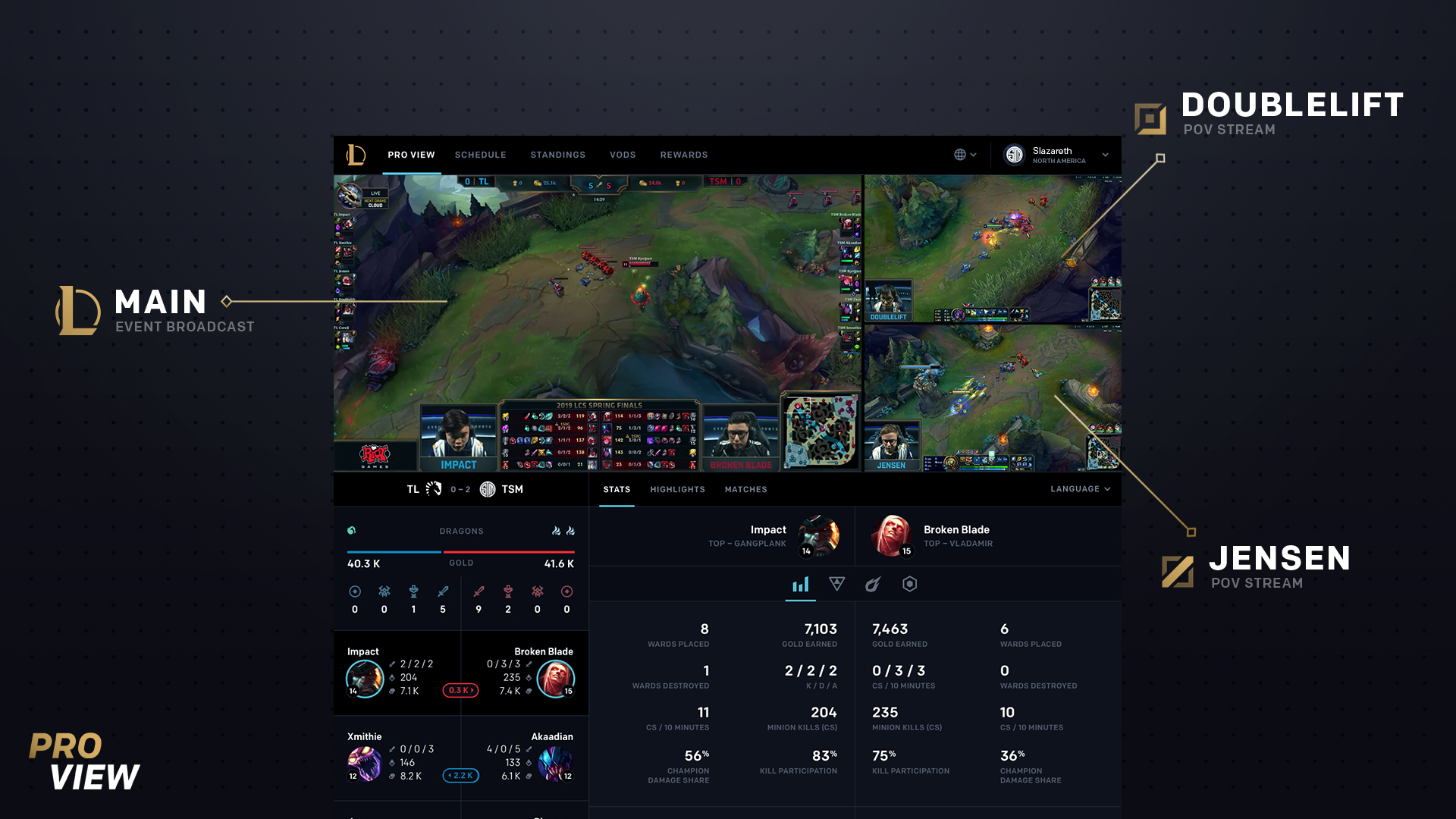
How League of Legends Pro Player Stats Shape Analysis
Professional League of Legends analysis relies on granular statistical data to quantify player performance, strategic execution, and meta-game shifts. By translating complex in-game interactions into measurable metrics, analysts and co...
Professional League of Legends analysis relies on granular statistical data to quantify player performance, strategic execution, and meta-game shifts. By translating complex in-game interactions into measurable metrics, analysts and coaching staffs move beyond subjective observation to verify team efficiency, optimize draft compositions, and identify objective patterns in player behavior across the global professional circuit.
Contents
The Foundation of Performance Metrics
At the professional level of League of Legends, "stats" refer to far more than basic Kill/Death/Assist (KDA) ratios. Professional analysis prioritizes contextual data that accounts for the state of the game, the gold economy, and the efficiency of resource allocation. The transition from amateur to professional analysis is defined by the use of "Advanced Stats," which break down the game into actionable segments.
Key Performance Indicators (KPIs)
To shape a coherent analysis, teams focus on specific data points that reflect high-level execution:
- Gold Differential at 15 Minutes (GD@15): A critical indicator of early-game dominance and lane priority.
- Damage Per Minute (DPM): A measure of combat efficiency, often normalized against gold income to determine if a player is providing "gold-efficient" damage.
- Kill Participation (KP%): Used to evaluate mid-jungle synergy and roaming presence.
- Vision Score Per Minute (VSPM): A vital metric for support and jungle roles, tracking how effectively a player facilitates map control and objective setup.
- Death Share: A nuanced look at defensive play, identifying which players are most frequently prioritized by opponents as targets.
How Stats Shape Tactical Preparation
Data analysis acts as the primary tool for developing "game plans." When a coaching staff prepares for a specific opponent, they use historical statistics to build a profile of that team’s tendencies. This process is known as Scout Profiling.
If an analysis of an opposing team’s jungle pathing shows a 70% frequency of ganking the bottom lane before the five-minute mark, the coaching staff will use this statistic to inform their own top-side strategy. This allows the team to "counter-strat"—a method where specific champion bans and lane positioning are dictated entirely by the statistical history of the opponent.
Translating Data into Drafting Strategy
The drafting phase is arguably where statistical analysis is most visible. By utilizing software to cross-reference global win rates, champion synergy statistics, and player-specific comfort metrics, teams create a "Draft Tier List."
- Normalization: Analysts filter champion performance based on current patch versions. A champion's performance on Patch 16.3 cannot be weighed equally against Patch 16.5 due to mechanical balance changes.
- Synergy Modeling: Teams look for high-win-rate pairings (e.g., specific ADC and Support combos) that statistically correlate with higher gold leads in the mid-game.
- Counter-Pick Verification: Analysts quantify how effectively specific counter-picks neutralize meta threats. If a proposed counter-pick has a statistically significant win rate drop against a specific popular champion, the team will avoid that selection, regardless of internal theories.
Comparison of Statistical Perspectives
Analyzing professional performance requires a balanced approach between objective outputs and contextual variables.
| Metric Type | Purpose | Limitation |
|---|---|---|
| Micro-Stats | Measuring individual mechanics (CS, landing skill shots). | Does not account for team-wide strategy or zoning. |
| Macro-Stats | Measuring objective control, gold leads, and map pressure. | Often influenced by the skill gap between teams. |
| Comparative Stats | Measuring performance vs. league averages. | Can be skewed by outliers in specific playstyles. |
| Predictive Stats | Forecasting win probability based on draft composition. | Cannot predict "human error" or sudden meta shifts. |
The Role of Analytical Tools
In 2026, the ecosystem of professional analysis is supported by specialized software suites that ingest Riot Games’ match history data. These tools provide real-time visualization of team fights and pathing heatmaps. Analysts use these to verify "Gold Efficiency"—the ratio of how much gold a player receives compared to their team’s total gold percentage versus their damage output percentage.
When a player consistently maintains a high damage output with a lower-than-average share of team gold, they are classified as "resource efficient." This data point often shapes contract negotiations and roster construction, as it identifies which players can "do more with less."
Common Analytical Pitfalls
A frequent mistake in statistical analysis is "Overfitting," where analysts prioritize historical trends that no longer apply to the current competitive environment. Because League of Legends is a rapidly evolving game—frequently updated with new items, map changes, and champion reworks—data from three months prior may be obsolete.
Analysts must filter data through the lens of "Patch Relevance." Furthermore, analysts must be wary of "Selection Bias," where a player’s stats look inflated because they only played a specific champion into favorable matchups. Advanced analysis requires controlling for these variables to ensure that the data represents a player's true skill level rather than a situational anomaly.
Frequently Asked Questions
What is the most important stat in pro League of Legends? There is no single "most important" stat; however, Gold Differential at 15 minutes is widely considered the most indicative of team success, as it dictates which team gains control of the early-to-mid-game objective tempo.
How does data change after a patch update? Professional teams reset their "data window." Following a significant balance patch, analysts weigh data from the current patch much more heavily than previous ones, as changes to item costs or ability scaling can invalidate past performance metrics.
Can stats predict a win? Stats cannot guarantee a win, but they establish the "win condition." Analysis provides a range of probabilities; teams use these to determine if their composition is strong enough to force a fight early or if it requires a defensive posture until the late-game scaling phase.
Why do pro teams use analysts? Pro teams use analysts to remove human bias. While a player might "feel" like a specific champion is weak, an analyst can provide objective win-rate data and gold-efficiency graphs to either support that feeling or challenge it, leading to more informed strategic decisions.
Professional Recommendation
For those aiming to apply analytical methods to competitive play, start by focusing on Efficiency Mapping. Record your own gold income compared to your damage dealt. If you find your damage output is low despite having a high gold share, you are likely inefficient with your resources. Use the 2026 season's available public match data to compare your KPIs against professional averages for your rank. By aligning your personal performance metrics with established professional benchmarks, you create a measurable roadmap for individual and team improvement.
Image Gallery