Global Elephant Population in 2026: Trends, Statistics, and Conservation Status
As of 2026, the global elephant population is estimated to be between 500,000 and 550,000 individuals across three distinct species. This total includes approximately 415,000 African Savanna elephants, 100,000 African Forest elephants,...
As of 2026, the global elephant population is estimated to be between 500,000 and 550,000 individuals across three distinct species. This total includes approximately 415,000 African Savanna elephants, 100,000 African Forest elephants, and roughly 45,000 to 50,000 Asian elephants. While some regional populations in Southern Africa show stability or growth, others in Southeast Asia and West Africa face an imminent risk of localized extinction.
Contents
The Taxonomy of Modern Elephants
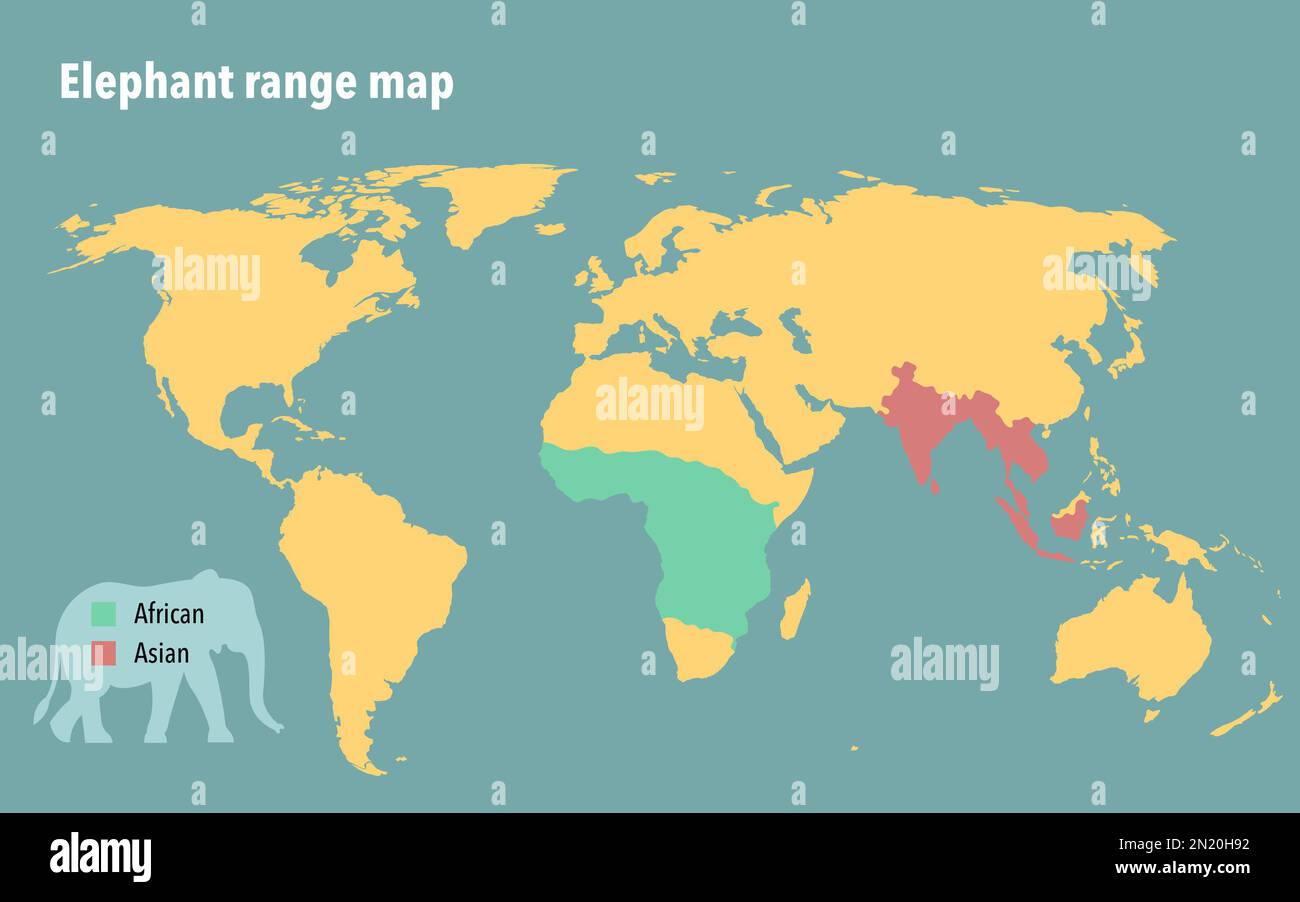
To understand population figures in detail, it is essential to distinguish between the three biologically recognized species. For decades, African elephants were treated as a single species, but genetic evidence finalized by the International Union for Conservation of Nature (IUCN) in 2021 confirmed two distinct African species.
African Savanna Elephant (Loxodonta africana)
The largest of the three, the Savanna elephant inhabits a variety of environments from grassy plains to deserts. They represent the majority of the world’s elephant population. Their status is currently listed as Endangered.
African Forest Elephant (Loxodonta cyclotis)
Residing in the humid rainforests of Central and West Africa, these elephants are smaller and have straighter, downward-pointing tusks. They are currently listed as Critically Endangered due to a devastating population collapse—estimated at over 80% over the last three decades—primarily driven by poaching and habitat loss.
Asian Elephant (Elephas maximus)
The Asian elephant is divided into several subspecies, including the Indian, Sri Lankan, Sumatran, and Bornean elephants. Their population is the most fragmented, with many small, isolated groups. They are listed as Endangered, with the Sumatran subspecies being Critically Endangered.
Regional Breakdown of African Elephant Populations
The distribution of African elephants is highly uneven. While the continent-wide trend has historically been one of decline, the mid-2020s have seen a stabilization in specific "fortress" conservation areas.
Southern Africa: The KAZA Stronghold
The Kavango-Zambezi Transfrontier Conservation Area (KAZA TFCA), which spans parts of Botswana, Namibia, Zimbabwe, Zambia, and Angola, remains the most significant elephant corridor in the world. As of 2026, this region hosts more than 227,000 elephants, nearly half of the continent's total. Botswana alone supports approximately 130,000 individuals, though this high density has led to increased human-wildlife conflict and debates regarding sustainable culling and trophy hunting.
East Africa: Recovery and Resilience
Nations like Kenya and Tanzania have seen a moderate rebound in numbers following aggressive anti-poaching campaigns launched in the late 2010s. For example, Kenya’s elephant population has grown significantly from its 1980s lows, now exceeding 36,000 individuals. However, extreme drought cycles in 2024 and 2025 have posed new threats, leading to natural mortality rates that occasionally exceed poaching losses.
Central and West Africa: The Crisis Zones
Central Africa remains the primary habitat for the Forest elephant. Gabon is the global stronghold for this species, containing an estimated 65,000 to 70,000 individuals—roughly 60% to 70% of the entire species' remaining population. In contrast, West African populations are "functionally extinct" in many former range states, with only tiny, disconnected groups remaining in protected pockets of Ivory Coast, Ghana, and Guinea.
The State of Asian Elephants in 2026
The Asian elephant population is significantly smaller and more threatened by habitat fragmentation than its African counterparts. Because they live in some of the most densely populated human regions on Earth, their survival is inextricably linked to land-use policy.
India: The Dominant Range State
India is home to approximately 60% of the world's wild Asian elephants, with a population hovering around 27,000 to 30,000. These are concentrated in the Northeast, the Nilgiris, and the foothills of the Himalayas. The Indian government’s "Project Elephant" has focused on securing migratory corridors, yet over 500 elephants per year are lost to electrocution, train collisions, and retaliatory killings.
Southeast Asia and the Island Subspecies
- Sri Lanka: Hosts nearly 6,000 elephants. Despite high density, the population suffers from one of the highest rates of human-elephant conflict globally.
- Sumatra: The Sumatran elephant is in a dire state, with fewer than 2,500 individuals remaining. Rapid deforestation for palm oil plantations in Indonesia has restricted them to small forest fragments.
- Borneo: The "pygmy" elephants of Borneo number fewer than 1,500. Recent genomic studies in 2024 have emphasized their unique evolutionary lineage, making their protection a high priority for international conservationists.
Comprehensive Population Statistics by Region (2026 Estimates)
| Region | Primary Species | Estimated Population | Primary Trend |
|---|---|---|---|
| Southern Africa | African Savanna | 293,000 | Stable / Increasing |
| East Africa | African Savanna | 86,000 | Slowly Increasing |
| Central Africa | African Forest | 95,000 | Declining |
| West Africa | Savanna / Forest | 11,000 | Severely Declining |
| India | Asian (Indian) | 29,500 | Stable |
| Sri Lanka | Asian (Sri Lankan) | 5,800 | Stable / Declining |
| Southeast Asia | Asian (Various) | 9,000 | Declining |
| Total Global | All Species | ~529,300 | Vulnerable |
Note: Data compiled from 2024-2025 status reports by the IUCN Red List and the CITES Elephant Trade Information System (ETIS).
Key Drivers of Population Change
1. Habitat Loss and Fragmentation
The single greatest threat in 2026 is no longer just poaching, but the disappearance of space. As human populations expand, ancient migratory routes are blocked by fences, farms, and infrastructure. When elephants are "locked" into small parks, they over-browse the vegetation, leading to habitat degradation that affects other species.
2. The Illegal Ivory Trade
While the international ban on ivory trade remains in place, underground markets continue to drive poaching. However, there has been a shift; large-scale industrial poaching has decreased in Southern Africa but remains a persistent threat to Forest elephants in Central Africa, where dense canopy cover makes aerial surveillance difficult.
3. Climate Change and Water Scarcity
Elephants require up to 150 liters of water per day. The intensifying drought cycles in the Sahel and East Africa have led to mass migrations toward human water sources, escalating conflict. In 2025, researchers noted that "climate-induced stress" is now a leading cause of calf mortality in arid regions of Namibia and Zimbabwe.
Modern Methodology: How Elephants are Counted
Accurate population data is difficult to obtain, especially for forest-dwelling species. By 2026, census methods have moved beyond simple visual tallies:
- Aerial Surveys: Used in the Savanna, where fixed-wing aircraft fly "transects" to count individuals and carcasses.
- Dung DNA Analysis: In dense jungles, researchers collect dung samples to perform genetic "fingerprinting," allowing them to identify unique individuals and estimate population density without ever seeing the elephants.
- Acoustic Monitoring: Passive sensors record elephant "rumbles" (infrasound) in forests, using AI algorithms to estimate the number of individuals in the vicinity based on the frequency and volume of calls.
- Satellite Imagery: High-resolution satellites (such as those from the Maxar constellation) are now used to count elephants in open landscapes from space, reducing the need for expensive and dangerous low-altitude flights.
The Role of Captive Populations
In Asia, the distinction between "wild" and "captive" elephants is often blurred. Roughly 15,000 Asian elephants live in captivity, used for tourism, religious ceremonies, or timber work. Conservationists argue that these individuals are often "demographically dead" because they do not contribute to the wild gene pool. Efforts are underway in Thailand and India to transition "elephant tourism" toward observation-only models to improve animal welfare and potentially reintroduce suitable candidates into the wild.
Frequently Asked Questions
Which country has the most elephants in 2026?
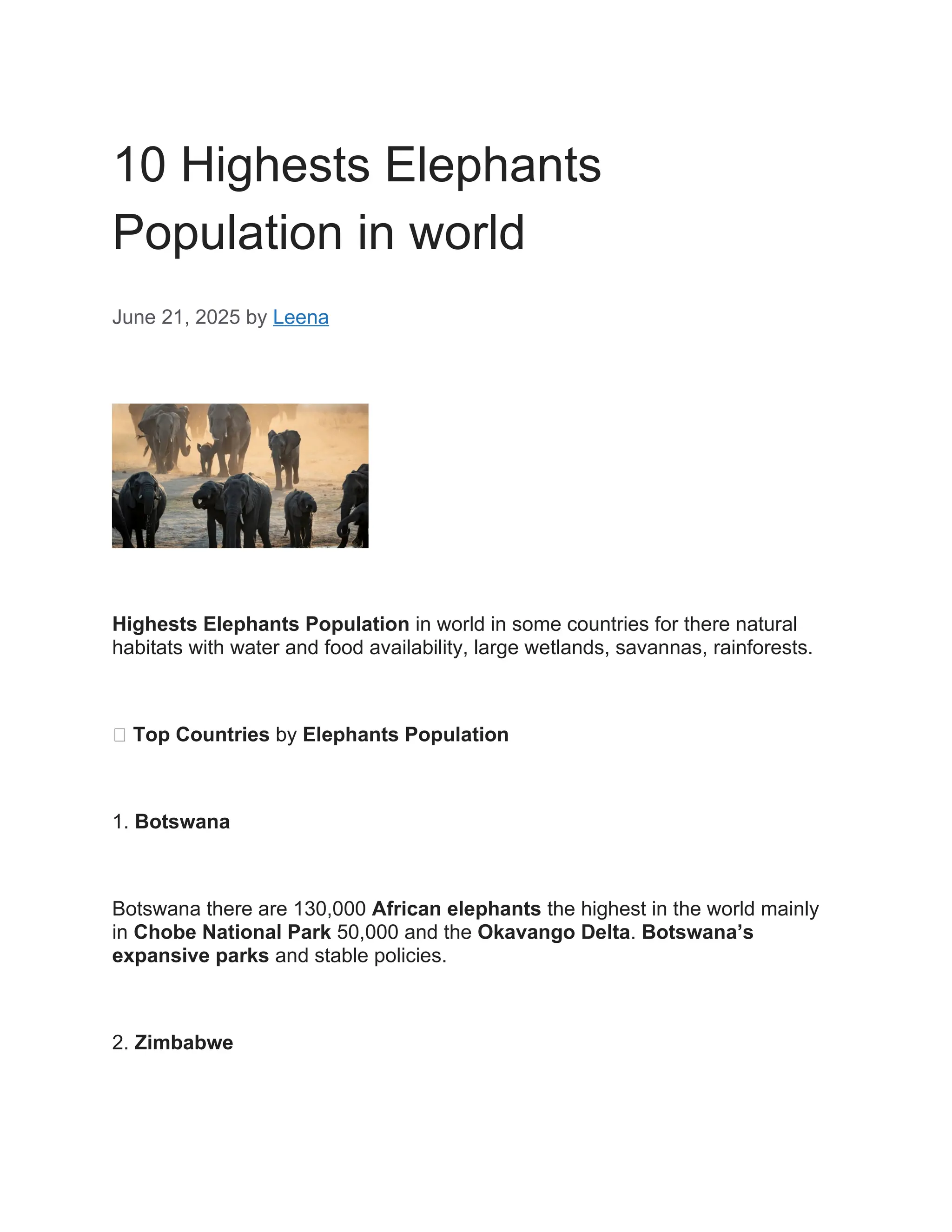
Botswana holds the largest elephant population in the world, with an estimated 130,000 African Savanna elephants. This population is centered in the northern part of the country, particularly around the Chobe National Park and the Okavango Delta.
Are elephant numbers increasing or decreasing?
The answer depends on the species and location. Globally, the numbers are relatively stable but significantly lower than historical levels. African Savanna elephants are increasing in Southern Africa but decreasing in West Africa. African Forest elephants and Asian elephants remain in a state of general decline due to habitat loss.
How many elephants are killed by poachers each year?
As of recent 2025 data, it is estimated that between 10,000 and 15,000 elephants are still poached annually. While this is a decrease from the peak of 30,000 per year a decade ago, it still exceeds the natural birth rate in many vulnerable populations, particularly the Forest elephant.
What is the difference between an endangered and a critically endangered species?
According to the IUCN, an "Endangered" species (like the Asian and African Savanna elephant) faces a very high risk of extinction in the wild. A "Critically Endangered" species (like the African Forest elephant) faces an extremely high risk of extinction and has typically seen a population decline of over 80% within three generations.
Can elephants be moved from overpopulated areas to underpopulated ones?
Translocation is possible but extremely expensive and complex. In 2022 and 2024, successful translocations occurred in Malawi and Zimbabwe. However, elephants are highly social and territorial; moving them requires relocating entire family units to ensure social stability, which is a massive logistical challenge.
Next Steps for Global Conservation
To ensure the survival of elephants beyond 2026, the focus must shift from "island" conservation (protecting isolated parks) to "landscape" conservation. This involves creating wildlife corridors that allow elephants to move between protected areas across international borders.
If you wish to contribute, supporting organizations that focus on Human-Wildlife Coexistence (HWC)—such as the African Wildlife Foundation or Save the Elephants—is critical. These groups work to provide farmers with non-lethal deterrents, such as beehive fences or chili-pepper fences, which keep elephants away from crops without the need for lethal force.
Image Gallery