Optimizing Yield and Resource Efficiency with Precision Agriculture Technology in 2026
Precision agriculture technology leverages advanced data analytics, satellite imagery, and autonomous hardware to optimize field-level management, ensuring maximum crop yields while minimizing environmental impact and input costs. By i...
Precision agriculture technology leverages advanced data analytics, satellite imagery, and autonomous hardware to optimize field-level management, ensuring maximum crop yields while minimizing environmental impact and input costs. By integrating site-specific spatial data, producers can transition from uniform field management to hyper-localized decision-making, effectively managing the unique variability found within every acre of their land.
Contents
The Core Architecture of Precision Agriculture Systems
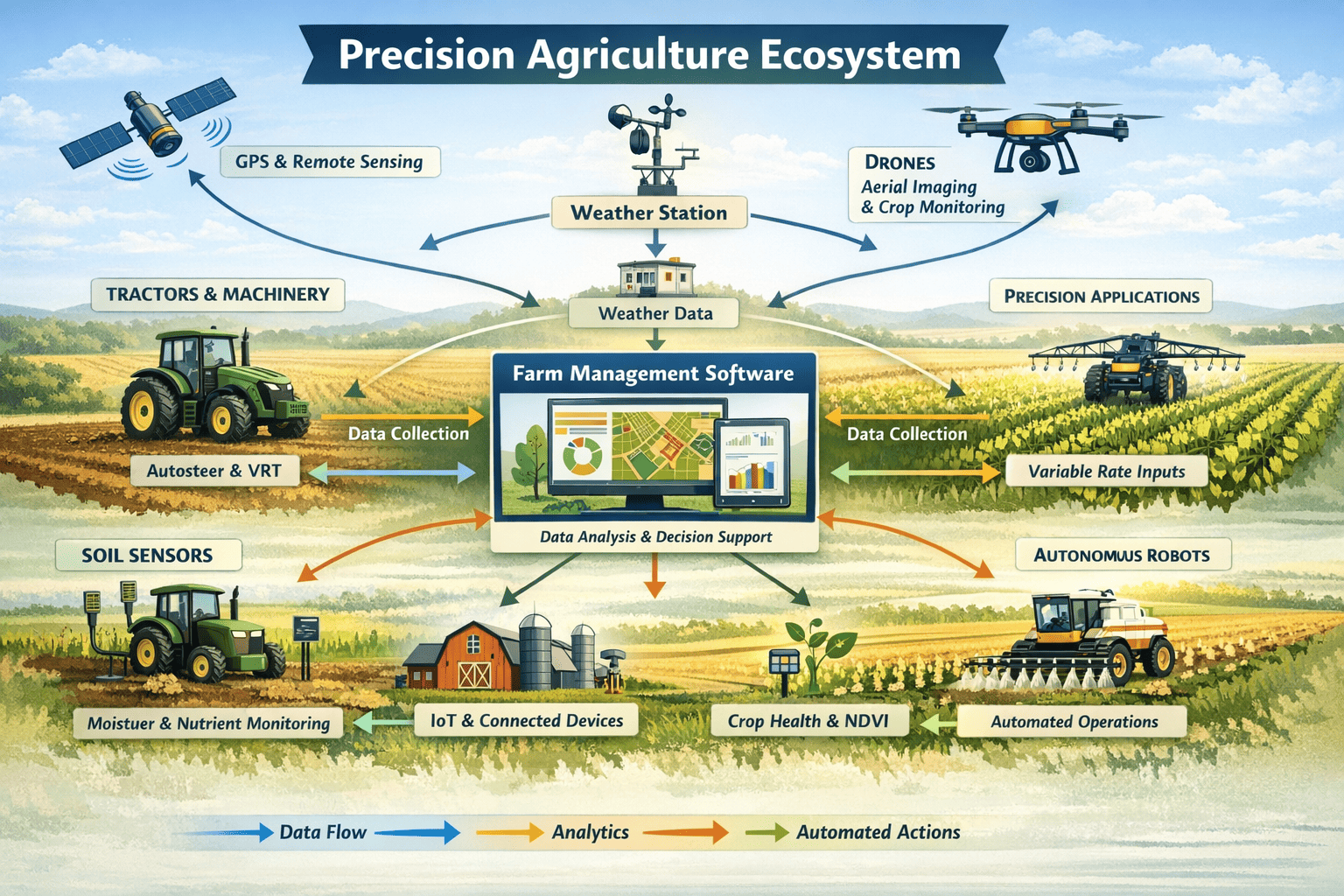
Modern precision agriculture relies on a layered technological ecosystem designed to capture, process, and act upon data. The integration of these components allows for the automation of traditionally manual tasks, reducing labor requirements and human error.
Global Navigation Satellite Systems (GNSS) and Guidance
At the foundation of this technology is the use of GNSS for sub-inch accuracy in field operations. RTK (Real-Time Kinematic) correction services are standard in 2026 for autonomous equipment, allowing tractors, sprayers, and harvesters to maintain consistent pass-to-pass accuracy. This prevents overlap during planting, spraying, and harvesting, which directly impacts the bottom line by reducing wasted seed, fertilizer, and fuel.
Sensor Networks and IoT Deployment
In-field sensor arrays monitor soil moisture, electrical conductivity, and ambient microclimates. These Internet of Things (IoT) devices transmit data to centralized farm management platforms (FMPs).
- Soil Moisture Probes: Capacitance sensors buried at multiple depths track infiltration rates.
- Canopy Sensors: Optical sensors mounted on equipment measure biomass and chlorophyll content to generate real-time vegetation indices.
- Weather Stations: Localized units provide hyper-local data for disease pressure modeling and spray window optimization.
Strategic Application of Variable Rate Technology (VRT)
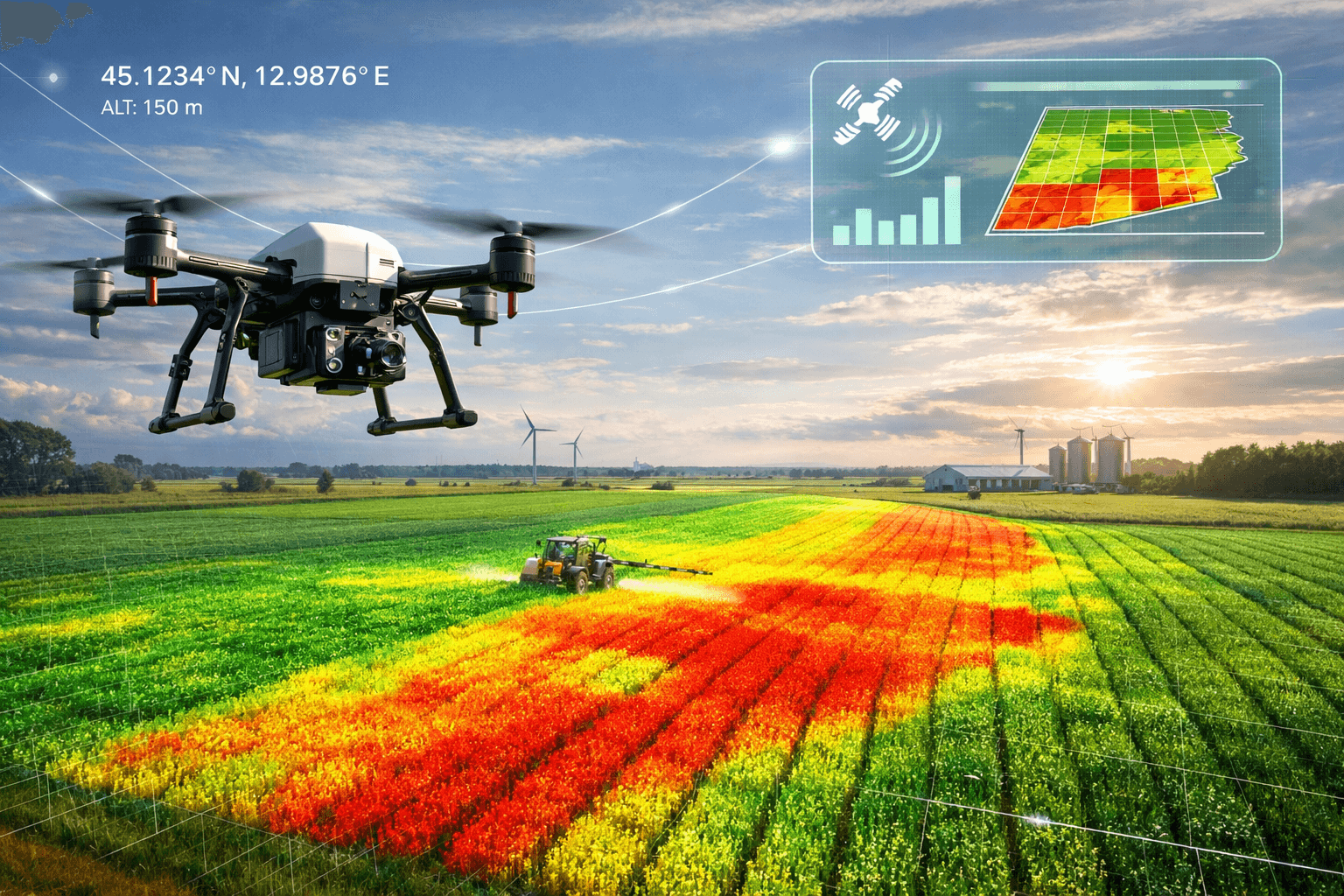
Variable Rate Technology (VRT) is the tactical execution of precision agriculture. It involves applying inputs—such as nitrogen, phosphorus, lime, or seed populations—at varying rates across a single field based on pre-generated management zones.
| Input Category | Data Basis for VRT | Primary Goal |
|---|---|---|
| Seeding | Soil texture, organic matter, historical yield data | Optimize plant density per yield potential |
| Nitrogen (N) | Nitrate testing, stalk testing, biomass indices | Increase Nitrogen Use Efficiency (NUE) |
| Phosphorus (P) | Grid soil sampling (2.5-acre blocks) | Replenish soil nutrients based on crop removal |
| Irrigation | Soil moisture depletion levels | Reduce water waste and leaching |
By utilizing VRT, producers move away from "whole-field" averaging, which often results in under-applying on high-potential soil and over-applying on low-potential soil. The 2026 standard emphasizes the integration of these zones into automated, cloud-connected equipment consoles that adjust flow rates dynamically as the machine traverses different zones.
Autonomous Equipment and Robotic Integration
The 2026 agricultural landscape is defined by the scaling of autonomous platforms. Unlike traditional manned machinery, these systems are designed to operate with minimal human intervention, often working in swarms to complete tasks faster and with less soil compaction.
Operational Safety and Protocol
Autonomous units deployed in 2026 must adhere to regional safety frameworks regarding obstacle detection and emergency stop protocols. Operators are required to maintain a digital geofence boundary, ensuring that equipment remains within designated field limits. Failure to maintain active connectivity between the fleet and the base station often triggers a "failsafe" mode, necessitating manual site inspection to verify clear lines of sight before resuming operation.
Benefits and Operational Challenges
Adopting precision agriculture involves balancing significant capital investment with long-term operational efficiency. Understanding the trade-offs is essential for sustainable farm management.
The Advantages
- Input Cost Reduction: Targeted application significantly lowers chemical and fertilizer waste.
- Yield Stability: Managing variability minimizes the impact of localized droughts or nutrient deficiencies.
- Data-Driven Decision Making: Every decision is backed by historical performance data rather than intuition.
- Environmental Compliance: Reduced chemical runoff protects local watersheds, facilitating compliance with increasingly stringent environmental regulations.
The Challenges
- Interoperability Hurdles: Different brands often utilize proprietary software, making cross-platform data synchronization difficult.
- Data Privacy Concerns: Protecting proprietary yield data from unauthorized third-party access is a primary concern for modern producers.
- High Barrier to Entry: The initial cost for hardware, software subscriptions, and consultant fees can be prohibitive for smaller operations without external financing or grants.
Troubleshooting Common Implementation Issues
Technical friction is a reality of modern farming. Most issues stem from connectivity gaps or calibration errors rather than mechanical failure.
- GNSS Signal Drift: If equipment is drifting from the line, verify the status of your RTK base station. Often, signal interference from foliage or structural obstructions is the culprit.
- Sensor Data Mismatch: If moisture sensors show disparate readings, check for soil-to-sensor contact issues. Air gaps caused by improper installation often lead to false "dry" readings.
- Software Sync Errors: Always ensure that the firmware on your console matches the latest version provided by the manufacturer. Use a secure, high-bandwidth connection to sync your field maps before entering the field.
Frequently Asked Questions
What is the most important factor for success in precision agriculture? The most critical factor is high-quality, clean, and consistent data management. Without accurate data input, the algorithms used for prescription mapping will produce flawed outputs that negatively impact crop performance.
Do I need a high-speed internet connection in my fields? While you do not need fiber-optic speeds, a reliable cellular or satellite link is necessary for real-time cloud syncing of prescriptions and telematics. Many modern systems use low-latency cellular gateways specifically designed for rural environments.
How does precision agriculture differ from traditional farming? Traditional farming treats a field as a single, uniform unit, whereas precision agriculture treats every sub-section of a field as an individual entity. This shift allows for the management of intra-field variability, leading to higher efficiency.
Is precision technology compatible with older farm equipment? Yes, retrofitting is common in 2026. Many aftermarket kits allow for the installation of steering actuators, display monitors, and rate controllers on legacy tractors, though full automation features are typically reserved for newer, "smart" equipment.
Can precision agriculture help with sustainability goals? Absolutely. By applying nitrogen and pesticides only where needed, you significantly reduce the potential for nutrient leaching and pesticide drift, which is a key component of regenerative and sustainable agricultural certifications.
Moving Forward with Data-Driven Stewardship
The transition to precision agriculture technology is an iterative process that requires a commitment to continuous learning and infrastructure upgrades. Start by identifying the most variable parts of your operation and implementing targeted sensing or VRT in those specific areas. Consult with certified agronomists and local technology dealers to ensure that your hardware selection aligns with the specific soil types and crops common to your region. By treating your data with the same care as your crop, you position your operation to thrive in an increasingly competitive global agricultural landscape.
Image Gallery