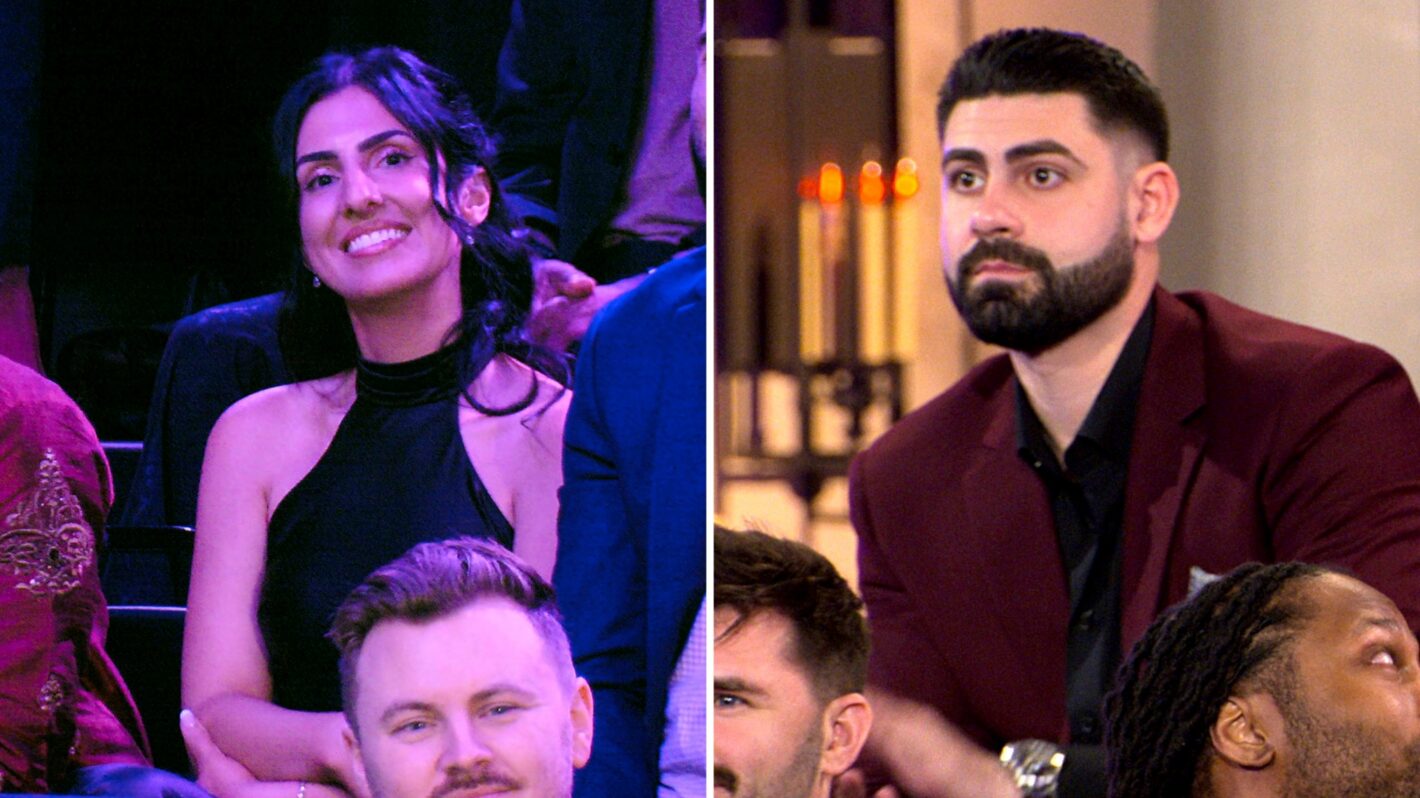
Mike and Tara on Love Is Blind: A Deep Dive into Reality TV Romance
Michael (Mike) and Tara were participants in the seventh season of Netflix’s Love Is Blind, set in Washington, D.C. (2024). Although they were part of the initial cast of thirty singles, their journey primarily took place within the po...
Michael (Mike) and Tara were participants in the seventh season of Netflix’s Love Is Blind, set in Washington, D.C. (2024). Although they were part of the initial cast of thirty singles, their journey primarily took place within the pods, highlighting the intense emotional vetting process that defines the series’ central experiment.
Contents
The Love Is Blind franchise has evolved from a niche social experiment into a global cultural phenomenon. By 2026, the series has reached its tenth season in the United States, yet the Washington, D.C. cohort (Season 7) remains a frequent topic of "deep dives" due to its unique cast of high-achieving professionals. Among those professionals were Michael, a 30-year-old Senior Mortgage Loan Officer, and Tara, a 32-year-old Marketing Manager. Their presence on the show offers a window into the "unseen" side of reality TV romance—the stories that contribute to the atmosphere of the pods but do not always culminate in a televised wedding.
The Profiles: Who Are Michael and Tara?
To understand the dynamic Michael and Tara brought to the pods, one must look at their backgrounds and the specific "dating resume" they carried into the experiment. In the D.C. season, the cast was notably older and more established than in previous seasons, with a heavy emphasis on career stability and political or corporate proximity.
Michael (Mike): The Financial Strategist
Michael entered the pods as a Senior Mortgage Loan Officer. In the context of a reality show that strips away physical appearance, financial literacy and professional stability often become major talking points. Michael represented the "stable provider" archetype, a common figure in the D.C. dating scene where career success is often a prerequisite for serious partnership. His approach to the pods was characterized by a search for someone who understood the high-stakes, high-stress environment of the financial sector while being able to "turn off" the professional persona at home.
Tara: The Creative Communicator
Tara, a Marketing Manager at the time of filming, brought a different energy to the experiment. Marketing professionals on Love Is Blind often navigate the pods with a heightened awareness of communication styles and brand—both personal and romantic. At 32, Tara was part of the demographic that the show’s creators, Chris Coelen and Kinetic Content, often describe as being "ready for the next step." Her goal was to find a connection that bypassed the superficial "swiping culture" of modern D.C. apps.
The D.C. Connection: Reality TV in the Nation’s Capital
The setting of Season 7 played a crucial role in the romance between participants like Mike and Tara. Washington, D.C. is notoriously known as a "transient" city where people move for work and often prioritize networking over deep emotional bonding.
When Mike and Tara entered the pods, they were essentially rebelling against the D.C. dating norm. The "Deep Dive" into their romance—or the potential thereof—requires looking at the psychological barriers of the D.C. professional. For many in this cohort, vulnerability is seen as a liability. Love Is Blind forces these individuals to lead with their insecurities rather than their job titles. While the televised edit focused heavily on the drama between other couples like Garrett and Taylor or Tyler and Ashley, the interactions between Mike and Tara represented the "everyman" experience of the pods: two successful people trying to see if their values aligned behind a glowing blue wall.
The "Unseen Couples" Phenomenon in Love Is Blind
A major point of discussion for fans in 2026 is the "Ghost Edit." Not every couple that finds a spark—or even gets engaged—makes it to the final cut of the show. In the history of Love Is Blind, several couples (such as Joey and Tara from Season 2 or Westley and Ani from Season 1) have gotten engaged in the pods only to have their entire journey omitted from the broadcast.
While Michael and Tara did not emerge as one of the "Final Five" couples that traveled to the retreat and the altar, their participation is essential to the show's data pool. For every televised romance, there are dozens of hours of deep, emotional conversations between cast members like Mike and Tara that never see the light of day. This creates a "filtered reality" where viewers only see the most volatile or the most "perfect" pairings, leaving the more grounded, perhaps less dramatic connections on the cutting room floor.
Why Some Romances are Sidelined
- Narrative Redundancy: If two couples have similar "story beats," producers may choose to focus on only one.
- Lack of Conflict: In the world of reality TV, "no news is bad news." Couples who communicate too healthily in the pods sometimes fail to provide the "drama" necessary for a prime-time slot.
- Logistical Constraints: Netflix typically follows a set number of couples to the next phase (the vacation/living together phase) to manage production costs and episode length.
Analyzing the Reality TV Romance Archetype
The "deep dive" into Mike and Tara's experience allows us to analyze the broader mechanics of how love is manufactured and marketed on television. Reality TV romance relies on three primary pillars: Isolation, Time Compression, and High Stakes.
| Pillar | Mechanism | Impact on Participants like Mike & Tara |
|---|---|---|
| Isolation | Removal of phones, internet, and external influence. | Forces participants to rely solely on their pod partner for emotional support. |
| Time Compression | Attempting to build a "lifetime" connection in 10 days. | Leads to "emotional flooding," where feelings are intensified unnaturally. |
| High Stakes | The looming prospect of a televised wedding. | Creates a "fight or flight" response regarding commitment and public image. |
For Mike and Tara, these pillars acted as a pressure cooker. In the D.C. environment, where image is everything, the risk of "failing" on national television can lead participants to be more guarded or, conversely, to over-perform affection.
The Evolution of Love Is Blind by 2026
As we look back from 2026, the D.C. season (Season 7) is viewed as a turning point for the franchise. It was one of the first seasons to face intense scrutiny regarding the "professionalism" of its cast. By 2026, the show has implemented more rigorous background checks and psychological support systems, partly due to the feedback from earlier cohorts.
Michael and Tara’s participation occurred at a time when the show was transitioning from a "wild west" of social experimentation into a more polished, almost clinical process of pairing people. Their story, though not the center of a wedding special, contributes to the ongoing debate about whether "the pods" are a viable way to meet a spouse or simply a platform for career-minded individuals to gain exposure.
Practical Takeaways from the Pod Experience
Even for those who do not end up married, the Love Is Blind experience offers psychological insights that viewers often apply to their own lives. This is why the "deep dive" into secondary cast members remains popular.
- The Importance of Active Listening: Without visual distractions, participants must master the art of the follow-up question. Mike and Tara’s sessions in the pods (based on cast interviews) highlighted the need for intellectual compatibility.
- Values Over Aesthetics: The show consistently proves that people can fall in love with a voice and a set of values, even if the "real world" attraction isn't immediate.
- The "Post-Show" Reality: In 2026, many former cast members emphasize that the "real" dating starts after the cameras stop rolling. For Mike and Tara, life after the pods involved returning to their high-powered jobs in D.C., away from the artificial environment of the Netflix set.
Common Questions About Mike and Tara
Did Michael and Tara get engaged on Love Is Blind?
No, Michael and Tara did not get engaged during the televised portion of Season 7. While they shared several dates in the pods, they did not move forward to the engagement or retreat phase of the show. Their connection served as part of the broader cast dynamic during the initial filming stages in Washington, D.C.
What are Michael and Tara doing now (in 2026)?
As of 2026, both Michael and Tara have returned to their respective careers in Washington, D.C. Michael continues his work in the financial sector as a mortgage specialist, while Tara has transitioned into senior marketing roles. Both remain active on social media, often sharing "throwback" content from their time in the pods and participating in reality TV alumni events.
Why were they not featured more prominently in Season 7?
Television production requires a focused narrative. Because Michael and Tara did not reach the engagement stage or involve themselves in the central "love triangles" of the season, their screen time was limited. Producers prioritize couples whose journeys end in a wedding or a dramatic "I don't," leaving more stable or less "televised" connections in the background.
Is the Love Is Blind experiment effective for D.C. professionals?
The experiment has seen mixed results for high-intensity professionals. While some, like those in the D.C. season, found the isolation helpful for focusing on emotional needs, the transition back to high-stress jobs often creates friction. By 2026, many experts suggest that the "pod effect" wears off quickly when faced with the logistical demands of a D.C. career.
Final Perspective: The Value of the Unseen Journey
The "deep dive" into Mike and Tara on Love Is Blind reminds us that reality TV is as much about the people we don't see as the ones we do. Their experience in the pods represents the reality for the majority of participants: a brief, intense, and transformative period of self-reflection that doesn't always lead to a ring, but often leads to a better understanding of what one truly needs in a partner. For viewers, their story is a reminder that romance—even in a reality TV setting—is rarely a straight line to the altar.
Image Gallery