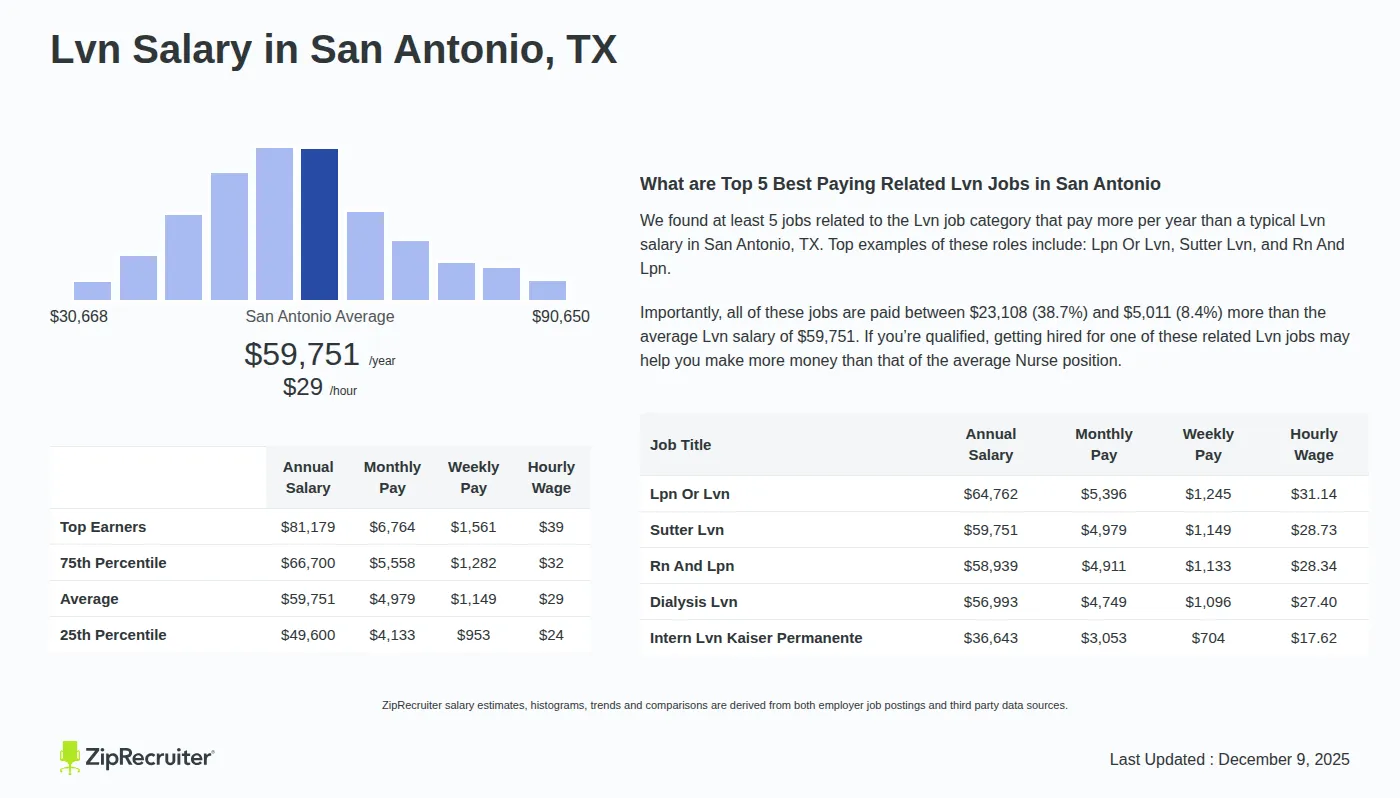
Understanding LVN Salary Hourly: Factors, Regional Trends, and Earning Potential
Licensed Vocational Nurses (LVNs)—or Licensed Practical Nurses (LPNs) in most U.S. states—play a critical role in the healthcare continuum, providing essential patient care under the supervision of Registered Nurses (RNs) and physician...
Licensed Vocational Nurses (LVNs)—or Licensed Practical Nurses (LPNs) in most U.S. states—play a critical role in the healthcare continuum, providing essential patient care under the supervision of Registered Nurses (RNs) and physicians. As of 2026, the hourly compensation for an LVN is influenced by a complex interplay of geography, clinical setting, experience levels, and specific certification specializations. Compensation generally scales with patient acuity levels and the autonomy required within a specific healthcare environment, providing a wide range of hourly wages that fluctuate based on local labor market demand.
Contents
Factors Influencing Hourly Compensation for LVNs
The hourly wage for a Licensed Vocational Nurse is rarely a static figure. Instead, it is determined by several verifiable variables that employers use to calculate competitive compensation packages. Understanding these drivers allows nursing professionals to better evaluate their earning potential and career trajectory.
Geographical Disparities and Cost of Living
The most significant factor affecting LVN hourly pay is the location of the facility. Compensation is fundamentally tied to the local cost of living and the regional supply-and-demand ratio for healthcare staff. In metropolitan areas with high living costs, such as San Francisco or New York City, hourly rates are typically higher to attract qualified candidates. Conversely, in rural areas or regions where the cost of living is lower, hourly wages may be more modest, though the purchasing power of that salary relative to local housing and services remains a critical point of analysis.
Clinical Setting and Work Environment
Where an LVN chooses to work dictates both the pay scale and the nature of the duties. Generally, hospitals and acute care facilities tend to offer higher hourly rates than long-term care facilities or outpatient clinics. This is often due to the increased intensity of the work, the requirement for rotating shifts (including nights, weekends, and holidays), and the higher complexity of medical interventions required in acute environments.
Experience and Clinical Specialization
Years of service often lead to incremental pay increases. An entry-level LVN may start at a base hourly rate, while a nurse with five or ten years of experience may command a significantly higher wage. Additionally, obtaining specialized certifications—such as those in intravenous (IV) therapy, wound care, or gerontology—can increase an LVN’s value to an employer. When an LVN possesses specialized skills that are in short supply, they often qualify for "differential pay" or a higher base hourly rate.
Shift Differentials and Overtime
Hourly compensation is often supplemented by shift differentials. Many healthcare facilities operate 24/7, and those who work "off-hours"—such as the night shift, weekend shifts, or holiday shifts—are usually compensated at a higher hourly rate. Furthermore, in facilities experiencing staffing shortages, an LVN might be eligible for "pick-up" bonuses or overtime pay, which is calculated at 1.5 times the base hourly rate for any hours worked beyond the standard 40-hour work week, as mandated by the Fair Labor Standards Act (FLSA) for non-exempt employees.
Comparative Overview of Typical Work Environments
The following table summarizes how different environments generally influence the compensation structure for Licensed Vocational Nurses.
| Work Environment | Pay Frequency | Typical Compensation Drivers | Shift Flexibility |
|---|---|---|---|
| Acute Care Hospitals | Hourly + OT | Higher base, weekend/night differentials | High (Rotating shifts) |
| Nursing Facilities | Hourly | Consistent base, tenure-based raises | Moderate |
| Home Health | Per Visit / Hourly | Travel reimbursement, case complexity | Moderate |
| Outpatient Clinics | Hourly | Standard hours, limited differentials | Low (Business hours) |
| Private Practice | Hourly | Experience-based, office scale | Low (Fixed hours) |
The Impact of Regulatory Requirements and Licensing
To maintain their license and eligibility for employment, LVNs must adhere to specific state regulatory requirements. The Bureau of Labor Statistics (BLS) and state boards of nursing track employment data and educational standards. Because licensing is state-specific, an LVN moving from one state to another must verify reciprocity or pursue a compact license if applicable. Employers are legally required to verify current, active licensure before onboarding a nurse, and maintaining this credential is the primary prerequisite for earning any hourly wage in this field.
Failure to maintain continuing education units (CEUs) or lapses in professional liability coverage can result in disciplinary action or the suspension of an LVN’s ability to practice, which immediately impacts one’s ability to earn an hourly income.
Strategies for Maximizing Hourly Earnings
For those looking to increase their hourly compensation, several actionable strategies are effective:
- Seek Specialized Certifications: Pursuing certifications in areas like hospice, oncology, or geriatrics demonstrates advanced competency. Many employers are willing to pay a premium for nurses who can handle more complex patient populations.
- Negotiate Based on Data: Before entering salary negotiations, research the median hourly rates for your specific city and specialty. Providing evidence-based data regarding the local market can be a powerful tool during contract discussions.
- Consider Per Diem Assignments: Per diem (as-needed) nurses often earn a higher hourly rate than full-time staff because they do not receive the same benefits, such as health insurance or paid time off. This can be a strategic way to increase immediate cash flow if the nurse has independent access to insurance.
- Volunteer for Hard-to-Fill Shifts: Offering to cover night, weekend, or holiday shifts can lead to significant increases in total hourly pay through shift differentials.
Frequently Asked Questions
Does an LVN earn more money working in a hospital or a nursing home? Generally, LVNs earn more in hospital settings due to the higher acuity of care and the 24-hour nature of the facility. Nursing homes often provide more predictable schedules, but the base hourly rates are typically lower than those found in acute care settings.
How does an LVN's experience level affect their hourly rate? Experience directly correlates with hourly pay. Most healthcare organizations use a "step" system where an LVN's wage increases incrementally with each year of service. Advanced clinical skills developed over time also allow for more effective salary negotiation.
What is the difference between hourly wages and "per-visit" pay in home health? While many LVNs are paid an hourly rate, those in home health may be paid per visit. If you are paid per visit, you must calculate the total time spent per patient, including travel, to determine your true hourly rate. Often, per-visit models can be lucrative if the nurse is efficient with their time management.
Are LVN shift differentials mandatory by law? No, shift differentials are not mandated by federal law. They are determined by the employer's policies and often negotiated in union contracts. If you are seeking higher pay, ensure you ask about shift differentials during the interview process.
Can an LVN increase their pay by obtaining an IV certification? Yes. In many jurisdictions, an LVN with a specialized IV therapy certification is allowed to perform advanced procedures that a standard LVN cannot. Because this increases the nurse's utility to the employer, it frequently leads to a higher base hourly rate.
Professional Advice and Limitations
While the data provided serves as a guide for understanding the labor market, it is not a substitute for professional legal or financial advice. Salary figures are subject to change based on localized supply-demand fluctuations, economic conditions, and union negotiations. Always review your specific state's nursing board guidelines regarding the scope of practice and licensing requirements. If you are facing wage disputes or concerns regarding employment classification, consult with a labor law attorney or your state's department of labor.
For those pursuing employment, the most effective next step is to research the specific salary ranges published by your state's labor department or the U.S. Bureau of Labor Statistics for your specific region, as these records provide the most accurate benchmarks for current hiring practices in 2026.
Image Gallery