Understanding Taxes Receivable: Accounting Principles, Recognition, and Valuation
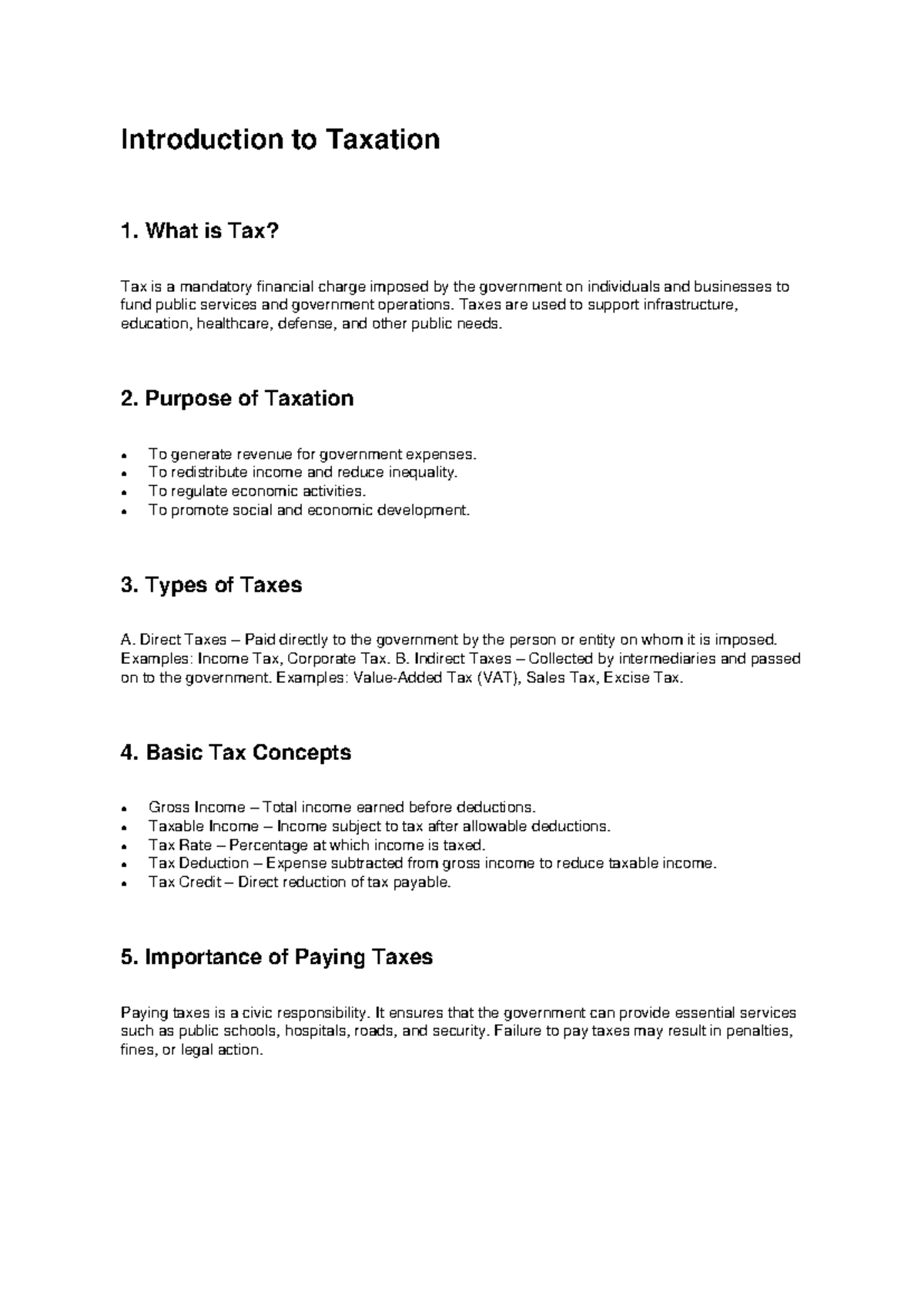
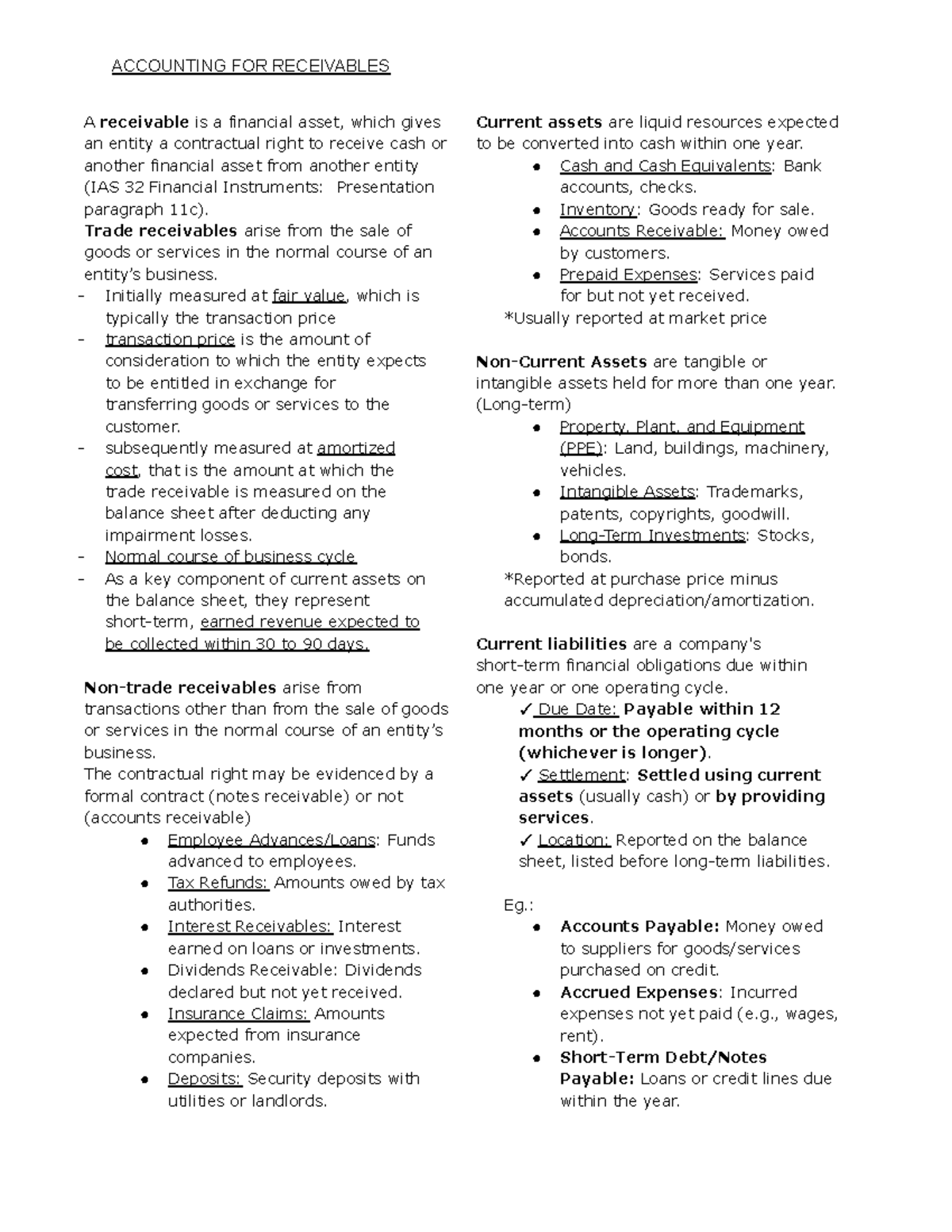
Taxes receivable represents tax revenues that have been levied or billed but not yet collected. In governmental accounting, it reflects property, sales, or income taxes owed by taxpayers to a public entity. In corporate accounting, it...
Taxes receivable represents tax revenues that have been levied or billed but not yet collected. In governmental accounting, it reflects property, sales, or income taxes owed by taxpayers to a public entity. In corporate accounting, it represents overpayments of taxes or refundable tax credits due back from tax authorities.
Contents
What Is Taxes Receivable?
In financial accounting, taxes receivable is classified as a current asset on a balance sheet. It denotes an legally enforceable claim to cash that has not yet been realized. However, the operational treatment, recognition timing, and accounting standards governing taxes receivable depend heavily on whether the reporting entity is a public sector (governmental) institution or a private corporate enterprise.
For public sector entities (such as municipal, county, state, or federal governments), taxes receivable represents a fundamental revenue engine. Governments levy taxes—including real estate property taxes, municipal sales taxes, corporate income taxes, and excise taxes—to fund public infrastructure, safety, education, and administrative services. Because tax levies are established by law prior to cash collection, a government must recognize the receivable when it acquires an enforceable legal claim.
For private corporations and business entities, income taxes receivable arises primarily when a company overpays its estimated tax obligations during a tax year, qualifies for refundable tax credits (such as research and development credits), or exercises net operating loss (NOL) tax provisions that trigger a tax refund from regulatory authorities like the Internal Revenue Service (IRS) or state revenue departments.
Understanding how taxes receivable functions requires navigating two distinct accounting frameworks:
- Governmental Accounting Standards Board (GASB) rules for state and local government entities.
- Financial Accounting Standards Board (FASB) Accounting Standards Codification (ASC) Topic 740 for corporate income taxes under US GAAP, along with International Financial Reporting Standards (IFRS) under IAS 12.
Governmental Accounting: GASB Framework and Recognition Rules
Governmental entities rely on specialized financial reporting frameworks established by GASB. Unlike private businesses, which generate revenue primarily through voluntary exchange transactions (selling goods or services for market value), governments derive the majority of their income through nonexchange transactions. In a nonexchange transaction, a government receives value (tax payments) without directly giving equal value in exchange to the individual taxpayer.
GASB Statement No. 33, Accounting and Financial Reporting for Nonexchange Transactions, establishes the accounting criteria for recognizing taxes receivable across four major categories of nonexchange transactions.
Categories of Nonexchange Transactions
Derived Tax Revenues
- Examples: Sales taxes, personal income taxes, fuel taxes, and hotel occupancy taxes.
- Definition: These taxes stem from underlying economic transactions undertaken by taxpayers.
- Recognition Standard: Taxes receivable are recognized as assets in the accounting period when the underlying economic transaction occurs (e.g., when a consumer completes a retail sale subject to sales tax, or when an employee earns taxable income).
Imposed Nonexchange Revenues
- Examples: Ad valorem property taxes, property assessment levies, fines, and forfeitures.
- Definition: Assessments imposed by a governmental body on non-governmental entities, including individuals and businesses, that do not result from an underlying exchange transaction.
- Recognition Standard: Taxes receivable are recognized when the government has an enforceable legal claim against the taxpayer or property owner (often the assessment date or tax lien date), or when resources are received, whichever occurs first.
Government-Mandated Nonexchange Transactions
- Examples: Federal or state grants provided to lower levels of government to fund specific mandated programs (such as highway construction or public health initiatives).
- Definition: Occurs when a higher level of government mandates that a lower level of government perform a specific function and provides funding to cover the costs.
- Recognition Standard: Assets and revenues are recognized when all applicable eligibility requirements established by the provider are met.
Voluntary Nonexchange Transactions
- Examples: Donated funds, optional state grants, and voluntary contributions.
- Definition: Financial assistance resulting from agreements entered into willingly by two or more parties.
- Recognition Standard: Assets are recognized when all eligibility requirements are fulfilled.
Dual Presentation: Fund Financial Statements vs. Government-Wide Financial Statements
Under the GASB reporting model, state and local governments must prepare two distinct sets of financial statements. The accounting treatment for taxes receivable varies significantly between these two presentations due to the underlying measurement focus and basis of accounting.
- Governmental Financial Reporting
- Fund Financial Statements
- Modified Accrual Basis
- Focus: Current Financial Resources
- Rule: "Measurable & Available" (Collected within 60 days)
- Government-Wide Statements
- Full Accrual Basis
- Focus: Total Economic Resources
- Rule: Enforceable Legal Claim or Transaction Date
- Fund Financial Statements
1. Government-Wide Financial Statements (Full Accrual Basis)
Government-wide financial statements use the economic resources measurement focus and the full accrual basis of accounting, similar to private-sector corporate accounting.
Under full accrual:
- Taxes receivable are recorded as assets as soon as the government acquires an enforceable legal claim or when the underlying transaction takes place.
- Revenue is recognized simultaneously, provided eligibility criteria are met, regardless of when cash is collected.
- An allowance for uncollectible taxes (contra-asset) is applied to reflect estimated delinquent or uncollectible balances.
2. Governmental Fund Financial Statements (Modified Accrual Basis)
Governmental fund statements (such as the General Fund) use the current financial resources measurement focus and the modified accrual basis of accounting. This model emphasizes near-term financial liquidity and spending capability.
Under modified accrual:
- An asset (Taxes Receivable) is recorded when the amount is measurable.
- Revenue is recognized only if the receivable is both measurable and available.
The "60-Day Availability Rule"
To be considered available under modified accrual accounting, tax collections must be expected to occur within the current accounting period or soon enough thereafter to pay liabilities of the current period.
For property taxes, GASB Interpretation No. 5 clarifies that the availability period should not exceed 60 days following the close of the fiscal year.
If a government levies property taxes for fiscal year 2026, but a portion of those taxes will not be collected within 60 days after year-end, the uncollected portion is recorded on the balance sheet as follows:
- Asset: Taxes Receivable (Property Taxes Receivable)
- Deferred Inflow of Resources: Unavailable Tax Revenue (instead of immediate Revenue)
When cash is eventually collected in a subsequent period, the deferred inflow of resources is removed, and revenue is officially recognized in the fund.
Corporate Accounting: Income Taxes Receivable under ASC 740
For commercial enterprises operating under US GAAP (FASB ASC Topic 740) or IFRS (IAS 12), taxes receivable occupies a different role. Businesses do not levy taxes; instead, they pay income, payroll, sales, and property taxes to federal, state, and international tax authorities.
Income Taxes Receivable on a corporate balance sheet typically represents:
- Overpayment of Estimated Tax Installments: Corporations are generally required to make quarterly estimated tax payments. If annual calculated taxable income is lower than projected, estimated payments may exceed total actual tax liability, creating a receivable due from the tax authority.
- Refundable Tax Credits: Tax legislation often offers refundable incentive credits (such as research activities, renewable energy investments, or employee retention programs) that exceed total tax liability.
- Loss Carrybacks: Where permitted by current tax law, corporate tax losses may be carried back to offset taxable income in prior fiscal years, creating an immediate tax refund claim from the tax authority.
Balance Sheet Classification and Valuation
Corporate income taxes receivable must be classified as a Current Asset if the business expects to receive the cash refund or apply the overpayment against short-term tax obligations within one year (or within the operating cycle, whichever is longer).
Under ASC 740, corporate accounting teams must evaluate uncertainty in tax positions. If a tax refund claim relies on an uncertain tax position, the entity can only recognize the financial statement benefit if it is more likely than not (a greater than 50% probability) that the position will be sustained upon examination by tax authorities, based strictly on its technical merits.
Accounting Journal Entries for Taxes Receivable
To understand how taxes receivable moves through an accounting system, consider standard journal entries across the tax lifecycle in both governmental and corporate settings.
Scenario A: Local Government Property Tax Levy (Governmental Accounting)
A municipality levies $10,000,000 in real estate property taxes for the 2026 fiscal year. Based on historical collection rates, the city estimates that 3% ($300,000) will prove uncollectible due to tax appeals, foreclosures, or delinquencies.
1. Initial Tax Levy Recording (Beginning of Fiscal Year)
Under the full accrual government-wide framework, the entry records the gross receivable, estimated uncollectibles, and net revenue:
| Account Title | Debit ($) | Credit ($) |
|---|---|---|
| Property Taxes Receivable - Current | 10,000,000 | |
| Allowance for Uncollectible Property Taxes | 300,000 | |
| Property Tax Revenue | 9,700,000 |
Explanation: Establishes gross tax claims owed by property owners, sets aside a 3% contra-asset allowance, and recognizes net expected tax revenue.
2. Cash Collections During the Year
During the fiscal year, taxpayers remit $8,500,000 in cash payments:
| Account Title | Debit ($) | Credit ($) |
|---|---|---|
| Cash | 8,500,000 | |
| Property Taxes Receivable - Current | 8,500,000 |
Explanation: Reduces the active taxes receivable balance as cash is received.
3. Reclassification of Delinquent Balances (End of Year)
At year-end, the remaining unpaid balance of $1,500,000 ($10,000,000 gross less $8,500,000 collected) becomes past due:
| Account Title | Debit ($) | Credit ($) |
|---|---|---|
| Property Taxes Receivable - Delinquent | 1,500,000 | |
| Property Taxes Receivable - Current | 1,500,000 |
Explanation: Transfers unpaid tax balances from current to delinquent status for specialized collection actions and tax lien enforcement.
4. Modified Accrual Adjustment for Revenue Not Available within 60 Days
Under modified accrual in fund accounting, if $400,000 of the delinquent taxes will not be collected within 60 days post-year-end, that portion cannot be recognized as current-year revenue:
| Account Title | Debit ($) | Credit ($) |
|---|---|---|
| Property Tax Revenue | 400,000 | |
| Deferred Inflows of Resources - Unavailable Tax Revenue | 400,000 |
Explanation: Reclassifies revenue into a deferred inflow of resources on the fund balance sheet until cash collection occurs within the availability window.
Scenario B: Corporate Tax Overpayment (Private Sector Accounting)
A corporation makes quarterly estimated income tax payments totaling $500,000 throughout 2026. At year-end closing, the tax department calculates the actual corporate income tax liability to be $420,000, resulting in a $80,000 overpayment to be refunded by the IRS.
1. Journal Entry for Annual Tax Provision and Overpayment
| Account Title | Debit ($) | Credit ($) |
|---|---|---|
| Income Tax Expense | 420,000 | |
| Income Taxes Receivable | 80,000 | |
| Cash / Estimated Tax Payments Asset | 500,000 |
Explanation: Recognizes the actual income tax expense of $420,000, eliminates the estimated tax payment asset of $500,000, and records an $80,000 corporate income tax receivable for the refund due.
Comparison: Governmental vs. Corporate Taxes Receivable
The following table summarizes the structural differences between taxes receivable in governmental accounting and corporate balance sheets.
| Feature / Dimension | Governmental Accounting (GASB) | Corporate Accounting (FASB / GAAP) |
|---|---|---|
| Primary Source | Statutory tax levies (Property, Sales, Income, Excise taxes) imposed on taxpayers. | Overpayment of quarterly estimated taxes, tax credit refunds, or loss carrybacks. |
| Accounting Standards | GASB Statement No. 33, GASB Codification Section P70. | FASB ASC Topic 740 (Income Taxes), IAS 12. |
| Classification on Statement | Current Asset (Government-wide & Fund statements). | Current Asset (Short-term refund) or Non-Current Asset (Long-term dispute). |
| Revenue Recognition Timing | Full Accrual: When legal claim arises.Modified Accrual: When measurable and available (60-day rule for property tax). | Reduces tax expense or recognizes receivable upon overpayment/filing claim. |
| Contra-Asset Account | Allowance for Uncollectible Taxes (estimates delinquent non-payments). | Valuation Allowance (primarily used against Deferred Tax Assets under ASC 740). |
| Deferred Inflows Required? | Yes, under modified accrual for revenues collected beyond the availability window. | No. Deferred tax liabilities exist, but deferred inflows of resources are specific to public sector reporting. |
| Enforcement Mechanism | Statutory authority, tax liens, tax sales, property foreclosures. | Tax dispute filings, administrative appeals, tax court litigation, refund claims. |
Valuation Allowances and Managing Uncollectible Balances
Taxes receivable balances cannot be assumed to be 100% collectable. Taxpayers may face bankruptcy, experience financial hardship, dispute property valuations, or relocate outside the tax authority's jurisdiction. Consequently, entities must establish valuation accounts to present receivables at their net realizable value.
Allowance for Uncollectible Taxes (Governmental Sector)
Governments estimate uncollectible taxes based on historical collection trends, economic indicators, pending tax appeals, and local real estate conditions.
The contra-asset account, Allowance for Uncollectible Taxes, reduces gross Taxes Receivable on the balance sheet:
$$\text{Net Taxes Receivable} = \text{Gross Taxes Receivable} - \text{Allowance for Uncollectible Taxes}$$
Writing Off Uncollectible Tax Balances
When a government entity determines that a specific tax debt is legally uncollectible (e.g., following a tax lien foreclosure sale that yields less than the tax debt, or an uncollectible bankruptcy discharge), the debt is written off against the allowance account:
| Account Title | Debit ($) | Credit ($) |
|---|---|---|
| Allowance for Uncollectible Property Taxes | 15,000 | |
| Property Taxes Receivable - Delinquent | 15,000 |
Explanation: Writing off a specific uncollectible property tax balance has no impact on total current expenditures or revenues, as the estimated loss was already recorded during the initial levy assessment.
Valuation Allowances under ASC 740 (Corporate Sector)
In corporate finance, tax receivables are rarely written off for non-payment because the debtor is a sovereign or state tax authority (such as the IRS or a State Department of Revenue). Instead, risk centers on whether the tax authority will disallow claimed credits, deductions, or refund filings upon audit.
Under ASC 740, if a company reports Deferred Tax Assets (DTAs) alongside income tax refund claims, it must evaluate whether a valuation allowance is necessary. If, based on available positive and negative evidence, it is more likely than not that some or all of the deferred tax assets or refund claims will not be realized, the company must record a valuation allowance to reduce the asset to its estimable realizable amount.
Common Audit Risks and Compliance Challenges
Auditors and financial managers pay close attention to taxes receivable during year-end financial audits. Misstatements in this account directly alter reported revenues, fund balances, or corporate liquidity metrics.
1. Failure to Enforce the 60-Day Availability Rule
In municipal audits, a common finding involves recording revenue for property tax payments collected 75 or 90 days after fiscal year-end under fund financial statements. Auditors will require an adjusting entry to reclassify revenue collected past the 60-day window into Deferred Inflows of Resources.
2. Inadequate Allowance Estimations
Underestimating uncollectible tax rates inflates net assets and revenue. Governments must periodically recalibrate allowance models, particularly during recessions or shifts in local property values, to account for rising tax delinquency rates.
3. Misclassification of Pass-Through Revenues
Local governments often collect sales taxes that are administered and distributed by state revenue departments. In these situations, the local entity must distinguish between:
- Taxes Receivable: Tax amounts collected by the state that are due for distribution to the local government.
- Agency / Custodial Obligations: Funds collected by the municipality on behalf of another jurisdiction (such as a regional transit authority) that must be passed through without being recorded as municipal tax revenue.
4. Overstating Uncertain Tax Refund Claims
Corporations that aggressively record income tax receivables based on uncertain tax positions risk audit adjustments, interest penalties, and mandatory restatements if tax authorities reject the position upon audit.
Frequently Asked Questions
Is taxes receivable considered a current asset or a non-current asset?
Taxes receivable is almost always classified as a current asset because taxes are legally due and expected to be collected within 12 months or within the normal operating cycle. However, if a tax dispute or installment agreement defers collection beyond 12 months, the portion extending past one year is reclassified as a non-current asset.
What is the difference between taxes receivable and taxes payable?
Taxes receivable is an asset account representing tax money owed to the reporting entity (e.g., taxes owed to a city by property owners, or a tax refund owed to a corporation by the IRS). Taxes payable is a liability account representing tax debts that the reporting entity owes to tax authorities (such as accrued payroll taxes, corporate income tax liability, or collected sales taxes owed to the state).
How does the 60-day rule affect property tax revenue in governmental funds?
The 60-day rule dictates that under modified accrual accounting (used in governmental fund financial statements), property tax collections can only be recognized as current-year revenue if cash is collected during the fiscal year or within 60 days after fiscal year-end. Any collections expected after 60 days must be recorded as a deferred inflow of resources on the balance sheet.
Can a private company have a taxes receivable account?
Yes. A private corporation records an Income Taxes Receivable account when it overpays its quarterly estimated tax obligations, qualifies for refundable government tax credits, or files a tax refund claim resulting from net operating loss carrybacks.
What happens when a taxpayer fails to pay delinquent taxes receivable?
When taxpayers fail to pay delinquent taxes receivable, public sector entities initiate statutory enforcement actions. For property taxes, the government may attach a tax lien to the property, charge interest and penalties, and eventually initiate a tax lien sale or property foreclosure to recover the unpaid tax asset.
Next Steps for Accounting Professionals
To manage taxes receivable effectively and maintain regulatory compliance across accounting frameworks:
- Review Basis of Accounting Requirements: Ensure that tax revenues and receivables are appropriately split between full accrual (government-wide statements) and modified accrual (fund statements) accounting rules.
- Audit Availability Windows: Verify that your organization strictly enforces the 60-day availability parameter for property taxes in fund accounting to prevent audit adjustments.
- Recalibrate Allowance Models: Review historical delinquency and collection data annually to ensure the Allowance for Uncollectible Taxes accurately reflects current economic conditions.
- Document Tax Positions: For corporate tax refunds, assemble thorough technical documentation supporting any refund claim under FASB ASC 740 to sustain audit scrutiny by internal auditors and tax authorities.
For authoritative guidelines, consult the latest pronouncements directly from the Governmental Accounting Standards Board (GASB) and the Financial Accounting Standards Board (FASB).
Image Gallery