Security Risks of Round Robin Load Balancing in Cloud Environments
Round robin load balancing in cloud environments creates security vulnerabilities primarily through its lack of traffic intelligence, which allows attackers to exploit predictable request distribution, bypass session persistence, and o...
Round robin load balancing in cloud environments creates security vulnerabilities primarily through its lack of traffic intelligence, which allows attackers to exploit predictable request distribution, bypass session persistence, and overwhelm specific nodes during DDoS attacks. Because it treats every request and server as equal, it cannot distinguish between legitimate users and malicious actors without integrated security layers.
Contents
While round robin (RR) is one of the simplest and most common load-balancing algorithms used in cloud computing, its implementation in 2026 requires a deep understanding of its inherent security limitations. In a cloud-native landscape where microservices and ephemeral instances are the norm, relying on a basic "circular" distribution of traffic can inadvertently open backdoors for sophisticated cyber threats.
The Technical Mechanism of Round Robin in the Cloud
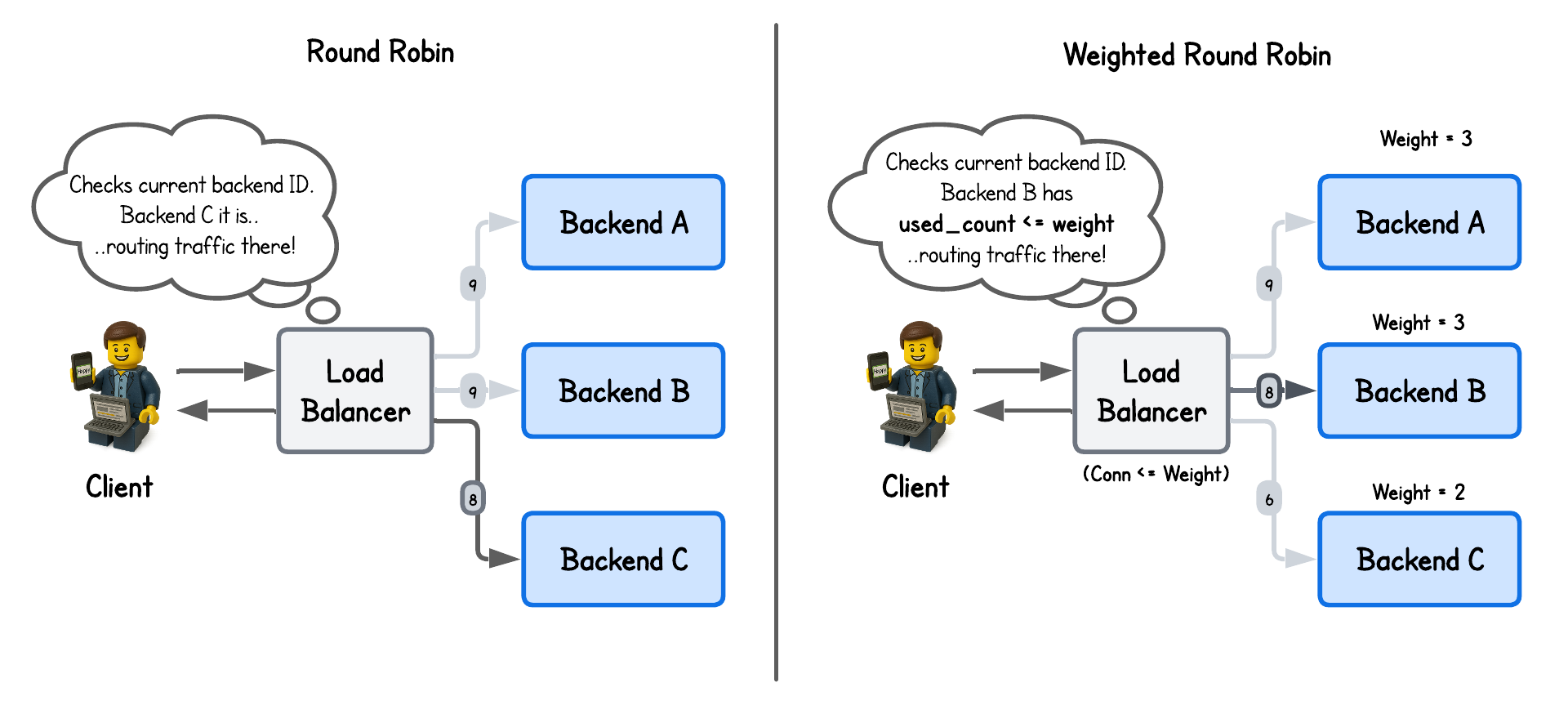
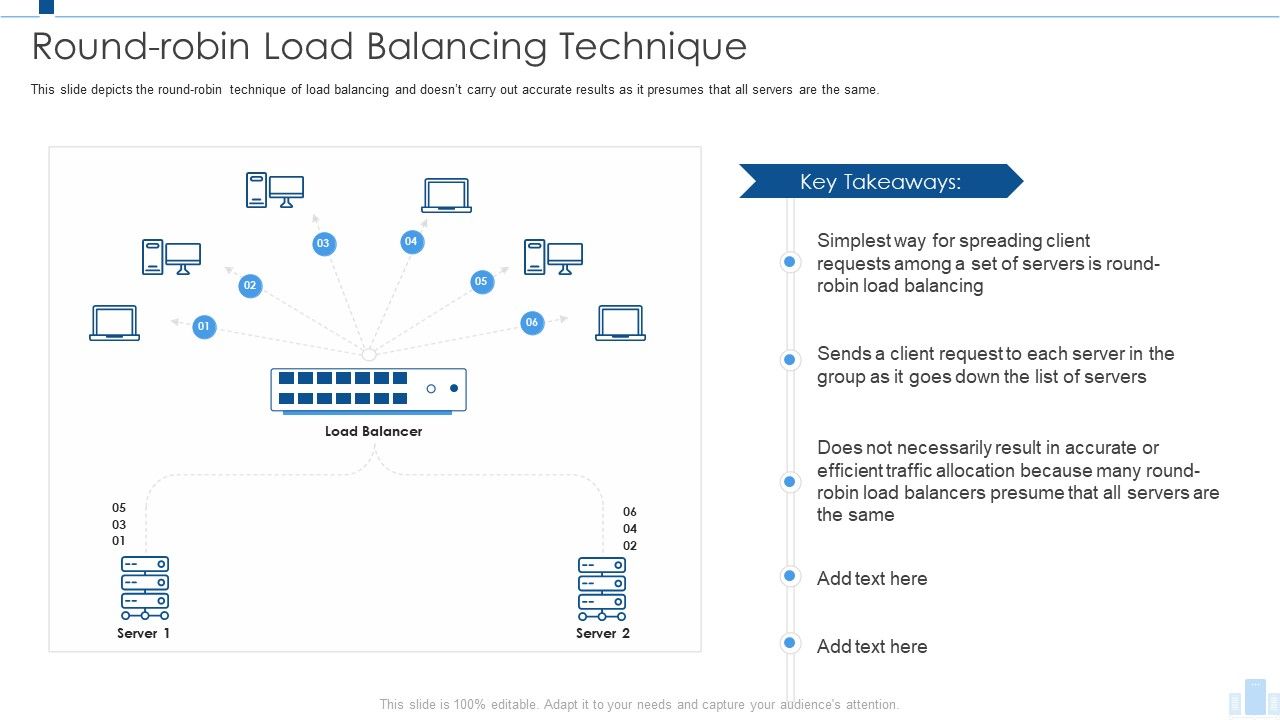
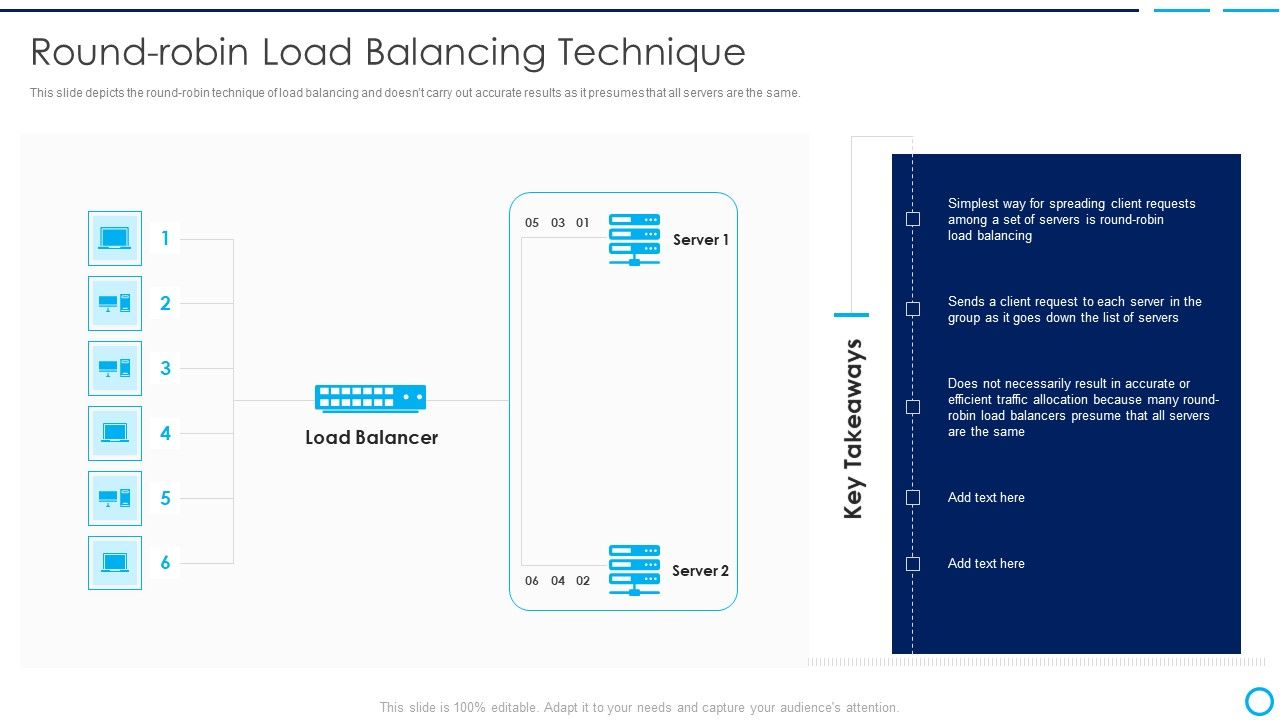
To understand the security issues, one must first understand how round robin operates within a cloud infrastructure (such as AWS Elastic Load Balancing, Azure Load Balancer, or Google Cloud Load Balancing). The algorithm distributes incoming client requests across a group of backend servers in a sequential, rotating fashion.
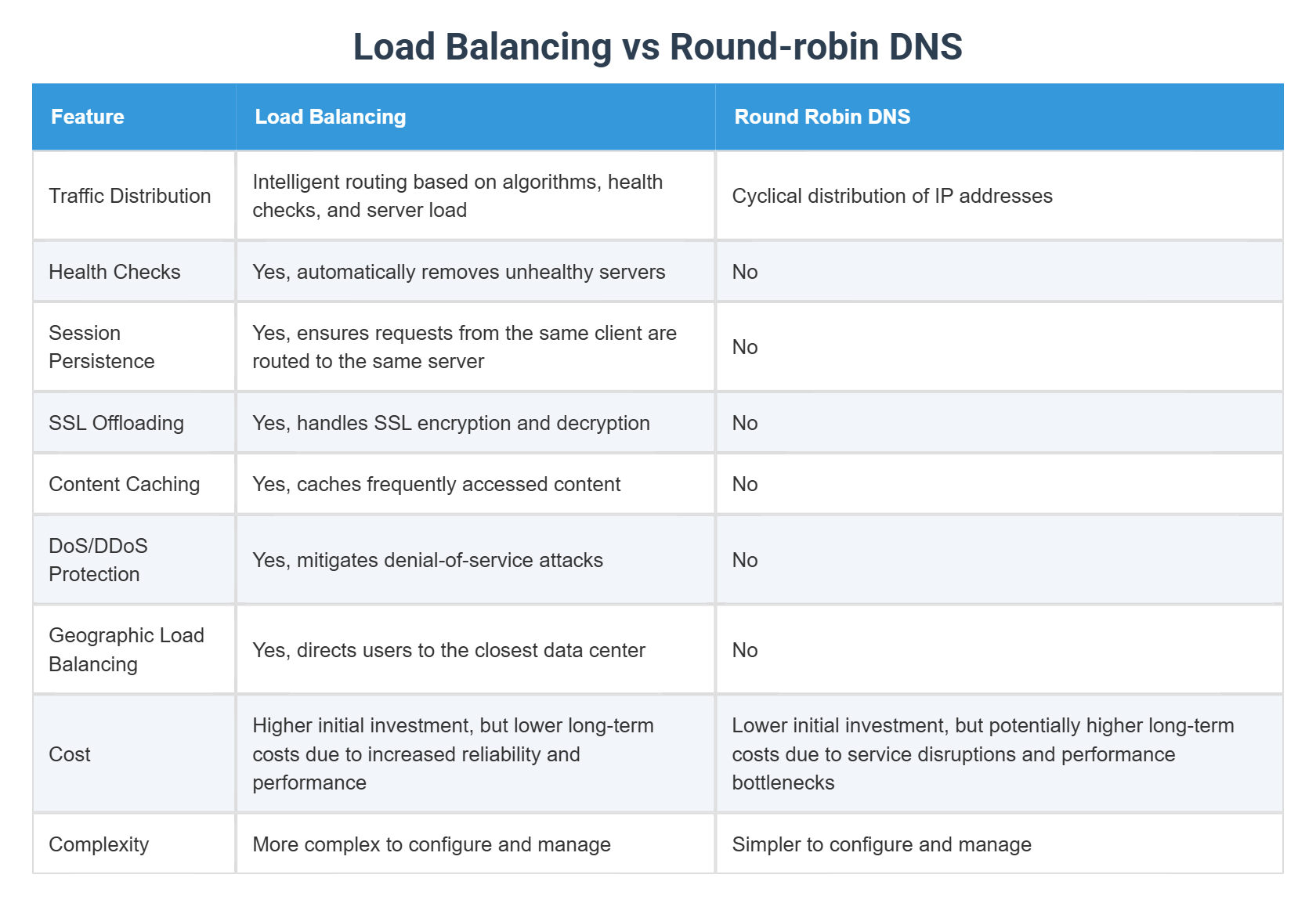
If you have three servers (A, B, and C), the first request goes to A, the second to B, the third to C, and the fourth returns to A. In a cloud environment, this is often managed at the DNS level (DNS Round Robin) or at the application level (Layer 7 Load Balancing).
The simplicity of this approach is its greatest weakness. In a modern cloud environment, servers are rarely identical in terms of real-time resource availability or security posture. When a load balancer uses round robin, it acts as a "blind" traffic director, ignoring the state of the backend instance, the nature of the payload, and the identity of the requester.
Primary Security Vulnerabilities of Round Robin Load Balancing
The shift to cloud-based infrastructure has magnified the risks associated with static load-balancing algorithms. Below are the most critical security issues that organizations face when using round robin in 2026.
1. Predictability and Target Selection
The most fundamental security flaw of round robin is its predictability. Because the algorithm follows a fixed sequence, an attacker can easily map out the backend infrastructure. By sending a series of requests and monitoring response headers or timing nuances, a malicious actor can determine exactly which server will receive the next request.
This predictability is a goldmine for attackers seeking to exploit a specific known vulnerability on a single node. If an attacker knows that Server B is running a slightly outdated patch or has a misconfigured service, they can time their malicious payload to land precisely on that instance by "burning" requests on Servers A and C first.
2. DDoS Amplification and Resource Exhaustion
Round robin is notoriously poor at handling Distributed Denial of Service (DDoS) attacks. Unlike "Least Connections" or "Resource-Based" algorithms, round robin continues to send traffic to a server even if that server is already at 90% CPU utilization.
In a cloud environment, where auto-scaling is often tied to load balancer metrics, a surge in malicious traffic distributed via round robin can trigger unnecessary and expensive scaling events. Attackers can exploit this to perform "Economic Denial of Sustainability" (EDoS) attacks, driving up the victim’s cloud bill by forcing the infrastructure to scale horizontally to handle garbage traffic that a smarter load balancer would have dropped.
3. Session Hijacking and Persistence Failures
Round robin does not inherently support session persistence (also known as "sticky sessions"). In the cloud, many applications require a user to stay connected to the same backend server to maintain their session state.
When round robin is used without a secondary persistence mechanism (like cookies or IP hashing), a user’s subsequent requests may land on a different server that has no record of their authentication. This creates two security problems:
- Re-authentication Loops: Users are forced to log in repeatedly, increasing the window for credential sniffing or man-in-the-middle attacks.
- Session Fixation: Attackers can exploit the handoff between servers to inject their own session IDs if the application’s state-sharing mechanism (like Redis or Memcached) is not perfectly synchronized and secured.
4. The "Zombie Server" Problem (Health Check Latency)
In cloud environments, instances frequently spin up and down. Round robin algorithms rely on health checks to remove unhealthy nodes from the rotation. However, there is always a "dead window"—the time between a server failing (or being compromised) and the load balancer detecting the failure.
If a server is compromised by an attacker and begins exhibiting malicious behavior, a standard round robin balancer will continue to feed it clean user data and requests until the next health check cycle. This allows an attacker to maintain a "zombie" presence within the trusted internal network, intercepting data from every n-th visitor.
Comparison of Load Balancing Algorithms and Security Impact
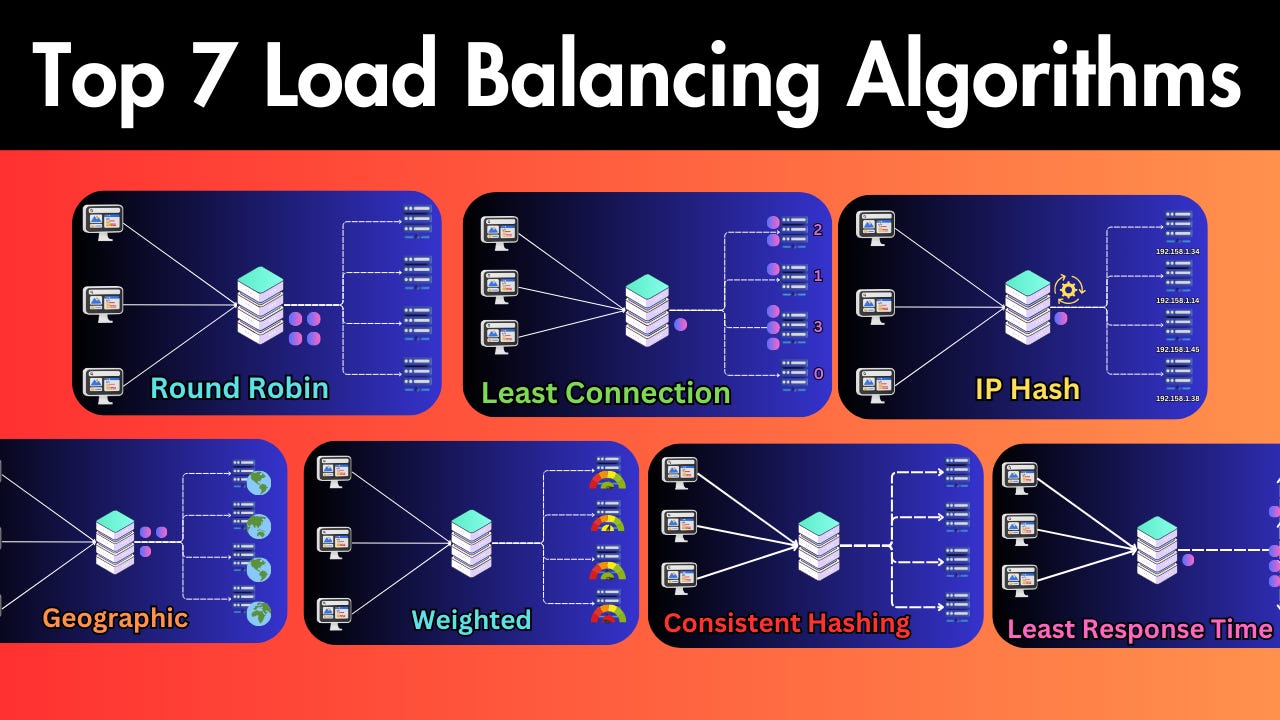
The following table compares round robin with other common cloud load-balancing methods to highlight why it is often considered the least secure option for sensitive workloads.
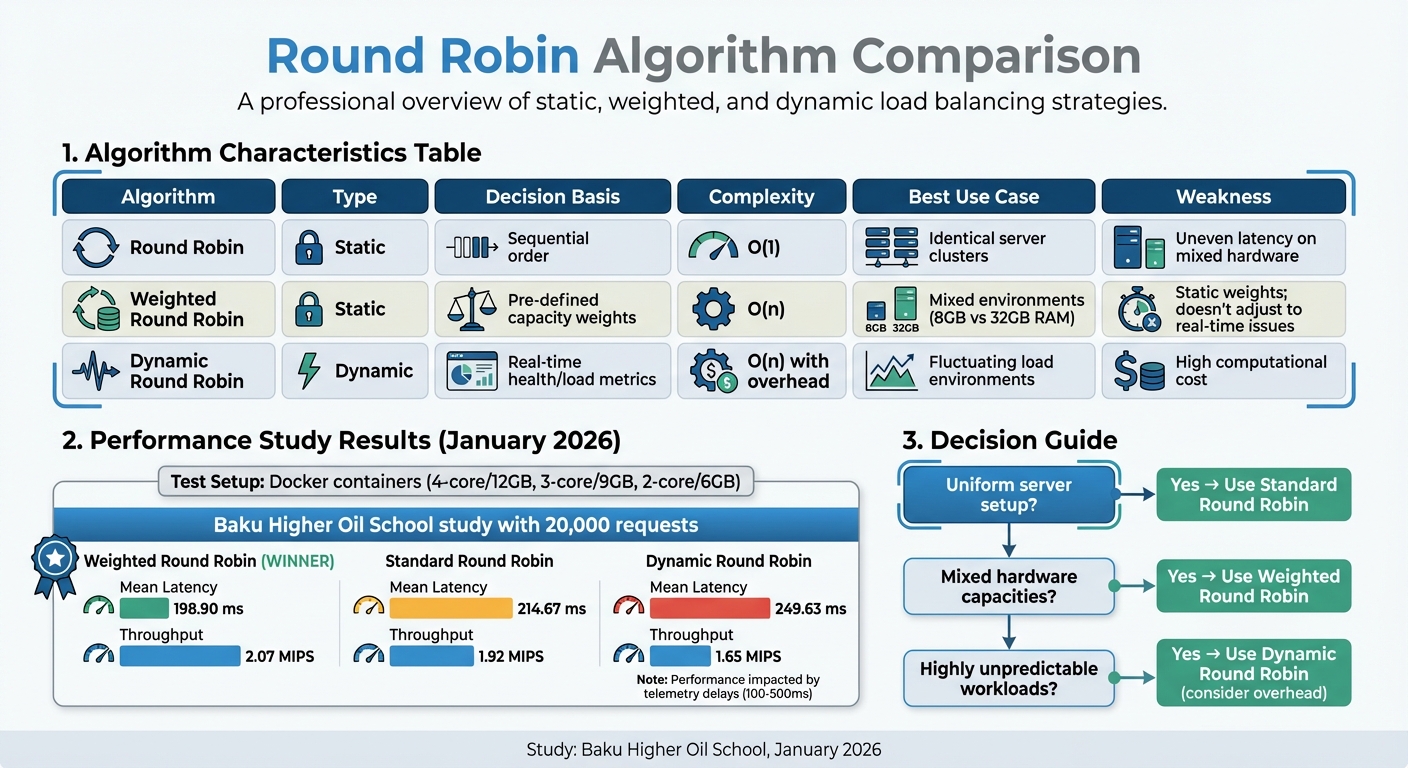
| Algorithm | Security Level | Predictability | DDoS Resilience | Best Use Case |
|---|---|---|---|---|
| Round Robin | Low | High | Low | Static content, internal non-sensitive services. |
| Weighted Round Robin | Low/Medium | Moderate | Low | Clusters with heterogeneous hardware specs. |
| Least Connections | Medium | Low | Moderate | Applications with varying request processing times. |
| IP Hash | Medium/High | Low | Moderate | Applications requiring strict session persistence. |
| Resource-Based | High | Very Low | High | High-security enterprise cloud environments. |
Advanced Cloud Security Considerations for 2026
As we navigate the mid-2020s, the "blind" nature of round robin has become even more problematic due to the rise of AI-driven botnets. These botnets can mimic human behavior across multiple IP addresses, making it difficult for a simple circular algorithm to detect the pattern of an attack.
Shared Responsibility Model Risks
Cloud providers like AWS and Google Cloud operate under a Shared Responsibility Model. While the provider ensures the load balancer service (the "plumbing") is available, the configuration of the algorithm and the security of the traffic flowing through it are the user's responsibility.
Using round robin in a high-stakes environment like financial services or healthcare without an integrated Web Application Firewall (WAF) is now considered a failure of due diligence. In 2026, regulatory bodies increasingly view the choice of load-balancing algorithms as a factor in "reasonable security" audits.
Lack of Content Inspection
Round robin typically operates at Layer 4 (Transport Layer) or basic Layer 7 (Application Layer). Because its primary goal is speed and simplicity, it does not perform deep packet inspection. This means it can inadvertently act as a delivery mechanism for SQL injection or Cross-Site Scripting (XSS) attacks, spreading the malicious payload evenly across your entire server fleet and making the "blast radius" of an attack much harder to contain.
Strategies to Mitigate Round Robin Security Issues
If your organization must use round robin for architectural reasons, several mitigation strategies can bridge the security gap.
- Integrate a Cloud WAF: Place a Web Application Firewall in front of the load balancer. The WAF handles the inspection and filtering of malicious traffic before the round robin algorithm decides which server receives the request.
- Enable Strict Health Checks: Shorten the interval for health checks to under 5 seconds and increase the threshold for failure. This reduces the "dead window" where a compromised or failing server can still receive traffic.
- Implement Zero Trust Architecture: Do not assume that traffic coming from the load balancer is "safe" because it is internal. Use mTLS (mutual TLS) between the load balancer and the backend servers to ensure that only authorized traffic is processed.
- Use Weighted Round Robin for Canary Deployments: Instead of standard RR, use weighted distributions to send only 1-2% of traffic to new or higher-risk instances. This limits the potential impact if one node is compromised or misconfigured.
- Shift to Least Connections: Where possible, migrate from round robin to the "Least Connections" algorithm. It is inherently more resilient to "Low and Slow" DDoS attacks and makes it harder for attackers to predict which server will receive their next packet.
Frequently Asked Questions
Is round robin load balancing still used in 2026?
Yes, it remains widely used for simple internal services, microservices that handle idempotent requests, and legacy systems where low latency and minimal configuration are prioritized over granular security controls. However, it is rarely the primary choice for public-facing, high-security applications.
Can round robin be made "secure" for cloud applications?
Round robin itself cannot be "made secure" because its core logic is non-security-aware. Security must be added as a layer around the algorithm. This involves using WAFs, robust identity and access management (IAM), and real-time anomaly detection to monitor the traffic the algorithm is distributing.
How does round robin affect "Blast Radius" in a security breach?
Round robin actually increases the blast radius of a breach. Because it distributes traffic evenly, a single malicious request pattern (like a worm) is guaranteed to reach every server in the pool eventually, rather than being isolated to a few nodes as might happen with IP Hashing or Resource-Based routing.
Does round robin impact cloud compliance (SOC2, PCI-DSS)?
While using round robin isn't an automatic fail for compliance, it can complicate the "Logging and Monitoring" requirements. Because traffic is constantly shifting between nodes, tracing a single malicious session across multiple servers requires sophisticated log aggregation (like an ELK stack or Splunk) to reconstruct the timeline of an attack.
Why is DNS Round Robin particularly risky?
DNS Round Robin caches IP addresses at the client or ISP level. If a server is compromised and you remove it from the DNS record, clients with cached entries will continue to send traffic to the compromised server for the duration of the Time-to-Live (TTL), which can be minutes or even hours.
Practical Recommendations
For cloud administrators and security engineers in 2026, the era of "set it and forget it" load balancing is over. If you are currently utilizing round robin load balancing for any internet-facing workload, your first priority should be to audit your session persistence settings. Ensure that "sticky sessions" are enabled via encrypted cookies to prevent session hijacking.
Secondly, evaluate the feasibility of moving to a Least Connections or Latent-Based algorithm. These methods provide a more dynamic response to traffic spikes and are significantly harder for attackers to map out. Finally, always pair your load balancer with a modern cloud-native protection suite that provides real-time threat intelligence, ensuring that your "blind" traffic director is supported by a "sighted" security guard.
Image Gallery