Is "Happy Hump Day" Inappropriate? A 2026 Workplace Etiquette Guide
In 2026, saying "Happy Hump Day" is generally considered appropriate in most casual to mid-level professional environments as a harmless reference to reaching the midpoint of the workweek. However, its appropriateness is context-depend...
In 2026, saying "Happy Hump Day" is generally considered appropriate in most casual to mid-level professional environments as a harmless reference to reaching the midpoint of the workweek. However, its appropriateness is context-dependent, relying heavily on your organization's specific harassment policies, the existing relationship between colleagues, and the cultural nuances of a diverse, globalized workforce.
Contents
While the phrase is widely accepted as a celebratory nod to Wednesday, the evolution of workplace standards requires a more nuanced understanding of linguistic "red flags." As organizations lean more heavily into inclusive communication and AI-monitored sentiment analysis in internal platforms like Slack and Microsoft Teams, even seemingly benign idioms can occasionally be flagged for potential double entendres or cultural insensitivity.
The Linguistic Evolution and Professional Context of "Hump Day"
To understand if "Happy Hump Day" is inappropriate in a modern setting, one must first examine its origin and its transition into the corporate lexicon. The term "Hump Day" began gaining traction in the mid-20th century, specifically the 1950s and 60s, to describe Wednesday. The metaphor is simple: the workweek is a hill, and Wednesday represents the "hump" at the peak. Once you cross it, you are "over the hump" and descending toward the weekend.
The phrase saw a massive resurgence in popular culture during the 2010s, largely driven by viral marketing campaigns. By the early 2020s, it became a staple of "watercooler talk," even in virtual environments. However, by 2026, the professional landscape has shifted toward higher levels of "psychological safety" and "linguistic precision."
Cultural Shift Analysis
The transition from 2023 to 2026 has seen a marked increase in the sensitivity of automated HR compliance tools. These systems are designed to identify language that could be interpreted as sexually suggestive or exclusionary. Because the word "hump" has a secondary, slang definition related to sexual activity, it occasionally surfaces in discussions regarding hostile work environments, particularly if used in a suggestive tone or directed at a specific individual in a predatory manner.
Assessing Appropriateness: The 2026 Compliance Framework
Determining whether to use this phrase involves a quick mental audit of your current professional environment. Workplace etiquette is no longer a static set of rules but a dynamic framework based on three primary pillars:
- Organizational Culture: Is your workplace a "high-formality" environment (e.g., legacy legal firms, specialized medical surgical teams, or high-stakes finance)? In these settings, almost all slang is discouraged. Conversely, in tech startups or creative agencies, "Happy Hump Day" is often a standard greeting.
- The Medium of Communication: A "Happy Hump Day" GIF sent in a general "Random" Slack channel is perceived differently than the phrase being included in a formal email to a new client or a government regulator.
- Power Dynamics: The "Hump Day" greeting is safest when exchanged between peers. When a supervisor uses it toward a subordinate, or vice versa, the potential for misinterpretation increases, especially if there is a history of boundary-testing in that professional relationship.
When "Happy Hump Day" Becomes a Liability
While usually innocent, there are specific scenarios where using the phrase can lead to disciplinary action or at least a stern conversation with Human Resources. In the 2026 regulatory environment, the EEOC (Equal Employment Opportunity Commission) continues to emphasize that "harassment" is defined by the perception of the victim and the standard of a "reasonable person."
- Targeted Repetition: Using the phrase daily or focusing it on one specific person can be construed as "grooming" or "harassment" if the recipient has expressed discomfort.
- Accompanied Non-Verbal Cues: If the phrase is delivered with a "wink and a nod" or suggestive body language, the linguistic "hump" metaphor is secondary to the behavioral implication.
- International Misinterpretation: For global teams, the "Hump Day" idiom does not always translate. Colleagues in regions like East Asia or the Middle East may not be familiar with the "hill" metaphor, leading them to look up the word "hump" and finding its more vulgar definitions first.
Professionalism Comparison: Mid-Week Greetings in 2026
The following table evaluates various mid-week greetings based on their risk level, professional impact, and suitability for different communication channels within a standard corporate structure.
| Greeting Phrase | Risk Level | Primary Audience | Best Channel | HR Sentiment Flag |
|---|---|---|---|---|
| "Happy Hump Day!" | Low to Medium | Peer-to-Peer / Casual Teams | Slack, Teams, Oral | Neutral / Context-Dependent |
| "Happy Wednesday!" | Zero Risk | Universal / Clients / Executives | Email, Formal Meetings | Positive / Professional |
| "We're halfway there!" | Low | Internal Teams | Chat, Stand-up Meetings | Positive / Motivating |
| "Over the hump!" | Low | Close Colleagues | Oral, Private Message | Neutral |
| "Wishing you a productive mid-week." | Zero Risk | High-Value Clients / External | Formal Letter, Email | High Professionalism |
| "Hump Day Vibes" (with GIF) | Medium | Social / Internal Groups | Messaging Apps | Potential Distraction Flag |
HR Guidelines for Slang and Idioms in the Workplace
As a Senior Technical SEO and communication strategist, I recommend that organizations establish clear "Internal Communication Style Guides." These guides prevent the ambiguity that leads to "inappropriateness" claims. If you are an employee wondering if you should hit "send" on that Hump Day message, consider the following checklist:
- The "Grandmother" Rule: If you wouldn't say it to your grandmother (or a respected elder in your culture), reconsider saying it in a professional forum.
- The "Client" Filter: Would you feel comfortable if this message was screenshotted and sent to your company’s biggest client?
- The "Documentation" Factor: In 2026, almost all corporate communication is archived and searchable. If "hump" is a keyword that triggers an automated flag in your company’s compliance software, you are creating a digital paper trail that may require future explanation.
Expert Recommendation on Global Communication
If you are working in a decentralized, global workforce—which is the standard in 2026—prioritize "Plain English." Idioms like "Hump Day," "Touch Base," or "Ballpark Figure" often create cognitive load for non-native speakers. Replacing "Happy Hump Day" with "Hope your week is going well" is not just about avoiding "inappropriateness," it is about maximizing "clarity" and "inclusivity."
How to Respond if Someone Finds the Phrase Inappropriate
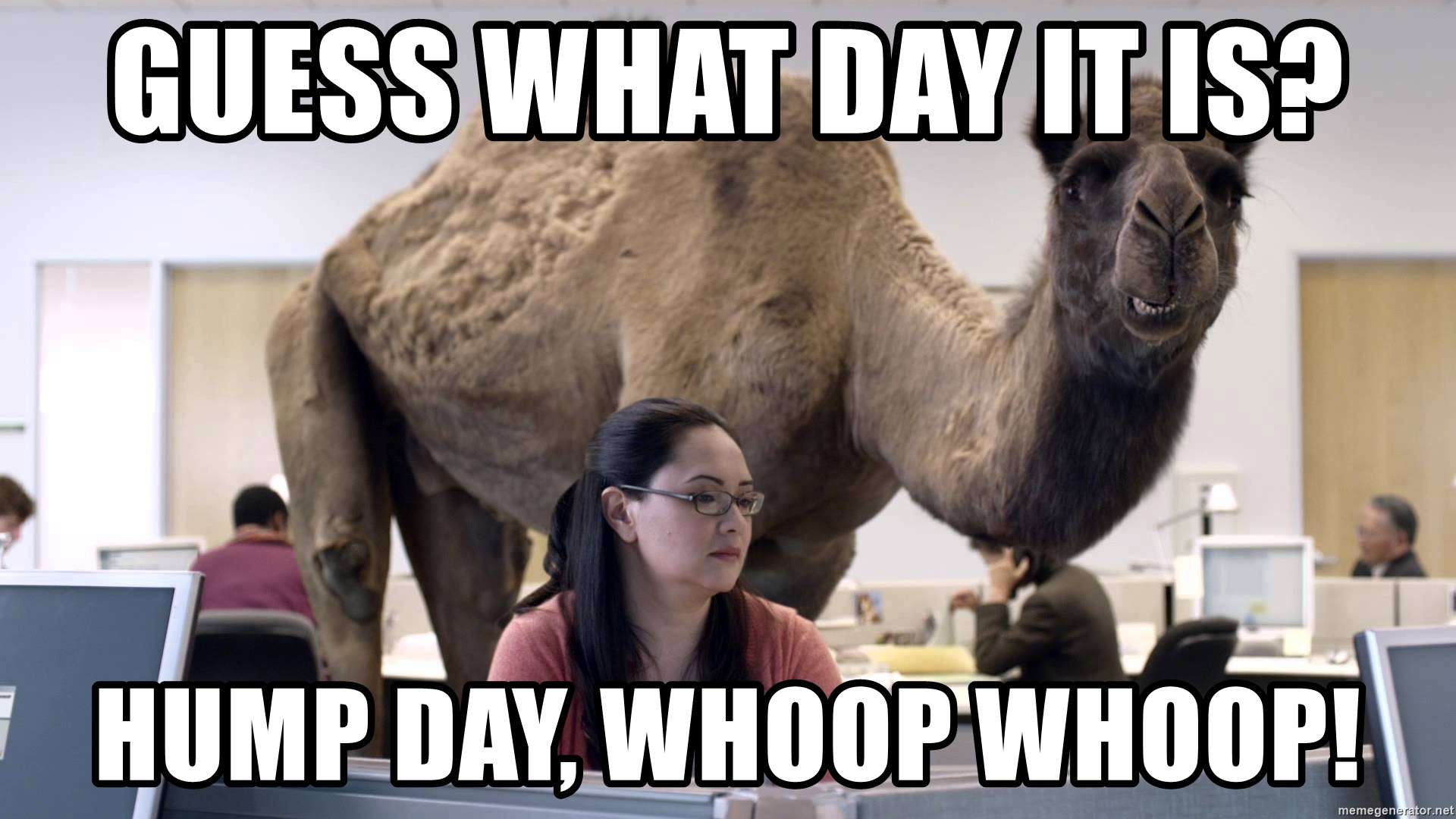
If you use the phrase and are met with a cold response or a direct complaint, the best course of action in the 2026 workplace is a "Corrective Pivot." Do not become defensive or try to explain the GEICO camel commercial from thirteen years ago. Instead, follow these steps:
- Acknowledge and Validate: "I hear that the phrase made you uncomfortable, and I appreciate you telling me."
- Clarify Intent (Briefly): "I intended it as a reference to it being Wednesday, but I see how it could be misinterpreted."
- Commit to Change: "I’ll stick to 'Happy Wednesday' or more direct greetings moving forward."
- Update Your Mental Map: Note that this specific colleague or this specific channel has a lower tolerance for informal idioms.
The Role of Modern HR Software (AI Oversight)
In 2026, many Enterprise Resource Planning (ERP) systems and communication tools use Natural Language Processing (NLP) to monitor workplace health. These tools don't just look for "bad words"; they look for patterns. A single "Happy Hump Day" is unlikely to trigger an alert. However, if an employee's sentiment score is already trending toward "aggressive" or "hostile," and they begin using words with double meanings, the system may flag the behavior for human review.
This "Technical SEO" approach to communication means we must treat our internal messages with the same scrutiny we treat public-facing metadata. Every word has a weight, a primary meaning, and a secondary connotation.
Frequently Asked Questions
Is "Happy Hump Day" sexual harassment?
On its own, "Happy Hump Day" is not sexual harassment. For a phrase to constitute harassment, it generally must be unwelcome, persistent, or part of a "pervasive" pattern of behavior that creates a hostile work environment. However, if a colleague has asked you to stop using the term and you continue, it could then fall under harassment or insubordination guidelines.
Can I get fired for saying "Happy Hump Day" in 2026?
It is highly unlikely that a single instance of saying "Happy Hump Day" would result in termination unless your company has an explicit "Zero Tolerance" policy for non-professional language or if the phrase was used in a clearly suggestive or derogatory manner. Most 2026 HR departments prefer "coaching" over "termination" for minor linguistic slips.
Why do some people find "Hump Day" offensive?
The offense usually stems from the word "hump," which has been used as a vulgar slang term for decades. In an era where workplace boundaries are strictly enforced to protect all employees, some feel that any word with a potential sexual double meaning should be removed from the professional vocabulary to ensure total inclusivity.
What are the best alternatives to "Happy Hump Day"?
The safest and most professional alternatives include "Happy Wednesday," "Have a great mid-week," or "Hope your week is moving along well." These phrases convey the same friendly sentiment without the risk of cultural or linguistic misinterpretation.
Does "Hump Day" apply to 4-day work weeks?
With the rise of the 4-day work week in 2026, "Hump Day" has become even more ambiguous. If a team works Monday through Thursday, the "hump" would technically be Tuesday afternoon or Wednesday morning. Using the phrase in these environments often feels outdated or confusing.
Navigating Professional Greetings in the Future
As we move through 2026, the definition of "appropriate" will continue to lean toward clarity and mutual respect. While "Happy Hump Day" remains a common fixture in many offices, the savvy professional understands that language is an ever-evolving tool. By prioritizing the comfort and cultural background of your audience, you can maintain a friendly, high-energy workplace without crossing the line into unprofessional territory.
When in doubt, observe the "Power Users" of communication in your organization—the executives and HR leaders. If they utilize informal idioms, the culture is likely permissive. If they stick to standard, clear English, it is a signal that you should do the same.
Image Gallery