What Heineken Means in Brewing History: From the A-Yeast to Global Consistency
In brewing history, Heineken represents the pivotal transition from localized, variable brewing to a standardized, scientifically controlled global industry. It is most significant for the 1886 isolation of the "Heineken A-yeast," whic...
In brewing history, Heineken represents the pivotal transition from localized, variable brewing to a standardized, scientifically controlled global industry. It is most significant for the 1886 isolation of the "Heineken A-yeast," which established a benchmark for the clean, crisp profile of the modern European Pale Lager.
Contents
The story of Heineken is not merely a tale of a successful beverage brand; it is a historical record of how microbiology, engineering, and global logistics converged to create the world’s first truly international beer. To understand what Heineken means in brewing history, one must look past the green bottle and into the laboratory and the boardroom of the 19th and 20th centuries.
The 1864 Foundation: A Shift Toward Quality
In 1864, Gerard Adriaan Heineken purchased the "De Hooiberg" (The Haystack) brewery in Amsterdam. At the time, the Dutch beer market was dominated by "brown beer," a top-fermented product that was often inconsistent, unstable, and prone to spoilage. Heineken’s entry into the market was fueled by a specific vision: to produce a "gentleman’s beer" that leveraged the emerging bottom-fermentation techniques popular in Germany.
This shift was a critical moment in brewing history because it prioritized clarity and shelf-life over the heavy, murky ales of the era. By investing in modern refrigeration and steam-driven technology, Gerard Adriaan moved brewing away from a seasonal craft toward an industrial science. This era marked the birth of the premium lager segment, where technical purity became a selling point for the rising middle class.
The A-Yeast Revolution: Microbiology in the Brewhouse
The most enduring contribution Heineken made to brewing history occurred in 1886. Following the groundbreaking work of Louis Pasteur, who proved that yeast was a living organism responsible for fermentation, Heineken sought to eliminate the "wild" yeasts that caused off-flavors and inconsistency.
Gerard Adriaan Heineken hired Dr. H. Elion, a student of Pasteur, to isolate a pure yeast strain. The result was the Heineken A-yeast. This specific strain allowed the brewery to produce a consistent flavor profile—characterized by subtle fruity notes and a crisp finish—batch after batch.
In the late 19th century, this was a radical advancement. Before pure strain isolation, brewers were at the mercy of environmental microbes. If a batch went sour, the cause was often a mystery. By standardizing the yeast, Heineken provided a blueprint for the modern lager industry. Today, that original A-yeast is still used in every bottle of Heineken worldwide, meticulously cultured and transported from the Netherlands to global production sites.
The Engineering of Flavor: Horizontal Fermentation Tanks
While many historical breweries shifted to large vertical cylindro-conical tanks (CCTs) in the 20th century to save space and speed up production, Heineken maintained a distinct technical path. In the context of brewing history, Heineken is synonymous with the use of horizontal fermentation tanks.
The physics of a horizontal tank differ significantly from a vertical one. In a horizontal tank, the height of the liquid is lower, which reduces the hydrostatic pressure on the yeast. This lower pressure allows the A-yeast to produce its signature esters (specifically those reminiscent of green apple and banana) more effectively. While vertical tanks are more efficient for harvesting yeast, the horizontal method prioritizes the specific flavor profile that defined the brand’s identity during its global expansion phase.
Global Expansion and the Post-Prohibition Era
Heineken’s historical significance also lies in its role as a pioneer of international trade. In 1933, the brand made a legendary move in the United States. On April 11, 1933—the day Prohibition was repealed—the first shipment of Heineken arrived in New York harbor.
This was not just a marketing win; it established the "Imported Premium" category in the American mind. Before this, most American beer was local. Heineken proved that a beer could maintain its quality across the Atlantic, provided the brewing standards were rigorous. This led to a global distribution model that, by 2026, has seen the brand reach nearly every country on Earth. The consistency required to maintain the same flavor in Amsterdam, Singapore, and New York is a feat of logistical and technical history.
Technical Specifications of the Heineken Brewing Standard
To understand the brand's place in history, one must look at the rigorous standards that have remained largely unchanged for over a century. The following table illustrates the technical milestones and specifications that define the Heineken method.
| Era / Component | Technical Development | Historical Impact |
|---|---|---|
| 1864: Foundation | Transition to Bottom-Fermentation | Introduced stable, clear lagers to the Dutch market. |
| 1886: Microbiology | Isolation of the A-Yeast | Eliminated batch-to-batch variation; set the standard for pure strain brewing. |
| Early 20th Century | Horizontal Fermentation | Optimized ester production for a specific fruity, crisp profile. |
| 1933: Logistics | First Post-Prohibition Import | Defined the "Premium International Lager" category in North America. |
| Late 20th Century | The 28-Day Brewing Cycle | Refused "high-gravity" short brewing to ensure natural carbonation and clarity. |
| 2026: Sustainability | Net-Zero Brewing Operations | Historical shift toward carbon-neutral production and circular water usage. |
The 28-Day Rule: Patience as a Technical Requirement
In the mid-20th century, many industrial brewers began adopting "high-gravity" brewing—a process where a very strong beer is brewed and later diluted with water to increase output. Heineken historically resisted this trend for its core brand, adhering to a strict 28-day brewing cycle.
This cycle includes approximately nine days of fermentation followed by a long period of "lagering" (cold storage). During this time, the beer clarifies naturally as yeast and proteins settle out, and the flavor "mellows." In the history of industrial beer, this refusal to cut corners for the sake of volume helped preserve the category of "Premium Lager" at a time when many other brands were becoming lighter and more adjunct-heavy.
Iconography and the "Green Bottle" Narrative
In terms of cultural brewing history, Heineken’s decision to use green glass is a subject of much technical debate. Most brewers know that brown glass offers superior protection against "lightstruck" (skunky) off-flavors caused by UV rays. However, Heineken chose green glass to signify a premium, fresh product, distinct from the brown bottles of the era.
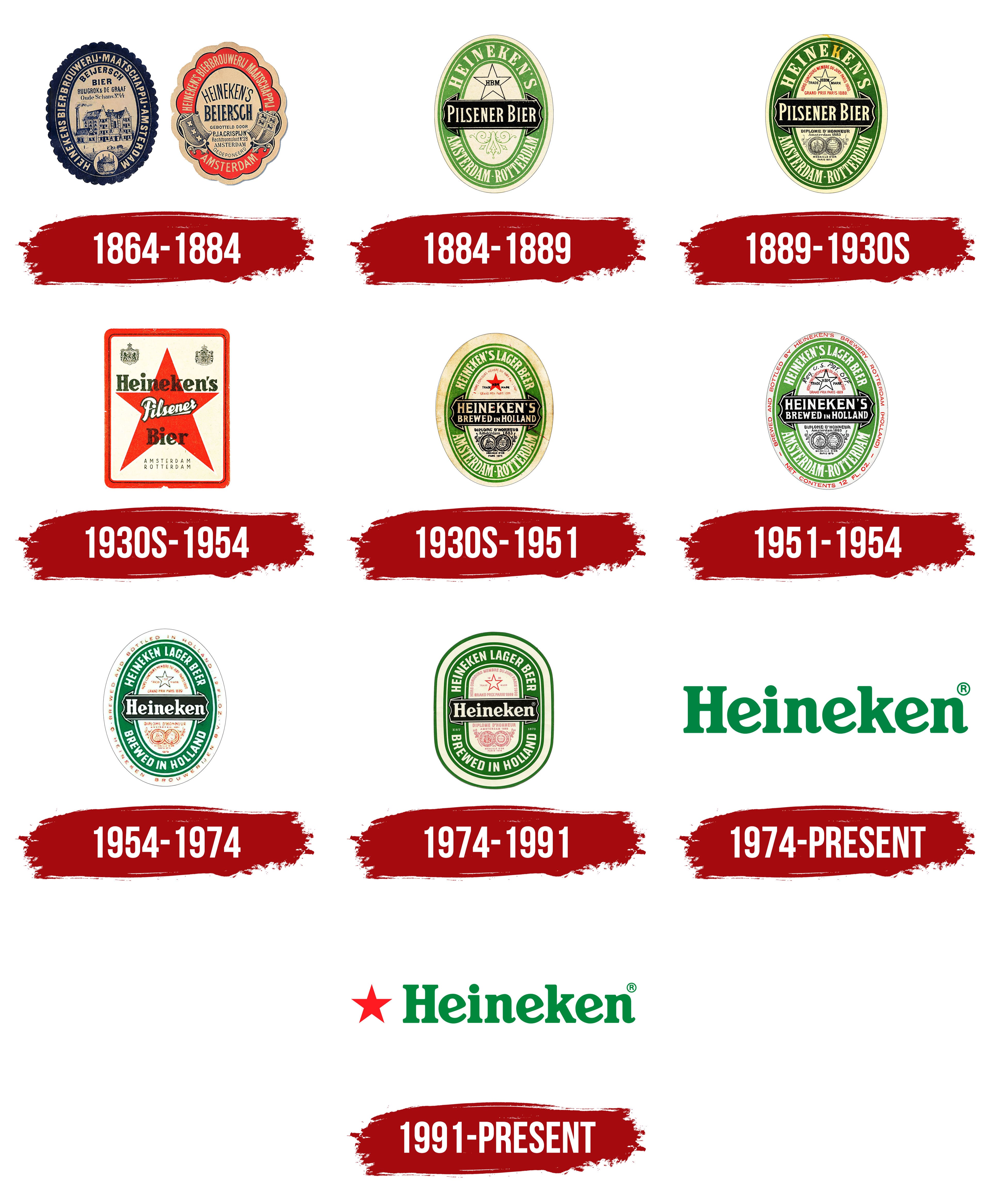
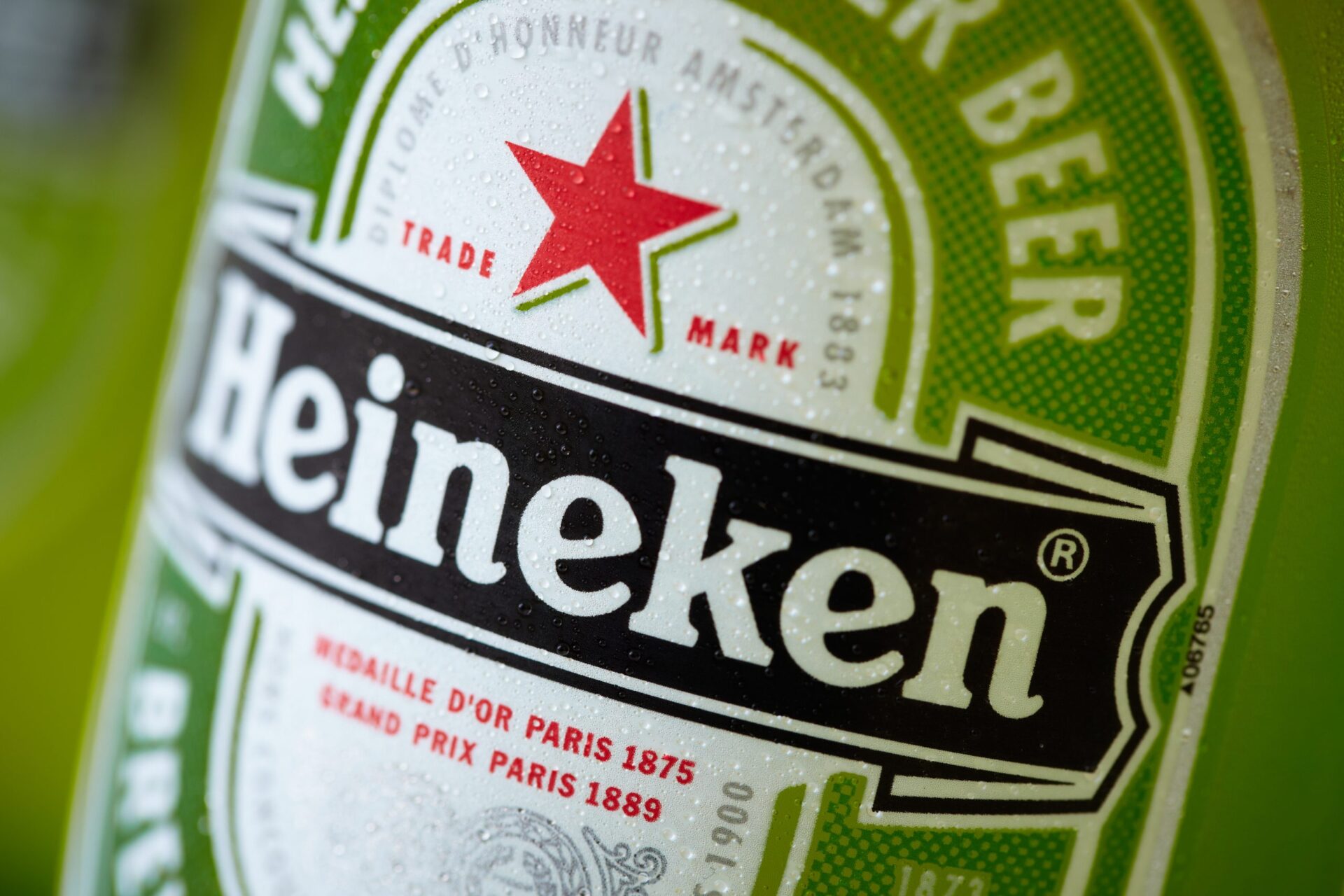
This decision forced the brewery to maintain incredibly high standards of handling and logistics to ensure the beer reached the consumer in optimal condition. The green bottle, combined with the "smiling e" in the logo and the red star, created a visual language for beer that focused on internationalism and prestige rather than local heritage.
The Significance of the Red Star
The red star on the bottle is more than a logo; it is a symbol with historical roots in the Middle Ages. Historically, brewers believed the star’s four points represented the four elements (earth, air, fire, and water), while a fifth, "mysterious" point represented the "magic" of the brewing process.
While the star’s meaning was briefly obfuscated during the Cold War—where it was changed to a white star with a red outline to avoid association with communism—it was restored to full red after 1991. This journey reflects how brewing history is often intertwined with global politics and shifting cultural perceptions.
FAQ: Understanding Heineken’s Historical Impact
Why is the A-yeast considered so important in brewing history?
The A-yeast was one of the first pure yeast strains isolated following Louis Pasteur’s discoveries. Before this, beer quality was unpredictable. By isolating a single strain, Heineken proved that beer could be "engineered" for consistency, which paved the way for the modern global lager industry.
Why does Heineken use horizontal tanks instead of vertical ones?
Horizontal tanks provide a larger surface area and lower hydrostatic pressure. This environment is ideal for the A-yeast to produce the specific esters that give the beer its slightly fruity, crisp taste. Vertical tanks, while more space-efficient, can stress the yeast and change the flavor profile.
Is the Heineken recipe the same everywhere in the world?
Yes. One of Heineken's greatest historical achievements is the "Global Recipe." Whether brewed in the Netherlands or under license elsewhere, the water is treated to match the original Amsterdam profile, the A-yeast is shipped from a central source, and the raw materials are strictly audited to ensure the beer tastes identical regardless of location.
What is the significance of the 28-day brewing process?
Most mass-market lagers are produced in 14 to 21 days. Heineken’s 28-day process allows for natural carbonation and a longer lagering period. This history of patience ensures that the beer is naturally clear and has a balanced flavor without the need for excessive chemical fining agents.
Did Heineken actually invent the "Premium" beer category?
While they didn't "invent" the concept of high-quality beer, they were the first to successfully market and distribute a single brand as a "premium" product on a global scale. Their entry into the US market immediately after Prohibition established the standard for what an "imported" beer should look and taste like.
Legacy and Next Actions for Enthusiasts
What Heineken means in brewing history is the triumph of consistency over chaos. It represents the moment when brewing ceased to be an art of the "lucky" and became a science of the "diligent." For beer enthusiasts or those interested in industrial history, the brand serves as a case study in how maintaining strict technical parameters—such as the use of specific yeast strains and horizontal tanks—can define a product for over 150 years.
To truly appreciate this history, one should compare a Heineken with a local craft lager. Observe the clarity, the head retention, and the specific fruity notes provided by the A-yeast. Understanding the 1886 scientific breakthrough allows you to taste the history of microbiology in every glass. For those interested in the future of the industry, monitoring Heineken’s 2026 sustainability reports offers a glimpse into how the next century of brewing history will be written through water conservation and carbon neutrality.
Image Gallery