How a State Waiver for Workers’ Compensation Works in 2026
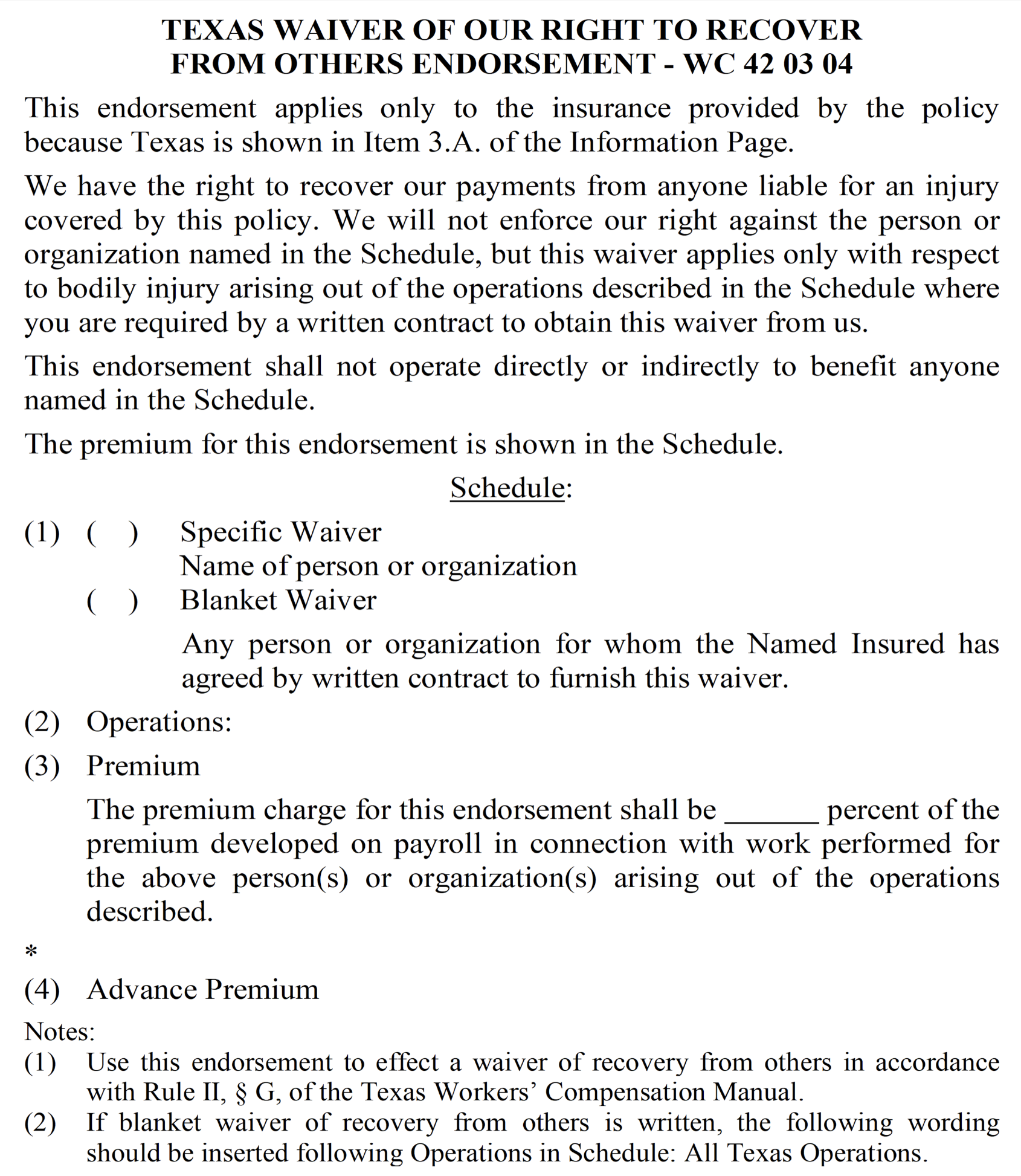
A state waiver for workers’ compensation is a legal document or formal election that allows specific business owners, corporate officers, or partners to opt out of their state’s mandatory insurance coverage. By filing this waiver, the...
A state waiver for workers’ compensation is a legal document or formal election that allows specific business owners, corporate officers, or partners to opt out of their state’s mandatory insurance coverage. By filing this waiver, the individual relinquishes their right to collect benefits for work-related injuries in exchange for a reduction in the business’s total insurance premiums.
Contents
Workers’ compensation is a fundamental pillar of American labor law, designed to provide a "grand bargain": employees receive guaranteed medical and wage benefits regardless of fault, while employers receive immunity from most personal injury lawsuits filed by staff. However, for those who own or lead the company, the state often allows for a "waiver of coverage" or "election of non-coverage."
In 2026, the process of navigating these waivers has become increasingly digitized, yet the legal implications remain as complex as ever. Understanding how these waivers function requires a deep look into state statutes, eligibility requirements, and the long-term financial risks associated with opting out of the safety net.
The Legal Framework of Workers’ Compensation Waivers
Most states mandate that any business with employees must carry workers' compensation insurance. However, state legislatures recognize that business owners, corporate officers, and members of limited liability companies (LLCs) often have a different risk profile and financial stake than general employees. Consequently, statutes provide a mechanism to "exclude" these individuals from the policy.
The "waiver" functions as an amendment to the standard insurance contract. When an eligible person files a waiver, they are effectively telling the state and the insurance carrier that they will take personal responsibility for their own medical expenses and lost wages should they suffer an injury on the job.
It is important to distinguish between a voluntary waiver and a statutory exemption. An exemption usually applies to the business entity as a whole (e.g., a sole proprietor with no employees may be exempt from the law entirely), whereas a waiver is an individual election made within a business that is otherwise required to have a policy.
Who is Eligible for a State Waiver?
Eligibility for a workers' compensation waiver is strictly regulated and varies significantly by jurisdiction. Most states limit waivers to individuals who possess a significant ownership stake or executive authority within the organization. Common eligible roles include:
- Corporate Officers: Presidents, Vice Presidents, Secretaries, and Treasurers of a corporation.
- LLC Members: Individuals who own a portion of a Limited Liability Company and are often involved in management.
- Partners: General partners in a partnership structure.
- Sole Proprietors: Owners who may choose to cover themselves but are often excluded by default unless they "opt-in."
- Family Members: Some states allow specific exclusions for family members of the owner in small, family-run operations.
Ownership Thresholds
In 2026, many states have standardized ownership thresholds to prevent "sham" waivers. For instance, several states require a corporate officer to own at least 10% to 25% of the company’s stock to be eligible for a waiver. This prevents companies from giving employees "officer" titles simply to avoid paying insurance premiums on their wages.
The Application and Filing Process
A waiver is not an informal agreement; it is a legal filing that must be executed correctly to be valid. The process generally follows these steps:
- Verification of Eligibility: The individual must confirm they meet the state-specific criteria for ownership or officer status.
- Completion of State Forms: Most states provide a specific form, such as a "Notice of Election to be Exempt" or a "Waiver of Workers' Compensation Coverage."
- Submission to the Carrier: The form is typically submitted to the insurance company providing the workers' compensation policy. The carrier then adjusts the "estimated payroll" for the policy period, removing the officer's salary from the premium calculation.
- State Filing: In many jurisdictions, the waiver must also be filed with the state's Workers' Compensation Board or Department of Labor.
- Effective Date: Waivers are rarely retroactive. They generally become effective on the date the form is received and processed by the state or the carrier.
The Role of Digital Portals in 2026
By 2026, most states have transitioned to centralized digital registries. Business owners can log into a state-managed portal (such as Florida’s "Business Service Center" or California’s "DIR Self-Service") to file, renew, or revoke exemptions in real-time. This has significantly reduced the "paper lag" that previously left many owners uninsured during the transition period.
State-Specific Nuances and Variations
While the general concept of a waiver is consistent, the execution varies wildly across state lines. Understanding these differences is critical for businesses operating in multiple jurisdictions.
| State | Primary Waiver Mechanism | Ownership Requirement | Notable Restriction |
|---|---|---|---|
| California | Form 105 (Waiver) | Minimum 10% | Officers must be covered unless they meet specific ownership and role criteria under Labor Code Section 3352. |
| Florida | Certificate of Election to be Exempt | Varies by Industry | Construction industry officers must own at least 10% and pay a fee for the certificate. |
| Texas | Form DWC-05 | No State Mandate | Texas is a "non-subscriber" state; waivers are used differently as insurance itself is optional but risky. |
| New York | CE-200 Form | 100% (for Sole/Partners) | Very strict; most officers of corporations with employees cannot waive coverage unless they own all stock. |
| Tennessee | Worker’s Comp Exemption Registry | Varies | Uses a centralized registry for construction and non-construction exemptions. |
The Construction Industry Exception
Construction is a high-risk industry, and states often apply stricter waiver rules to these businesses. In states like Florida and Tennessee, construction officers must apply for a specific "Exemption Certificate" which is often valid for two years. General contractors usually require proof of this certificate before allowing a subcontractor on a job site to ensure they are not liable for the subcontractor's injuries.
The Financial Impact: Premium Savings vs. Out-of-Pocket Risk
The primary motivation for seeking a waiver is the reduction of insurance costs. Workers' compensation premiums are calculated based on payroll. Corporate officers often have the highest salaries in a company; therefore, excluding them can save a business thousands of dollars annually.
However, the "savings" come with a significant catch. If a waived officer is injured while performing work duties:
- No Medical Coverage: The workers' comp policy will not pay for emergency room visits, surgeries, or rehabilitation.
- No Disability Benefits: There is no "replacement income" for the time the officer is unable to work.
- Health Insurance Limitations: Many private health insurance policies have "work-related injury" exclusions. If a health insurer discovers an injury happened on the job, they may deny the claim, leaving the individual with the full medical bill.
Legal Risks: The Loss of "Exclusive Remedy"
One of the most technical aspects of a state waiver is its impact on the "Exclusive Remedy" rule. In a standard employment relationship, an employee cannot sue their employer for negligence because workers' comp is the "exclusive remedy" for the injury.
When an officer waives coverage, they may be stripping the company of this protection. In some jurisdictions, if a waived officer is injured due to company negligence, they (or their estate) may have the right to file a personal injury lawsuit against the business. Conversely, in other states, the act of signing a waiver is viewed as a total assumption of risk, meaning the individual loses both the insurance benefits and the right to sue.
Common Mistakes and Troubleshooting
Failing to manage waivers correctly can lead to severe financial penalties during an annual insurance audit.
- Failure to Renew: Many state exemptions expire every two years. If an exemption expires and is not renewed, the insurance carrier will automatically include the officer's full salary in the premium audit, resulting in a large, unexpected bill.
- Incomplete Documentation: Simply "telling" an agent you want to be excluded is insufficient. Without the state-stamped form, the carrier is legally obligated to charge for the exposure.
- Misunderstanding "Ghost Policies": Some small businesses purchase a "Ghost Policy" (a policy with zero employees where the owner is excluded) just to get a certificate of insurance for a contract. If that owner later hires a "subcontractor" who is legally classified as an employee, the owner is personally liable for any injuries.
Practical Recommendations for Business Owners
Before filing a state waiver for workers’ compensation in 2026, consider the following actions:
- Consult a Broker: Ensure that your private health insurance or disability insurance does not have an exclusion for "occupational injuries."
- Check Contractual Requirements: If you are a subcontractor, verify with your General Contractor if they accept waivers. Many large firms require all people on-site to be covered by workers' comp, regardless of state exemptions.
- Review Ownership Percentages: If your business structure changes (e.g., you bring on a new partner), your existing waivers may become invalid if ownership percentages drop below state-mandated thresholds.
- Maintain a Digital File: Keep a PDF of the state-approved waiver and the confirmation from your insurance carrier. This is essential for both insurance audits and proof of compliance for clients.
Frequently Asked Questions
Can I cancel my waiver at any time?
Yes, most states allow you to revoke a waiver or "elect coverage" at any time. However, this usually requires filing a specific revocation form with the state and notifying your insurance carrier. The premium will be adjusted pro-rata for the remainder of the policy term.
Does a waiver protect me from being sued by employees?
No. A waiver only affects the coverage of the individual who signs it. It does not exempt the business from the requirement to cover other employees, nor does it protect the business if a covered employee is injured and files a claim.
If I have a waiver, can I still use my personal health insurance for a work injury?
This is a high-risk area. Many health insurance plans specifically exclude injuries that are "covered or coverable" by workers' compensation. If you waive workers' comp, you should check your health insurance policy's "Summary of Benefits" or speak with a representative to ensure you aren't creating a "coverage gap."
Does a waiver apply to all my businesses?
No. Waivers are entity-specific. If you are an officer in two different corporations, you must file separate waivers for each entity and each respective insurance policy.
What is a "Notice of Election to be Exempt"?
This is the formal name used in many states (like Florida) for the waiver document. It is a legal filing that serves as public notice that you are opting out of the workers' compensation system and will not be counted as an employee for insurance purposes.
Image Gallery