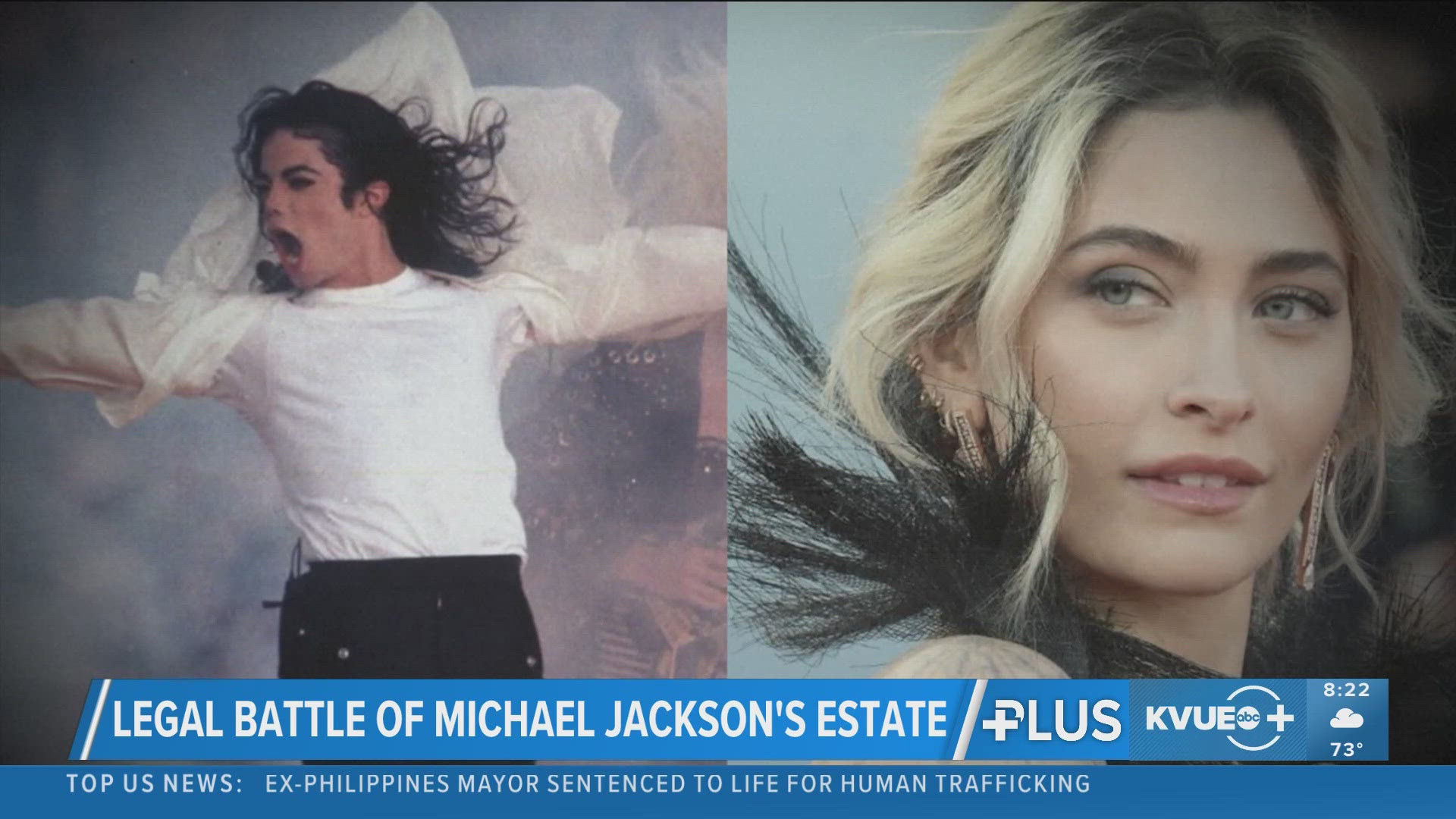
Michael Jackson Estate Attorney Roles and Legal Structure Explained
When pop icon Michael Jackson passed away in June 2009, he left behind an legendary cultural legacy alongside a complex financial web comprising over $500 million in debt, vast intellectual property rights, and a complex network of cre...
When pop icon Michael Jackson passed away in June 2009, he left behind an legendary cultural legacy alongside a complex financial web comprising over $500 million in debt, vast intellectual property rights, and a complex network of creditors and claimants. Over the subsequent years, the administration of his estate evolved into one of the most commercially successful and legally contested probate matters in American history. For members of the public seeking to understand how this estate operates, the distinction between the estate’s executors, its retained legal counsel, and the underlying family trust is essential.
Contents
The legal management of the Michael Jackson Estate relies on a distinct separation of roles: co-executors who make commercial and administrative decisions, specialized estate attorneys who defend those decisions in probate and civil court, and trust documents that dictate how earnings are distributed to his beneficiaries.
1. The Legal Architecture of the Michael Jackson Estate
To understand who represents the estate and how legal decisions are made, one must first examine the formal probate structure established prior to the artist's death.
- 2002 Last Will & Testament
- Co-Executors (John Branca & McClain)
- Retained Legal Counsel (Trial, Tax, & IP)
- Michael Jackson Family Trust
- Katherine Jackson
- Children (Prince, Paris, Bigi)
- Co-Executors (John Branca & McClain)
The 2002 Last Will and Testament
Michael Jackson executed his final valid will on July 7, 2002. Under California probate law, a valid will designates the individuals responsible for collecting assets, settling debts, paying taxes, and distributing remaining wealth according to the decedent’s explicit wishes. Jackson's 2002 will named long-time entertainment attorney John G. Branca and music executive John McClain as co-executors, alongside a third named executor who later resigned.
When the will was filed in Los Angeles County Superior Court, the court formally confirmed Branca and McClain as personal representatives of the estate. Their court-appointed duty is a fiduciary obligation: they must act in the strict best financial interest of the estate and its beneficiaries, rather than for personal gain or external interests.
Co-Executors vs. Retained Estate Attorneys
A frequent point of public confusion is the distinction between an estate's executor and an estate's attorney:
- Co-Executors (Personal Representatives): John Branca and John McClain hold ultimate decision-making authority over business deals, asset acquisitions, sales, and litigation management, subject to probate court oversight where required by statute. While Branca himself is an accomplished entertainment lawyer, his primary role in this context is as a court-sanctioned fiduciary executor, not as direct courtroom legal counsel.
- Retained Estate Counsel: The executors hire external law firms and trial lawyers to handle specific legal matters. These attorneys do not make business decisions for the estate; instead, they provide advice, draft agreements, handle tax filings, and represent the estate against outside lawsuits in court.
The Michael Jackson Family Trust
Jackson’s will featured a legal mechanism known as a pour-over will. This structure dictates that any assets titled directly in Jackson's name at the time of death automatically "pour over" into a private revocable trust: the Michael Jackson Family Trust.
The terms of this trust allocate the net proceeds of the estate into specific proportions:
- 20% to Charity: A fixed percentage designated for charitable organizations.
- 40% to Katherine Jackson: A life estate trust providing income and support for Michael Jackson’s mother during her lifetime.
- 40% to His Children: Trust accounts established for Prince Jackson, Paris Jackson, and Bigi (Blanket) Jackson, structured to distribute assets at designated age milestones.
Because the trust receives net income only after the estate settles debts, administrative expenses, legal fees, and tax liabilities, the co-executors and their attorneys maintain control over asset monetization before funds flow down to the trust beneficiaries.
2. Key Attorneys and Law Firms Representing the Estate
Because the Michael Jackson Estate involves music publishing, catalog sales, likeness rights, tax disputes, and high-profile civil lawsuits, the co-executors maintain relationships with several top-tier law firms.
- Michael Jackson Estate Counsel
- Trial & Litigation Counsel (Katten Muchin Rosenman / Kinsella Weitzman et al.)
- Business & Deal Counsel (Ziffren Brittenham LLP & In-House Legal Team)
- Special Tax & IP Counsel (Specialist Tax Law Practices)
Howard Weitzman and Katten Muchin Rosenman
For over a decade following Jackson’s death, renowned trial lawyer Howard Weitzman (of Katten Muchin Rosenman LLP) served as the primary litigation counsel for the estate until his passing in 2021. Weitzman represented the estate in numerous high-stakes legal battles, defending it against alleged creditor claims, contract disputes, and wrongful death allegations. Following Weitzman’s death, partners such as Jonathan Steinsapir and firms like Kinsella Weitzman Iser Kump Holley LLP continued to manage litigation for the estate.
Business and Transactional Counsel
When negotiating massive commercial transactions—such as the sale of the estate’s 50% stake in Sony/ATV Music Publishing in 2016 for $750 million, or the landmark 2024 transaction where Sony Music Group acquired a 50% interest in Jackson’s recorded music and publishing catalog for over $600 million—the executors rely on specialized transactional entertainment practices, including Ziffren Brittenham LLP and internal corporate counsel, to structure deals while minimizing liability and tax impact.
3. Major Legal Disputes Managed by Estate Attorneys
The attorneys for the Michael Jackson Estate have navigated several monumental legal cases that directly shaped modern entertainment and probate law.
1. The IRS Tax Court Valuation Battle (Estate of Michael J. Jackson v. Commissioner)
The most financially significant legal conflict in the estate's history occurred in the United States Tax Court. Following Jackson's death, the Internal Revenue Service (IRS) issued a notice of deficiency, asserting that the estate severely undervalued Jackson's name, likeness, and interest in corporate entities. The IRS initially claimed the estate owed over $500 million in unpaid estate taxes and $200 million in gross valuation misstatement penalties.
The estate’s tax litigators presented valuation experts arguing that at the moment of death in June 2009, Jackson's image and likeness had negligible commercial value due to public scandals and mounting debt. In May 2021, Tax Court Judge Mark V. Holmes issued a comprehensive decision (T.C. Memo 2021-59) that largely agreed with the estate on key valuation metrics, valuing Jackson's image and likeness at $4.15 million rather than the IRS's claimed $161 million. This legal victory saved the estate hundreds of millions of dollars in potential tax assessments.
2. Intellectual Property and Likeness Protection
The estate’s legal team aggressively defends Jackson’s trademarks, domain names, and copyright catalogue. Under California’s Celebrity Rights Act (Cal. Civ. Code § 3344.1), post-mortem publicity rights belong to the estate for 70 years after death. Attorneys continuously file cease-and-desist actions and federal copyright suits against unauthorized documentaries, bootleg merchandise manufacturers, and unapproved stage productions.
3. Beneficiary and Intra-Family Legal Disputes
While the executors have a legal mandate to protect and grow estate assets, conflicts frequently arise between the executors and the estate's beneficiaries regarding legal costs, asset sales, and administrative decisions.
For instance, Katherine Jackson and Bigi Jackson engaged in separate court filings concerning whether estate funds could be used to reimburse legal expenses incurred while appealing court decisions regarding major catalog transactions negotiated by Branca and McClain. The probate court regularly evaluates whether administrative legal expenditures serve the trust's overall economic interests.
4. Operational Breakdown: Executors vs. Counsel vs. Beneficiaries
To clarify how responsibilities are divided within the Michael Jackson Estate, the table below breaks down the key entities, their legal authority, and their primary contributions.
| Entity / Role | Key Individuals or Law Firms | Primary Legal Authority | Strategic Impact on Estate |
|---|---|---|---|
| Co-Executors | John G. BrancaJohn McClain | Authorized under the 2002 Will & Los Angeles Superior Court probate orders. | Transformed the estate from a $500M debt burden into a commercial entity valued in billions. |
| Lead Litigation Counsel | Katten Muchin Rosenman LLPKinsella Weitzman Iser Kump Holley LLP | Retained by executors to defend estate in civil, contract, and probate court. | Successfully defended against third-party lawsuits and unauthorized IP commercialization. |
| Tax & Valuation Counsel | Specialized Federal Tax Litigators | Authorized to represent estate in U.S. Tax Court negotiations and trials. | Won key rulings in Estate of Jackson v. Commissioner (2021), saving hundreds of millions. |
| Trust Beneficiaries | Katherine JacksonPrince, Paris, & Bigi Jackson | Equitable owners of net proceeds via the Michael Jackson Family Trust. | Receive mandatory distributions; can challenge executor actions in probate court if misconduct occurs. |
5. Key Estate Planning Lessons for the Public
Although the scale of the Michael Jackson Estate is exceptional, the legal concepts governing its operation apply to standard estate planning:
- Clear Executor Designation: Naming clear, capable personal representatives who understand business and financial administration prevents immediate operational collapse upon an asset holder's passing.
- Pour-Over Will & Trust Mechanics: Combining a pour-over will with a revocable trust allows individuals to consolidate assets privately without subjecting every distribution rule to public probate files.
- Disproportionate Tax Liabilities: For high-net-worth individuals, valuation dates matter immensely. Post-death appreciation generated by executors is generally taxed differently than the fair market value determined at the exact time of death.
- Separation of Powers: Keeping beneficiary distribution rights distinct from administrative estate operational authority protects core commercial assets from being fragmented prematurely.
Frequently Asked Questions
Who controls the Michael Jackson Estate?
The estate is controlled by its co-executors, attorney John G. Branca and music executive John McClain. They hold court-appointed fiduciary authority over business operations, asset sales, catalog rights, and litigation decisions.
What is the difference between an estate executor and an estate attorney?
An estate executor is the court-appointed decision-maker responsible for overall management and fiduciary duty. An estate attorney is hired by the executor to provide legal advice, draft paperwork, negotiate contracts, and represent the estate in court. While John Branca is an attorney by profession, his official role in the Jackson estate is as co-executor.
Did the Michael Jackson Estate win its case against the IRS?
Yes. In May 2021, the U.S. Tax Court issued a decision (Estate of Michael J. Jackson v. Commissioner, T.C. Memo 2021-59) that substantially reduced the IRS’s valuation of Jackson’s image, likeness, and trust assets at the time of death, rejecting the vast majority of proposed tax deficiencies and penalties.
Can Michael Jackson's family members fire the estate's attorneys or executors?
No. Beneficiaries cannot unilaterally fire executors appointed under a verified will and confirmed by a probate court. Beneficiaries can, however, petition the probate court to remove an executor if they can prove serious breach of fiduciary duty, fraud, or gross mismanagement.
What happens to the estate's earnings when the trust terminates?
Under the terms of the Michael Jackson Family Trust, net income is held and distributed in stages to his children and designated charities. Upon the passing of Katherine Jackson and once the children reach specific age thresholds outlined in the trust documents, remaining trust assets are distributed directly to the heirs or their designated sub-trusts.
Next Actions and Legal Considerations
Understanding how the Michael Jackson Estate is managed highlights the importance of proactive legal structuring. For individuals evaluating their own estate planning options:
- Audit Asset Titling: Ensure real property, intellectual property, and corporate shares are titled in the name of a trust rather than an individual to streamline probate administration.
- Select Fiduciaries Wisely: Choose executors and trustees based on administrative capability, business acumen, and willingness to hire competent specialized legal counsel.
- Consult a Qualified Estate Attorney: Consult a licensed estate planning attorney in your jurisdiction to establish valid wills, revocable living trusts, and healthcare directives suited to your financial situation.
Disclaimer: This article is for educational and informational purposes only and does not constitute legal, tax, or financial advice. For specific advice regarding probate, trusts, or estate planning, consult a licensed attorney in your jurisdiction.
Image Gallery