The Surprising Growth Behind the History of Advance Auto Parts
The growth of Advance Auto Parts is a narrative of aggressive strategic acquisitions, shifting market demographics, and a transition from a regional family business to a multi-billion-dollar global entity. From its 1932 origins to its...
The growth of Advance Auto Parts is a narrative of aggressive strategic acquisitions, shifting market demographics, and a transition from a regional family business to a multi-billion-dollar global entity. From its 1932 origins to its status in 2026, the company’s expansion relied on consolidating smaller competitors and pivoting from retail "DIY" customers to professional "DIFM" service providers.
Contents
The Foundations of an Empire: 1932–1945
The story of Advance Auto Parts began in the midst of the Great Depression, a period when many businesses were contracting. In 1932, Arthur Taubman purchased three stores in Roanoke and Lynchburg, Virginia, from Pep Boys. At the time, the stores were operating under the name Advance Stores. Taubman’s vision was built on the necessity of the automobile; during economic downturns, consumers could not afford new vehicles, making maintenance and repair parts essential.
During the early years, the company did not exclusively focus on automotive components. Like many general stores of the era, Advance Stores sold a variety of home supplies, toys, and electronics. However, Taubman recognized that the specialization in automotive parts offered higher margins and more consistent demand. By the end of World War II, the company had established a firm foothold in the Mid-Atlantic region, setting the stage for a decades-long expansion that would eventually cover the entire North American continent.
Post-War Expansion and the Shift to "Advance Auto Parts"
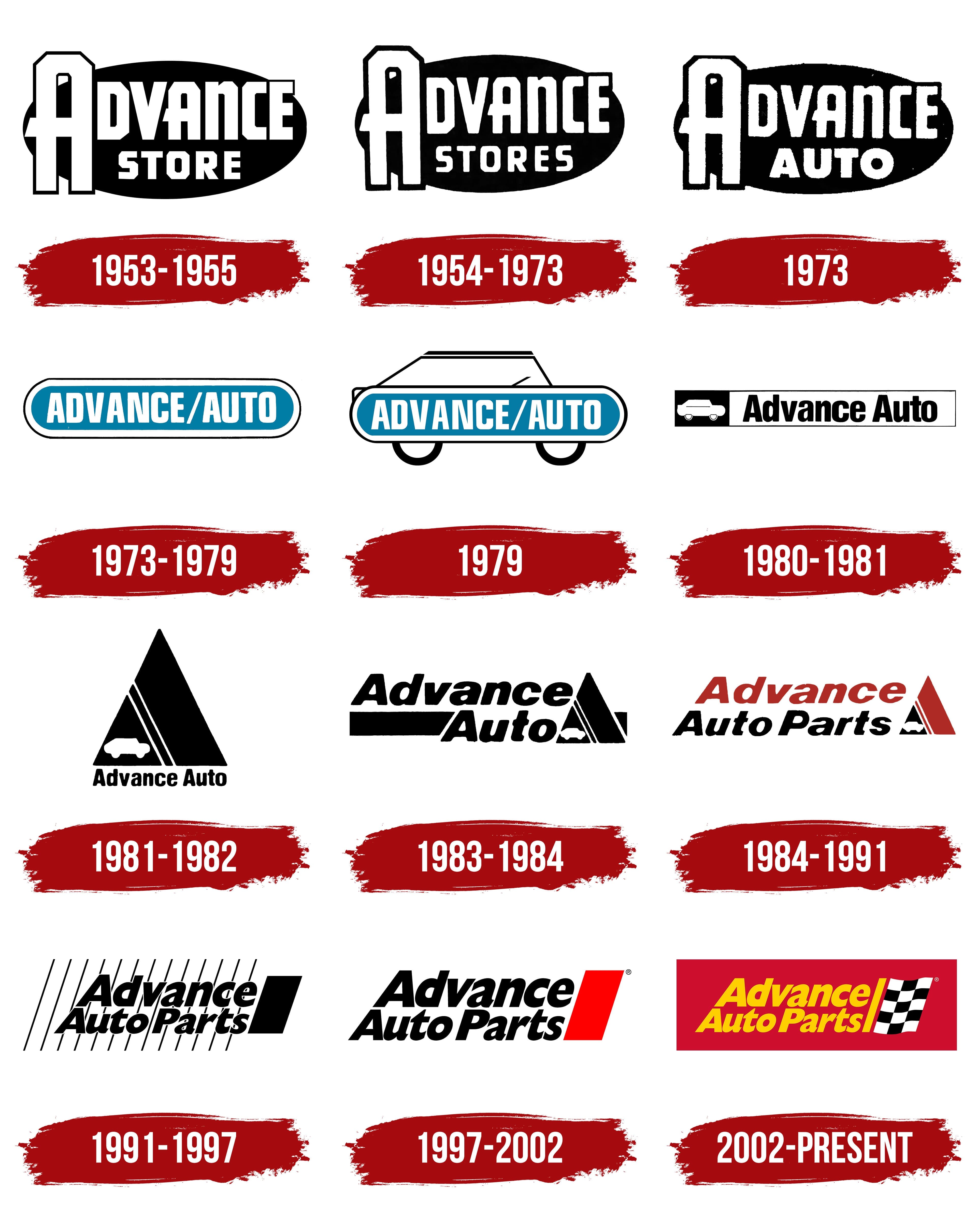
Following the war, the American suburbs exploded, and car ownership became a fundamental aspect of the American lifestyle. Under the leadership of the Taubman family, the company began a deliberate expansion program across the Southeast. In 1974, Nicholas Taubman took the helm as CEO, succeeding his father. It was during this period that the company rebranded more specifically to focus on the automotive aftermarket, eventually adopting the name Advance Auto Parts to reflect its specialized inventory.
By the early 1980s, the company operated over 100 stores. The growth during this era was largely organic, funded by internal cash flows and conservative lending. However, the landscape of the automotive industry was changing. Modern vehicles were becoming more complex, and the "Do-It-Yourself" (DIY) segment—individuals who worked on their own cars in their driveways—began to share the market with the "Do-It-For-Me" (DIFM) segment, which consisted of professional repair shops and technicians.
The M&A Rocket Ship: Transforming Through Acquisitions
The most "surprising" aspect of the Advance Auto Parts history is the sheer velocity of its growth via mergers and acquisitions (M&A) starting in the late 1990s. This strategy allowed the company to leapfrog competitors and gain instant market share in territories where they previously had no presence.
The Western Auto Acquisition (1998)
In 1998, Advance Auto Parts made a move that doubled its size overnight. It acquired the Western Auto chain from Sears, Roebuck and Co. This deal added approximately 600 stores and several distribution centers to the portfolio. This was a turning point, moving the company from a regional player to a national contender.
The Discount Auto Parts Integration (2001)
Continuing the momentum, the company merged with Discount Auto Parts, Inc. in 2001. This acquisition was particularly strategic because it provided a dominant position in the Florida and Georgia markets. In the same year, Advance Auto Parts became a publicly traded company on the New York Stock Exchange (NYSE: AAP), providing the capital necessary for further consolidation.
The Carquest Paradigm Shift (2014)
The largest and most complex growth milestone occurred in 2014 when Advance Auto Parts acquired General Parts International (GPI), the parent company of Carquest and Worldpac, for approximately $2 billion. This acquisition was transformative for several reasons:
- Scale: It instantly created the largest automotive aftermarket parts provider in North America at the time.
- The Professional Market: Carquest had a deep relationship with professional installers, which significantly bolstered Advance’s DIFM revenue.
- Supply Chain: The inclusion of Worldpac gave Advance a sophisticated distribution network for "import" car parts, a rapidly growing segment of the U.S. fleet.
Analyzing the Growth Phases of Advance Auto Parts
The following table outlines the pivotal eras that defined the company's trajectory from a local shop to a Fortune 500 leader.
| Era | Primary Strategy | Key Outcome |
|---|---|---|
| 1932–1969 | Regional Foundation | Established dominance in Virginia and North Carolina. |
| 1970–1997 | Organic Expansion | Scaled to over 500 stores; shifted focus purely to automotive. |
| 1998–2003 | Major Consolidation | Acquired Western Auto and Discount Auto Parts; IPO in 2001. |
| 2004–2013 | Operational Refinement | Integrated acquisitions and optimized the supply chain. |
| 2014–2023 | Global Integration | Acquired GPI (Carquest/Worldpac); focused on professional installers. |
| 2024–2026 | Strategic Divestiture | Sold Worldpac; focused on core retail and inventory productivity. |
Strategic Challenges and the 2024–2026 Turnaround
Growth was not without its hurdles. The rapid integration of thousands of stores under different banners—Advance, Carquest, and others—created significant supply chain friction. By the early 2020s, the company faced stiff competition from AutoZone and O'Reilly Auto Parts, who often boasted higher profit margins due to more streamlined logistics.
In 2023, the company appointed Shane O’Kelly as CEO to spearhead a comprehensive turnaround. A major part of this strategy involved the "surprising" decision to sell off non-core assets that were previously seen as growth engines. In late 2024, Advance Auto Parts sold its Worldpac division to Carlyle for $1.5 billion. This move was designed to simplify the business model and reduce debt, allowing the company to reinvest in its core "Front Room" (retail) and "Back Room" (professional) operations.
As of 2026, the company’s growth is no longer measured solely by store count, but by margin expansion and inventory availability. The focus has shifted toward high-tech distribution centers and a unified brand experience across all North American locations.
The Role of Technology in Modern Growth
A significant portion of the growth in the 2020s has been driven by the "Advance Pro" platform. Recognizing that professional shops require parts within 30 to 60 minutes to keep their bays full, Advance invested heavily in predictive analytics.
By analyzing local vehicle registration data, the company can stock specific parts—such as specific alternators for a 2015 Honda Civic—in stores near where those cars are actually driven. This data-driven approach to inventory has been a primary driver of the company's ability to maintain its market position against e-commerce giants like Amazon.
Frequently Asked Questions
Who founded Advance Auto Parts?
Advance Auto Parts was founded by Arthur Taubman in 1932. He purchased three existing stores from Pep Boys in Virginia, which laid the foundation for the current enterprise. The Taubman family remained central to the company’s leadership for over 70 years, guiding it through its initial public offering.
Why did Advance Auto Parts acquire Carquest?
The 2014 acquisition of General Parts International (the parent of Carquest) was intended to capture the professional repair market. While Advance was strong in retail (DIY), Carquest had a massive footprint in the professional (DIFM) space. This deal allowed Advance to service both types of customers more effectively and increased their store count to over 5,000.
What happened to Western Auto?
After Advance Auto Parts acquired Western Auto in 1998, most of the company-owned stores were converted to the Advance Auto Parts brand. The wholesale and franchise operations of Western Auto helped Advance expand into smaller markets where a corporate-owned store might not have been viable.
How has the company changed between 2024 and 2026?
Between 2024 and 2026, Advance Auto Parts underwent a "simplification" phase. This included selling the Worldpac division to focus on its core retail brand and closing underperforming distribution nodes to improve overall supply chain speed. The goal was to match the operational efficiency of its primary competitors, O'Reilly and AutoZone.
Is Advance Auto Parts still the largest parts retailer?
While Advance was the largest by store count following the 2014 Carquest merger, the landscape has shifted due to divestitures and aggressive growth from competitors. As of 2026, it remains one of the "Big Three" in the North American automotive aftermarket, though it currently prioritizes profitability and store productivity over total store count.
Practical Recommendations for Investors and Professionals
For those tracking the automotive aftermarket, the history of Advance Auto Parts serves as a masterclass in the risks and rewards of M&A-driven growth. If you are a professional installer or a business analyst, focus on the following:
- Monitor Inventory Availability: The company's success in 2026 is tied to its "availability" metrics. A parts store is only as good as the parts it has on the shelf today.
- Evaluate the DIFM vs. DIY Balance: As vehicles become more electronic and specialized, the "Do-It-For-Me" segment is expected to grow. Advance’s ability to retain Carquest’s professional loyalists is critical.
- Watch Debt Management: Following the sale of Worldpac, the company's balance sheet is significantly cleaner. Future growth will likely come from technology upgrades rather than massive new acquisitions.
Image Gallery