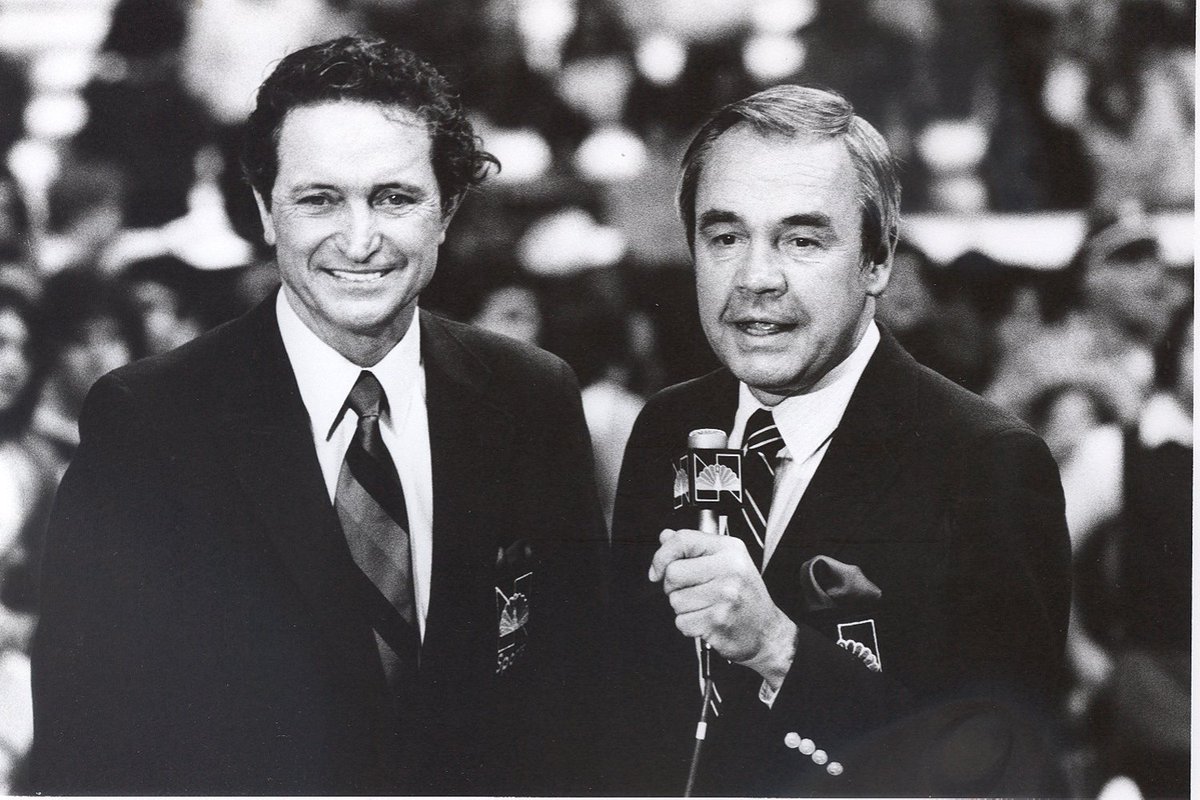
Dick Enberg the Hall of Fame Broadcaster: A Legacy of "Oh My!"
Dick Enberg was a legendary American sportscaster whose versatile career spanned over six decades, earning him the rare distinction of being honored by the Hall of Fame in baseball, football, and basketball. Known for his signature cat...
Dick Enberg was a legendary American sportscaster whose versatile career spanned over six decades, earning him the rare distinction of being honored by the Hall of Fame in baseball, football, and basketball. Known for his signature catchphrase "Oh my!", Enberg's articulate delivery and meticulous preparation defined a golden era of sports broadcasting.
Contents
The Versatile Voice of American Sports
Dick Enberg was often referred to as "The Professor," a nickname that reflected both his academic credentials—he held a doctorate from Indiana University—and his cerebral yet passionate approach to sports journalism. While many broadcasters specialize in a single sport, Enberg was a master of many. He was the primary voice for NBC Sports during the 1970s, 80s, and 90s, covering everything from the NFL and MLB to Wimbledon and the NCAA Final Four.
His ability to transition seamlessly between the high-impact collisions of professional football and the hushed, prestigious atmosphere of center court at Wimbledon was a testament to his range. As of 2026, Enberg remains a primary case study for aspiring broadcast students who seek to understand how to balance emotional resonance with technical accuracy. He didn't just report the game; he curated an experience for the viewer, using silence as effectively as he used his voice.
The Triple Crown of Hall of Fame Honors
Perhaps the most remarkable aspect of Dick Enberg’s career is his recognition across the three major American sports. Very few broadcasters have achieved the "Triple Crown" of sports media honors, which signifies excellence and impact that transcends a single discipline.
The National Baseball Hall of Fame (Ford C. Frick Award)
In 2015, Enberg received the Ford C. Frick Award for excellence in broadcasting. This honor recognized his work with the California Angels (now the Los Angeles Angels) early in his career and his later stint as the voice of the San Diego Padres. His storytelling ability made even the mid-summer lulls of a baseball season feel significant.
The Pro Football Hall of Fame (Pete Rozelle Radio-Television Award)
Enberg’s contribution to the NFL was cemented in 1999 when he received the Pete Rozelle Award. During his tenure at NBC, he was the lead play-by-play announcer for many of the most-watched Super Bowls in history. His chemistry with color commentator Merlin Olsen is still cited as one of the greatest broadcasting duos in the history of televised football.
The Naismith Memorial Basketball Hall of Fame (Curt Gowdy Media Award)
Long before he was a fixture in professional sports, Enberg was synonymous with college basketball. He was the voice of the 1979 NCAA Championship game between Magic Johnson’s Michigan State and Larry Bird’s Indiana State—a game that is still the highest-rated basketball game in television history. His induction via the Curt Gowdy Award in 1995 recognized this immense impact on the hardwood.
The "Oh My!" Philosophy and Broadcasting Style
Every great broadcaster has a signature, but for Enberg, "Oh my!" was more than a catchphrase; it was a genuine reaction to the excellence he witnessed. He once explained that the phrase originated from his mother, and he adopted it because it was a clean, versatile expression of surprise and wonder.
Enberg’s style was characterized by:
- Informed Enthusiasm: He never allowed his preparation to stifle his excitement. He arrived at the booth with color-coded charts and deep biographical sketches of every player, but he allowed the flow of the game to dictate his energy.
- The "Human" Element: Enberg looked for the story behind the athlete. Whether it was a backup quarterback or a rising tennis star, he wanted the audience to understand the stakes on a personal level.
- Economy of Words: He understood that in television, the picture is the primary storyteller. He provided the "caption" to the image, never over-explaining what the viewer could clearly see for themselves.
Major Career Milestones and Historical Context
To understand the weight of Enberg's career, one must look at the specific events he brought to life. His resume is a timeline of 20th-century American sporting history.
| Milestone / Event | Role / Network | Significance |
|---|---|---|
| 1979 NCAA Championship | NBC Sports | Magic vs. Bird; highest-rated game in history. |
| Super Bowl XV, XVII, XX, XXIII, etc. | Lead Play-by-Play | Narrated 8 Super Bowls for NBC. |
| Wimbledon (1979–2011) | Lead Voice | Covered the tournament for 28 years. |
| 1968 "Game of the Century" | TVS | Houston vs. UCLA (Alcindor vs. Hayes). |
| San Diego Padres (2010–2016) | TV Voice | His final regular broadcasting role. |
| The Way It Was | Host (PBS) | A sports nostalgia show that defined his early national presence. |
The Preparation: The Legendary Notebooks
One of the most discussed aspects of Enberg’s legacy is his "notebooks." Before the digital age made statistics instantly accessible, Enberg maintained meticulously handwritten notebooks for every assignment. These weren't just lists of numbers; they were tactical maps of the game.
He would spend hours interviewing coaches and players, finding the "nuggets" of information that would distinguish his broadcast from a standard play-by-play. This level of preparation allowed him to remain calm during technical difficulties or long injury timeouts, as he always had a story or a historical parallel ready to share. Even in 2026, these notebooks are often referenced in sports media curricula as the gold standard for journalistic rigor in broadcasting.
Impact on Tennis and the Global Stage
While many remember him for the NFL or MLB, Enberg’s impact on tennis was profound. For nearly three decades, he was the voice of "Breakfast at Wimbledon." He brought a sense of American approachability to the often-stuffy atmosphere of the All England Club. He helped popularize stars like Bjorn Borg, John McEnroe, Martina Navratilova, and Pete Sampras to a U.S. audience that was just beginning to embrace tennis as a mainstream televised sport.
His ability to handle the "quiet" of tennis—the long pauses between serves and the tension of a tiebreak—demonstrated his mastery of pacing. He knew that in tennis, the silence is often more dramatic than the roar of the crowd.
The Education of a Broadcaster
Dick Enberg was a firm believer that his education as a teacher was the foundation of his broadcasting success. After earning his doctorate in health sciences from Indiana University, he taught at Cal State Northridge. He often said that the broadcast booth was just a larger classroom. This pedagogical background gave him a unique perspective; he viewed his role as someone who explained the "why" of the game, not just the "what."
This academic rigour translated into a career that was remarkably free of controversy. He was a professional's professional, respected by colleagues and athletes alike. He received 13 Sports Emmy Awards and was named National Sportscaster of the Year nine times by the National Sports Media Association.
Frequently Asked Questions
What was Dick Enberg’s most famous call?
While he had many, his call of the 1979 NCAA Championship game is often cited as his most influential. However, his "Oh my!" during miraculous plays in the NFL or dramatic match points at Wimbledon became his overall trademark. He was also the voice behind the 1982 World Series and multiple Rose Bowls.
How many Halls of Fame was Dick Enberg inducted into?
Enberg is unique because he is recognized by the Pro Football Hall of Fame (Rozelle Award), the Naismith Memorial Basketball Hall of Fame (Gowdy Award), and the National Baseball Hall of Fame (Frick Award). He is also in the National Sports Media Association Hall of Fame and the Rose Bowl Hall of Fame.
Did Dick Enberg play sports professionally?
No. Enberg played college baseball and football at Central Michigan University, but his primary focus shifted toward education and broadcasting early on. His deep understanding of the athlete's perspective came from his time as a collegiate athlete and his years of interviewing elite pros.
When did Dick Enberg retire?
Enberg officially retired from full-time broadcasting in 2016 after completing his final season as the primary television voice for the San Diego Padres. He passed away shortly thereafter in December 2017 at the age of 82.
What is the "Dick Enberg Award"?
The Dick Enberg Award is presented annually by CoSIDA (College Sports Information Directors of America) to a person who has demonstrated a commitment to academics and community service while achieving excellence in their athletic or professional field. This honors Enberg’s legacy as "The Professor."
Practical Recommendation for Aspiring Broadcasters
For those looking to follow in the footsteps of Dick Enberg, the most valuable takeaway is his commitment to the "three pillars" of broadcasting: preparation, pacing, and personality.
- Preparation: Do not rely on digital stat sheets. Create your own notes to internalize the information.
- Pacing: Learn to love the silence. Let the crowd noise and the visual action tell the story when the moment is big.
- Personality: Develop a genuine connection with the material. If you are not excited by the game, the audience won't be either.
Study historical archives of Enberg’s work, particularly his Wimbledon coverage and 1980s NFL broadcasts, to observe how he balanced technical data with emotional storytelling. His career proves that a broadcaster can be both a scholar and a fan, a combination that remains the pinnacle of the profession in 2026.
Image Gallery