Competitive Boat Loan Rates at Credit Unions in 2026: A Complete Financing Guide
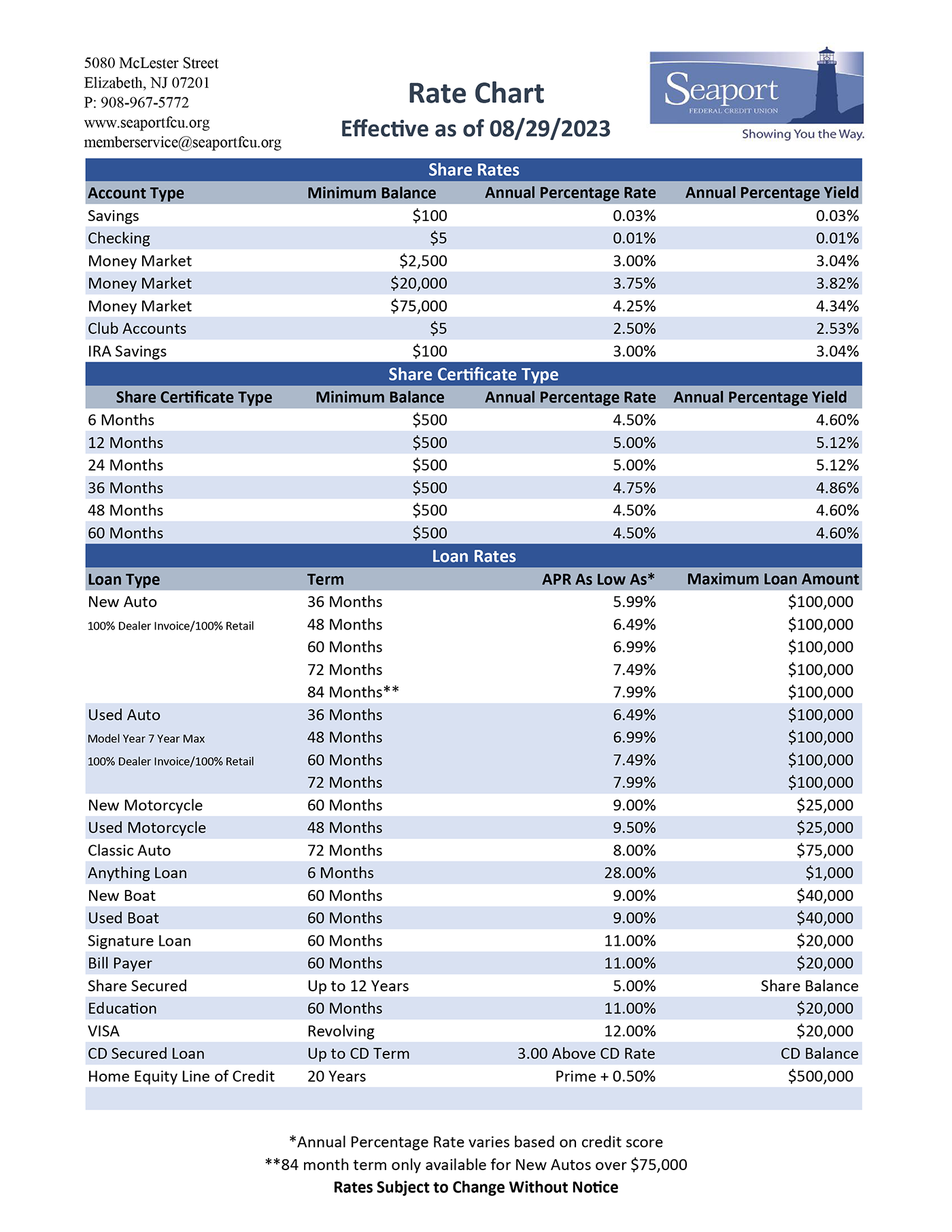
In 2026, boat loan rates at credit unions typically range from 5.99% to 10.75% for well-qualified borrowers, consistently undercutting national banks by 0.5% to 1.5%. Because credit unions are member-owned non-profits, they return surp...
In 2026, boat loan rates at credit unions typically range from 5.99% to 10.75% for well-qualified borrowers, consistently undercutting national banks by 0.5% to 1.5%. Because credit unions are member-owned non-profits, they return surplus earnings to members through lower interest rates, flexible terms, and reduced processing fees for marine financing.
Contents
The Advantage of Choosing a Credit Union for Boat Financing
When searching for the most competitive boat loan rates, credit unions often emerge as the superior choice over commercial banks and dealership financing. The primary reason lies in their organizational structure. Unlike commercial banks that prioritize shareholder profits, credit unions operate as cooperatives. This allows them to cap interest rates and offer more personalized underwriting.
In the current 2026 economic landscape, credit unions have maintained a significant edge in the recreational vehicle (RV) and marine sectors. While a large national bank might treat a boat loan as a high-risk luxury item, many credit unions view marine lending as a core part of their member service portfolio. This perspective often results in lower down payment requirements—sometimes as low as 10%—and longer repayment terms that make the dream of boat ownership more accessible for middle-income households.
Furthermore, credit unions are known for their "relationship banking" model. If you are already a member with a checking account or an existing auto loan, you may qualify for "relationship discounts." These can shave an additional 0.25% to 0.50% off the standard Annual Percentage Rate (APR), a benefit rarely found at larger, impersonal financial institutions.
Factors Influencing Boat Loan Rates in 2026
The interest rate you receive from a credit union isn't arbitrary; it is a calculation based on several risk factors. Understanding these variables can help you position your application for the lowest possible APR.
Credit Score Tiers
Your credit score remains the most influential factor. In 2026, lenders generally categorize borrowers into the following tiers:
- Tier 1 (740+): Eligible for the lowest advertised rates and maximum loan terms.
- Tier 2 (700-739): May see rates 0.5% to 1% higher than the prime rate.
- Tier 3 (660-699): Often requires a larger down payment (20%+) to offset risk.
- Tier 4 (Below 660): May require a co-signer or specialized credit union programs for "credit rebuilding."
Loan Term Length
While it is tempting to stretch a boat loan to 15 or 20 years to lower the monthly payment, this usually increases the interest rate. Credit unions typically offer their "best" rates on terms of 60 to 120 months. For larger vessels or yachts, terms may extend to 240 months, but these often carry a premium of 1% to 2% over shorter-term loans.
New vs. Used Vessels
Much like the automotive market, new boats generally qualify for lower rates. A used boat (especially one over 10 years old) represents a higher risk to the lender because its resale value is less predictable. Most credit unions will finance used boats, but they may limit the loan-to-value (LTV) ratio to 80% of the BUC Book or NADA value.
Comparing Boat Loan Sources
To understand why credit unions are often the preferred choice, it is helpful to compare them directly against other common lending institutions.
| Feature | Credit Unions | National Banks | Marine Specialty Lenders |
|---|---|---|---|
| Typical APR (2026) | 5.99% – 10.75% | 7.25% – 13.00% | 6.50% – 11.50% |
| Membership Required | Yes | No | No |
| Down Payment | 10% – 15% | 15% – 25% | 10% – 20% |
| Maximum Term | Up to 20 years | Often 10–15 years | Up to 20 years |
| Personalized Service | High | Low | Moderate |
| Processing Fees | Generally Lower | Higher | Moderate |
Eligibility and Membership Requirements
To access these competitive rates, you must be a member of the credit union. While this was once a major hurdle, "common bond" requirements have become significantly more inclusive by 2026.
- Geographic-Based: Many credit unions serve anyone who lives, works, or attends school in a specific county or set of zip codes.
- Employer-Based: Large corporations, government agencies, and school districts often have dedicated credit unions for their employees and their families.
- Association-Based: Some credit unions allow you to join if you make a small one-time donation (often $5 to $20) to a specific non-profit or advocacy group.
- Military/Federal: Institutions like Navy Federal or Pentagon Federal (PenFed) serve military members, veterans, and defense contractors nationwide.
Once you meet the eligibility criteria, you typically only need to open a basic savings account with a nominal deposit (usually $5) to establish membership.
The Application and Survey Process
Financing a boat is more complex than financing a car because of the additional verification steps required. Credit unions follow a specific protocol to protect their investment.
Pre-Approval
Before visiting a boat show or dealership, obtain a pre-approval from your credit union. This gives you a clear budget and puts you in a stronger negotiating position with sellers. Pre-approvals are typically valid for 30 to 60 days.
Marine Surveys
For used boats, and occasionally for new boats over a certain length (typically 30 feet), the credit union will require a professional Marine Survey. This is a detailed inspection performed by a certified surveyor (often accredited by SAMS or NAMS). The surveyor evaluates the structural integrity, engine health, and safety equipment of the vessel. The credit union uses this report to verify that the boat’s actual market value supports the loan amount.
Documentation Requirements
You should have the following documents ready for the underwriting team:
- Proof of income (W-2s, pay stubs, or tax returns for self-employed individuals).
- A formal Purchase and Sale Agreement.
- Verification of the boat’s Hull Identification Number (HIN).
- The vessel's current registration or Coast Guard Documentation.
- Proof of specialized marine insurance with the credit union listed as the lienholder.
Hidden Costs and Loan Considerations
When calculating your monthly budget based on credit union rates, do not overlook the ancillary costs of boat ownership. These are often required by the lender as part of the loan agreement.
Marine Insurance: Unlike basic auto insurance, marine insurance must often cover environmental "fuel spill" liability and "wreck removal." Lenders in 2026 strictly enforce these requirements, and the premium will vary based on the boat’s speed, location (coastal vs. inland), and your experience as a captain.
Sales Tax and Registration: Depending on your state, sales tax can add thousands to the initial cost. Some credit unions allow you to roll these taxes into the loan, provided the total loan amount does not exceed their LTV limits (usually 110% of the boat’s value including taxes).
Maintenance Escrow: While rare for smaller boats, some credit unions financing high-value yachts may require a maintenance reserve or proof of a slip agreement to ensure the asset is being properly maintained and stored.
Frequently Asked Questions
Can I get a boat loan from a credit union if I have "fair" credit?
Yes, many credit unions offer "sub-prime" or "credit builder" programs. While the interest rate will be higher—likely in the 11% to 14% range—credit unions are generally more willing than big banks to look at the "story" behind your credit score, such as medical debt or a temporary job loss, rather than just the number itself.
Is it better to get a secured boat loan or an unsecured personal loan?
A secured boat loan uses the vessel as collateral, which results in significantly lower interest rates and longer terms. An unsecured personal loan does not require collateral but usually has much higher rates (often 12%+) and shorter terms (3 to 5 years). For most buyers, the secured boat loan is the more cost-effective choice.
Do credit unions finance "live-aboard" houseboats?
Financing for live-aboard vessels is more specialized. Many credit unions will finance them, but they may classify the loan differently—sometimes similar to a secondary residence or mortgage—which can change the down payment requirements and tax deductibility of the interest.
Are boat loan rates at credit unions fixed or variable?
The vast majority of credit union boat loans in 2026 are fixed-rate loans. This protects the borrower from market volatility. Variable-rate loans are rare in marine lending and are typically only seen in very large, commercial-scale yacht financing.
Can I refinance my existing boat loan with a credit union?
Absolutely. If you originally financed through a dealership or a high-interest bank, moving your loan to a credit union can often save you thousands in interest over the life of the loan. Credit unions frequently run "refinance specials" where they may even offer a 60-90 day payment holiday for new members.
Final Recommendation for 2026 Boat Buyers
To secure the best possible boat loan rate in 2026, your first action should be to check the membership requirements of at least three local or national credit unions. Compare their "published" rates, but also call a loan officer to ask about relationship discounts.
Before signing any paperwork, ensure you have accounted for the cost of the marine survey and insurance, as these are non-negotiable requirements for most credit union loans. By leveraging the member-focused nature of a credit union, you can minimize your financing costs and maximize your time on the water.
Image Gallery