Mashable Connection Hints Today: Master the Daily Puzzle Challenge
Navigating the daily Mashable Connection puzzle requires a keen eye for categorical grouping, lexical nuances, and linguistic patterns to successfully connect sixteen terms into four distinct groups of four. Understanding the underlyin...
Navigating the daily Mashable Connection puzzle requires a keen eye for categorical grouping, lexical nuances, and linguistic patterns to successfully connect sixteen terms into four distinct groups of four.
Contents
Understanding the underlying structural logic of word-association games transforms a frustrating guessing exercise into a methodical strategy. This guide covers daily hints, structural analysis, classification strategies, and expert problem-solving techniques designed to optimize your puzzle-solving workflow.
Decoding the Mechanics of Daily Word-Association Puzzles
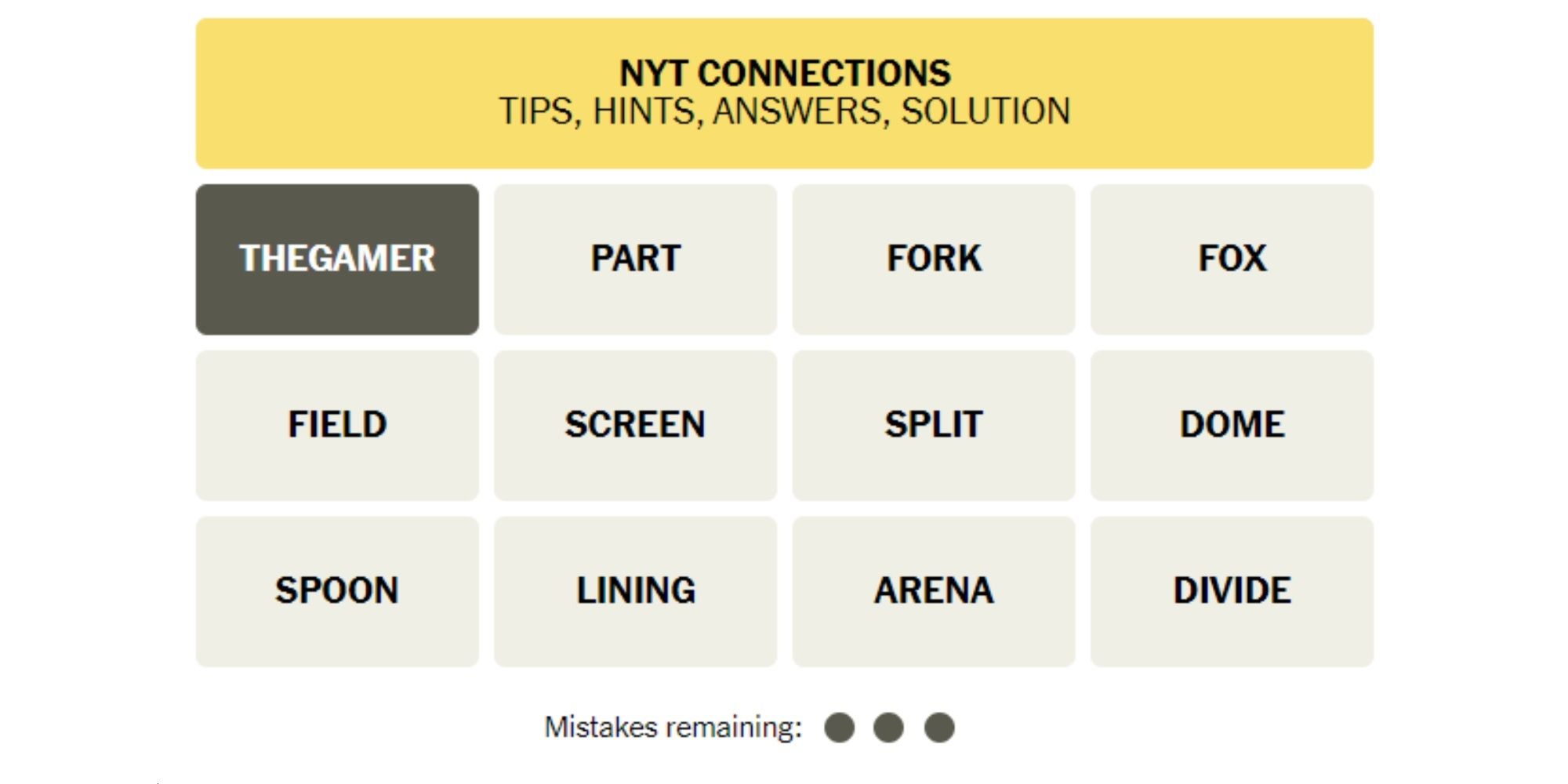
Word-association games test cognitive flexibility by challenging players to look past surface-level definitions and identify hidden thematic links. Each puzzle presents a grid of sixteen tiles. Your objective is to isolate four separate groups of four items based on shared characteristics, which can range from synonyms and pop-culture references to prefixes, suffixes, or categorization anomalies.
Every puzzle incorporates deliberate distractor tiles designed to lure solvers into premature guessing. These red herrings often share a common domain—such as types of weather, musical terms, or cooking techniques—making them look like a valid group when they actually belong to entirely different categories. Recognizing these traps is the first step toward achieving a consistent solving streak.
Core Difficulty Tiers and Color Coding
Puzzles utilize a standardized color-coded difficulty hierarchy to indicate how elusive or abstract a category is. Familiarizing yourself with these tiers helps you prioritize which groups to solve first.
- Yellow (Straightforward): Represents the most literal and direct connections, often relying on clear synonyms or straightforward classifications.
- Green (Moderate): Involves slight abstraction, such as words that precede a specific term, common idioms, or secondary definitions.
- Blue (Challenging): Frequently incorporates specialized terminology, pop-culture crossovers, geographical themes, or complex wordplay.
- Purple (Tricky): The most abstract tier, usually revolving around hidden prefixes, fill-in-the-blank phrases, or structural letter patterns rather than semantic meaning.
Strategic Framework for Solving Connection Challenges Today
Approaching a grid with a systematic methodology prevents you from burning through your four allotted mistakes. Instead of tapping tiles at random, apply a structured triage process before locking in any guesses.
Scan all 16 tiles for obvious pairs or triplets | Identify potential overlapping red herrings | Isolate the most concrete Yellow or Green category | Test the remaining tiles for secondary patterns | Submit and adjust based on system feedback
Step 1: Initial Grid Triage and Isolation
Before making any selections, read through all sixteen words twice. Look for immediate pairs or triplets that belong together. If you spot five or six words that seem to fit a single theme—for example, five different types of trees—you have likely encountered a red herring. Step back and look for the word that is the odd one out or belongs to a different semantic family.
Step 2: Evaluating Wordplay and Suffixes
If semantic meanings fail to reveal clear groups, shift your analytical lens toward linguistic structure. Ask yourself the following diagnostic questions:
- Can all these words follow or precede the word "box"?
- Do several of these terms share a common prefix or suffix?
- Are any of these words anagrams or heteronyms?
- Do these terms form compound words when combined with a hidden modifier?
Step 3: Managing Mistake Limits
You are allowed up to four incorrect submissions before the puzzle locks. Treat your first two guesses with extreme caution. If you submit a guess and receive a "One away..." notification, do not immediately submit a slight variation of the same guess. Pause, swap out a single tile, and re-evaluate the remaining pool to identify which three items were correct and which one was the impostor.
Comparative Analysis of Solving Tactics
Different mental frameworks yield varying degrees of success depending on the day's specific theme. Selecting the right approach early saves time and prevents frustration.
| Strategy Approach | Best Used For | Potential Risks | Success Rate |
|---|---|---|---|
| Semantic Clustering | Yellow and Green tiers, direct synonyms | Falls victim to semantic red herrings | Moderate |
| Wordplay & Phrasing | Purple tier, fill-in-the-blank puzzles | Overthinking simple direct matches | High for advanced players |
| Elimination Method | Grids with heavy ambiguity | Burns through mistake allowances quickly | Low to Moderate |
| Reverse Engineering | Finding the odd-one-out among 5+ matches | Requires spotting subtle category overlaps | High |
Common Pitfalls and How to Avoid Them
Even experienced word puzzle enthusiasts occasionally fall into predictable traps. Recognizing these failure points helps protect your daily streak.
- Forcing Overlapping Themes: Trying to make a word fit a category where it only loosely belongs. Always look for the most precise and exclusive fit for every tile.
- Ignoring Pluralization Mismatches: Mixing singular and plural nouns within the same category. While puzzles occasionally group mixed forms, categories are typically grammatically consistent.
- Rushing the First Guess: Submitting a tentative guess before checking the remaining twelve tiles. Always account for all sixteen items before locking in your first selection.
- Overcomplicating Simple Clues: Looking for intricate wordplay when the puzzle simply requires basic synonyms. Start with the most literal interpretation before diving into complex linguistic gymnastics.
Frequently Asked Questions
How many mistakes am I allowed before failing the puzzle?
You are permitted a maximum of four incorrect guesses before the game ends and reveals the remaining categories. Tracking your remaining attempts helps you decide when to take a calculated risk versus when to pause and re-evaluate the grid.
What does the "One away..." message mean when I submit a guess?
This notification indicates that exactly three of the four tiles you selected belong together in a valid category, while the fourth tile is incorrect. When you see this message, keep three of the tiles and swap out only the fourth candidate on your next attempt.
Are the categories the same for every player on a given day?
Yes, the tile selection and category pairings remain identical for all players on any given calendar day. However, the visual layout and position of the tiles on the grid are randomized for each user to prevent uniform pattern recognition.
Can a single word belong to multiple categories?
Occasionally, a word may fit into more than one potential group, which is precisely why puzzle designers use overlapping options as red herrings. Your goal is to find the unique combination where all four categories resolve cleanly without leaving orphan words that fit nowhere else.
How can I improve my daily solving speed and consistency?
Consistent practice combined with exposure to diverse vocabulary, idioms, and pop culture references builds pattern recognition over time. Reviewing the solution breakdown after completing each puzzle also helps train your brain to spot subtle linguistic traps more quickly in future challenges.
Master Your Daily Puzzle Routine
Approaching your daily word challenge with a structured strategy eliminates guesswork and maximizes your problem-solving efficiency. By systematically auditing the grid, identifying red herrings, and respecting the difficulty tiers, you can consistently conquer complex puzzles and maintain an unbroken solving streak. Take your time, analyze the linguistic clues, and apply these methods to your next daily challenge.
Image Gallery