Nolan Ryan: The Story of Baseball’s First Million-Dollar Player
In November 1979, Nolan Ryan became the first player in Major League Baseball history to sign a contract worth $1 million per year. Joining his hometown Houston Astros as a free agent, Ryan signed a four-year deal totaling $4.5 million...
In November 1979, Nolan Ryan became the first player in Major League Baseball history to sign a contract worth $1 million per year. Joining his hometown Houston Astros as a free agent, Ryan signed a four-year deal totaling $4.5 million, marking a seismic shift in sports economics and the power of player free agency.
Contents
The signing of Nolan Ryan was not just a headline about a legendary pitcher; it was the definitive moment when the "business of baseball" entered a new stratosphere. Before this landmark agreement, the idea of a professional athlete earning seven figures annually was considered a pipe dream by many and a threat to the sport’s stability by owners. However, the convergence of Ryan's unique talent and the birth of modern free agency created the perfect environment for this financial breakthrough.
The Financial Landmark: Breaking the Million-Dollar Barrier
When Nolan Ryan stepped into the offices of the Houston Astros in late 1979, he was already a household name. Known as the "Ryan Express," his fastball was the most feared weapon in the game. But while his 100-mph heater was historic, his contract would prove to be even more revolutionary. The deal paid him an average of $1.125 million per season through 1983.
To understand the magnitude of this figure, one must look at the economic landscape of 1980. At the time, the average salary for a Major League ballplayer was roughly $144,000. Ryan’s contract didn't just exceed the average; it nearly octupled it. For the Astros, the investment was a calculated risk aimed at transforming a franchise that had long played second fiddle to the established powers of the National League. By bringing the Texas native home, they were purchasing more than just a right arm; they were buying relevance, ticket sales, and a signal of intent.
The negotiation was spearheaded by Ryan's agent, Dick Moss, who recognized that the newly established free agency rules allowed for a "bidding war" environment that had never existed before. The California Angels, Ryan's previous team, had been hesitant to meet such a steep price, allowing the Astros to swoop in and cement Ryan's place as the sport's first "Million Dollar Man."
The Era of Free Agency: Setting the Stage for the Ryan Deal
The path to Nolan Ryan’s million-dollar contract was paved by years of legal battles and labor disputes. For nearly a century, baseball operated under the "Reserve Clause," a standard part of every player's contract that effectively tied them to a single team for the duration of their career, unless they were traded or released. Under this system, players had zero leverage; they either signed for the amount the owner offered or they didn't play.
The collapse of the Reserve Clause began with Curt Flood’s historic challenge in 1969, but the definitive blow came in 1975 with the Messersmith-McNally arbitration case. Labor arbitrator Peter Seitz ruled that Andy Messersmith and Dave McNally had fulfilled their contract obligations and were free to negotiate with any team. This ruling birthed the modern era of free agency.
By 1979, the market was beginning to heat up. Players like Catfish Hunter and Pete Rose had signed significant deals, but Ryan was the first to cross the symbolic million-dollar threshold. This transition changed the dynamic of the locker room and the front office. Owners could no longer rely on loyalty or lack of options to keep stars; they had to pay market value. Ryan’s contract proved that there was no upper limit to what a superstar could command if multiple teams were hungry for their services.
Why Nolan Ryan? The Value of the "Ryan Express"
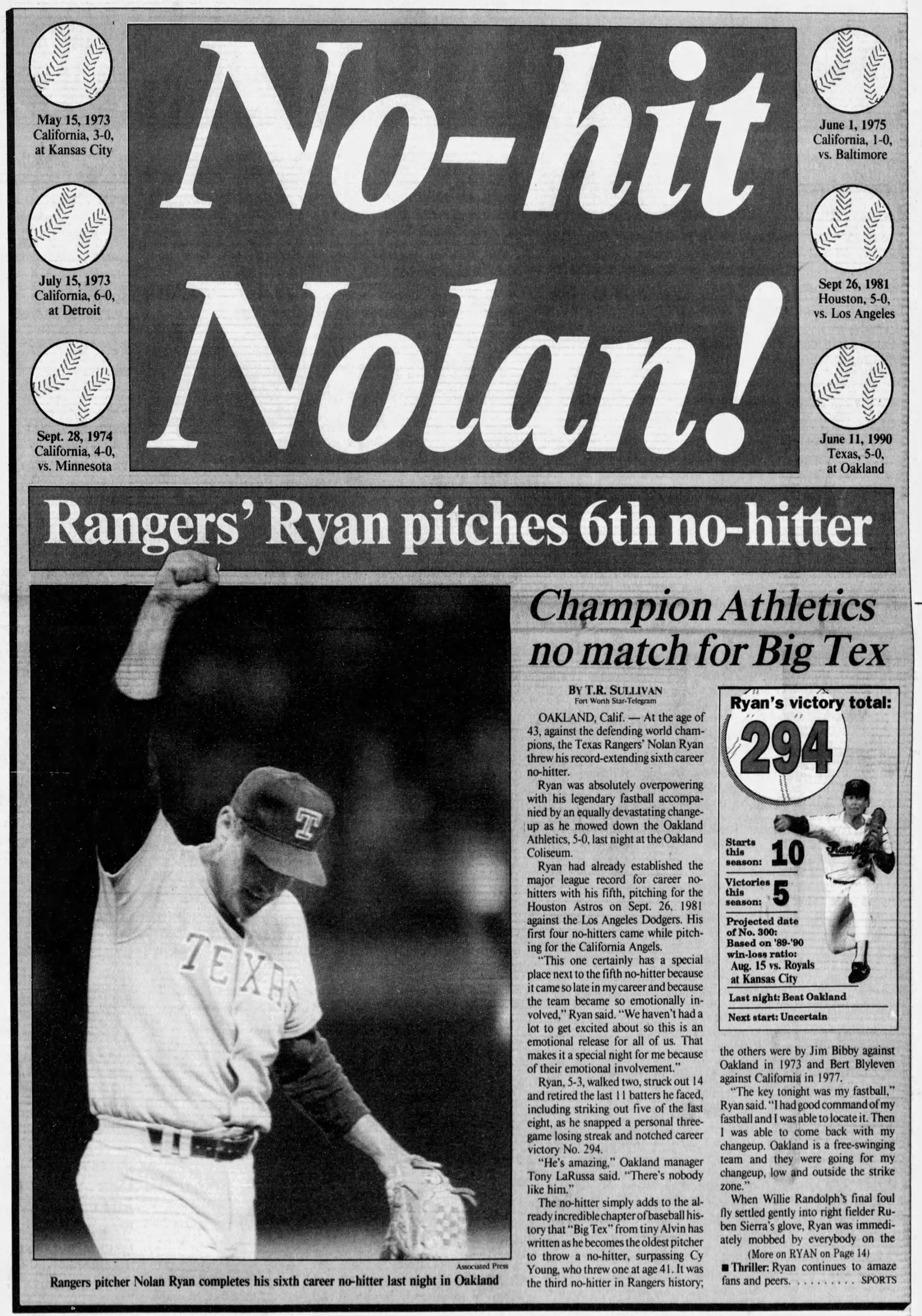
Why was Nolan Ryan the one to break the barrier? By 1979, Ryan had already established a resume that bordered on the mythological. He had already thrown four no-hitters (a record at the time) and had set the single-season strikeout record with 383 in 1973. He was a physical marvel who seemingly didn't age, maintaining a triple-digit fastball well into his 30s.
Beyond the statistics, Ryan was a massive "gate attraction." In an era before every game was televised nationally, fans would flock to the stadium specifically on "Ryan Day" to see if they might witness history. The possibility of a no-hitter or a 15-strikeout performance was a powerful marketing tool.
For the Houston Astros, Ryan represented the missing piece. He provided:
- Immediate Credibility: Transitioning from a mid-tier team to a contender.
- Local Appeal: As a native of Alvin, Texas, Ryan was a local hero who could unify the fan base.
- Durability: Ryan was a workhorse who pitched over 200 innings almost every year, providing a level of reliability that justified the high price tag.
Comparing Historical MLB Salary Milestones
Nolan Ryan’s $1 million salary was a peak that took decades to reach, but it served as a launchpad for the astronomical figures seen in 2026. The evolution of baseball salaries is a reflection of the sport's growth from a localized pastime to a multi-billion-dollar global industry.
| Milestone Year | Player | Salary (Annual Average) | Context/Notes |
|---|---|---|---|
| 1930 | Babe Ruth | $80,000 | Famously more than President Herbert Hoover. |
| 1966 | Sandy Koufax | $125,000 | Signed after a famous joint holdout with Don Drysdale. |
| 1975 | Catfish Hunter | $750,000 | First major free agent "bidding war" winner. |
| 1980 | Nolan Ryan | $1,125,000 | First to average over $1M per year. |
| 1982 | George Foster | $2,000,000 | First $2 million per year player (Mets). |
| 1991 | Roger Clemens | $5,380,250 | First to surpass the $5M mark. |
| 1997 | Albert Belle | $11,000,000 | First to surpass $10 million per year. |
| 2001 | Alex Rodriguez | $25,200,000 | Historic 10-year, $252M deal with Rangers. |
| 2024 | Shohei Ohtani | $70,000,000 | Largest contract in sports history (with significant deferrals). |
The Impact on Baseball Economics
Ryan’s contract was the "proof of concept" that the baseball market could sustain million-dollar salaries. Critics at the time, including many team owners, predicted that such spending would lead to the bankruptcy of the league. Instead, it forced the league to professionalize its marketing and television negotiations to generate the revenue needed to cover rising payrolls.
The $1 million salary also changed the player-agent relationship. Agents became much more sophisticated, looking at advanced metrics and market scarcity to drive up prices. It shifted the focus from "what did the team pay last year?" to "what is the player worth on the open market?" This transition was painful for some traditionalists who felt the game was becoming too focused on money, but for the players, it was a long-overdue correction for decades of underpayment under the Reserve Clause.
Furthermore, Ryan's contract set a precedent for "performance-based" value. Because Ryan continued to perform at an elite level after signing the deal—leading the league in ERA in 1981 and 1987—he validated the idea that paying a premium for an elite arm was a sound business strategy. This paved the way for future pitchers like Roger Clemens, Greg Maddux, and Max Scherzer to command even larger percentages of their teams' budgets.
Was the Investment Worth It for the Houston Astros?
In hindsight, the Astros' decision to make Ryan the first million-dollar player was a resounding success. During his tenure in Houston (1980–1988), Ryan remained one of the most dominant pitchers in the league.
- On-Field Success: In his first year (1980), Ryan helped lead the Astros to their first-ever division title. They reached the National League Championship Series (NLCS), losing a heartbreaker to the Phillies, but the franchise had finally arrived on the big stage.
- Milestones: While in an Astros uniform, Ryan threw his fifth no-hitter in 1981, breaking Sandy Koufax's record. He also surpassed Walter Johnson’s all-time strikeout record in 1983, a feat that generated massive national media coverage for Houston.
- Longevity: Ryan stayed with the Astros for nine seasons. While many feared a pitcher in his mid-30s would decline, Ryan defied biology. He led the National League in strikeouts in both 1987 and 1988 at the ages of 40 and 41.
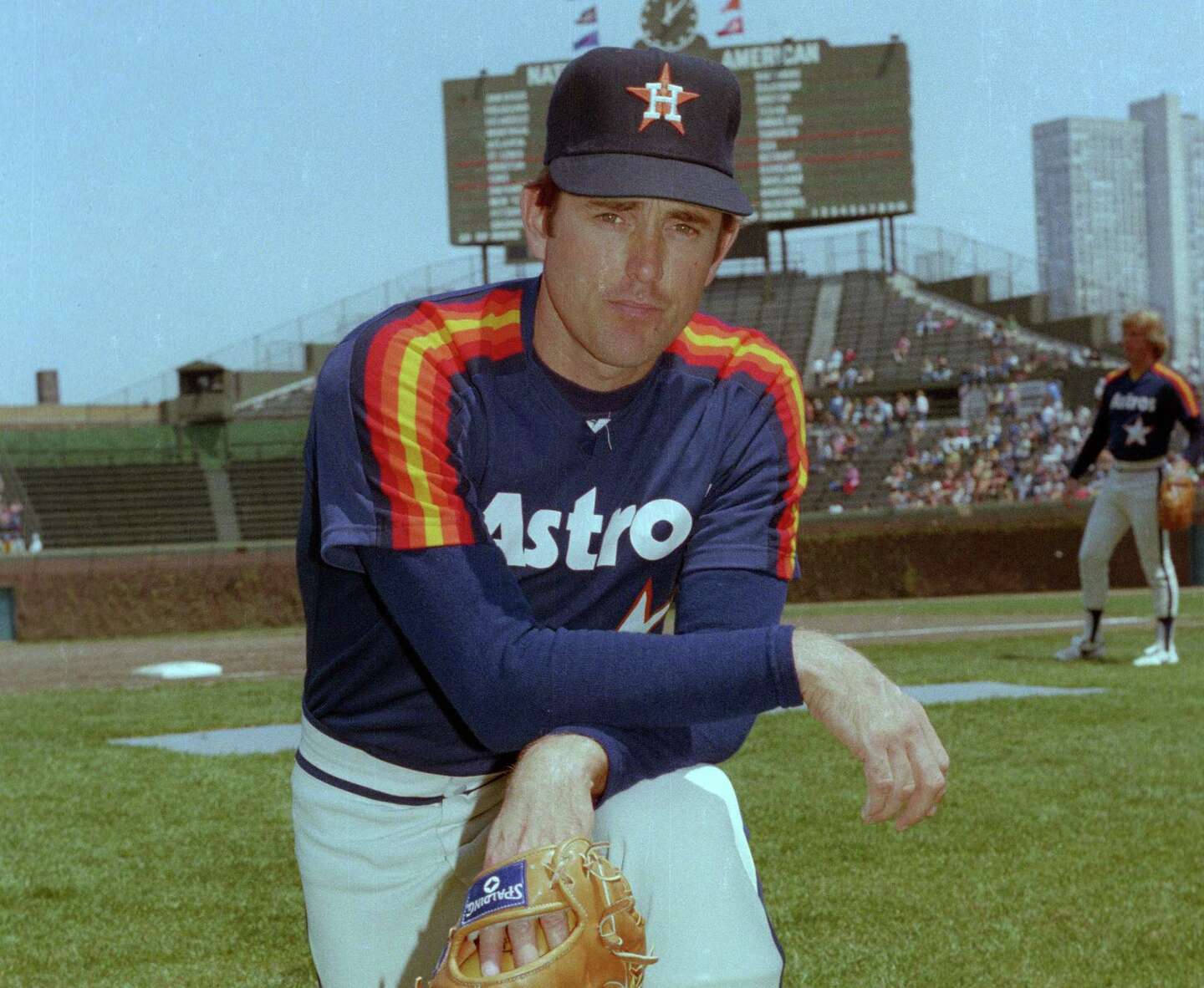
The marketing value alone likely recouped Ryan's salary several times over. He became the face of the franchise, and even today, he is often the first player fans associate with the "Rainbow Guts" era of the Astros.
The Legacy of the Million-Dollar Man
Nolan Ryan eventually left Houston for the Texas Rangers, where he continued to pitch until 1993, retiring at the age of 46 with 5,714 strikeouts and seven no-hitters. However, he is forever linked to the year 1980 and the $1 million mark.
His legacy is not just one of speed and strikeouts, but of professionalizing the role of the athlete. Ryan was one of the first players to emphasize rigorous off-season conditioning and weight training, which allowed him to maintain his value well past the age when most pitchers retired. This commitment to "the craft" served as a justification for his high salary; he wasn't just a natural talent, he was a dedicated professional who treated his body like a high-end investment.
In 2026, as we see players signing contracts that exceed $500 million, Nolan Ryan's $1 million salary seems quaint. Yet, without that first barrier being broken, the trajectory of professional sports might have looked very different. He proved that the public was willing to support a game where the stars were paid like the icons they were.
Frequently Asked Questions
Who was the first baseball player to make $1 million in a single season?
Nolan Ryan was the first. He signed a contract in November 1979 with the Houston Astros that paid him an average of $1.125 million per year starting in the 1980 season.
How much would Nolan Ryan's $1 million salary be worth today?
Adjusting for inflation from 1980 to 2026, $1 million would be equivalent to approximately $4.2 million to $4.5 million. While this is a significant sum, it is much lower than the current minimum salaries for MLB stars, illustrating how much faster baseball salaries have grown compared to standard inflation.
Did any player make $1 million before Nolan Ryan?
No player had an official contract that paid a $1.0 million annual salary before Ryan. Some players, like Catfish Hunter and Pete Rose, had large multi-year deals that were worth several million in total, but their annual "base" or average salary did not hit the $1 million mark until Ryan's 1979 signing.
How many strikeouts did Nolan Ryan have when he signed the contract?
By the end of the 1979 season, right before signing with the Astros, Ryan had 2,951 career strikeouts. He reached the 3,000-strikeout milestone early in his first season with Houston (1980).
Was Nolan Ryan the highest-paid athlete in the world in 1980?
While Ryan was the highest-paid in baseball, some athletes in other sports—particularly boxing—could earn more for a single event. However, in terms of a guaranteed team-sport annual salary, Ryan was at the very top of the hierarchy at that time.
Practical Recommendation for Baseball Historians
If you are researching the economic evolution of Major League Baseball, it is essential to look at the 1976 Basic Agreement between the MLB Players Association (MLBPA) and the owners. This document, following the Seitz decision, formally established the rules for free agency that Nolan Ryan exploited to get his record-breaking deal. Understanding the "service time" requirements of that era provides necessary context for why Ryan had to wait until 1979 to hit the open market despite being a star for a decade. For those interested in the primary documents, the National Baseball Hall of Fame Library in Cooperstown holds extensive records on the labor negotiations of the 1970s.
Image Gallery