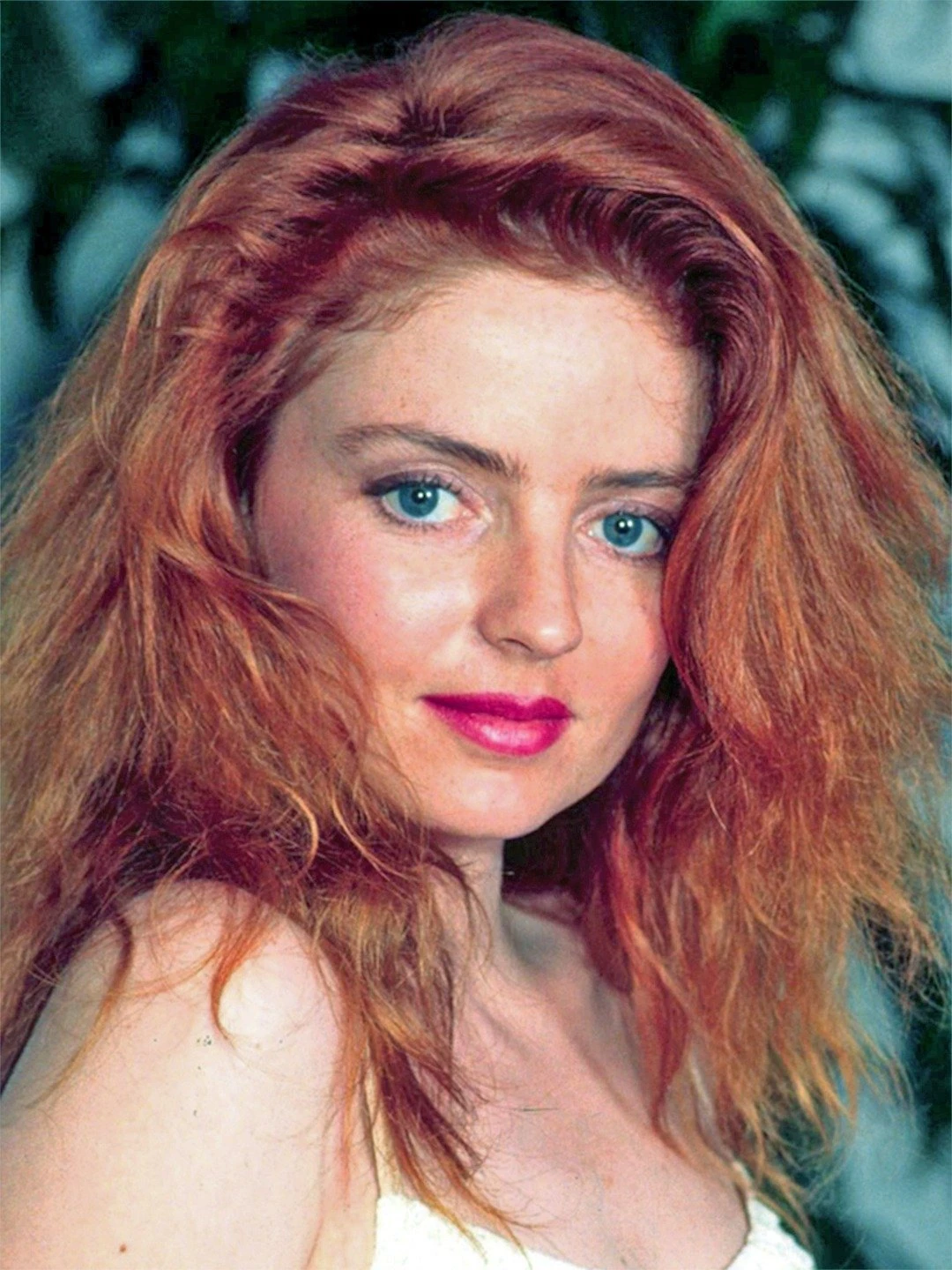
Louise Robey and the 5 Million Net Worth: A Detailed Career and Financial Analysis
As of 2026, the estimated net worth of Louise Robey, the multifaceted British actress, singer, and former model, is approximately $5 million. This valuation is derived from her extensive career in international modeling, her success as...
As of 2026, the estimated net worth of Louise Robey, the multifaceted British actress, singer, and former model, is approximately $5 million. This valuation is derived from her extensive career in international modeling, her success as a recording artist in the 1980s, her lead role in the cult-classic television series Friday the 13th: The Series, and her private investments and matrimonial history within the British aristocracy.
Contents
The Multi-Dimensional Career of Louise Robey
To understand how Louise Robey reached a $5 million net worth, one must examine the diverse sectors of the entertainment and fashion industries she occupied during her professional peak. Unlike many performers who rely on a single stream of income, Robey—often known simply as Robey—leveraged her success across three distinct platforms: high-fashion modeling, the global music charts, and syndicated television.
Born in Montreal and raised largely in Europe, Robey’s background provided her with a cosmopolitan appeal that translated well into the lucrative markets of New York and London. By the late 1970s and early 1980s, she had become a prominent face in the fashion world, which served as the initial foundation for her financial portfolio.
The Modeling Foundation (Elite Model Management)
In the late 1970s, Robey was signed by the prestigious Elite Model Management. This was an era of significant growth for the modeling industry, where top-tier models began to command daily rates that far exceeded the national average annual salary. Robey appeared in high-profile publications such as Vogue and Cosmopolitan, and she was a frequent face in commercial campaigns for major brands.
The earnings from this period were not merely about salary; they represented the establishment of a global brand. During her tenure as a model, she moved in circles that provided access to high-level financial opportunities and networking. While modeling careers are often short-lived, Robey used her visibility to transition into the music industry, a move that would significantly increase her earning potential through royalties and performance fees.
The Musical Peak: "One Night in Bangkok"
Robey’s music career reached its zenith in the mid-1980s. Signed to Silver Blue Records, she released her self-titled debut album, Robey, in 1985. The standout success of this era was her cover of the Murray Head hit "One Night in Bangkok."
While covers can be hit-or-miss, Robey's version became a staple of the dance and club circuits. Her rendition reached the top 5 on the Billboard Dance charts. For an artist, a hit of this magnitude generates several revenue streams:
- Mechanical Royalties: Earnings from the sale of physical media (vinyl, cassettes, and CDs) and, later, digital downloads and streams.
- Performance Royalties: Payments made when the song is played on the radio, in clubs, or on television.
- Touring and Appearance Fees: During the 80s, "club dates" were highly lucrative for dance-pop artists, allowing them to earn significant cash for short, high-energy performances.
Even by 2026, Robey’s musical catalog continues to generate passive income through streaming platforms and "80s nostalgia" compilations, contributing to the stability of her $5 million valuation.
Friday the 13th: The Series and Television Syndication
For many fans, Louise Robey is most recognizable as Micki Foster from Friday the 13th: The Series. Running from 1987 to 1990, the show was a pioneer in the "first-run syndication" market. Unlike network shows that relied on a single broadcaster, syndicated shows were sold directly to local stations across the United States and internationally.
The Economics of Micki Foster
As the female lead of the series, Robey appeared in 72 episodes. In the late 1980s, a lead actor in a successful syndicated series could expect a salary ranging from $15,000 to $30,000 per episode, depending on the season and contract negotiations.
| Revenue Source | Estimated Financial Impact (Historical & Residual) |
|---|---|
| Initial Salary (1987–1990) | Estimated total of $1.2M to $1.8M before taxes/fees. |
| International Distribution | Significant backend payments for airings in Europe and Asia. |
| Home Media Releases | Royalties from VHS, DVD, and Blu-ray box set sales. |
| Streaming Licensing | Residual income from platforms like Paramount+ and others. |
The longevity of Friday the 13th: The Series in the hearts of horror fans has ensured that the show remains in constant rotation. Under standard SAG-AFTRA agreements, lead actors receive residuals when their work is rebroadcast or sold to new media platforms. While these payments decrease over time, the "long tail" of a cult series provides a consistent financial cushion that many other actors from the era lack.
Aristocratic Ties and Personal Wealth
A significant factor in Louise Robey’s current financial status is her marriage into the British aristocracy. In 1994, she married Sir James Michael "Mick" Lyon, 2nd Baronet. Upon this marriage, she became Lady Lyon.
While the marriage ended in divorce in 2003, it marked a period where her personal assets were likely restructured. Marriages within the British titled classes often involve prenuptial agreements, trust funds, and significant property interests. The settlement and the lifestyle associated with this period contributed to her long-term capital preservation.
In the decades following her time in the public eye, Robey has been noted for her involvement in the arts and photography. Private investments in real estate—particularly in the United Kingdom and potentially the United States—have historically been the primary vehicle for celebrities to grow a $1 million or $2 million career earnings into a $5 million net worth over thirty years.
The Modern "Conway" Economy and Public Appearances
In 2026, the "convention circuit" is a major economic engine for stars of 1980s cult television. Louise Robey remains a highly sought-after guest at horror conventions, Comic-Cons, and 80s-themed events.
For an actress of her stature, a single weekend at a major convention can generate significant revenue:
- Guaranteed Appearance Fee: Organizers pay a base fee to ensure the star's attendance.
- Autograph and Photo Op Shares: Actors typically keep a large percentage (often 60% to 80%) of the fees charged for signatures and photographs.
- Merchandise Sales: Selling personal memorabilia, limited edition prints, or music.
For many stars of the 80s, these appearances act as a "working retirement," providing a high-income stream with minimal time commitment, allowing them to maintain their net worth without needing to pursue full-time acting roles.
Why the $5 Million Figure is Consistent
Financial analysts and celebrity net worth trackers arrive at the $5 million figure by balancing her visible assets against her historical earning power. In 2026, this number reflects a "conservative-growth" trajectory.
If we consider that Robey earned several million dollars during her peak years (1982–1992) and invested a portion of that into diverse portfolios or real estate, a $5 million valuation is highly plausible. It accounts for:
- Asset Appreciation: The rise in value of property holdings over 30 years.
- Residual Stability: The continued demand for 80s media.
- Low Burn Rate: Robey has maintained a relatively private life in recent years, avoiding the high-expenditure lifestyle that often leads to celebrity bankruptcy.
Common Misconceptions About Her Wealth
It is important to distinguish between "liquid net worth" (cash in the bank) and "total net worth" (the value of all assets). While Robey may not have $5 million in a single checking account, her combined assets—including intellectual property rights, physical property, and investment accounts—form the basis of this valuation.
Frequently Asked Questions
Did Louise Robey inherit her wealth?
While she was married into a titled family (the Lyon baronetcy), much of Robey's initial wealth was self-made through her modeling and acting careers. Her net worth is a combination of professional earnings and the financial outcomes of her personal life and investments.
Does she still earn money from "Friday the 13th: The Series"?
Yes. Under SAG-AFTRA (Screen Actors Guild) rules, actors receive residuals for the rebroadcast of their work. Because the series remains popular on streaming and physical media, it continues to provide a source of passive income.
How does her singing career affect her net worth today?
Music royalties are a significant part of her "long-tail" income. Her cover of "One Night in Bangkok" is still played on 80s-themed radio stations and curated digital playlists, which triggers royalty payments to the performer.
Is the $5 million figure verified by Robey herself?
Publicly available net worth figures are estimates based on career earnings, known property records, and industry standards. Like most private citizens, Robey does not publish her tax returns or bank statements for public verification.
What is Louise Robey doing in 2026?
Robey continues to be active in the arts, focusing on photography and creative projects. She also makes periodic appearances at fan conventions, where she interacts with the dedicated following of her 1980s television and music work.
Final Recommendation for Researchers
When evaluating the net worth of a figure like Louise Robey, it is essential to look beyond the "actress" label. Her financial stability is a result of diversification. For those looking to understand the financial longevity of 80s stars, Robey serves as a primary example of how cross-industry success (modeling, music, and TV) creates a more resilient financial foundation than a single-track career.
Image Gallery