Complete Guide to Police Abbreviations and Codes in 2026
Law enforcement communication relies heavily on standardized police abbreviations and codes to ensure rapid, precise, and secure radio transmissions. Whether you are studying criminal justice, monitoring a police scanner, or writing re...
Law enforcement communication relies heavily on standardized police abbreviations and codes to ensure rapid, precise, and secure radio transmissions. Whether you are studying criminal justice, monitoring a police scanner, or writing realistic fiction, understanding these tactical shorthand terms is essential for decoding dispatch audio and official incident reports.
Contents
Understanding the Evolution and Structure of Law Enforcement Radio Codes
Police terminology is built upon a foundation of brevity and operational clarity. When seconds matter during an emergency, verbal shorthand prevents channel congestion and maintains officer safety. Over time, agencies have migrated away from complex proprietary systems toward standardized formats to improve multi-jurisdictional interoperability.
Radio codes generally fall into three distinct structural categories:
- 10-Codes (Signals): Numeric systems initiated by the number 10, originally developed in the 1930s to maximize efficiency over early, crowded analog radio frequencies.
- Alpha-Numeric Codes: Combinations of letters and numbers used to designate specific criminal offenses, administrative tasks, or unit assignments.
- Phonetic Alphabets: Standardized spelling words utilized to transmit license plates, street names, and suspect descriptions without ambiguity over static-heavy radios.
Although federal initiatives like the National Incident Management System (NIMS) have pushed many agencies toward Plain English (or "Clear Text") reporting to assist mutual aid partners, numerical shorthand remains deeply embedded in daily dispatch culture.
Comprehensive Breakdown of Standard 10-Codes
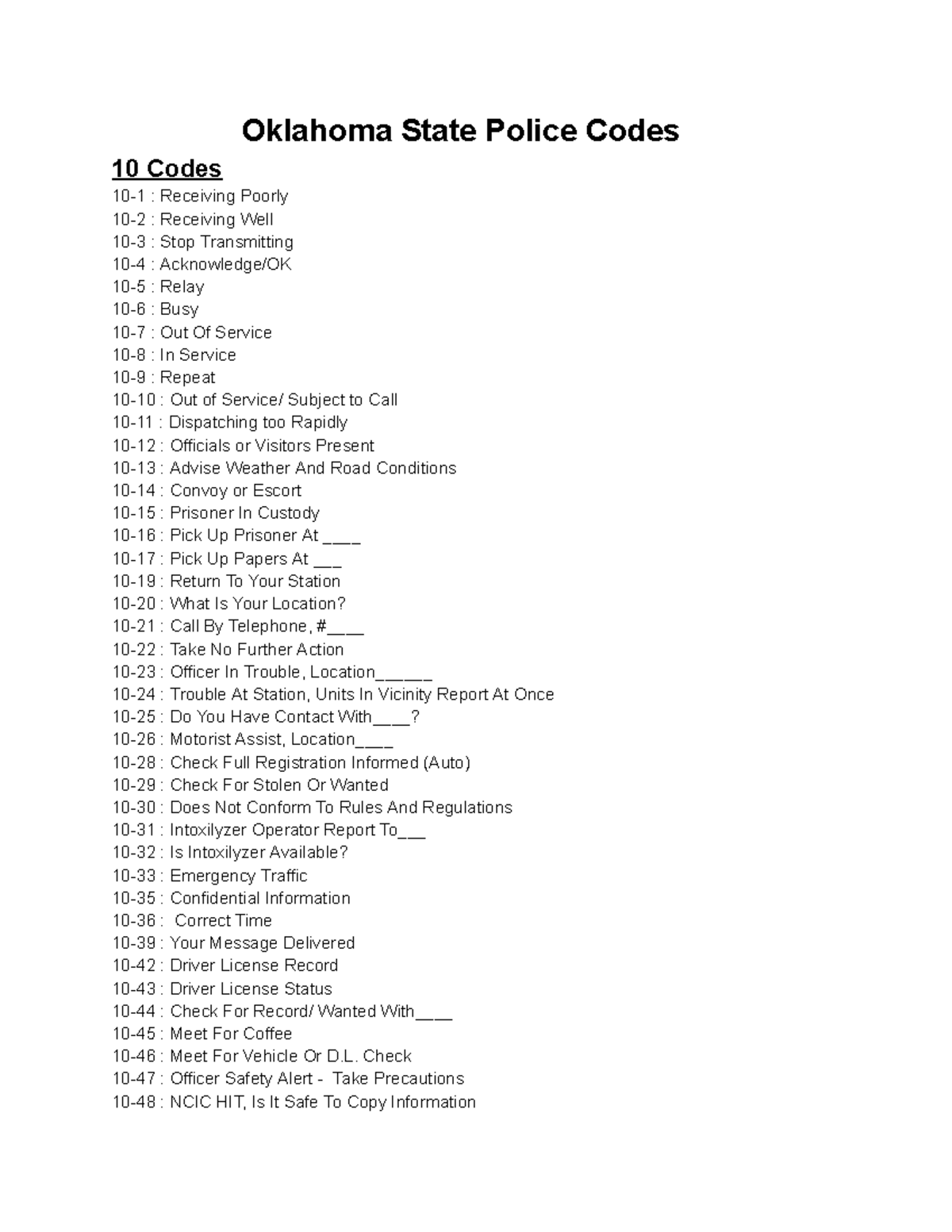
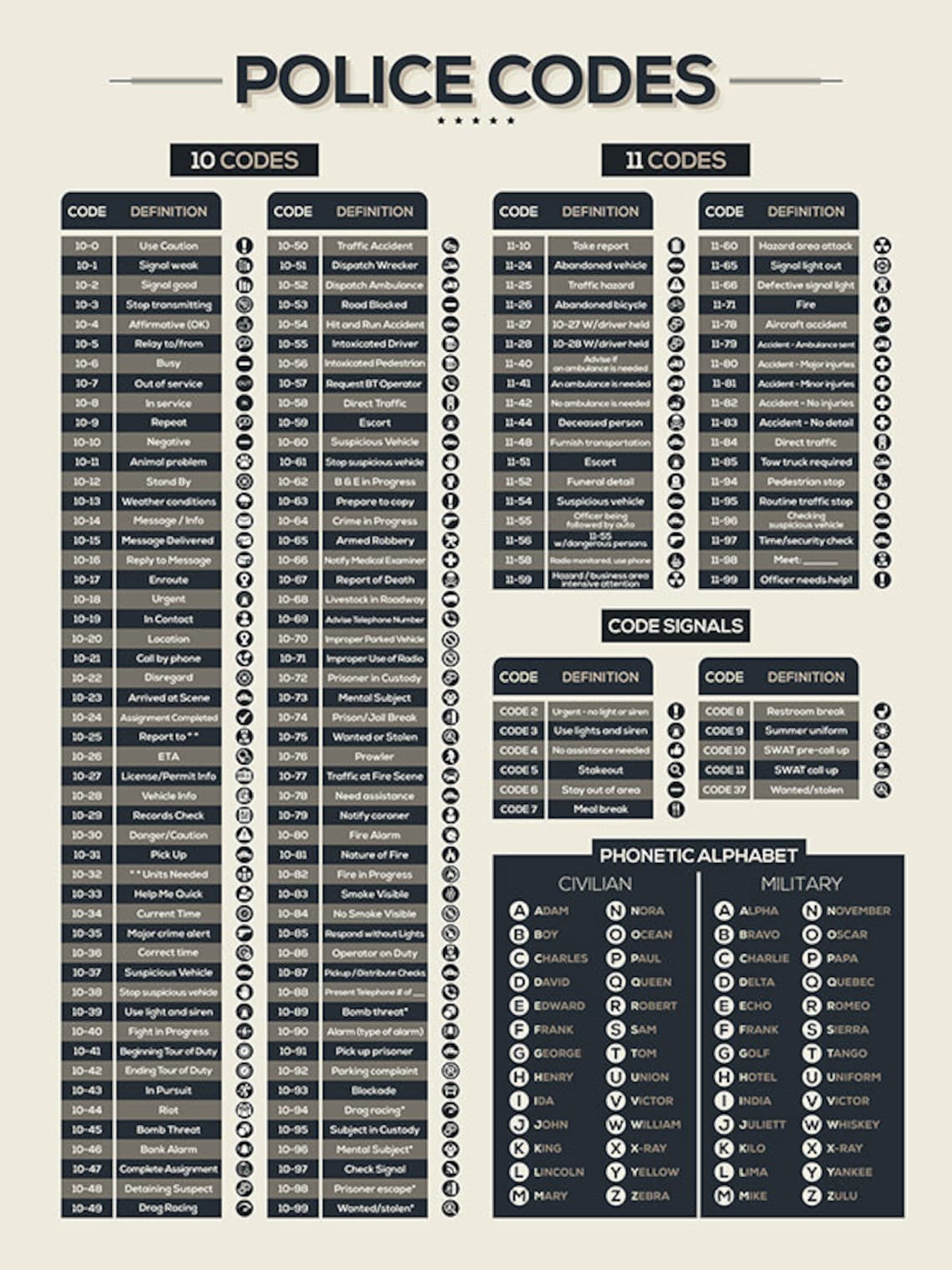
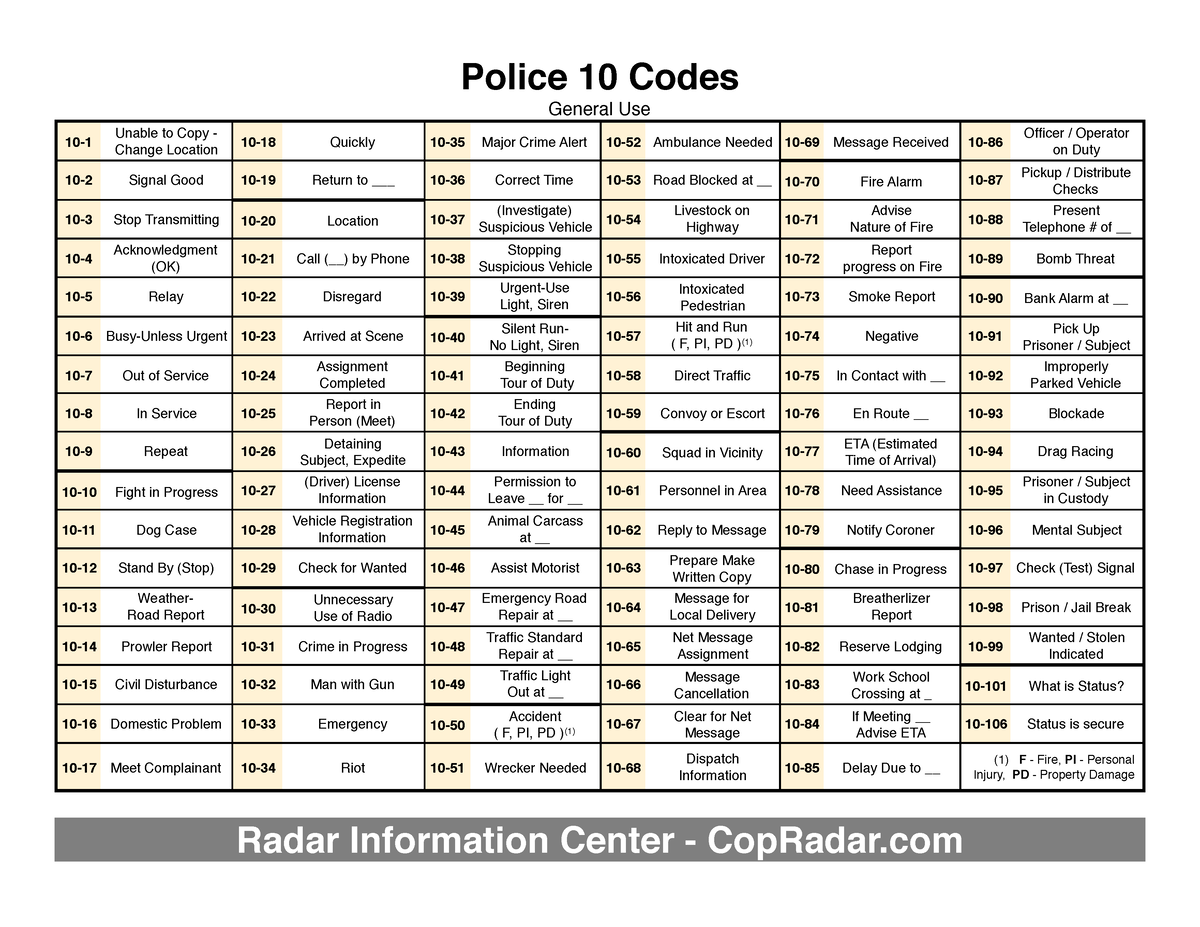
While 10-codes vary significantly between state police departments, county sheriffs, and municipal city police, several nationwide standards have emerged through decades of routine use. The table below outlines the most common 10-codes historically and currently utilized across various North American jurisdictions.
| Code | Standard Meaning | Tactical Context & Operational Use |
|---|---|---|
| 10-4 | Acknowledge / Affirmative | Used to confirm that a transmission or instruction has been received and understood. |
| 10-7 | Out of Service | Officer is unavailable for dispatch due to administrative tasks, meal breaks, or end of shift. |
| 10-8 | In Service / Available | Officer is back on patrol and ready to take dispatched calls for service. |
| 10-20 | Location | Inquired or stated geographic position (e.g., "What is your 10-20?"). |
| 10-33 | Emergency Traffic Clear Channel | Requires all units to cease routine radio traffic immediately; only emergency updates permitted. |
| 10-99 | Wanted / Stolen Record | Indicates that a vehicle, license plate, or individual has an active warrant or record. |
Common Police Phonetic Alphabet Standards
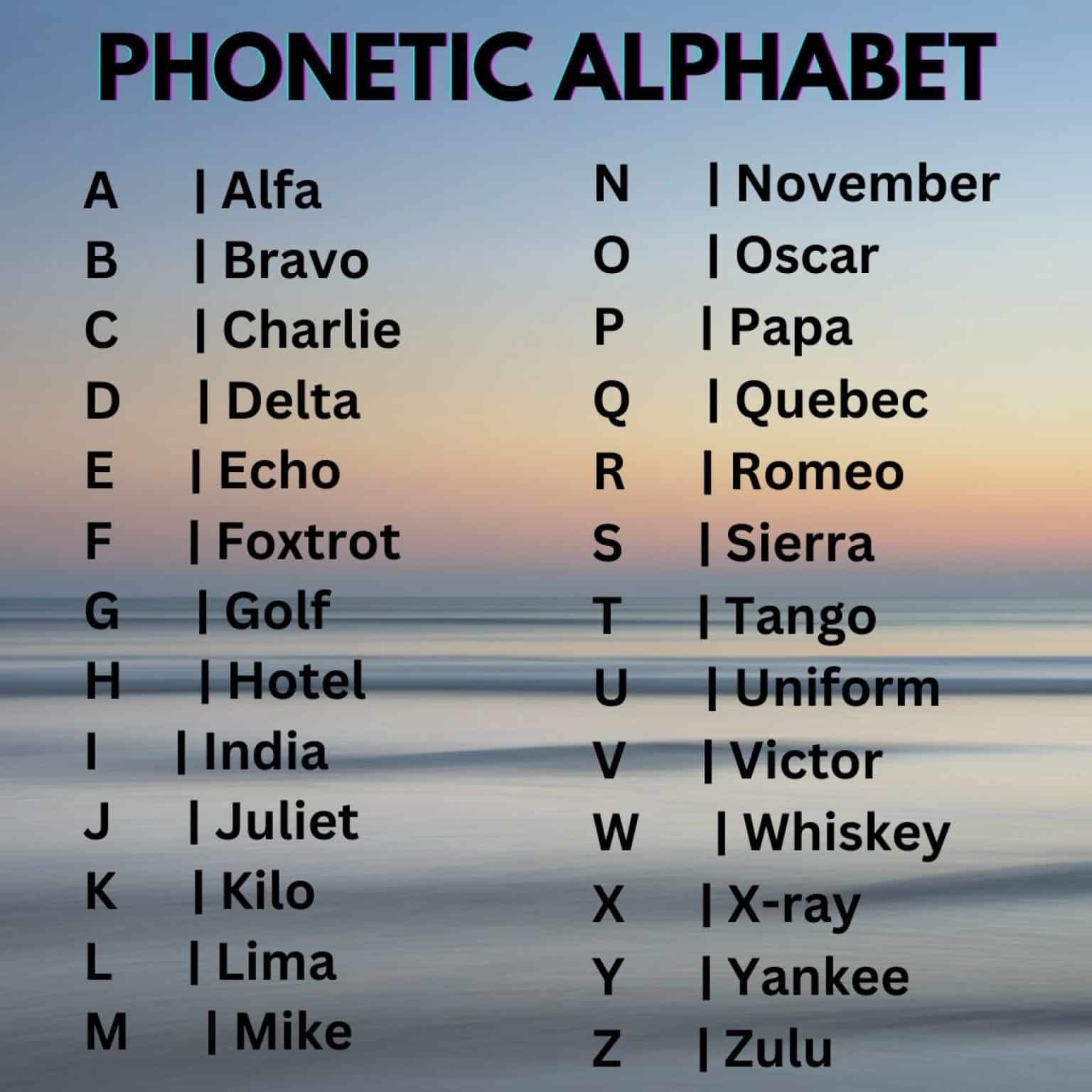
When spelling out vehicle identification numbers (VINs), serial numbers, or suspect names, dispatchers and officers use the International Civil Aviation Organization (ICAO) phonetic alphabet to eliminate confusion caused by radio static or similar-sounding letters.
- A: Alpha
- B: Bravo
- C: Charlie
- D: Delta
- E: Echo
- F: Foxtrot
- G: Golf
- H: Hotel
- I: India
- J: Juliett
- K: Kilo
- L: Lima
- M: Mike
- N: November
- O: Oscar
- P: Papa
- Q: Quebec
- R: Romeo
- S: Sierra
- T: Tango
- U: Uniform
- V: Victor
- W: Whiskey
- X: X-ray
- Y: Yankee
- Z: Zulu
Standard Police Incident Codes and Penal Code References
Beyond radio shorthand, police reports and dispatch logs utilize numerical codes that map directly to state criminal statutes or standardized municipal infractions. While these codes differ drastically by state (for example, California Penal Code versus New York Penal Law), certain universal categorizations appear across dispatch desks nationwide.
Major Incident Classifications
- Code 2 / Priority 2: Urgent response required, typically involving lights and sirens, but without an immediate threat to life.
- Code 3 / Priority 3: Emergency response requiring lights and sirens due to an active threat to life or a crime in progress.
- Code 4 / No Further Assistance Needed: Indicates the scene is secure, and other responding units can slow down or cancel their response.
- Code 6: Investigation at a specific location; officer is out of the vehicle checking a suspicious circumstance or person.
The Shift Toward Plain English and Clear Text Reporting
A critical development in modern policing is the transition from proprietary 10-codes to Plain English. Following communication breakdowns during multi-agency responses to historical disasters, federal guidelines strongly encouraged public safety agencies to drop numerical codes in favor of direct verbal communication.
Operational Realities of Plain English: While federal mandates encourage clear text for inter-agency coordination during disasters, local municipal departments often retain legacy 10-codes out of habit, speed, and shorthand convenience during routine, intradepartmental operations.
Frequently Asked Questions About Police Codes
What does "10-4" actually mean in police radio communication?
10-4 is a universally recognized radio code meaning "acknowledgment" or "message received." It confirms that the receiving party understands the instructions or information transmitted.
Why do police departments use codes instead of speaking normally?
Codes were originally created to save valuable airtime on congested analog radio frequencies and to provide a measure of operational privacy from civilian radio hobbyists.
Are police 10-codes universal across the entire United States?
No. While certain codes like 10-4 and 10-20 are widely understood, 10-codes vary significantly between state, county, and local municipal agencies.
What is the difference between Code 2 and Code 3 responses?
Code 2 generally denotes an urgent response using emergency lights without sirens, whereas Code 3 indicates an emergency response utilizing both lights and sirens due to immediate danger.
How has modern technology affected the use of police abbreviations?
Encrypted digital radio systems, mobile data terminals (MDTs), and computer-aided dispatch (CAD) software have reduced reliance on voice codes, though verbal shorthand remains a staple of tactical radio communication.
Mastering Law Enforcement Terminology
Mastering police abbreviations and codes requires consistent practice and an understanding of regional agency protocols. Whether you are analyzing public safety logs or studying tactical communications, keeping a reliable reference guide close at hand ensures you can accurately interpret law enforcement radio traffic.
Image Gallery