The Cheapest Cell Phone Plans in California: Best Budget Options & Government Assistance
Finding the cheapest cell phone plan in California requires balancing low monthly rates with dependable network coverage. Commercial Mobile Virtual Network Operators (MVNOs) like Mint Mobile, Tello, and Visible offer plans starting bet...
Finding the cheapest cell phone plan in California requires balancing low monthly rates with dependable network coverage. Commercial Mobile Virtual Network Operators (MVNOs) like Mint Mobile, Tello, and Visible offer plans starting between $10 and $25 per month by leveraging major networks. Additionally, qualifying low-income residents can obtain deeply discounted or free wireless services through the state-administered California LifeLine program.
Contents
Decoding the Wireless Market in California: MNOs vs. MVNOs
To secure the lowest possible monthly bill in California, it is essential to understand how mobile networks operate. The United States mobile landscape is built upon three major Mobile Network Operators (MNOs): AT&T, T-Mobile, and Verizon. These carriers own, build, and maintain the physical cell towers and fiber-optic backhaul infrastructure across the state.
While MNOs offer extensive post-paid plans featuring device subsidies and unlimited multi-line perks, their service comes at a premium price. Budget-conscious consumers achieve substantial savings by turning to Mobile Virtual Network Operators (MVNOs).
MVNOs purchase network capacity wholesale from AT&T, T-Mobile, or Verizon and resell it to consumers at a fraction of the cost. Because MVNOs maintain low overhead costs—often operating entirely online without physical retail stores—they pass those savings directly to subscribers.
Data Deprioritization Explained
The primary trade-off when using an MVNO is data deprioritization. During times of heavy network congestion (such as inside a crowded stadium in Los Angeles or during peak commuting hours in San Francisco), MNOs prioritize traffic from their direct, premium subscribers. As a result, MVNO users may experience temporarily reduced data speeds. For everyday web browsing, social media streaming, and navigation, however, most users notice little to no difference in service quality.
Top Cheap Commercial Cell Phone Plans in California
Several budget carriers offer high-value plans tailored to different usage habits, ranging from ultra-light data users to heavy streamers.
| Carrier | Host Network | Base Price/Month | Best Suited For |
|---|---|---|---|
| Tello Mobile | T-Mobile | $5 - $25 | Flexible/Low Data |
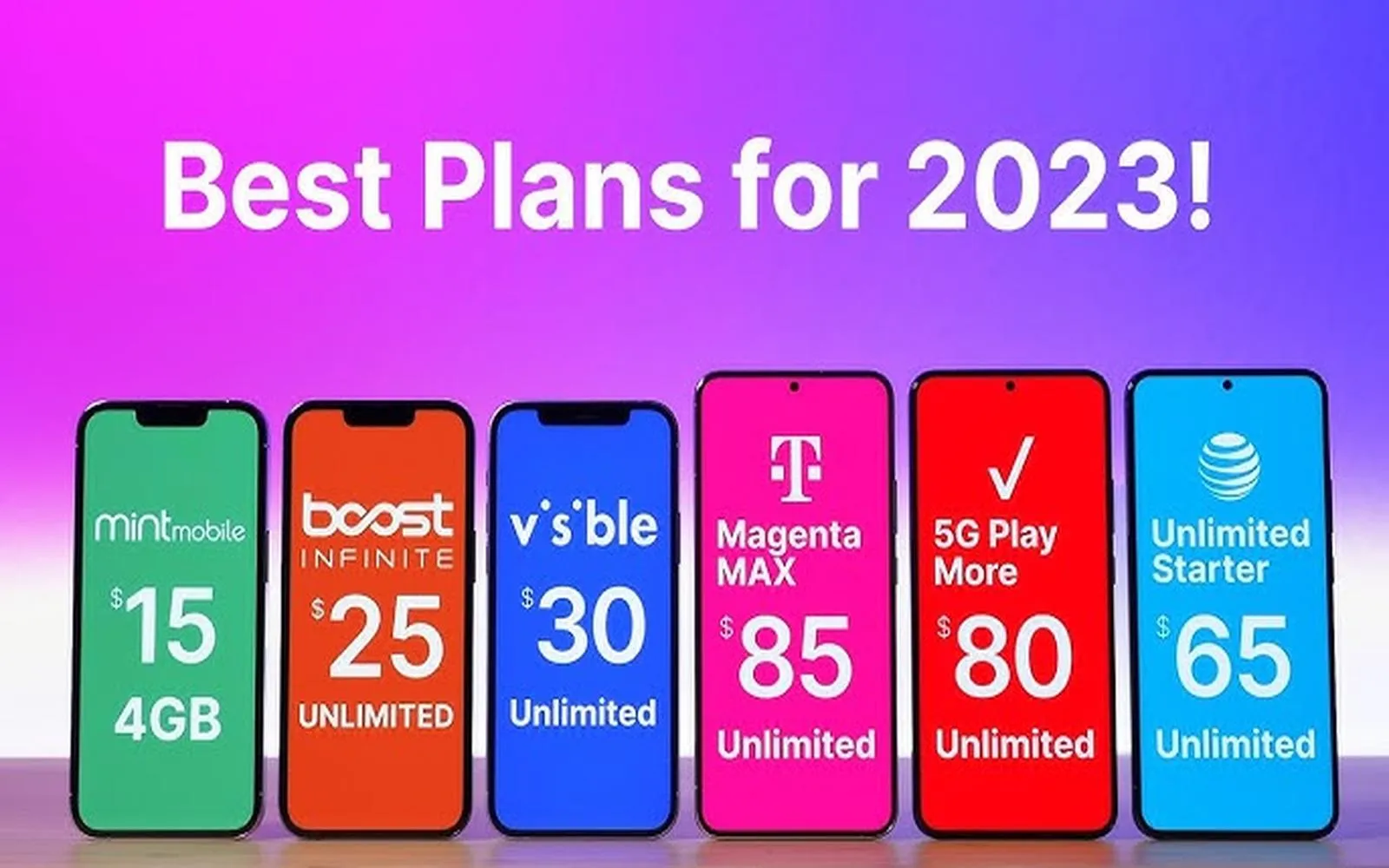
| Mint Mobile | T-Mobile | $15 - $30 | Bulk/Prepaid Pay |
| Visible | Verizon | $25 - $45 | Truly Unlimited Data |
| US Mobile | Verizon / AT&T | $10 - $28 | Customizable Plans |
| Consumer Cellular | AT&T / T-Mobile | $20 - $35 | Seniors / Support |
1. Tello Mobile (Best for Customizable, Ultra-Low Data Plans)
Operating on T-Mobile’s nationwide 4G LTE and 5G network, Tello Mobile allows users to build custom plans based on exact data and minute requirements.
- Pricing Structure: Plans begin as low as $5 per month for no-data talk-and-text combinations and go up to $25 per month for an "Unlimited" plan (which includes 35 GB of high-speed data before throttling).
- Key Features: Tello includes free international calling to over 60 countries (including Mexico and Canada), free mobile hotspot usage drawn from your data allotment, and no long-term contracts.
- Ideal User: Light data users, seniors, or individuals working primarily from home on Wi-Fi.
2. Mint Mobile (Best Value for Bulk Data Purchasing)
Mint Mobile operates on T-Mobile’s network and uses a wholesale buy-in-bulk pricing model. Customers purchase service in advance in 3, 6, or 12-month increments.
- Pricing Structure: New customers receive an introductory rate of $15 per month for any plan tier during their first 3 months. After the trial, maintaining the $15 rate requires paying for a full 12 months upfront for the 5 GB plan. Mint's Unlimited tier (40 GB high-speed cap) runs $30 per month on an annual commitment.
- Key Features: Full 5G access, free mobile hotspot (capped at 10 GB on unlimited plans), and free calls to Mexico and Canada.
- Ideal User: Users comfortable paying upfront for a full year of service to lock in low monthly rates.
3. Visible by Verizon (Best Low-Cost Truly Unlimited Plan)
Visible is a prepaid subsidiary owned directly by Verizon, meaning it runs natively on Verizon’s extensive coverage network.
- Pricing Structure: The standard Visible plan costs $25 per month (taxes and fees included). The upgraded Visible+ plan costs $45 per month and offers 50 GB of premium, un-deprioritized data on Verizon’s 5G Ultra Wideband network.
- Key Features: Truly unlimited data with no hard high-speed cap (though basic plan speeds are subject to deprioritization during high network congestion). It also features unlimited mobile hotspot usage capped at a functional 5 Mbps speed.
- Ideal User: Commuters and heavy data consumers who require unlimited bandwidth without contract surprises.
4. US Mobile (Best for Flexible Network Switching)
US Mobile provides access to both Verizon and AT&T networks (referred to internally as Warp 5G and Dark Star), giving consumers control over which tower network powers their phone.
- Pricing Structure: Shared data plans start at $10 per month for 2 GB. Unlimited plans range from $18 to $28 per month.
- Key Features: Top-tier customer support, customizable top-ups, and multi-line discounts for families.
- Ideal User: Budget-conscious families and users living in areas where one carrier's signal clearly outperforms others.
Navigating California Taxes, Surcharges, and Fees
When calculating the total monthly expense of a cell phone plan in California, advertised rates can be deceiving. Post-paid plans from major carriers often feature state, county, and municipal taxes alongside regulatory fees that add between 15% and 30% to the monthly bill.
Public Purpose Program Surcharges
The California Public Utilities Commission (CPUC) mandates that telecommunications providers collect surcharges to fund state public purpose programs. These programs support rural broadband access, telecommunications equipment for disabled individuals, and discounted telephone service for low-income households.
In California, these fees include:
- California LifeLine User Fee
- Deaf and Disabled Telecommunications Program (DDTP) Surcharge
- California Teleconnect Fund (CTF)
- Emergency 911 State Surcharge
Prepaid vs. Post-paid Fee Calculations
- Taxes-Included MVNOs: Providers such as Visible include all applicable state and local taxes directly within their flat advertised rate (e.g., $25 per month means exactly $25 charged to your card).
- Standard Prepaid Carriers: Brands like Mint Mobile add a small "MTS" (Prepaid Mobile Telephony Services) surcharge at checkout to satisfy California state tax requirements.
- Post-Paid Carriers: Post-paid bills detail every local utility user tax (UUT) based on your billing address city, resulting in higher final monthly costs.
Government Discounted Options: The California LifeLine Program
For low-income households, veterans, seniors, and eligible individuals receiving government assistance, the cheapest cell phone plan may cost nothing at all.
What is California LifeLine?
California LifeLine is a state program funded by the CPUC that provides discounted home phone or cell phone services to eligible households. While the federal Lifeline program offers a baseline monthly subsidy across the US, California supplements this fund with state money to deliver higher total discounts and comprehensive service packages.
| Program-Based Qualification | Income-Based Thresholds |
|---|---|
| CalFresh / SNAP (Food Stamps) | 1-2 Persons: ≤ $32,500 |
| Medi-Cal / Medicaid | 3 Persons: ≤ $37,700 |
| Supplemental Security Income (SSI) | 4 Persons: ≤ $45,900 |
| Bureau of Indian Affairs General Assistance | Each Extra Person: +$8,200 |
(Note: Income thresholds are updated annually by the CPUC; numbers reflect general state guidelines.)
Key Requirements & Eligibility Rules
To qualify for California LifeLine wireless discounts, you must satisfy one of the following criteria:
- Program-Based Qualification: You or a household member participate in eligible assistance programs such as CalFresh (SNAP), Medi-Cal, Supplemental Security Income (SSI), Low Income Home Energy Assistance Program (LIHEAP), or Veterans and Survivors Pension Benefit.
- Income-Based Qualification: Your total household annual gross income falls at or below California’s established income limits.
Top California LifeLine Wireless Providers
Several specialized wireless carriers administer California LifeLine plans, offering eligible applicants free monthly talk, text, and data allotments:
- TruConnect: Offers free unlimited talk, text, and a monthly high-speed data allocation to qualifying California residents, often bundled with an affordable or free Android smartphone.
- Assurance Wireless (by T-Mobile): Provides eligible users with free monthly minutes, unlimited texts, and high-speed data on the T-Mobile network.
- Access Wireless: Operates on major statewide networks, giving qualifying households free monthly access.
To review guidelines or submit an application, visit the official California LifeLine Administrator portal.
Regional Coverage Considerations Across California
California's unique geography—ranging from dense coastal cities to remote mountain regions and expansive desert highways—means that carrier performance varies significantly by location. Choosing the cheapest plan is counterproductive if the underlying network lacks coverage where you live and work.
| Region | Strongest Overall Coverage | Recommended Budget Option |
|---|---|---|
| Greater LA & Inland | T-Mobile & Verizon (Tie) | Visible / Mint Mobile |
| SF Bay Area | T-Mobile & AT&T | Mint Mobile / Tello |
| Central Valley | AT&T & Verizon | US Mobile (Dark Star/Warp) |
| Sierra Nevada / North | AT&T | Cricket Wireless / US Mobile |
1. Southern California Urban Sprawl (Los Angeles, Orange, & San Diego Counties)
In urban Southern California, all three major networks offer high-speed 5G performance. T-Mobile leads in mid-band 5G speed density, making Mint Mobile and Tello excellent choices. However, in subterranean parking structures or dense concrete high-rises, Verizon and AT&T maintain reliable signal penetration, keeping Visible competitive.
2. San Francisco Bay Area & Silicon Valley
The Bay Area features strong overall network coverage, but terrain variations around coastal hills can create local dead zones. T-Mobile and AT&T perform reliably across most East Bay and Peninsula cities. Heavy commuters on BART or Caltrain often prefer Visible or Mint Mobile for consistent streaming during off-peak travel.
3. Central Valley (Fresno, Bakersfield, Sacramento)
In the agricultural Central Valley, tower spacing is wider than in coastal cities. AT&T and Verizon maintain the most consistent macro-tower coverage along Interstate 5 and Highway 99. MVNOs operating on these networks, such as US Mobile or Cricket Wireless, provide strong coverage without the expense of main-line carrier contracts.
4. Rural Northern California & Mountain Regions (Sierra Nevada, Shasta, Lake Tahoe)
In rural areas, mountainous terrain, and state parks, coverage changes dramatically. AT&T holds the largest physical network footprint across Northern California’s timber counties and Sierra Nevada highways. Rural residents and frequent outdoor enthusiasts should select MVNOs anchored to AT&T (such as Cricket Wireless or US Mobile’s AT&T network tier) to avoid dropped calls outside major metropolitan areas.
Step-by-Step Guide to Switching to a Cheap Carrier
Switching your mobile carrier in California can be completed quickly online without losing your existing phone number or purchasing a new device.
- Step 1: Check Compatibility & Unlock Device
- Step 2: Compare Carrier Coverage Maps
- Step 3: Request Account PIN & Porting Info
- Step 4: Order SIM / Activate via eSIM
- Step 5: Complete Number Transfer Test
Step 1: Unlock Your Current Phone
Under Federal Communications Commission (FCC) regulations, carriers must unlock consumer phones once contractual obligations or device payment balances are satisfied. Contact your current carrier or use their mobile app to verify that your smartphone is unlocked for use on other networks.
Step 2: Request Port-Out Information
To transfer your current phone number to a new carrier, you need two items from your current account:
- Account Number (found on your billing statement or app account profile).
- Number Transfer PIN / Port PIN (generated via your current carrier’s app or customer support phone line).
Step 3: Check eSIM Compatibility
Most smartphones manufactured in recent years feature eSIM (embedded SIM) technology. Choosing eSIM allows you to download your new cheap phone plan instantly over Wi-Fi, bypassing the need to wait for a physical SIM card to arrive in the mail.
Step 4: Initiate Activation and Transfer
Order your chosen plan online. When prompted, select the option to "Keep My Number" and enter your Account Number and Transfer PIN. Do not cancel your old service manually; your previous service will terminate automatically once the new carrier completes the number transfer.
Frequently Asked Questions
What is the absolute cheapest cell phone plan available in California?
For minimal phone usage, Tello Mobile offers custom plans starting at $5 per month for talk and text with no data. For light internet users, US Mobile provides 2 GB of high-speed data for $10 per month. If you qualify for the California LifeLine program, eligible service is free.
Can I keep my phone number when switching to a cheaper carrier?
Yes. Federal law requires mobile service providers to support number portability. As long as your line remains active with your old carrier during the transfer process, you can move your existing number to any budget carrier.
Are cheap prepaid plans deprioritized in California emergency situations?
No. Standard data deprioritization affects high-bandwidth internet activities like video streaming or app downloads during network congestion. Emergency services, 911 calls, and text routing are prioritized at the network level across all wireless service providers.
Does California LifeLine provide free smartphones?
Many authorized California LifeLine providers (such as TruConnect and Assurance Wireless) offer a free basic Android smartphone to newly approved applicants. Availability depends on current inventory and carrier promotional offers.
Is T-Mobile, AT&T, or Verizon best for cheap plans in California?
T-Mobile powers the most affordable commercial MVNOs (like Tello and Mint Mobile), making it the best option for price-conscious urban and suburban residents. Verizon provides strong coverage through its low-cost subsidiary, Visible. AT&T offers the most complete coverage in rural and mountainous regions of California.
Strategic Recommendation
If you qualify for low-income assistance, start by applying through the official California LifeLine Administrator to secure free monthly service.
For all other budget-conscious consumers:
- Choose Tello Mobile ($5–$14/month) if you spend most of your day connected to home or work Wi-Fi.
- Select Mint Mobile ($15/month) if you can pay upfront for annual service and live in an urban center.
- Select Visible ($25/month flat) if you require unlimited high-speed data on Verizon's network without contract commitments.
Image Gallery