Life Insurance and Vaping Nicotine: Underwriting Rules, Testing, and Rates
Vaping nicotine directly impacts life insurance premiums, as most insurance carriers classify e-cigarette users under standard tobacco rates. This classification can double or triple monthly premium costs compared to non-smoker rates....
Vaping nicotine directly impacts life insurance premiums, as most insurance carriers classify e-cigarette users under standard tobacco rates. This classification can double or triple monthly premium costs compared to non-smoker rates. However, approval terms, cotinine lab limits, and rate classes vary significantly depending on carrier guidelines, nicotine concentration, and frequency of use.
Contents
How Life Insurance Underwriters View Vaping and Nicotine Use
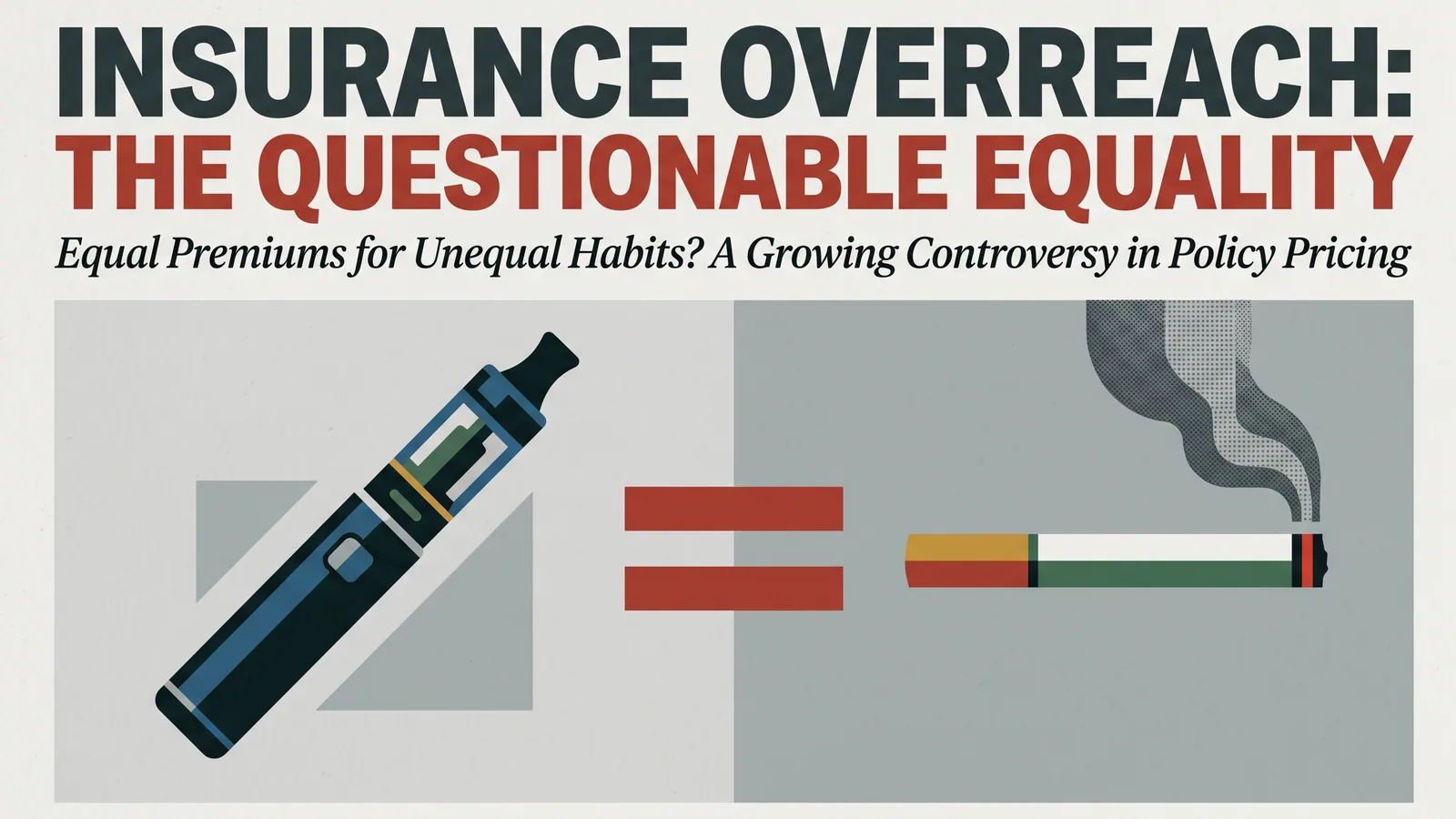
Life insurance underwriters evaluate risk based on mortality data, medical history, and lifestyle habits. When e-cigarettes first gained widespread popularity, insurers lacked decades of longitudinal health data. As a result, major life insurance carriers established conservative underwriting guidelines that treat vaping containing nicotine similarly to traditional combustible cigarettes.
Underwriting risk pools are broadly divided into two primary categories: Tobacco / Smoker and Non-Tobacco / Non-Smoker. Because e-cigarette liquids often contain concentrated nicotine derived from tobacco, most life insurance companies group vapers into the tobacco category. Insurers cite cardiovascular risks associated with nicotine consumption—such as elevated heart rate, arterial stiffening, and increased blood pressure—alongside potential respiratory risks from inhaled aerosol components.
| Tobacco Risk Pool | Non-Tobacco Risk Pool |
|---|---|
| - Combustible Cigarettes | - Non-users |
| - Vapes / E-Cigarettes (Nicotine) | - Zero-Nicotine Vapers* |
| - Cigars / Pipes / Chewing Tob. | - Fully Cessated (>12–24 mos) |
*Subject to negative cotinine lab results and specific carrier approval.
However, underwriting approaches are not entirely uniform across the industry:
- Strict Standard Carriers: Treat any form of nicotine delivery—vapes, cigarettes, cigars, pipes, patches, or nicotine gum—as traditional tobacco use, placing applicants directly into Preferred Smoker or Standard Smoker rating classes.
- Hybrid / Moderate Carriers: Distinguish between smoking combustible tobacco and alternative delivery systems. A subset of carriers offers "Standard Non-Tobacco" or "Preferred Tobacco" pricing for individuals who vape exclusively and do not smoke traditional cigarettes.
- Non-Nicotine Vapers: Applicants who vape zero-nicotine liquids may qualify for non-tobacco rates, provided their lab work confirms the absence of nicotine metabolites and their medical records show no underlying respiratory conditions.
The Medical Exam: How Insurers Detect Nicotine (Cotinine Testing)
When applying for fully underwritten life insurance, applicants typically complete a paramedical exam. This process includes physical measurements, blood pressure checks, and collection of blood and urine specimens. Insurers analyze these samples for cotinine, the primary chemical byproduct formed after the body metabolizes nicotine.
What Is Cotinine and How Long Does It Stay in the Body?
Cotinine has a much longer elimination half-life than nicotine itself. While nicotine leaves the bloodstream within a few hours, cotinine remains detectable in bodily fluids for several days to weeks depending on usage frequency, metabolic rate, and overall hydration.
| Specimen Type | Typical Detection Window | Purpose in Life Insurance Underwriting |
|---|---|---|
| Urine | 3 to 7 days (up to 10–14 days for daily vapers) | Standard screening method during paramedical exams; highly sensitive. |
| Blood | 1 to 3 days | Confirms active nicotine presence and measures specific serum levels. |
| Oral Fluid (Saliva) | 1 to 4 days | Commonly used in quick-check lab panels or fluid-only exams. |
| Hair Specimen | Up to 90 days or longer | Rarely used for standard life insurance, but utilized in high-value policies. |
Lab testing uses a standard cutoff threshold—typically 200 nanograms per milliliter (ng/mL) in urine screenings—to differentiate between active nicotine consumption and passive environmental exposure (such as secondhand smoke). If cotinine levels exceed the cutoff, the lab flags the result as positive for tobacco/nicotine use, overriding any "non-smoker" selection made on the initial application.
Cost Impact: Premium Comparisons for Vapers vs. Non-Users
The financial consequence of being classified as a tobacco user due to vaping is substantial. On average, a policyholder assigned a tobacco rate class pays between 100% and 300% more in monthly premiums than a non-tobacco applicant of identical age, gender, and general health profile.
The following table demonstrates hypothetical monthly premium estimates for a $500,000, 20-Year Term Life Insurance Policy across different age groups and underwriting classifications.
Note: Rates represent broad market averages for illustrative purposes. Actual premiums depend on individual health profiles and specific underwriting decisions.
| Age & Gender | Preferred Non-Smoker | Standard Non-Smoker | Preferred Smoker / Vaper | Standard Smoker / Vaper |
|---|---|---|---|---|
| 30-Year-Old Male | $22 – $28 | $32 – $42 | $75 – $95 | $105 – $135 |
| 30-Year-Old Female | $18 – $24 | $26 – $34 | $58 – $75 | $80 – $105 |
| 40-Year-Old Male | $38 – $48 | $55 – $70 | $145 – $185 | $195 – $245 |
| 40-Year-Old Female | $30 – $40 | $42 – $56 | $110 – $145 | $150 – $190 |
| 50-Year-Old Male | $90 – $115 | $130 – $165 | $360 – $450 | $480 – $610 |
| 50-Year-Old Female | $70 – $90 | $98 – $125 | $260 – $330 | $340 – $440 |
Over a 20-year term, a 30-year-old male paying Preferred Smoker rates instead of Preferred Non-Smoker rates could pay upwards of $12,000 to $16,000 in additional premiums purely due to nicotine classification.
Life Insurance Carrier Approaches to Vaping
Not all life insurance companies evaluate e-cigarettes identically. Understanding how different carriers segment risk helps applicants target companies with favorable underwriting matrices.
- Carrier Underwriting Spectrum
- Strict Carriers: All nicotine = Smoker
- Hybrid Carriers: Standard Non-Tobacco if cotinine-positive
- Niche Carriers: Special Rates for Occasional Use
1. Traditional Strict Carriers
The vast majority of life insurance carriers enforce a strict policy: any positive cotinine test or admitted use of nicotine products within the past 12 months places the applicant automatically into a tobacco rate tier.
2. Hybrid / Distinguishing Carriers
A smaller group of carriers distinguishes between combustible smoking and alternative nicotine systems. Under specific circumstances, these carriers may offer a Standard Non-Tobacco classification to e-cigarette users, provided the applicant:
- Uses e-cigarettes exclusively and has not smoked traditional cigarettes for at least 12 to 24 months.
- Discloses full details regarding frequency of use and nicotine strength on their application.
- Has no underlying pulmonary, cardiac, or secondary risk factors.
3. Non-Nicotine Vaping Exceptions
If an applicant vapes strictly zero-nicotine e-liquids, several carriers will issue Preferred Non-Tobacco or Standard Non-Tobacco rates. To qualify:
- The applicant must test completely negative for cotinine during the paramedical lab screening.
- Medical records must be free of secondary respiratory complications (such as asthma, chronic bronchitis, or unexplained lung inflammation).
- The applicant must clearly state on the lifestyle questionnaire that their liquid formulations are nicotine-free.
Consequences of Non-Disclosure: Material Misrepresentation
Some applicants attempt to secure lower non-smoker rates by omitting their vaping habits on insurance forms or abstaining from vaping for a few days prior to the medical exam to bypass urine screening. This strategy carries severe financial and legal risks.
The Incontestability Provision
In life insurance contracts, state insurance laws establish a two-year contestability period starting from the date the policy goes into effect. If the policyholder dies within this two-year window, the insurance carrier maintains the legal right to audit the original application, review medical records, and re-examine lab findings.
If an insurer discovers that an applicant lied about vaping or nicotine use during the application process, they can take formal adverse action:
- Rescission of Coverage: The insurer can declare the policy void from inception, refunding premiums paid while denying the death benefit payout to beneficiaries.
- Benefit Adjustment: The carrier may retroactively recalculate the benefit amount based on what the premiums paid would have purchased under the correct tobacco classification, significantly reducing the payout to surviving family members.
- Fraud Investigation: Deliberately misrepresenting material health habits on an insurance contract constitutes insurance fraud under state insurance regulations, which can complicate future attempts to obtain coverage with any carrier.
How to Obtain Optimal Life Insurance Rates as a Vaper
If you currently use e-cigarettes or have recently quit, specific strategic steps can minimize policy costs while maintaining full regulatory compliance.
1. Work with an Independent Life Insurance Broker
Captive insurance agents represent a single company and must adhere strictly to that carrier's underwriting manual. In contrast, an independent broker works with dozens of insurance providers. Independent agents know which carriers treat e-cigarette use more leniently and can route applications to companies offering non-tobacco pricing for vapers.
2. Consider "Simplified Issue" or "No-Exam" Options Carefully
Accelerated underwriting and non-medical-exam policies skip physical blood and urine collection. However, these policies still require detailed medical surveys, pull prescription history database reports, and query the Medical Information Bureau (MIB). Omitting nicotine use on non-exam applications carries the exact same legal risks of misrepresentation as standard policies.
3. Pursue Rate Reclassification After Quitting
If you stop using all nicotine products entirely, most life insurance companies allow policyholders to request a rate reconsideration or reclassification.
- Quit Vaping/Nicotine
- Wait 12–24 Months
- Request Reclassification
- Pass Cotinine Test
- Rates Lowered
The general criteria for rate reduction after quitting include:
- 12 Months Smoke/Vape Free: Most carriers will consider moving an ex-vaper from Smoker rates to Standard Non-Smoker rates after 12 consecutive months of complete nicotine cessation.
- 24 to 36 Months Smoke/Vape Free: Qualifying for top-tier Preferred Plus Non-Smoker rates typically requires two to three full years without any form of nicotine delivery.
- Re-Testing Requirement: The insurer will require a new urine/blood cotinine test and a short medical questionnaire to confirm non-user status before adjusting monthly premiums.
Frequently Asked Questions
Does vaping show up on a standard life insurance medical exam?
Yes. Standard life insurance medical exams include a urine analysis screened for cotinine, the primary byproduct of nicotine. If you vape liquids containing nicotine, the lab test will flag positive, regardless of whether you smoke traditional combustible cigarettes.
Can I get non-smoker life insurance rates if I vape zero-nicotine liquid?
Yes, it is possible. If your e-liquid contains no nicotine and your urine sample tests negative for cotinine, multiple carriers will offer non-tobacco rate classes. You must still disclose zero-nicotine vaping on your application to maintain full transparency.
What happens if I start vaping after my life insurance policy is already active?
If you accurately filled out your application as a non-tobacco user at the time of policy issue and subsequently pick up vaping, your existing coverage remains valid at the original rates. Life insurance policies cannot retroactively increase your rates due to lifestyle changes that occur after the policy has been approved and placed in force.
Are nicotine pouches, gum, and patches treated differently than vaping?
Most traditional carriers treat all nicotine delivery systems—including Over-The-Counter (OTC) replacement therapies like patches or nicotine gum, as well as oral nicotine pouches—under the standard tobacco guidelines. However, a select group of carriers offers non-tobacco rates for users of FDA-approved nicotine replacement therapy (NRT) if prescribed for cessation.
How long must I be nicotine-free to get the lowest non-smoker rates?
To qualify for standard non-smoker rates, most companies require applicants to be completely free of nicotine for at least 12 months. To qualify for the absolute best rate class (Preferred Plus Non-Smoker), insurers generally require 24 to 36 months of complete abstinence from all tobacco and nicotine products.
Recommended Action Steps for Applicants
To secure the most comprehensive life insurance coverage at the lowest possible cost while vaping:
- Be Fully Transparent: Never conceal vaping habits or nicotine use on an application. Honest disclosure protects your policy against future contestability claims and guarantees your beneficiaries receive their benefit payout.
- Shop the Market: Request quotes from multiple carriers through an independent broker who understands nicotine underwriting nuances. Target companies that offer Standard Non-Tobacco terms for e-cigarette users.
- Establish a Cessation Plan: If lowering life insurance overhead is a long-term goal, plan to quit nicotine entirely. Mark the calendar date of your last use; once you reach the 12-month mark, contact your insurer or re-apply on the open market to drop your premium rates down to non-tobacco tiers.
Image Gallery