The Big 4 Tax Firms and the Choices They Offer: A Comprehensive Guide
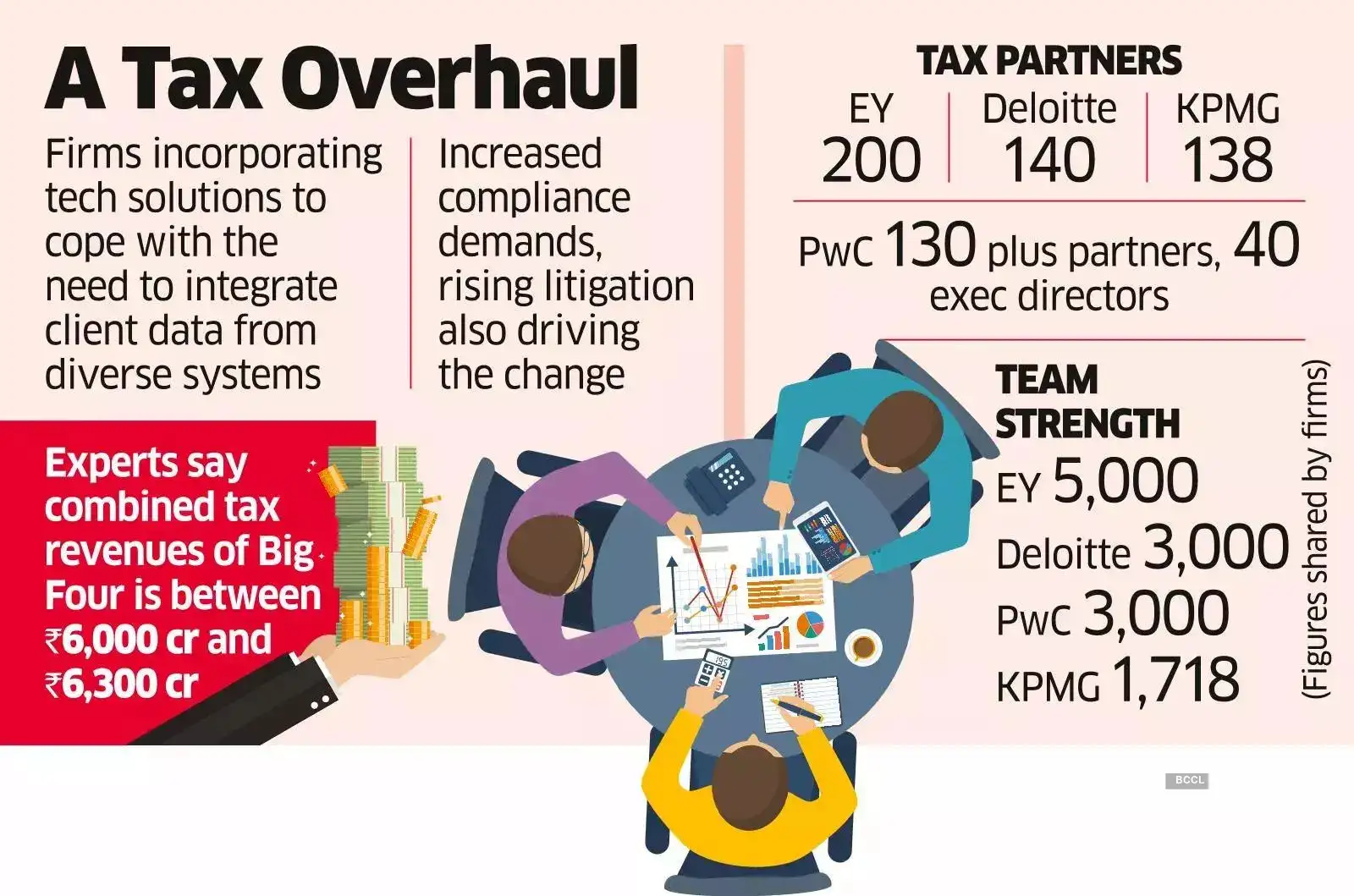
The Big 4 tax firms—Deloitte, PwC, EY, and KPMG—dominate global tax advisory, compliance, and enterprise technology services. Choosing among them requires evaluating their service delivery models, proprietary technology stacks, industr...
The Big 4 tax firms—Deloitte, PwC, EY, and KPMG—dominate global tax advisory, compliance, and enterprise technology services. Choosing among them requires evaluating their service delivery models, proprietary technology stacks, industry specializations, and fee structures. This guide breaks down the core choices these firms offer to multinational corporations, private enterprises, and high-net-worth clients.
Contents
Disclaimer: This article provides general administrative and market information regarding tax advisory practices. It does not constitute formal legal, financial, or tax advice. Organizations and individuals should consult a qualified tax attorney or certified public accountant regarding specific regulatory obligations.
Who Are the Big 4 Accounting and Tax Firms?
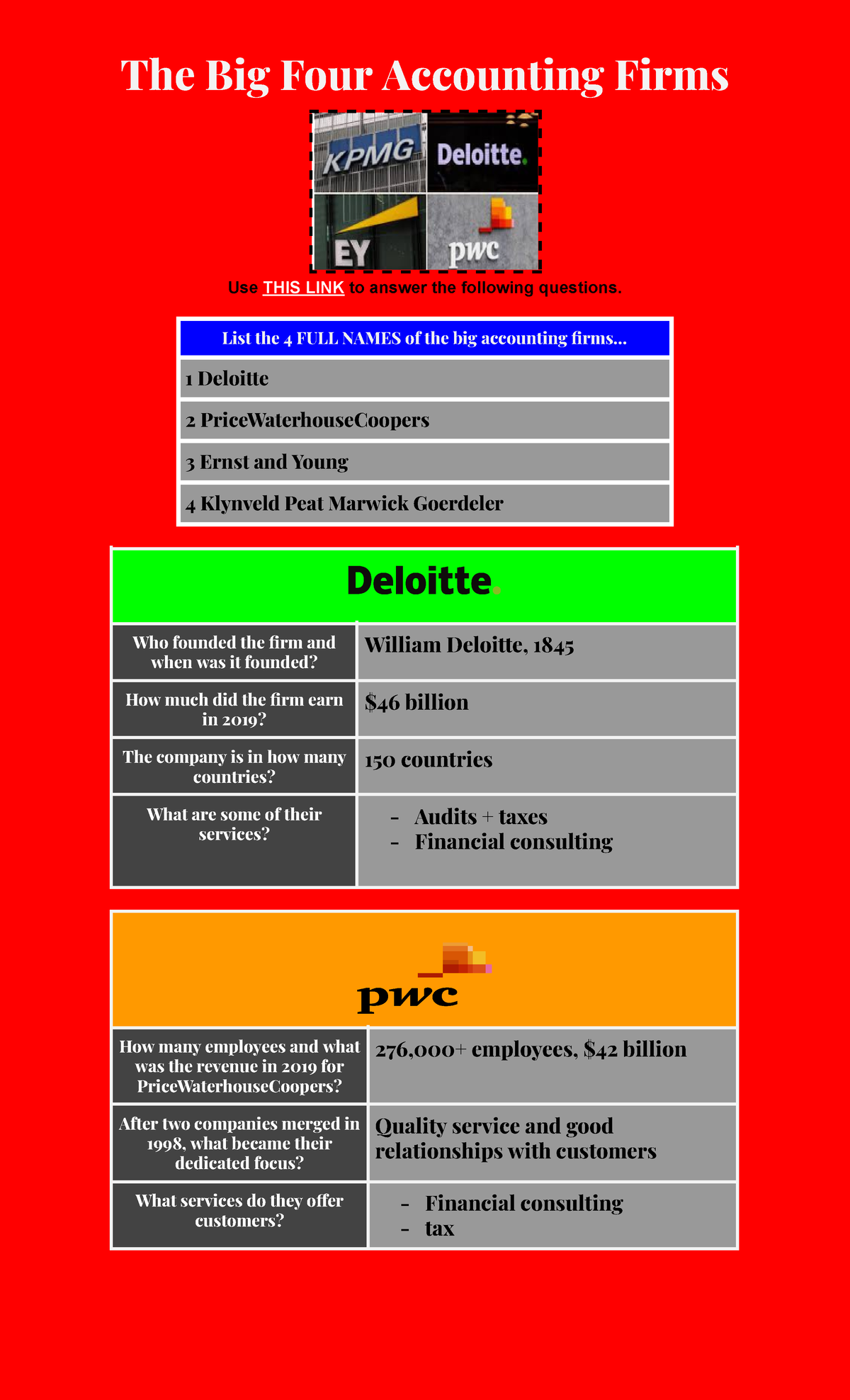
The "Big 4" refers to the four largest professional services networks in the world by revenue and global reach: Deloitte, PricewaterhouseCoopers (PwC), Ernst & Young (EY), and KPMG. While each firm offers audit, management consulting, and transaction advisory services, their tax divisions form a cornerstone of their enterprise relationships.
Together, these four firms manage complex cross-border tax strategy, corporate compliance, regulatory dispute resolution, and digital tax operations for the majority of the Fortune 500 and Global 500 companies. Each network operates as a co-operative structure of independently owned national member firms, allowing them to provide local regulatory expertise while maintaining unified global capabilities.
| Deloitte | PwC | EY | KPMG |
|---|---|---|---|
| Tax Tech & Enterprise Integration | Policy & Strategy M&A / Deals | Global Managed Services | Middle Market |
Understanding what sets each firm apart requires examining their core service categories, technological capabilities, and strategic focus areas.
Primary Tax Service Offerings: Comparing the Strategic Choices
When engaging a Big 4 firm, clients select from five primary service pillars. Each pillar addresses distinct risk profiles, operational needs, and corporate life stages.
Corporate Tax Strategy and International Structuring
Multinational corporate tax planning has shifted significantly under international regulatory initiatives, notably the OECD International Tax Co-operation guidelines and global minimum tax frameworks (Pillar Two). The Big 4 assist global businesses in aligning their operational supply chains with international tax treaties, transfer pricing rules, and local economic substance requirements.
- Transfer Pricing Analysis: Establishing defensible arm's-length pricing models for intra-group transactions, intellectual property licensing, and shared services across jurisdictions.
- Cross-Border Restructuring: Structuring mergers, acquisitions, corporate spin-offs, and supply chain reorganizations to minimize double taxation risks.
- Pillar Two Compliance: Managing the global 15% minimum effective tax rate across foreign subsidiaries, requiring consolidated reporting and specialized tax calculation models.
Tax Compliance, Managed Services, and Co-Sourcing
Corporate tax departments face shrinking internal resources alongside expanding regulatory demands. Big 4 firms provide flexible compliance arrangements ranging from standard return preparation to full operational management.
- Global Entity Management: Coordinating corporate income tax filings, business licenses, and indirect tax returns (VAT, GST, sales and use tax) across dozens of legal jurisdictions.
- Co-Sourced Tax Operations: Supplementing an in-house tax team with embedded Big 4 specialists who handle technical tasks such as income tax provision software execution or quarterly estimate modeling.
- Managed Tax Services (Outsourcing): Transferring the end-to-end execution of a company's tax function to the service provider under multi-year service level agreements (SLAs).
Tax Technology Integration and Digital Transformation
Tax functions require sophisticated integration between Enterprise Resource Planning (ERP) engines like SAP or Oracle and specialized tax calculators. The Big 4 design, deploy, and maintain custom technology architectures to automate manual data collection and provisioning.
- ERP Tax Engine Integration: Configuring automated tax determination engines (e.g., Vertex, Thomson Reuters ONESOURCE, Sovos) into core corporate finance software.
- Data Analytics and Automation: Deploying robotic process automation (RPA) and machine learning tools to ingest unstructured financial data for tax provision calculations.
- Tax Data Warehousing: Creating single-source-of-truth tax data repositories to satisfy increasingly granular audit requirements from tax authorities worldwide.
Private Wealth, Family Office, and Individual Mobility
In addition to public corporations, Big 4 firms maintain specialized practices serving high-net-worth individuals (HNWIs), family offices, corporate executives, and globally mobile workforces.
- Private Client Advisory: Structuring intergenerational wealth transfers, trust administration, charitable foundations, and estate planning strategies.
- Global Mobility Services: Managing international assignment tax policies, dual-resident tax return filings, hyper-localized shadow payrolls, and tax equalization calculations for expatriate executives.
- Pass-Through Entity Planning: Optimizing tax position structures for private equity partners, real estate syndicates, and closely held private enterprises.
Tax Controversy and Dispute Resolution
When tax authorities issue assessments, initiate audits, or dispute transfer pricing arrangements, Big 4 tax controversy practices provide defense and negotiation support.
- Audit Defense and Negotiation: Representing corporate taxpayers during administrative reviews with taxing authorities like the Internal Revenue Service (IRS).
- Advance Pricing Agreements (APAs): Securing prospective agreements between taxpayers and multiple international taxing authorities to resolve complex transfer pricing positions before disputes arise.
- Tax Dispute Litigation Support: Partnering with external legal counsel to provide economic modeling, expert witness testimonies, and factual support during tax court proceedings.
Comparative Overview of Big 4 Tax Capabilities
Each Big 4 firm maintains distinct competitive advantages rooted in strategic investments, historical strengths, and proprietary technology platforms.
| Firm Name | Primary Tax Focus & Strategic Advantage | Proprietary Tax Tech Platforms | Best Suited For |
|---|---|---|---|
| Deloitte | Industry-tailored enterprise tax transformation, end-to-end tax tech implementation, large-scale systems integration | Deloitte Intax, Cortell Enterprise Tax Platform, Tax Analytics Solutions | Large global enterprises implementing full-stack SAP/Oracle tax engine transformations |
| PwC | High-level tax policy insights, deal/M&A tax structuring, strategic regulatory forecasting | PwC Sightline, Enterprise Tax Solutions, Digital Tax Platform | Corporations navigating major M&A transactions and international regulatory shifts |
| EY | Global tax managed services, large-scale co-sourcing networks, unified cross-border mobility platforms | EY Mobility Pathway, EY Tax Web, Tax Operating Model (TOM) | Companies seeking to outsource or co-source enterprise tax operations across 100+ countries |
| KPMG | Middle-market agile compliance solutions, practical indirect tax tech, specialized industry practices | KPMG Digital Gateway, Link Enterprise, Tax Intelligence Solution | Mid-cap to enterprise clients needing cost-effective global indirect tax and regional compliance |
Engagement Models: How Clients Work with Big 4 Tax Firms
Choosing the right firm also requires selecting the correct operational engagement model. Big 4 firms structure client relationships through three primary mechanisms.
- Client Tax Operations
- Project Advisory (Ad-Hoc)
- Co-Sourced Hybrid Model (Shared Risk)
- Fully Managed Outsourced Model (SLA-Driven)
Project-Based Advisory vs. Retainer Models
For point-in-time transactions—such as restructuring an overseas entity, executing a corporate spin-off, or defending an administrative audit—clients typically engage firms on a project basis.
These engagements rely on detailed Statements of Work (SOWs) based on fixed fees or hourly rate cards. Conversely, enterprises seeking ongoing technical consultation often keep a Big 4 firm on a monthly retainer to access on-demand regulatory policy updates and technical accounting memorandums.
Co-Sourcing vs. Complete Tax Function Outsourcing
Companies routinely evaluate whether to maintain internal tax compliance teams or contract external operations.
- Co-Sourcing: The internal tax director retains control of strategy, decision-making, and primary reporting. The Big 4 partner handles specialized execution, such as foreign tax credit calculations or international statutory filings. This model mitigates fixed operational costs while preserving in-house strategic control.
- Full Outsourcing (Managed Services): The enterprise transfers all operational tax tasks, software licensing, and processing overhead to the Big 4 firm. The provider manages compliance, technical provisions, and statutory reporting under contractual SLAs.
Navigating Audit Conflicts and Independence Rules
Regulatory frameworks restrict how public companies engage Big 4 firms. Under independence guidelines managed by bodies like the U.S. Securities and Exchange Commission (SEC), an accounting firm generally cannot provide non-audit services—such as aggressive tax planning or tax technology implementation—to a public enterprise whose financial statements it audits.
Publicly traded entities must carefully manage these independence rules:
- Audit Firm Boundaries: The firm performing the independent financial statement audit faces strict limits on the non-audit tax services it can offer the company.
- Non-Audit Big 4 Selection: Public companies routinely contract a second or third Big 4 firm to handle tax advisory, transfer pricing, and digital tax software integration.
- Audit Committee Pre-Approval: All tax advisory engagements sourced from an independent auditor must receive prior approval from the client's corporate audit committee.
How to Choose the Right Big 4 Tax Firm for Your Organization
Selecting an appropriate Big 4 tax partner requires a systematic evaluation of organizational needs, geographic requirements, and regulatory boundaries. Follow this decision framework:
- Step 1: Map Tax Scope
- Step 2: Check Independence
- Step 3: Evaluate Tech
- Step 4: Assess Footprint
- Step 5: Review RFP
Step 1: Map Your Tax Scope and Technical Needs
Determine whether your primary requirement is transaction planning, ongoing compliance, global mobility, or technology implementation. If your priority is migrating core tax engines during a company-wide ERP update, prioritize firms with dedicated enterprise software integration divisions.
Step 2: Conduct Auditor Independence Checks
Cross-reference prospective tax partners against your current audit firm. If Deloitte performs your company's financial audit, evaluate PwC, EY, or KPMG for high-stakes tax advisory or technology engagements to comply with independence rules.
Step 3: Evaluate Proprietary Technology Stacks
Request practical demonstrations of each firm's proprietary tax portal and data platforms. Assess how easily their tools ingest data from your operational financial platforms (such as NetSuite, Workday, SAP, or Oracle) and how transparent their progress dashboards are for global statutory filings.
Step 4: Assess Regional and Industry Specialization Footprint
Evaluate the firm's physical presence and technical experience within your specific industry and geographic markets. A firm with deep regulatory practices in Washington, Brussels, or Singapore offers distinct advantages for cross-border policy navigation compared to a firm with standard regional offices.
Step 5: Issue a Structured Request for Proposal (RFP)
Issue an RFP detailing your data structures, global operational footprints, project milestones, and service level requirements. Compare prospective firms on fee structures (fixed-fee vs. capped hourly), key personnel retention guarantees, software integration capabilities, and client references.
Frequently Asked Questions
What are the main differences between the Big 4 tax firms?
While all four firms offer comprehensive tax services globally, their market positions differ based on core investments:
- Deloitte is known for large-scale tax technology integrations and enterprise consulting.
- PwC excels in tax policy leadership, corporate transactions, and complex M&A advisory.
- EY leads in global managed tax operations, cross-border mobility, and international compliance co-sourcing.
- KPMG offers strong agile solutions for middle-market corporate growth, practical tax automation, and specialized regional market coverage.
Why do companies hire Big 4 tax firms instead of mid-tier accounting firms?
Multinational companies turn to Big 4 firms primarily for their global coverage across more than 150 countries, specialized technical expertise, and capacity to handle complex multi-jurisdictional tax rules. Mid-tier firms offer effective localized support, but they may lack the scale, proprietary tech platforms, and deep international tax policy practices required by massive multinational conglomerates.
Can a company use the same Big 4 firm for both audit and tax services?
Yes, but with strict regulatory limitations. Under SEC and Public Company Accounting Oversight Board (PCAOB) rules, an independent auditor can provide standard, non-discretionary tax compliance services to a public audit client, provided those services are pre-approved by the audit committee. However, public companies cannot hire their independent auditor for aggressive tax positioning, valuation services, or tax technology system implementations.
How do Big 4 tax firms charge for their services?
Big 4 firms bill clients using several fee structures depending on the engagement type:
- Time and Materials (T&M): Standard hourly rate cards based on professional seniority.
- Fixed-Fee Arrangements: Set prices for routine, predictable deliverables such as annual tax returns or transfer pricing documentation.
- Value-Based or Success Fees: Capped percentage structures used in specific tax credit recovery or dispute settlements, subject to independence regulations.
- Recurring Managed Service Contracts: Multi-year, SLA-driven retainers for continuous tax function outsourcing.
Next Steps for Evaluating Tax Advisory Partners
To select the right tax advisory partner, start by conducting an internal audit of your organization's technical capabilities, upcoming software upgrades, and regulatory exposure.
- Document Internal Gaps: Identify whether your internal team requires strategic advisory, technical software implementation support, or international compliance relief.
- Review Independence Boundaries: Confirm which accounting networks are cleared to perform non-audit services for your organization.
- Issue a Targeted RFP: Request detailed proposals from at least two Big 4 firms, specifying required service levels, proprietary software requirements, and pricing structures.
- Schedule System Demonstrations: Require prospective firms to demonstrate their data integration platforms using sample company parameters to ensure technical compatibility before signing a contract.
Image Gallery