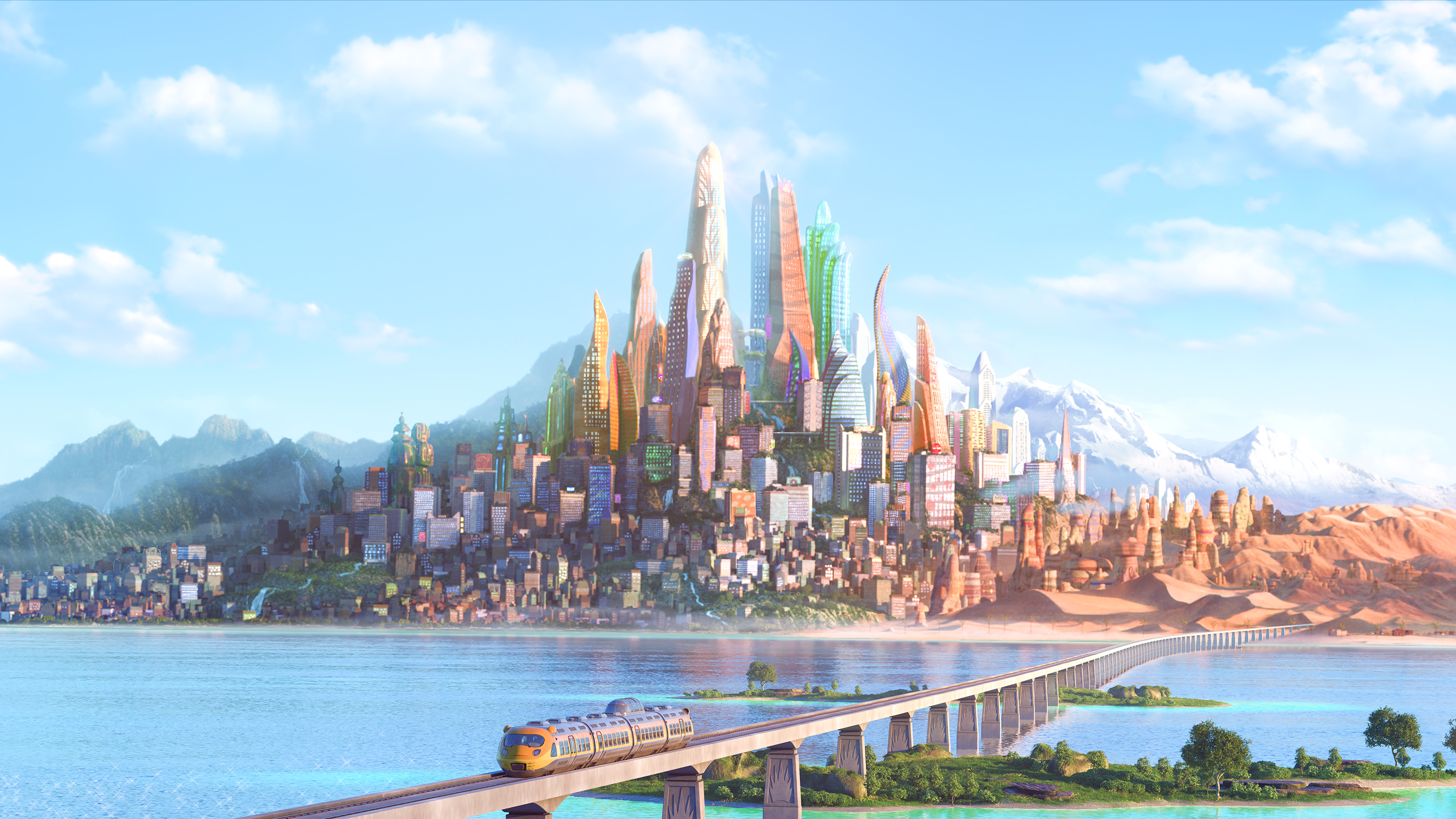
The Zootopia Train Crash Explained: Analyzing the Climactic Secret Lab Heist
The Zootopia train crash occurs during the film's third-act climax when protagonists Judy Hopps and Nick Wilde discover a secret laboratory housed within an abandoned subway car. To preserve evidence of Assistant Mayor Bellwether’s con...
The Zootopia train crash occurs during the film's third-act climax when protagonists Judy Hopps and Nick Wilde discover a secret laboratory housed within an abandoned subway car. To preserve evidence of Assistant Mayor Bellwether’s conspiracy to turn predators "savage" using Night Howler serum, they hijack the train, leading to a high-speed chase and an eventual explosive derailment that destroys the mobile lab but preserves the critical evidence needed for the final confrontation.
Contents
The Context: Uncovering the Night Howler Conspiracy
To understand why the train crash is the pivotal turning point of the film, one must first look at the "Night Howler" mystery. By this point in the narrative, Judy and Nick have realized that the predators of Zootopia are not becoming savage due to biological "reversion," but rather through deliberate poisoning. The culprit is a concentrated serum derived from the Midnicampum holicithias flower, known colloquially as the Night Howler.
The investigation leads them to an abandoned subway station—specifically the "Bucky" station—where they find a ram named Doug operating a high-tech laboratory inside a repurposed old subway car. This mobile lab allowed the conspirators to manufacture the serum and sniper-darts in transit, making it nearly impossible for the Zootopia Police Department (ZPD) to track the source of the "savage" outbreaks.
The Objective of the Heist
When Judy and Nick infiltrate the lab, their primary goal is to secure physical proof of the conspiracy. They realize that simply taking photos would not suffice to bring down high-ranking officials. They need the manufacturing equipment, the refined serum, and the projectile delivery system. Judy’s decision to "steal" the entire train car is a calculated risk: by moving the evidence directly to ZPD headquarters, they bypass the potential for the evidence to be intercepted by corrupt elements within the city’s infrastructure.
The Mechanical Sequence of the Crash
The sequence begins when Judy activates the ancient subway car, much to the surprise of Doug and his fellow henchmen, Woolter and Jesse. Because the subway car is disconnected from the automated central transit grid of Zootopia, it operates on manual controls, which Judy manages to engage despite her lack of formal engineer training.
The High-Speed Pursuit
The crash is not an accident of poor driving, but the result of a tactical struggle. As the train gains momentum, the rams attempt to board and stop it. The technical stakes are raised by the fact that the tracks are old and poorly maintained.
- The Track Switch: During the chase, the train approaches a junction. The rams attempt to force the train onto a "dead" track or cause a derailment by tampering with the switches.
- The Physical Altercation: Nick and Judy must fend off the rams while keeping the train at high speed to prevent the henchmen from gaining a foothold.
- The Speed Threshold: The old subway car was never intended for the speeds it reaches during this sequence. The friction and the volatile chemicals stored in the lab create a "powder keg" scenario.
The Final Derailment
The crash occurs at a sharp curve where the speed of the train exceeds the centripetal force the aging rails can provide. As the train rounds the bend, the wheels lift from the track. Judy and Nick are forced to jump from the vehicle just before it slams into the station wall and explodes.
The explosion is significant because it marks the destruction of the bulk of the conspirators' production capability. However, the heat and pressure of the crash also serve as a narrative "cleansing," leaving behind only the most essential pieces of evidence: the case containing the dart gun and the serum pellets.
Technical Specifications of the Evidence
The items salvaged from the crash are what eventually allow the protagonists to set their trap in the Natural History Museum. The following table illustrates the status of the evidence before and after the derailment.
| Evidence Item | Purpose | Status Post-Crash |
|---|---|---|
| Mobile Lab Car | Manufacturing and processing of serum | Destroyed in the explosion. |
| Night Howler Flowers | Raw material for the toxin | Burnt/Lost; inaccessible. |
| Refined Serum Pellets | Concentrated toxin for darts | Salvaged; used as physical proof. |
| Custom Sniper Gun | Delivery system for the serum | Salvaged; crucial for the final ruse. |
| Doug’s Phone/Records | Tracking the distribution list | Lost in the crash; force Judy to rely on the serum. |
Why the Crash Didn't Stop the Investigation
In most scenarios, the destruction of a mobile laboratory would be a victory for the villains. For Bellwether, the train crash was intended to be the ultimate "clean-up" operation. If the lab exploded, all links to her involvement would vanish. However, the crash failed to achieve its goal for three specific reasons:
1. The Preservation of the "Case"
Judy Hopps’s quick thinking allowed her to secure a briefcase containing the most damning evidence—the specialized dart gun and the blue serum pellets—before jumping from the train. While the production facility was gone, the weapon remained. This weapon was the "smoking gun" needed to link the physical attacks to a deliberate criminal act.
2. The "Blueberry" Strategic Pivot
The crash forced Judy and Nick into a corner. Without the massive evidence of the entire lab, they had to go undercover. This led to the famous "blueberry" swap. Knowing that Bellwether would likely attempt to use the recovered dart gun against them, Nick replaced the toxic serum pellets with harmless blueberries from Judy’s family farm. This pivot was only possible because they had successfully salvaged the gun from the wreckage.
3. Psychological Miscalculation
Bellwether assumed that the loss of the train would demoralize Judy and Nick. Instead, the high-stakes nature of the crash and the narrow escape solidified their partnership. By the time they reached the Natural History Museum, they were no longer a rookie cop and a cynical con artist; they were a synchronized team capable of outmaneuvering a political mastermind.
Environmental and Structural Damage to the Bucky Station
The "Bucky" station, where the crash occurred, serves as a metaphor for the forgotten history of Zootopia. As an abandoned transit hub, its structural integrity was already compromised. The crash caused a significant cave-in, effectively sealing off the old subway tunnels.
From a technical SEO and narrative analysis perspective, the choice of this location is vital. It highlights the "underbelly" of a city that prides itself on being a utopia. The fact that a conspiracy could exist in the shadows of the transit system speaks to the systemic issues Judy discovers throughout her journey.
Operational Failures of the Conspirators
The crash was also a result of the henchmen's operational failures. Doug and his team relied on intimidation and brute force rather than technical sabotage.
- Failed Decoupling: Had the rams successfully decoupled the lab car from the engine earlier in the sequence, the evidence would have remained stationary and safe.
- Over-reliance on the Tracks: They assumed that because they controlled the "route," they controlled the outcome. They did not account for Judy’s willingness to push the equipment beyond its mechanical limits.
Frequently Asked Questions
Did anyone die in the Zootopia train crash?
No fatalities were confirmed during the sequence. The primary henchman, Doug, and his associates (Woolter and Jesse) were seen attempting to stop the train but were thrown off or cleared the tracks before the final explosion. In the context of the film's rating, the crash served as a spectacle of destruction rather than a lethal event for the characters involved.
Why did Judy and Nick take the train instead of just taking the serum?
They needed to prove a large-scale conspiracy. A single pellet of serum could be dismissed as an isolated incident or planted evidence. By attempting to deliver the entire laboratory, they intended to provide the ZPD with the "factory" behind the crimes, making the evidence irrefutable and uncovering the full scope of Bellwether's operation.
What happened to the "Night Howler" flowers after the crash?
The flowers being processed in the lab were incinerated in the explosion. However, this was not the only source of the plant. As Judy discovered earlier in Bunnyburrow, the flowers are common "pest protection" plants used by farmers. The destruction of the lab flowers only stopped the manufacture of the concentrated toxin, not the existence of the plant itself.
How did the train explode if it was electric?
While many Zootopia transit systems appear electric, the old "Bucky" line featured antiquated equipment. Furthermore, the explosion was primarily chemical, not mechanical. The lab was filled with pressurized canisters, refined toxins, and processing chemicals used to concentrate the Night Howler extract. When the train derailed and the structural integrity of these containers was breached, a massive chemical fire and subsequent explosion were inevitable.
Did the crash lead directly to Bellwether's arrest?
Not directly. The crash actually destroyed most of the evidence Bellwether was worried about. However, it led to the final chase in the Natural History Museum. The crash "thinned the herd" of evidence down to the dart gun, which Judy then used to trick Bellwether into a recorded confession. Without the crash, they might have simply driven the train to the ZPD, but the narrative required the loss of the lab to force the "blueberry" finale.
Practical Takeaway for Viewers
The Zootopia train crash is a masterclass in high-stakes storytelling. It serves to raise the tension by seemingly destroying the protagonists' hard-earned evidence, forcing them to rely on their wits rather than just a "lucky find." For those analyzing the film in 2026, it remains a quintessential example of how a "failed" mission can actually lead to a more clever and satisfying resolution. If you are ever faced with a "train wreck" in your own projects, look for the "briefcase" of essential value that survived the fire—that is where your solution lies.
Image Gallery