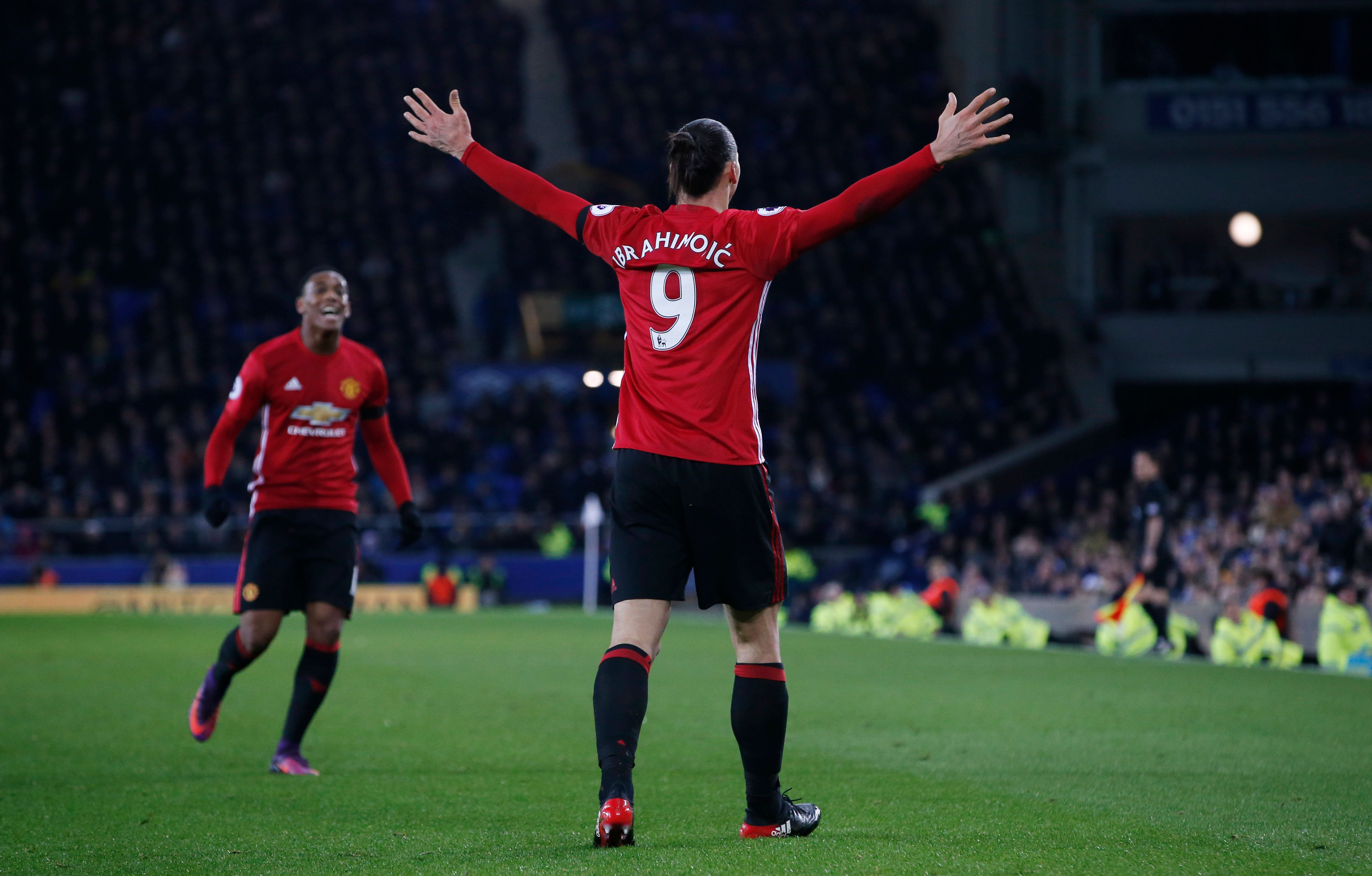
Zlatan Ibrahimović at Manchester United: Stats, Trophies, and Legacy
Zlatan Ibrahimović joined Manchester United on a free transfer in July 2016, reuniting with manager José Mourinho. Across 53 total appearances over two seasons, Ibrahimović scored 29 goals, provided 10 assists, and won three trophies—t...
Zlatan Ibrahimović joined Manchester United on a free transfer in July 2016, reuniting with manager José Mourinho. Across 53 total appearances over two seasons, Ibrahimović scored 29 goals, provided 10 assists, and won three trophies—the FA Community Shield, the EFL Cup, and the UEFA Europa League—leaving a defining cultural and competitive mark on Old Trafford.
Contents
The Arrival: Context and Expectations in the Summer of 2016
When Manchester United announced the signing of Zlatan Ibrahimović on July 1, 2016, the football world met the news with a mixture of excitement and skepticism. At 34 years old, the Swedish striker had conquered the top tiers of European football, winning league titles with Ajax, Inter Milan, Barcelona, AC Milan, and Paris Saint-Germain. However, critics questioned whether a forward in the twilight of his career could handle the physical intensity and grueling schedule of the English Premier League.
Manchester United were undergoing an extensive tactical and cultural reset. Following three turbulent post-Sir Alex Ferguson years under David Moyes and Louis van Gaal, the club hired José Mourinho to restore competitive ruthlessness. Mourinho identified Ibrahimović as the ideal leader to spearhead the attack and overhaul the squad’s mentality. Arriving on a free transfer following the expiration of his PSG contract, Ibrahimović immediately inherited the number 9 shirt, establishing himself as the focal point of United's tactical blueprint.
His arrival signaled an immediate change in squad demeanor. Ibrahimović brought elite self-assurance, technical command in hold-up play, and clinical finishing inside the penalty box. Rather than showing physical decline, his early performances silenced doubts regarding his adaptation to English football.
The 2016–17 Campaign: Dominance, Decisive Goals, and Silverware
Ibrahimović made an instantaneous impact in his competitive debut on August 7, 2016, in the FA Community Shield against Premier League champions Leicester City at Wembley Stadium. In the 83rd minute, he climbed above Wes Morgan to head home the winning goal, securing a 2–1 victory and his first piece of silverware in England.
He followed that performance by scoring on his Premier League debut away at Bournemouth with a driven 25-yard strike. A week later, he scored both goals in a 2–0 home victory against Southampton. By December 2016, Ibrahimović had firmly dispelled any doubts about his durability, carrying the club's scoring burden across four competitions.
The 2017 EFL Cup Final
The apex of Ibrahimović’s Manchester United career arrived on February 26, 2017, in the EFL Cup final against Southampton. In a hard-fought match at Wembley, Ibrahimović opened the scoring in the 19th minute with a dipping 30-yard free-kick.
After Southampton fought back to level the match at 2–2, Ibrahimović produced a decisive moment in the 87th minute. Latching onto an Ander Herrera cross, he executed a powerful header past Fraser Forster to secure a 3–2 win. The performance cemented his status as United's primary match-winner and delivered Mourinho his first major trophy at the club.
European Form and the Europa League Run
Simultaneously, United prioritized the UEFA Europa League as their clearest path back into the UEFA Champions League. Ibrahimović was instrumental in the tournament:
- Group Stage: Scored decisive goals against Zorya Luhansk to steady United's campaign.
- Round of 32: Recorded his first and only Manchester United hat-trick against Saint-Étienne at Old Trafford in a 3–0 first-leg victory.
- Round of 16 and Quarter-Finals: Provided physical presence and tactical link-up play against FC Rostov and RSC Anderlecht.
By April 2017, Ibrahimović had registered 28 goals in 46 appearances across all competitions, standing as the club’s top scorer by a wide margin.
The Anderlecht Injury: A Abrupt Turning Point
On April 20, 2017, during the second leg of the Europa League quarter-final against Anderlecht at Old Trafford, disaster struck. In the final seconds of regulation time, Ibrahimović challenged for an aerial ball and landed awkwardly, hyperextending his right knee.
Medical assessments confirmed a rupture to both his anterior cruciate ligament (ACL) and posterior cruciate ligament (PCL). At 35 years of age, an injury of this severity often meant retirement. The trauma sidelined him for the remainder of the campaign, forcing him to miss the Europa League final against his former club, Ajax, in Stockholm.
Despite his physical absence on the pitch, Ibrahimović travelled with the team to Sweden, joining the squad on crutches as Manchester United won 2–0. The victory secured the Europa League title and Champions League qualification. Ibrahimović finished the season as a Europa League winner, earning a place in UEFA's Europa League Squad of the Season.
Rehabilitation, the 2017–18 Extension, and Departure
With his original one-year contract expiring in June 2017 and an anticipated recovery time of eight to twelve months, Manchester United initially released Ibrahimović. However, the club allowed him access to the Aon Training Complex at Carrington to complete his rehabilitation under their medical supervision.
His recovery progressed significantly ahead of typical clinical timetables. Impressed by his physical condition and leadership, Mourinho and the club hierarchy signed Ibrahimović to a new one-year contract on August 24, 2017. Having yielded the number 9 shirt to summer signing Romelu Lukaku, Ibrahimović took the vacant number 10 shirt.
"I came to finish what I started." — Zlatan Ibrahimović, August 2017
He made his competitive return on November 18, 2017, coming on as a substitute against Newcastle United—just seven months after sustaining dual-ligament damage. On December 20, 2017, he scored his final goal for the club, a low free-kick against Bristol City in the Carabao Cup.
However, as the winter progressed, recurring discomfort and limitations in the joint restricted his mobility. Recognizing that his knee was not yet ready for the speed and physical demands of the Premier League, player and club held transparent discussions regarding his role. On March 22, 2018, Manchester United announced the mutual termination of his contract, enabling Ibrahimović to sign with Major League Soccer club LA Galaxy, where he quickly proved his physical longevity.
Zlatan Ibrahimović: Complete Manchester United Playing Record
The following data compiles all official, competitive appearances and goals registered by Zlatan Ibrahimović for Manchester United between August 2016 and March 2018.
| Competition | Appearances (Starts) | Goals | Assists | Yellow Cards | Red Cards |
|---|---|---|---|---|---|
| Premier League (2016–17) | 28 (27) | 17 | 5 | 7 | 0 |
| Premier League (2017–18) | 5 (1) | 0 | 0 | 0 | 0 |
| FA Cup | 1 (1) | 1 | 0 | 0 | 0 |
| EFL / Carabao Cup | 6 (5) | 5 | 0 | 1 | 0 |
| UEFA Europa League | 11 (9) | 5 | 4 | 2 | 0 |
| FA Community Shield | 1 (1) | 1 | 0 | 0 | 0 |
| Total Record | 53 (44) | 29 | 9 | 10 | 0 |
Note: Data reflects official matches across all domestic and European competitive fixtures.
Tactical Influence and Dressing Room Cultural Impact
Ibrahimović's legacy at Old Trafford extends beyond standard goal-scoring statistics. His tactical profile addressed several operational weaknesses that plagued Manchester United's squad during that transitional era.
1. Tactical Anchor in the Final Third
Under Mourinho’s 4-2-3-1 and 4-3-3 frameworks, Ibrahimović served as an elite target forward. He used his upper-body strength and spatial awareness to receive aerial clearances, absorb defensive pressure, and bring inverted wingers like Anthony Martial, Marcus Rashford, and Juan Mata into attacking phases. His presence relieved pressure on the midfield, providing an out-ball against aggressive pressing sides.
2. Mentorship and Professional Standards
Before Ibrahimović arrived, the squad was repeatedly criticized for complacency and inconsistency. Multiple players—most notably Marcus Rashford—have credited Ibrahimović with demonstrating the daily training discipline, nutrition habits, and psychological resilience required to compete at the highest tier of European sport. His presence raised expectations and self-belief across the dressing room.
3. Big-Game Efficiency
Ibrahimović demonstrated an exceptional conversion rate in high-leverage situations. He scored in the Community Shield, both domestic cup ties, the EFL Cup final, and scored crucial league winners against teams like Crystal Palace and West Bromwich Albion. His ability to deliver decisive finishes masked wider creative deficiencies within the team.
Frequently Asked Questions
How many goals did Zlatan Ibrahimović score for Manchester United?
Zlatan Ibrahimović scored 29 goals in 53 appearances for Manchester United across all competitions. In his primary season (2016–17), he scored 28 goals in 46 games, followed by one goal in seven appearances during his injury-shortened 2017–18 campaign.
Which trophies did Ibrahimović win with Manchester United?
Ibrahimović won three trophies during his tenure at Old Trafford:
- FA Community Shield (2016): Scored the late 83rd-minute winner in a 2–1 victory against Leicester City.
- EFL Cup (2016–17): Scored two goals, including an 87th-minute header, to defeat Southampton 3–2 in the final.
- UEFA Europa League (2016–17): Contributed five goals and four assists before sustaining a season-ending injury in the quarter-finals; United defeated Ajax 2–0 in the final.
What shirt numbers did Zlatan wear at Old Trafford?
During the 2016–17 season, Ibrahimović wore the number 9 shirt. After his short release and subsequent re-signing in August 2017, he took the number 10 shirt for the 2017–18 season, as incoming striker Romelu Lukaku had taken the number 9 jersey.
Why did Zlatan leave Manchester United in March 2018?
Ibrahimović and Manchester United mutually agreed to terminate his contract early because his knee was not yet performing at the physical threshold required for Premier League intensity. The departure allowed him to sign with LA Galaxy in Major League Soccer, where the physical demands and match cadence better suited the final stages of his rehabilitation.
How much did Manchester United pay to sign Ibrahimović?
Manchester United paid zero transfer fees for Ibrahimović. He arrived on a free transfer in July 2016 after his contract with Paris Saint-Germain expired at the end of the 2015–16 Ligue 1 season.
Recommended Next Steps for Football Researchers and Analysts
To evaluate Zlatan Ibrahimović's impact on Manchester United within the wider context of the post-Ferguson era:
- Compare Advanced Metrics: Contrast Ibrahimović’s 2016–17 expected goals (xG) and shot-conversion metrics with subsequent primary United center-forwards like Romelu Lukaku, Edinson Cavani, and Cristiano Ronaldo to analyze attacking efficiency under Mourinho and subsequent managers.
- Review Archival Match Footage: Study the tactical mechanics of the 2017 EFL Cup Final against Southampton and the Europa League quarter-final against Anderlecht to observe how Mourinho utilized Ibrahimović's target-man strengths to bypass midfield traps.
- Track the Post-United Trajectory: Examine his subsequent multi-season outputs at LA Galaxy and AC Milan, illustrating how his recovery from the 2017 dual-ligament knee injury allowed him to continue playing at an elite level until his retirement in 2023.
Image Gallery