Understanding Radiation Hardened Chips for Space Use
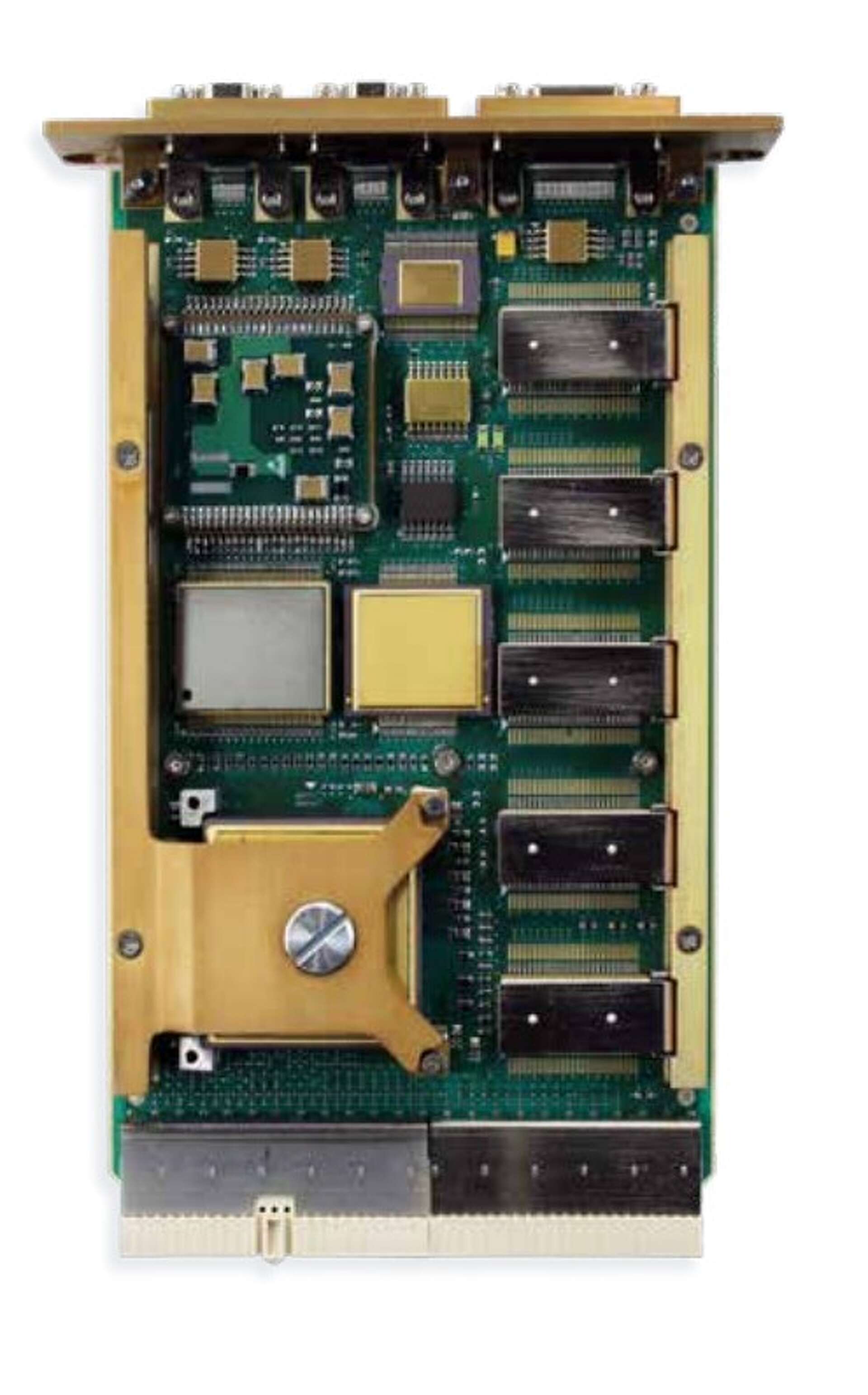
Radiation hardened chips are specialized integrated circuits engineered to withstand the harsh, ionizing radiation environments encountered in space, which can induce operational errors, permanent hardware damage, or system failure in...
Radiation hardened chips are specialized integrated circuits engineered to withstand the harsh, ionizing radiation environments encountered in space, which can induce operational errors, permanent hardware damage, or system failure in standard commercial-grade electronics. By employing specific design architectures, unique manufacturing processes, and rigorous shielding techniques, these components ensure the reliability of mission-critical systems in orbits ranging from Low Earth Orbit (LEO) to deep space exploration.
Contents
The Challenges of the Space Environment
Space is not a vacuum of radiation; rather, it is a highly energetic environment populated by trapped particles in magnetic fields, solar particle events, and galactic cosmic rays. Electronic components operating outside the protective shield of the Earth's atmosphere face significant hazards that can disrupt standard silicon devices.
Ionizing Radiation Effects
Radiation damage in semiconductors is primarily categorized into two distinct types: Total Ionizing Dose (TID) effects and Single Event Effects (SEE).
- Total Ionizing Dose (TID): This refers to the cumulative degradation of a component’s performance over its operational lifespan. As ionizing radiation passes through the gate oxides of MOSFET transistors, it traps charges, causing threshold voltage shifts, increased leakage current, and eventual functional failure.
- Single Event Effects (SEE): These are discrete, stochastic events caused by a single high-energy particle striking a sensitive node in an integrated circuit. Common types include Single Event Upset (SEU), where a bit flips in memory; Single Event Latch-up (SEL), which creates a high-current short circuit that can physically destroy the device; and Single Event Burnout (SEB), which causes catastrophic power failure in high-voltage power components.
Engineering and Design Strategies for Radiation Hardening
Engineers employ several layers of defense to mitigate these risks. Hardening is not a singular technique but a combination of material science, physical design, and architectural redundancy.
Manufacturing and Material Level
At the fabrication level, manufacturers often move away from standard bulk silicon processes. Silicon-on-Insulator (SOI) technology is a common solution, as it provides dielectric isolation between devices, effectively eliminating the risk of latch-up by preventing the formation of parasitic thyristor structures. Furthermore, specialized oxide processes are used to reduce the buildup of charge during exposure, significantly increasing TID tolerance.
Architectural Redundancy
Since radiation effects cannot be entirely eliminated, system designers focus on fault tolerance. Techniques include:
- Triple Modular Redundancy (TMR): Three identical logic circuits perform the same operation simultaneously. A "majority voter" circuit then compares the outputs; if one circuit disagrees, the system ignores it and continues with the correct data, mitigating the impact of an SEU.
- Error Correction Code (ECC) Memory: Data stored in RAM or Flash is appended with redundant bits, allowing the system to detect and correct single-bit flips—the most common outcome of a radiation strike—in real-time.
Comparison of Radiation Tolerance Approaches
| Approach | Primary Goal | Implementation Complexity | Cost Implications |
|---|---|---|---|
| Radiation Hardened (Rad-Hard) | Guaranteed survival in extreme flux | Very High | Premium pricing; long lead times |
| Radiation Tolerant (Rad-Tolerant) | Reliability for moderate environments | Moderate | Moderate cost; faster availability |
| Up-Screening COTS | High-performance commercial hardware | High (Testing) | Variable; requires rigorous screening |
| Redundancy (Software/System) | Mitigating upsets through architecture | Moderate/High | Trade-off in weight and power usage |
The Role of Up-Screening COTS Components
With the rapid evolution of terrestrial computing, the "New Space" industry often seeks to utilize high-performance Commercial Off-the-Shelf (COTS) components that were not originally designed for radiation environments. This practice involves "up-screening" or "hardening by system"—a process where engineers rigorously test large batches of commercial chips to identify those capable of meeting mission requirements.
While COTS components offer superior processing power compared to traditional space-grade chips, they lack the intrinsic TID immunity of purpose-built hardware. Mission designers must therefore balance the performance requirements of advanced payloads with the necessity of shielding and software-level fault detection.
Operational Constraints and Considerations
Choosing the right chip for a space mission involves a critical analysis of the intended trajectory and duration. A satellite in a polar orbit passing through the South Atlantic Anomaly—a region of intense radiation—requires significantly higher hardening levels than a satellite in a protected equatorial LEO orbit.
Power and Efficiency Trade-offs
Radiation hardened chips often lag behind their terrestrial counterparts in clock speed and transistor density. The specialized transistors and redundant logic take up significant physical space on the silicon die, leading to higher power consumption and heat dissipation challenges. Thermal management is critical, as thermal radiation, combined with high-energy particle bombardment, can accelerate the aging of sensitive circuits.
Verification and Certification
Verification is a standard, non-negotiable step. Components are subjected to ground-based particle accelerators (cyclotrons) that simulate space radiation. These tests measure the specific "cross-section" of the chip—a statistical probability of failure under a given flux of radiation. Engineers must ensure these test results align with the expected mission-life radiation dose.
Frequently Asked Questions
Why not just use lead shielding for all electronics?
Lead and other heavy-metal shielding protect against some radiation, but they are heavy, increasing launch costs. Furthermore, high-energy cosmic rays can cause "bremsstrahlung" (braking radiation) when striking dense shielding, creating secondary particle showers that can be more damaging to internal electronics than the original radiation.
What is the difference between Rad-Hard and Rad-Tolerant?
Rad-Hard components are manufactured to survive high doses and have guaranteed performance metrics for extreme environments. Rad-Tolerant parts are typically designed for less harsh environments, using standard manufacturing with minor modifications, and are often less expensive, serving as a middle ground for shorter-duration missions.
Can software fix radiation-induced damage?
Software can mitigate the symptoms of radiation, such as correcting a bit flip via ECC or resetting a processor after a latch-up event. However, software cannot reverse the physical, cumulative damage caused by TID (Total Ionizing Dose) that degrades transistors over years.
How do I decide between COTS and Rad-Hard parts?
The decision depends on the risk appetite of the mission and the criticality of the payload. If the system is a primary flight computer for a multi-year deep-space mission, industry-standard Rad-Hard components are usually mandatory. For short-term experimental CubeSats, COTS parts combined with robust error-checking software are frequently the preferred, cost-effective choice.
Does 2026 technology offer better shielding?
By 2026, the industry has shifted toward advanced "system-level hardening." While raw silicon performance is improved, the focus has moved to intelligent power management and software-defined reliability, allowing designers to extract more performance out of standard nodes while keeping the system resistant to transient upsets.
Next Actions for Mission Design
When selecting hardware, begin by defining the Total Ionizing Dose expected over the entire mission life, including margins for solar cycle fluctuations. Review the manufacturer’s Data Sheet for the "Radiation Guarantee" and cross-reference this with the specific mission orbit's particle flux. For complex systems, prioritize a combination of Rad-Hard core processors and COTS-based high-performance data processing units, utilizing a robust watchdog timer to monitor system health and trigger automated reboots if a latch-up event occurs. Consult with radiation testing laboratories to validate component batches before integration, ensuring that the specific lot of chips intended for flight meets the mission’s safety envelope.
Image Gallery