How Non-Owner Auto Insurance Works: A Comprehensive Guide for 2026
Non-owner auto insurance provides liability coverage for drivers who do not own a vehicle but occasionally operate borrowed or rented cars. It pays for medical bills and property damage you cause to others in an at-fault accident, acti...
Non-owner auto insurance provides liability coverage for drivers who do not own a vehicle but occasionally operate borrowed or rented cars. It pays for medical bills and property damage you cause to others in an at-fault accident, acting as a secondary layer of protection that supplements the vehicle owner’s primary insurance policy.
Contents
In the evolving mobility landscape of 2026, where car-sharing services and long-term rentals are increasingly common, non-owner auto insurance (sometimes called non-owners insurance) has become a vital financial tool. It bridges the gap between having no insurance at all and the high cost of a full personal auto policy. Understanding its mechanics is essential for anyone who drives but chooses not to deal with the overhead of vehicle ownership.
What is Non-Owner Auto Insurance?
Non-owner auto insurance is a specific type of liability-only policy designed for licensed drivers who do not own a car and do not have regular access to a vehicle owned by someone in their household. Because the insurance company isn't covering a specific piece of machinery—which can be stolen, damaged by hail, or totaled in a crash—the premiums are typically significantly lower than standard car insurance.
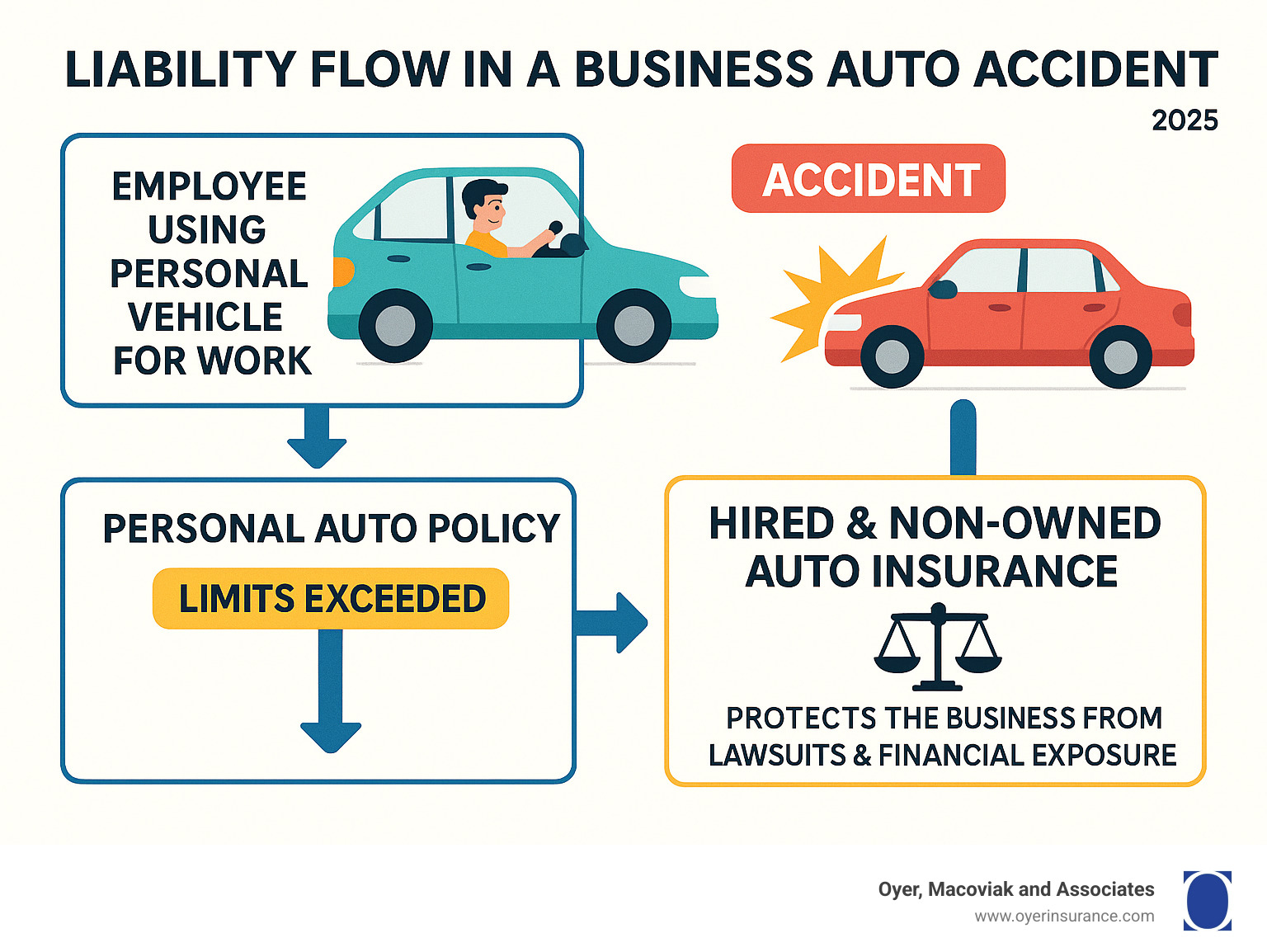
The primary purpose of this policy is to protect your personal assets. If you are driving a friend's car or a rental and cause a major accident, the costs can easily exceed the limits of the vehicle owner's primary policy. Without a non-owner policy, you could be held personally liable for the remaining tens or hundreds of thousands of dollars in damages.
In 2026, as urban centers continue to prioritize transit and micro-mobility, more drivers are opting for "insurance for the person" rather than "insurance for the car." This policy follows the driver, providing a consistent baseline of liability protection regardless of whose vehicle they happen to be operating.
Core Coverage Components
A standard non-owner policy is fundamentally built around Liability Coverage. It is important to distinguish what is included from what is excluded to avoid a "coverage gap" during a claim.
Bodily Injury Liability
This covers the medical expenses, lost wages, and legal fees of other people injured in an accident where you are at fault. In most jurisdictions, state law mandates a minimum level of bodily injury coverage. However, as medical costs in 2026 continue to rise, experts generally recommend limits far exceeding the state minimums (e.g., $100,000 per person/$300,000 per accident).
Property Damage Liability
This pays for repairs to other people's property. This usually refers to the other driver's car, but it also applies to buildings, fences, or public infrastructure. If you lose control of a borrowed SUV and crash into a storefront, your non-owner property damage liability would kick in after the car owner's primary limits are exhausted.
Uninsured/Underinsured Motorist Coverage (UM/UIM)
Many non-owner policies allow you to add UM/UIM coverage. This protects you if you are hit by a driver who has no insurance or insufficient insurance to cover your medical bills. This is particularly valuable in 2026, as a significant percentage of drivers remain underinsured relative to the cost of modern vehicle repairs and healthcare.
Medical Payments (MedPay) or Personal Injury Protection (PIP)
Depending on the state (particularly in "no-fault" states), you may be able or required to add MedPay or PIP. This covers your own medical expenses regardless of who caused the accident.
What is NOT Covered?
The most critical takeaway for any driver is that non-owner insurance does not include physical damage coverage.
- Collision Coverage: It will not pay to fix the car you are driving.
- Comprehensive Coverage: It will not cover theft, fire, or vandalism of the borrowed vehicle.
- Towing or Labor: These are tied to the specific vehicle's policy, not the non-owner's policy.
Who Needs Non-Owner Auto Insurance?
While not every occasional driver needs this policy, certain scenarios make it a strategic or legal necessity.
1. Frequent Car-Share and Rental Users
If you use services like Zipcar, Turo, or traditional rental agencies more than a few times a year, the costs of "collision damage waivers" and liability add-ons at the counter can be astronomical. A non-owner policy provides your own liability shield, often at a fraction of the annual cost of rental agency daily fees.
2. Borrowing Vehicles Regularly
If you frequently borrow a neighbor's truck or a friend's sedan, you are relying on their insurance. If they have low "state minimum" limits, you are exposed. A non-owner policy provides an excess layer of protection, ensuring a friendship doesn't turn into a legal battle after a fender-bender.
3. Maintaining Continuous Coverage
Insurance companies view a "gap" in coverage as a sign of high risk. If you sell your car and plan to be car-free for a year, your premiums will likely skyrocket when you eventually buy another vehicle. Keeping a non-owner policy in place maintains your "continuous insurance" status, which can save you thousands of dollars in the long run.
4. License Reinstatement (SR-22 or FR-44)
Drivers who have had their license suspended due to a DUI, reckless driving, or driving without insurance often need to file an SR-22 or FR-44 form with their state's DMV. If these drivers don't own a car, a non-owner policy is the cheapest way to fulfill the financial responsibility requirement and get back on the road.
How the Claims Process Works: Primary vs. Secondary
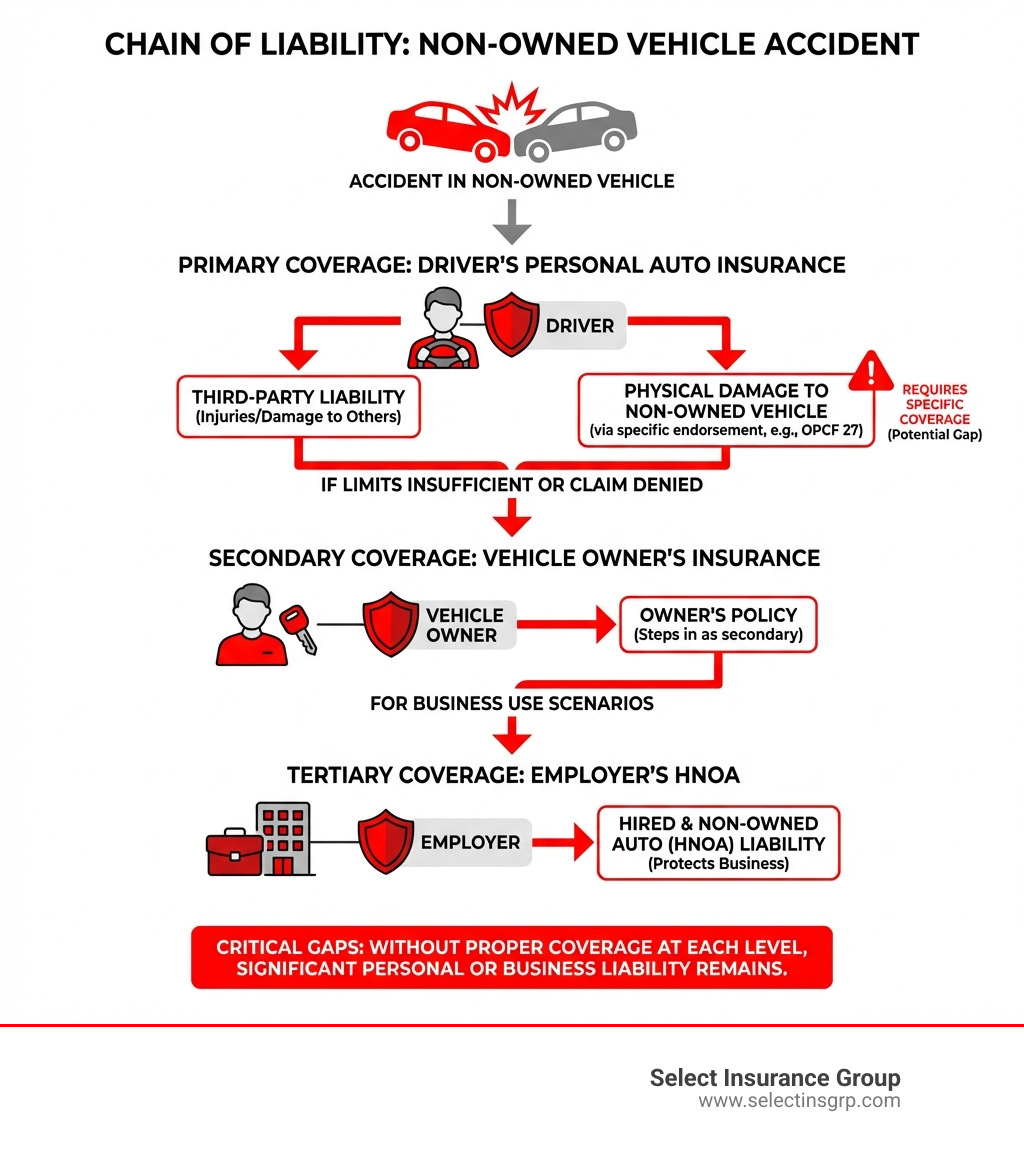
In the world of insurance, "insurance follows the car." This means the vehicle owner's insurance is always the primary coverage. Your non-owner policy is secondary.
Imagine you borrow a friend’s car. They have $25,000 in property damage liability. You cause an accident that results in $40,000 of damage to a luxury electric vehicle.
- Your friend's insurance pays the first $25,000.
- Your non-owner insurance pays the remaining $15,000.
- Without the non-owner policy, you would be personally sued for that $15,000 difference.
| Feature | Standard Auto Insurance | Non-Owner Auto Insurance |
|---|---|---|
| Primary Object Covered | A specific vehicle (VIN) | The individual driver |
| Liability Coverage | Included | Included |
| Collision/Comprehensive | Available/Required if financed | Not Available |
| Household Vehicles | Covers all cars in household | Excludes household vehicles |
| Average Cost | Higher ($1,500 - $3,000+ /year) | Lower ($200 - $600 /year) |
| SR-22 Compatibility | Yes | Yes |
| Rental Car Coverage | Usually transfers | Liability only transfers |
Eligibility and Strict Exclusions
Non-owner insurance is not a "loophole" for cheap insurance if you have regular access to a car. Insurance companies have strict eligibility criteria to prevent adverse selection.
The Household Exclusion
You generally cannot buy a non-owner policy if there is a car owned by someone in your household (spouse, roommate, parent). Insurance companies assume that if a car is in your driveway, you have "regular access" to it. In these cases, the carrier will require you to be added as a rated driver on the existing household policy.
The Regular Use Exclusion
If you borrow the same car every day for work, this is considered "regular use." Non-owner policies are intended for occasional use. If an investigation reveals you were using the vehicle daily, the insurer may deny a claim based on the regular use exclusion clause.
Business and Commercial Use
Most non-owner policies are strictly for personal use. If you are driving a non-owned vehicle for delivery services, ride-hailing, or corporate business, the non-owner policy will likely not apply. Dedicated commercial policies or "delivery endorsements" are required in those 2026 gig-economy scenarios.
Cost Factors and Buying Tips
As of 2026, the cost of a non-owner policy depends on several variables, though it remains one of the most affordable insurance products.
- Driving Record: Just like standard insurance, accidents, and tickets will drive up the cost.
- Location: Rates in high-density areas like New York or Chicago are higher than in rural zones.
- Coverage Limits: Opting for $500,000 in liability instead of $50,000 will increase the premium, though the jump is often surprisingly small.
- Frequency of Filing: If you require an SR-22 filing, expect a "filing fee" and a higher risk-tier premium.
To purchase a policy, you often cannot use the standard "instant quote" tools designed for VIN-based policies. You may need to call an agent at major carriers like Progressive, Geico, or State Farm. Be prepared to confirm that you do not own a vehicle and that no vehicles are registered to your address.
Common Mistakes to Avoid
- Assuming it covers the rental car body: Many drivers decline the rental company's Loss Damage Waiver (LDW) thinking their non-owner policy covers it. It does not. You still need a credit card with rental benefits or the LDW to cover the car's physical body.
- Buying it when you own a "junked" car: Even if your car is sitting on blocks in the backyard and doesn't run, if the title is in your name, you are technically a vehicle owner and may be ineligible for a non-owner policy.
- Forgetting to update the address: If you move into a house where others own cars, your non-owner policy may become invalid.
Frequently Asked Questions
Does non-owner insurance satisfy the legal requirement to drive?
Yes, in terms of liability. Every state requires drivers to have a minimum amount of liability insurance. If you do not own a car, a non-owner policy fulfills this legal mandate, allowing you to legally drive borrowed or rented vehicles.
Can I get non-owner insurance with a learner's permit?
Generally, no. Most insurance companies require a valid, permanent driver’s license to issue a non-owner policy. Permit holders are usually covered under the policy of the car owner who is supervising their driving.
Will non-owner insurance cover me if I drive a U-Haul or moving truck?
Most non-owner policies exclude "large commercial vehicles" or "vehicles with a load capacity over a certain weight" (often 10,000 lbs). You should check the specific policy language, but typically, you will need to purchase the supplemental insurance offered by the truck rental company.
Is non-owner insurance available for motorcycles?
Standard non-owner policies are for four-wheeled passenger vehicles. Non-owner motorcycle insurance is much rarer and often requires a specialized high-risk or enthusiast carrier.
Does it cover international driving?
Most U.S.-based non-owner policies only provide coverage within the United States, its territories, and Canada. If you are renting a car in Europe or South America in 2026, you will almost certainly need to purchase local insurance.
Final Recommendation
If you are a car-free urbanite or a frequent traveler who relies on borrowed wheels, non-owner auto insurance is an essential safety net. It provides high-value liability protection for a relatively low annual cost. Before purchasing, verify that you meet the "no household vehicle" requirement and ensure your liability limits are high enough to protect your 2026 savings and assets.
Image Gallery