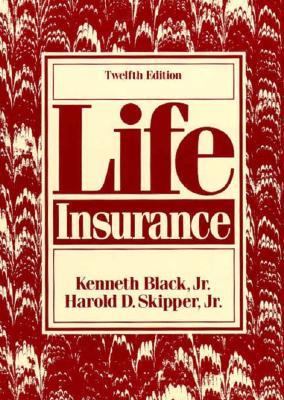
Why the 1987 Text "Life Insurance" by Harold D. Skipper and Kenneth Black Still Matters in 2026
The 1987 edition of Life Insurance, authored by Kenneth Black, Jr. and Harold D. Skipper, Jr., remains a foundational pillar of actuarial and risk management literature because it established the definitive theoretical framework for mo...
The 1987 edition of Life Insurance, authored by Kenneth Black, Jr. and Harold D. Skipper, Jr., remains a foundational pillar of actuarial and risk management literature because it established the definitive theoretical framework for modern policy structures. While subsequent editions updated regulatory data, the 11th edition (1987) captured the critical transition from traditional whole life products to the complex, interest-sensitive financial instruments that define the industry today.
Contents
The Authors: Architects of Modern Insurance Education
To understand why the 1987 text carries such weight in 2026, one must first recognize the influence of its authors. Kenneth Black, Jr. was a titan at Georgia State University, an institution that became a global hub for risk management education under his leadership. His co-author, Harold D. Skipper, Jr., expanded the text’s reach into international markets and regulatory theory.
In 1987, the insurance industry was reeling from a decade of high inflation and the introduction of new, flexible products like Universal Life. Black and Skipper did more than just list these changes; they provided the rigorous mathematical and legal scaffolding needed to understand how these products functioned. For professionals in 2026, revisiting the 1987 text is akin to a physicist returning to Newton—it is where the core "laws" of the modern life insurance mechanism were first synthesized into a unified academic theory.
The 1987 Paradigm Shift: From Protection to Investment
The mid-1980s represented a "big bang" moment for life insurance. Before this era, life insurance was largely seen as a static death benefit. However, the 11th edition was published at a time when the "unbundling" of insurance components became the industry standard. This text was among the first to comprehensively explain the separation of the protection element (mortality risk) from the savings element (cash value).
The Rise of Universal Life and Interest-Sensitive Products
In 1987, the industry was moving away from the "black box" of traditional whole life. Black and Skipper’s 1987 text provided the necessary deep-dive into:
- Transparency in Pricing: How mortality charges, expense loads, and interest credits interact in real-time.
- Flexible Premiums: The actuarial implications of allowing policyholders to skip or adjust payments.
- Market-Linked Risks: The early frameworks for variable life insurance, which are the direct ancestors of the sophisticated indexed products we use in 2026.
Why the 1987 Principles Endure in 2026
Even as we utilize AI-driven underwriting and blockchain-based policy administration in 2026, the underlying logic of the "Black and Skipper" 1987 text remains unassailable. The industry has changed its tools, but it has not changed its physics.
1. The Human Life Value Concept
The text remains the definitive source on the Human Life Value (HLV) concept. While modern software calculates HLV in milliseconds, Black and Skipper’s explanation of the economic worth of an individual’s future earning capacity remains the gold standard. They argued that life insurance is not just a contract but a mechanism for "capitalizing" a human life, a perspective that is essential for high-net-worth estate planning and corporate key-person coverage today.
2. The Law of Large Numbers and Actuarial Certainty
In the 1987 text, the authors meticulously detailed the mathematical foundations of risk pooling. In 2026, big data allows for more granular "micro-segmentation" of risk, but the Law of Large Numbers remains the bedrock. The 1987 edition provides a "pure" look at these statistics before the advent of modern predictive modeling, offering practitioners a clearer understanding of how mortality tables (like the then-current 1980 CSO Table) are constructed.
3. Legal and Ethical Frameworks
The legal principles articulated in 1987—Insurable Interest, Utmost Good Faith (Uberrimae Fidei), and the Principle of Indemnity—have not aged. In fact, as life insurance products become more complex and integrated with broader financial planning, these ethical and legal guardrails are more important than ever to prevent the "gambling" aspects that the authors warned against.
Technical Depth: The Mechanics of the 1987 Text
The 11th edition is known for its "technical density." It does not shy away from the math of net level premiums or the complexities of non-forfeiture values.
Actuarial Mathematical Rigor
Black and Skipper broke down the Present Value of Future Benefits (PVFB) versus the Present Value of Future Premiums (PVFP). This relationship is what determines a company's reserves. In 2026, while regulators have moved toward "Principles-Based Reserving" (PBR), the foundational "Formulaic Reserving" concepts explained in 1987 are still required learning for anyone seeking to understand the solvency and stability of a life insurer.
Comparison of Life Insurance Environments: 1987 vs. 2026
| Feature | 1987 Context (11th Edition) | 2026 Current Context |
|---|---|---|
| Primary Regulation | State-level (NAIC 1980 CSO Tables) | PBR (Principles-Based Reserving) |
| Product Innovation | Universal Life, Variable Life | IUL, Private Placement, AI-Underwriting |
| Interest Rate Environment | Transitioning from high 1980s rates | Stabilizing post-2020s volatility |
| Distribution | Career agents and brokerage houses | Omnichannel, Digital, and Hybrid Advisors |
| Underwriting | Medical exams and fluid samples | Accelerated (Data-driven, non-invasive) |
| Primary Goal | Family protection & tax-deferred growth | Estate liquidity & multi-generational wealth |
The Enduring Value for Professionals and Academics
For a CLU (Chartered Life Underwriter) or a ChFC (Chartered Financial Consultant) candidate in 2026, the 1987 text serves as a "Rosetta Stone." Most modern textbooks summarize these concepts, but they often omit the "why" behind the "what."
Educational Legacy
Many of the current leaders in the insurance industry were trained using the 11th edition. Its structure—moving from the economic basis of life insurance to the legal nature of the contract, and finally to the mathematics of the industry—has become the standard syllabus for university-level insurance courses worldwide.
Troubleshooting Complex Claims and Policy Design
When a legacy policy issued in the late 20th century comes across a desk today, the 1987 text is the manual for understanding its original intent. It explains how those specific contracts were "bundled" or "unbundled," how the expense loads were originally calculated, and how the "Guaranteed Minimum Interest Rates" (which were much higher in 1987 than in the early 2020s) affect the long-term solvency of the block of business.
Practical Application: How to Use the 1987 Text Today
If you are a financial professional or an insurance attorney in 2026, do not treat the 1987 text as a museum piece. Instead, use it as a reference for:
- Defining Policyowner Rights: The text provides an exhaustive look at the "Bundle of Rights" associated with policy ownership, including assignment and beneficiary designations.
- Explaining Taxation Logic: While specific tax codes have changed (e.g., the TAMRA and DEFRA updates of the 1980s), the logic behind the "Inside Build-up" and the "Seven-Pay Test" is perfectly captured in this edition.
- Risk Management Theory: Use the chapters on "The Nature of Risk" to train new associates on the difference between speculative risk and pure risk—a distinction often blurred in the modern era of crypto-linked insurance products.
Frequently Asked Questions
Why shouldn't I just read the 15th edition or a 2026 update?
While newer editions (some updated by Gene A. Morton and others) provide current tax tables and regulatory updates, the 1987 edition is widely considered the most "theoretically pure" version. It captures the foundational shift in the industry with a depth of explanation that newer, more "streamlined" textbooks sometimes lack.
Is the math in the 1987 text still accurate for 2026?
Yes. The actuarial formulas for calculating net premiums and reserves are based on universal mathematical principles. While the "inputs" (mortality rates, interest rates) have changed, the "formulas" (the logic of compound interest and probability) remain identical.
How did the 1987 text influence modern Universal Life policies?
Black and Skipper were among the first to provide a rigorous academic treatment of Universal Life (UL). They explained the mechanics of the "Type A" (level death benefit) and "Type B" (increasing death benefit) options, which are still the two standard choices for UL policies in 2026.
Is this book useful for legal researchers?
Absolutely. Many court cases involving life insurance contract disputes rely on the definitions of "Utmost Good Faith" and "Material Misrepresentation" as they were codified and explained in textbooks of this era. It serves as "expert testimony" in printed form.
Where can I find the 1987 edition in 2026?
Because of its status as a "classic," the 11th edition is often held in university libraries (especially those with Risk Management programs) and is frequently available through professional insurance archives or as a prioritized "legacy text" in digital academic repositories.
Expert Recommendation for 2026
For those seeking to master the intricacies of life insurance, the 1987 text by Harold D. Skipper and Kenneth Black is more than a history lesson; it is a technical manual for the soul of the industry. Professionals should use it to ground their modern knowledge in timeless theory. If you are designing complex wealth transfer strategies or litigating a multi-million dollar claim in 2026, the 11th edition provides the foundational logic that newer, more superficial resources cannot match. Keep a copy on your shelf as the ultimate "first principles" guide.
Image Gallery