The Oldest Plane Still Flying: The 1909 Blériot XI and Its Aviation Legacy
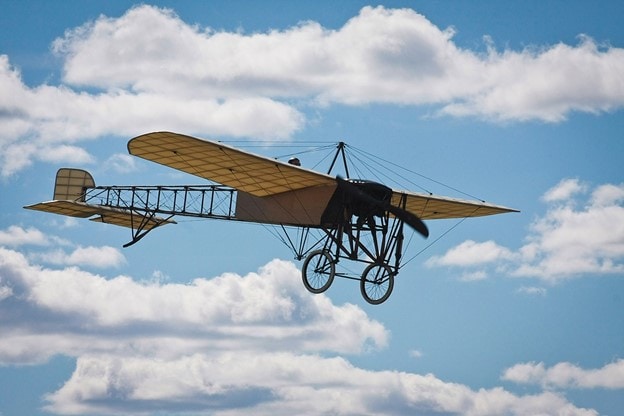
The world’s oldest operational aircraft still taking to the skies is the 1909 Blériot XI, preserved and maintained by the Shuttleworth Collection in Bedfordshire, England. Powered by its original three-cylinder Anzani engine, this pion...
The world’s oldest operational aircraft still taking to the skies is the 1909 Blériot XI, preserved and maintained by the Shuttleworth Collection in Bedfordshire, England. Powered by its original three-cylinder Anzani engine, this pioneering monoplane demonstrates early flight physics firsthand, serving as a vital bridge between experimental pioneering and modern aerospace engineering.
Contents
Identifying the World's Oldest Flying Aircraft
When evaluating early aircraft, historians distinguish between static museum artifacts, modern reproductions, and original airframes that remain airworthy. The title of the world's oldest original, airworthy aircraft belongs to a 1909 Blériot XI (manufactured with serial number 14 and registered as G-AANG) maintained by the Shuttleworth Collection at Old Warden Aerodrome in the United Kingdom.
Built in late 1909 by French aviation pioneer Louis Blériot, this specific aircraft was bought as scrap by industrialist Richard Shuttleworth in 1935. After meticulous restoration, it returned to the air and continues to perform short hops and low-altitude demonstration flights during favorable weather conditions.
Early Aviation Timeline (1903-1914)
- 1903: Wright Flyer (First powered, controlled flight - Static)
- 1909: Blériot XI (First English Channel crossing - AIRWORTHY)
- 1911: Curtiss Model D (Early pusher configuration - Airworthy)
- 1914: Sopwith Tabloid / Early WWI Biplanes (Airworthy / Rebuilt)
A second 1909 Blériot XI (Serial Number 56, registered as N60094) resides at the Old Rhinebeck Aerodrome in New York State. This aircraft is recognized as the oldest flying airplane in the Western Hemisphere. Powered by an original Y-shaped Anzani engine, it remains operational for flight demonstrations, making the Blériot XI design the undisputed holder of airworthy longevity records worldwide.
Technical Specifications and Engineering of the 1909 Blériot XI
The Blériot XI was not merely a proof-of-concept; it was one of the world's first commercially successful mass-produced airplanes. Its structural design set standard layout norms—a forward-mounted engine, tractor propeller, main fuselage frame, and tail-mounted control surfaces—that dominated aviation design for generations.
Blériot XI Basic Layout:
- Propeller
- Anzani Engine
- Open Fuselage Truss
- Castoring Gear
- Wing Warping Controls
- Tail Unit
Airframe and Materials
The fuselage relies on an open wooden box-truss frame constructed primarily of ash wood, reinforced with cross-bracing diagonals made of steel piano wire. Turnbuckles allow mechanics to adjust wire tension, providing structural stiffness while maintaining extreme lightweight efficiency. The wings feature ash spars and spruce ribs covered in unvarnished linen, which was stretched tight and sealed using liquid cellulose dopes or varnish.
Propulsion System: The Anzani 3-Cylinder Engine
Early Blériot XI models were powered by an engine designed by Italian engineer Alessandro Anzani. The motor is a air-cooled, three-cylinder engine operating on a total-loss oil system, delivering approximately 22 to 25 horsepower at 1,200 RPM.
| Specification | Value / Description |
|---|---|
| Engine Type | 3-Cylinder W-Fan / Y-Radial Air-Cooled |
| Horsepower Output | 22 - 25 hp @ 1,200 RPM |
| Total Weight (Empty) | Approx. 507 lbs (230 kg) |
| Wingspan | 25 ft 7 in (7.8 m) |
| Maximum Speed | Approx. 47 mph (76 km/h) |
| Flight Controls | Wing Warping (Lateral), Elevator/Rudder |
Because the engine relies on atmospheric intake valves (opened by cylinder vacuum rather than mechanical pushrods) and lacks an engine throttle, power output is managed primarily by adjusting the ignition cutout switch. The engine lubricates its moving components using pure castor oil, which sprays outward during operation and requires constant monitoring by ground crews.
Flight Controls and Mechanics
Unlike modern aircraft that utilize hinged ailerons on the trailing edge of the wings for roll control, the 1909 Blériot XI uses wing warping. Cables linked to a central control column pull down on the trailing edges of the flexible wooden wing structure, twisting the wooden wing frame to alter lift dynamics.
The flight deck controls feature a central joystick mechanism known as a "cloche" (bell), which operates both the wing warping cables and the elevator, alongside a foot-operated rudder bar for directional yaw control. The landing gear incorporates main wheels mounted on castoring forks with elastic rubber cord suspension, allowing the wheels to swivel like shopping cart casters to absorb crosswind landing loads on unpaved fields.
Comparison of the World’s Earliest Airworthy Aircraft
To understand where the 1909 Blériot XI stands in aviation history, it helps to compare it against other early aircraft maintained in operational status.
| Aircraft Name | Year of Origin | Operational Location | Engine Type | Airworthiness / Operational Limits |
|---|---|---|---|---|
| Blériot XI (Serial 14) | 1909 | Shuttleworth Collection (UK) | 3-Cylinder Anzani (Original) | Active; limited to low-altitude straight-line hops in calm wind (< 5 knots). |
| Blériot XI (Serial 56) | 1909 | Old Rhinebeck Aerodrome (USA) | 3-Cylinder Anzani Y-type (Original) | Active; performs brief hop demonstrations during summer airshows. |
| Curtiss Model D "Pusher" | 1911 (Reconstruction) | Various Museums (USA) | Curtiss V8 or modern replica | Active in select historical flight demonstrations; high pilot skill required. |
| Blackburn Monoplane | 1912 | Shuttleworth Collection (UK) | Rotary Engine (70 hp Gnome) | Active; oldest flying British aircraft; strict weather and maintenance limits. |
| Sopwith Pup | 1916 | Shuttleworth / Historic Flights | Le Rhône 80 hp Rotary | Active; capable of full circuit flights and basic aerobatic maneuvers. |
| Avro 504K | 1918 | Shuttleworth Collection (UK) | Clerget 130 hp Rotary | Active; fully airworthy for complete airfield traffic pattern displays. |
Operational Challenges: Maintaining a 100+ Year-Old Aircraft
Keeping a 1909 aircraft operational presents unique engineering, regulatory, and safety challenges. Maintaining airworthiness for aircraft over a century old requires balancing historical authenticity with safety standards.
Wood and Fabric Degradation
Wood is an organic, anisotropic material subject to dry rot, warping, and moisture retention. The ash frame and spruce wing structures require constant climate-controlled storage and structural non-destructive testing. The stretched linen skin degrades under ultraviolet light exposure and must be completely replaced every few decades using authentic period-accurate stitching and sealing techniques.
Mechanical Wear and Castor Oil Lubrication
The original 3-cylinder Anzani engine uses a total-loss lubrication system. Castor oil is pumped through the crankcase and exhausted directly into the slipstream. This creates two distinct maintenance problems:
- Engine Wear: Without recirculating oil filters, internal engine tolerances degrade rapidly, requiring frequent engine teardowns and custom fabrication of replacement bearings and piston rings.
- Fire Hazards: Unburnt castor oil mixes with exhaust heat on the unshielded wood-and-fabric airframe, demanding thorough degreasing after every run to prevent fires.
Maintenance Cycle for Early Rotary/Radial Aircraft:
- Pre-Flight Inspection
- Wire Tension Check
- Engine Run & Temp Check
- Short Hop Flight
- Degreasing & Mechanical Teardown
Flying Characteristics and Pilot Skill
Flying a Blériot XI requires specialized techniques that differ sharply from modern pilot training:
- Low Control Response: Wing warping provides minimal roll torque compared to modern hinged ailerons. Pilots must anticipate banked turns well in advance.
- Zero Throttle Precision: Engine speed cannot be continuously throttled down. Pilots blip the ignition switch on and off during approach to control descent rate.
- Strict Weather Envelope: Due to low wing loading and delicate structural wire bracing, the aircraft can safely fly only in wind speeds under 5 knots (5.7 mph) with minimal turbulence.
Why the Flying Blériot XI Matters to Modern Aviation
The continued flight of the 1909 Blériot XI is not merely a novelty for airshows; it serves critical historical, educational, and technical purposes in aerospace engineering.
Historical & Engineering Impact
- Proved Practicality: Blériot's 1909 Channel crossing proved long-distance overwater flight was commercially feasible.
- Monoplane Precedent: Monoplane layout laid the groundwork for modern commercial airliner configurations.
- Dynamic Preservation: Flying preserved airframes captures acoustic, mechanical, and aerodynamic data lost in static displays.
1. Living History vs. Static Displays
A static aircraft hanging in a museum frame offers a visual record of shape and dimension, but it hides the sensory reality of early flight. Operating an original engine reveals the acoustic profile, vibration frequencies, exhaust odors, and mechanical flexing inherent to pioneer-era flight. Maintaining airframe functionality preserves the intangible heritage of early aviation skills for historians and engineers.
2. Historical Paradigm Shift: The 1909 English Channel Crossing
On July 25, 1909, Louis Blériot piloted his Blériot XI across the English Channel from Calais, France, to Dover, England, in 36 minutes. This milestone proved that geographic barriers like oceans and channels no longer provided absolute military or logistical isolation. It shifted international perception of aircraft from experimental toys to military and commercial tools.
3. Structural and Control Evolution
The Blériot XI established key design standards:
- Tractor Configuration: Placing the propeller at the nose pulling the airframe forward provided better stability than pusher configurations (which placed the engine behind the pilot).
- Single-Deck Monoplane Efficiency: While biplanes dominated World War I due to structural strength limits of early wood, the Blériot XI proved the aerodynamic efficiency of the monoplane layout—the dominant design choice for modern airliners and transport aircraft.
Frequently Asked Questions
Is the original 1903 Wright Flyer still flying?
No. The original 1903 Wright Flyer made four brief flights on December 17, 1903, was damaged by a gust of wind while parked, and was never flown again. It is preserved as a static artifact at the Smithsonian Institution's National Air and Space Museum in Washington, D.C. All flying Wright Flyers today are modern reproductions.
How fast does the 1909 Blériot XI fly?
The 1909 Blériot XI has a cruising speed of approximately 35 to 40 miles per hour (56 to 64 km/h) and a maximum speed of about 47 mph (76 km/h). Its stall speed is close to its operating speed, requiring calm air conditions for safe flight.
What is the oldest military aircraft still in active operational service?
The oldest military aircraft design still in active, front-line service is the Boeing B-52 Stratofortress, which entered operational service with the United States Air Force in 1955. Updated variants of the B-52 are scheduled to remain in operational service past 2040.
Why do flying Blériot XI aircraft only make "hops" rather than full flights?
Because of the extreme age of the original wooden structures, delicate internal wire bracing, and low engine power, flight demonstrations are usually restricted to "hops"—taking off, flying low along the runway vector at altitudes of 10 to 20 feet, and landing straight ahead without high-stress banked turns.
How are replacement parts handled for 100-year-old aircraft?
Under aviation authority regulations for historic aircraft, replacement parts must be hand-fabricated using original drawings, materials, and joinery techniques. Specialized woodworkers and vintage engine machinists reproduce components such as ash spars, linen coverings, and custom brass engine valves to preserve original airworthiness certifications.
Practical Recommendations for Aviation Enthusiasts
For those seeking to experience pioneer-era aviation firsthand:
- Visit the Shuttleworth Collection (Bedfordshire, UK): Plan visits around scheduled Evening and Flying Display events held between May and October. The 1909 Blériot XI is brought out for flight attempts during calm weather conditions.
- Attend Old Rhinebeck Aerodrome Demonstrations (Rhinebeck, NY, USA): Old Rhinebeck conducts weekend airshows throughout the summer season featuring their original 1909 Blériot XI alongside early biplanes and rotary-engine aircraft.
- Consult Authentic Historical Flight Registers: Before traveling to see vintage aircraft, consult official registry logs (such as the UK Civil Aviation Authority or US FAA registry databases) to verify whether specific historical aircraft remain listed in active airworthy status.
Image Gallery