How Does Edu Admission Work: A Complete Guide to Higher Education Admissions
Higher education admission works through a systematic evaluation process where university admissions committees review an applicant’s academic achievements, personal background, and potential fit for a degree program. Institutions eval...
Higher education admission works through a systematic evaluation process where university admissions committees review an applicant’s academic achievements, personal background, and potential fit for a degree program. Institutions evaluate academic transcripts, standardized test results, essays, recommendation letters, and extracurricular engagement to determine admission decisions for undergraduate and graduate applicants.
Contents
The Philosophy of Higher Education Admissions
The higher education admission process varies significantly depending on the institution type, degree level, and geographic region. However, modern post-secondary admissions generally operate under one of two primary evaluation philosophies: criteria-based selection or holistic review.
Criteria-Based Admissions
Criteria-based admissions rely primarily on quantifiable academic metrics, such as cumulative grade point average (GPA), class rank, and standardized test scores. Many large public university systems utilize minimum index scores or cutoffs to automatically admit qualified applicants who meet established baseline thresholds.
In criteria-based systems, admissions officers focus on objective performance markers to handle high volumes of applications efficiently. If an applicant meets the minimum GPA and standardized test requirements—and has completed the prerequisite high school or undergraduate coursework—admission is typically granted without an extensive qualitative review.
Holistic Review Admissions
Selective private colleges, top-tier public universities, and specialized graduate programs utilize a holistic admission review framework. Under holistic review, no single grade, test score, or metric guarantees admission or automatically triggers a rejection. Instead, the admissions committee evaluates the student as a whole person within the context of their environment and opportunities.
Admissions committees examining a candidate holistically evaluate:
- Academic Rigor: The difficulty of coursework taken relative to what was available at the student’s institution (e.g., AP, IB, Dual Enrollment, or Honors courses).
- Personal Character and Voice: Revealed through personal statements, supplemental essays, and teacher recommendations.
- Impact and Engagement: The depth of involvement in extracurricular activities, leadership positions, employment, community service, or family obligations.
- Institutional Fit: How the applicant’s specific academic interests, research goals, and background align with the university’s institutional mission and department capacity.
Core Components of the College Application Package
Whether submitting an application for undergraduate study or an advanced degree, applicants must compile a standardized portfolio of documents. Admissions teams use these components to verify identity, assess academic preparedness, and measure overall potential.
- The Admission Application Portfolio
- Academic Metrics
- Official Transcripts
- Standardized Test Scores
- Course Rigor (AP/IB/Honors)
- Qualitative Evidence
- Personal Essays / SOP
- Recommendation Letters
- Extracurricular Portfolio
- Academic Metrics
1. Official Transcripts and Coursework
The academic transcript is universally considered the most critical element of any higher education application. Admissions officers evaluate transcripts to assess consistent academic performance over time, overall GPA, grade trends (such as steady improvement), and the rigor of the curriculum. For undergraduate admissions, counselors evaluate whether students completed core requirements in mathematics, laboratory sciences, English, social studies, and foreign languages. For graduate admissions, departments inspect upper-level undergraduate GPA, specific prerequisite courses, and major-field academic performance.
2. Standardized Testing Requirements
Standardized test scores provide institutions with a common benchmark to compare students from different educational systems and grading standards.
- Undergraduate Testing: Historically dominated by the SAT and ACT. While many institutions adopted test-optional or test-blind policies, several major public and private universities continue to require standardized tests or utilize them for merit scholarship distribution.
- Graduate Testing: Graduate programs frequently require specialized assessments such as the GRE (Graduate Record Examination), GMAT (Graduate Management Admission Test), LSAT (Law School Admission Council), or MCAT (Medical College Admission Test).
Testing policies generally fall into three categories:
- Required: Applicants must submit valid test scores for evaluation.
- Test-Optional: Applicants choose whether to submit scores. Scores are evaluated if submitted, but candidates are not penalized if omitted.
- Test-Blind / Score-Free: Admissions committees do not review test scores under any circumstances, even if submitted.
3. Personal Statements and Supplemental Essays
Essays allow applicants to speak directly to the admissions committee in their own voice. The primary essay—such as the main personal statement on The Common Application—typically focuses on personal growth, identity, overcoming adversity, or intellectual curiosity.
Many selective institutions also require institution-specific supplemental essays. These prompts often ask candidates to explain why they wish to attend that specific university, how they intend to contribute to campus life, or why they selected a specific major.
4. Letters of Recommendation
Letters of recommendation provide external validation of a student’s academic abilities, work ethic, personal integrity, and classroom engagement.
- Undergraduate Applications: Typically require one recommendation from a school counselor and one or two recommendations from core academic teachers (e.g., 11th or 12th-grade instructors in English, STEM, or Social Studies).
- Graduate Applications: Emphasize recommendations from academic mentors, research directors, or professional supervisors who can speak directly to the candidate’s analytical capacity, research skills, and field-specific capabilities.
5. Extracurricular Portfolio and Resume
Admissions committees do not simply seek a list of activities; they look for sustained commitment, leadership growth, initiative, and meaningful impact. Rather than accumulating superficial involvement in dozens of clubs, successful applicants generally demonstrate deep engagement in a few core areas, such as varsity athletics, artistic endeavors, community activism, student government, research projects, or paid employment.
Application Pathways and Deadlines
Higher education institutions offer several application cycles. The selection of an application pathway affects submission deadlines, decision notification dates, and the binding nature of the acceptance.
- Application Decision Pathways
- Early Decision (Binding Commitment)
- Early Action (Non-Binding Early)
- Regular Decision (Standard Window)
- Rolling Admission (First-Come Basis)
Early Decision (ED)
Early Decision is a binding contract. A student may apply Early Decision to only one institution. If accepted under ED, the candidate is legally and ethically bound to enroll at that institution and must immediately withdraw all applications submitted to other colleges. Early Decision applications are typically due in early November, with admissions decisions released in mid-December. Some institutions offer Early Decision II, which has a January deadline but maintains the same binding commitment.
Early Action (EA)
Early Action allows students to apply early—usually by November 1 or November 15—and receive an admissions decision by January or February. Unlike Early Decision, Early Action is non-binding. Students admitted under Early Action are not required to commit immediately and have until the national response date (typically May 1) to make their final enrollment decision. Restrictive Early Action (REA) or Single-Choice Early Action (SCEA) variants prohibit applicants from applying early to other private institutions, though the offer remains non-binding.
Regular Decision (RD)
Regular Decision is the traditional non-binding application cycle. Applications are typically due between January 1 and February 1, with notification dates occurring in late March or early April. Regular Decision gives applicants time to submit their first-semester senior year grades and updated standardized test scores.
Rolling Admission
Under rolling admission, institutions evaluate applications continuously as they arrive within an open application window, rather than evaluating all candidates after a single deadline. Decisions are rendered within several weeks of application completion. Because spaces in the entering class fill as applications are processed, applying early in the rolling window increases the likelihood of securing admission and financial aid allocation.
Comparing Admission Decision Pathways
The decision pathway chosen directly impacts application timing, binding obligations, and strategic positioning:
| Decision Pathway | Typical Deadline | Notification Window | Binding Commitment? | Key Advantages | Primary Considerations |
|---|---|---|---|---|---|
| Early Decision (ED) | Nov 1 – Nov 15 | Mid-December | Yes | Shows highest level of demonstrated interest; may offer higher acceptance rates. | Cannot compare financial aid offers; mandatory enrollment upon acceptance. |
| Early Action (EA) | Nov 1 – Nov 15 | Jan – Feb | No | Secures early admission offers without restricting choices or financial aid comparison. | Requires complete application package early in the final academic year. |
| Regular Decision (RD) | Jan 1 – Feb 15 | Late March / April | No | Allows inclusion of senior fall grades; full flexibility to compare financial aid. | Larger applicant pool; highly competitive evaluation environment. |
| Rolling Admission | Sept – Priority Deadlines | 3–6 weeks post-submission | No | Flexible timelines; fast decision turnaround; early application maximizes seat availability. | Popular programs and housing options fill quickly as the cycle progresses. |
How Admissions Committees Process and Evaluate Files
Behind closed doors, the review process moves through several structured stages to ensure fair and thorough evaluation.
- File Clearance: Verified docs & transcript audit
- Regional Read: Initial score by geographic reader
- Secondary Review: Verification by senior officer
- Full Committee: Final vote and yield management
Stage 1: Document Processing and Verification
Once an application is submitted through platforms like the Common Application, Coalition Application, or institution-specific portals, the admissions operations team verifies receipt of all required materials. Transcripts, letters of recommendation, official test reports, and English proficiency exams (such as TOEFL or IELTS for international applicants) are linked to the student profile. Incomplete files are held until all mandatory documents arrive.
Stage 2: The First Read (Regional Territory Manager)
Institutions assign admissions officers to specific geographic regions or territories. The regional reader understands the local high schools, regional grading scales, school profile context, and local educational environment. The reader evaluates the applicant’s academic performance against the opportunities available at their specific school, reads the essays, reviews the recommendations, and assigns internal rating scores across multiple categories (academic, extracurricular, personal, and overall).
Stage 3: Secondary Review and Committee Discussion
At selective institutions, applications undergo a secondary review by a senior admissions director or a second reader. If both readers agree on the decision (Admit, Deny, or Waitlist), the decision may be finalized. If there is a disagreement or if the applicant is on the margin between admission and rejection, the file goes to the Admissions Committee.
During committee deliberations, admissions officers present candidates to a panel of peers. The committee discusses the candidate's strengths, contextual factors, program capacities, and institutional priorities before taking a vote.
Stage 4: Yield Management and Waitlists
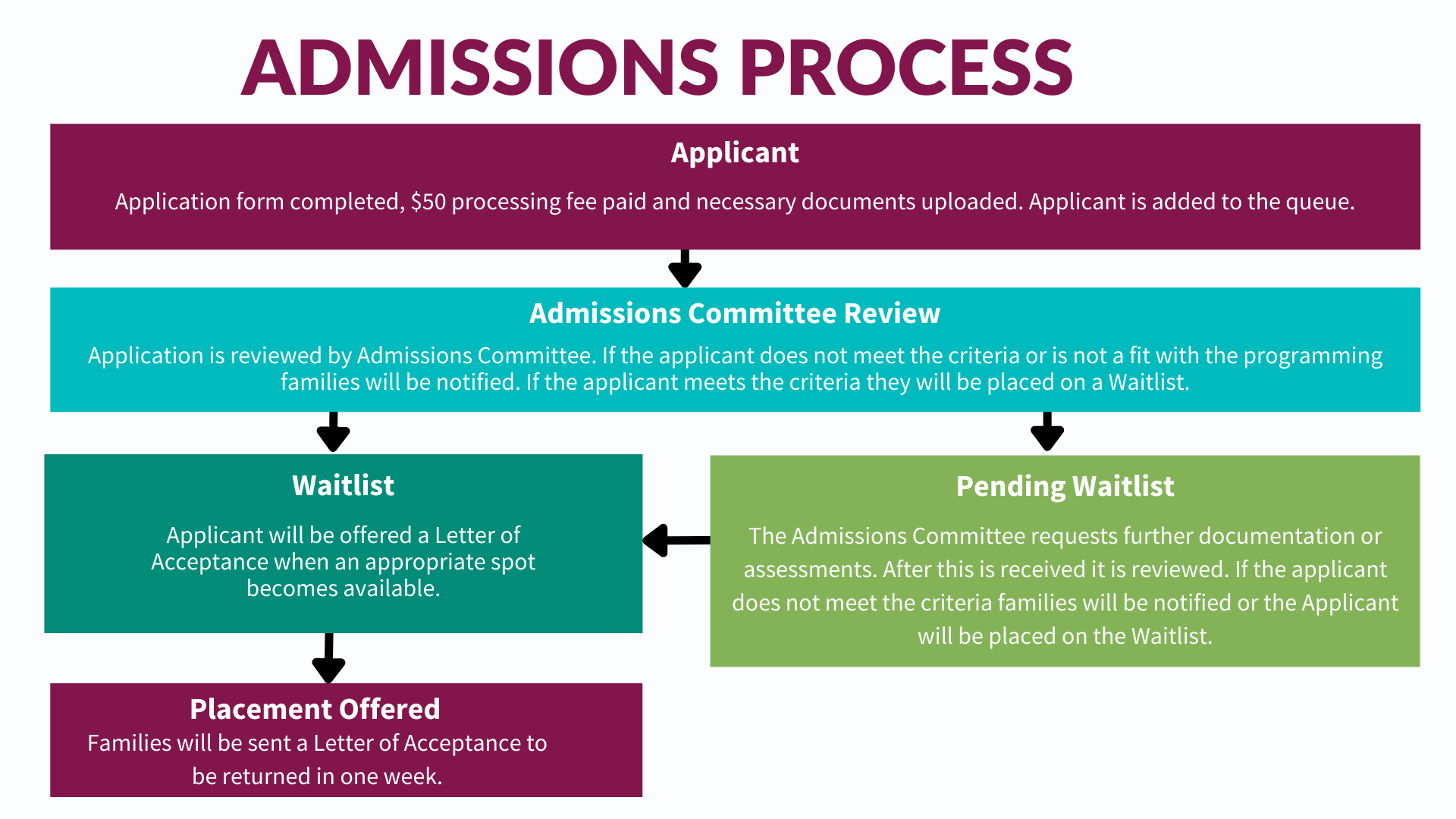
Admissions offices must manage their yield rate—the percentage of admitted students who ultimately choose to enroll. To ensure an entering class neither exceeds institutional capacity (housing, faculty ratio, lab space) nor falls short of tuition targets, colleges use waitlists.
Applicants placed on the waitlist are qualified for admission but are not offered a seat initially. If the number of accepted students who enroll is lower than projected by May 1, colleges offer waitlisted applicants admission to fill the remaining seats.
Special Admission Frameworks
International Student Admissions
International applicants navigating higher education admissions must complete additional verification steps:
- Credential Evaluation: Transcripts from foreign educational systems must often be evaluated by credential agencies, such as World Education Services (WES), to translate grades and qualifications into standard equivalents.
- Language Proficiency: Non-native English speakers must demonstrate English proficiency through standardized exams such as TOEFL, IELTS, or Duolingo English Test.
- Financial Verification: U.S. federal regulations require international students seeking student visas (such as F-1 visas) to provide official financial documentation demonstrating their ability to cover tuition and living expenses.
Transfer Admissions
Transfer admission paths are designed for students who have earned college credit at a community college or another post-secondary institution. Transfer reviews focus heavily on post-secondary academic performance rather than high school records. Admissions officers evaluate articulation agreements, course equivalencies, and cumulative college GPA to determine how many credits will transfer toward the target degree.
Financial Aid Integration (Need-Blind vs. Need-Aware)
The financial aid application process runs parallel to the admissions review, but institutions handle financial background differently:
- Need-Blind Admissions: The admissions committee reviews candidates without knowledge of their financial background or ability to pay tuition. Admissions decisions are made independently of financial aid requests.
- Need-Aware (or Need-Sensitive) Admissions: The institution considers an applicant’s financial need as a factor when making admissions decisions, particularly for students on the margin of acceptance or during late-stage committee evaluations.
To apply for financial aid in the U.S., domestic students submit the Free Application for Federal Student Aid through Federal Student Aid, while many private institutions also require the CSS Profile via College Board to allocate institutional grant aid.
Common Admissions Pitfalls and How to Avoid Them
Even academically qualified candidates can compromise their chances of admission by committing common application errors.
1. Submitting Generic Supplemental Essays
Admissions committees easily recognize reused essays where the institution's name has simply been swapped out. Supplemental essays should reference specific academic majors, research centers, campus programs, or unique faculty offerings that explain why the candidate is a strong fit for that specific institution.
2. Discrepancies in Self-Reported Academics
Many institutions allow students to submit Self-Reported Academic Records (SRAR). Entering incorrect course names, miscalculating grades, or omitting low marks leads to discrepancies when final official transcripts are audited in the summer. Major discrepancies can result in revoked admission offers.
3. Missing Deadlines and Letter Provider Delay
Admissions systems strictly enforce submission deadlines. Waiting until the final hours before a deadline can lead to technical glitches, payment processing delays, or missing recommendation letters. Applicants should confirm that teachers and counselors have submitted their letters weeks in advance of the institutional deadline.
Strategic Checklist for Applicants
To navigate higher education admissions successfully, follow this structured roadmap:
- Build a Balanced College List: Select 8 to 12 institutions categorized into Safety/Likely (high probability of admission), Target/Match (aligns with average GPA/test profiles), and Reach (highly selective or slightly above current academic profile).
- Track Key Deadlines: Construct a calendar detailing submission deadlines, financial aid priority dates, and scholarship application cutoff dates for every target institution.
- Request Recommendations Early: Approach teachers and counselors at least four to six weeks before your target deadline, providing them with a resume and a summary of your key academic accomplishments.
- Refine Essays Through Multiple Drafts: Begin drafting personal statements early. Focus on authentic voice, clear narrative structure, and meticulous proofreading.
- Complete Financial Aid Requirements On Time: File the FAFSA and CSS Profile as soon as application windows open to maximize eligibility for institutional grants, state aid, and federal loans.
Frequently Asked Questions
What is the difference between holistic admission and criteria-based admission?
Criteria-based admission relies primarily on cutoffs for GPAs and standardized test scores to determine entry, commonly used by large public universities. Holistic admission evaluates the whole applicant, including course rigor, essays, recommendation letters, extracurricular contributions, and personal context alongside academic scores.
Does applying Early Decision increase the chances of getting admitted?
Applying Early Decision often shows higher acceptance rates statistically, primarily because it demonstrates binding interest to the institution. However, the ED applicant pool typically includes highly qualified candidates, recruited athletes, and legacy applicants, which can skew rates. Early Decision should only be used if the institution is an absolute first choice.
What happens if an applicant is deferred or waitlisted?
A deferral moves an early applicant (Early Decision or Early Action) into the Regular Decision pool to be evaluated again alongside the broader applicant pool. A waitlist decision occurs during Regular Decision; it means the candidate is qualified, but the college must wait until after the May 1 enrollment deadline to see if open seats remain in the entering class.
Are standardized test scores mandatory for all university applications?
No. While several major institutions require standardized test scores (SAT, ACT, GRE, or GMAT), many post-secondary institutions maintain test-optional policies. In a test-optional environment, applicants choose whether to submit scores based on whether those scores strengthen their overall academic profile.
Can an offer of admission be revoked after it has been accepted?
Yes. Colleges issue offers of admission contingently based on the successful completion of ongoing coursework and acceptable conduct. An offer can be revoked if a student’s final senior-year grades decline significantly, if they fail to graduate, if they engage in disciplinary misconduct, or if application fraud is discovered during transcript verification.
Image Gallery