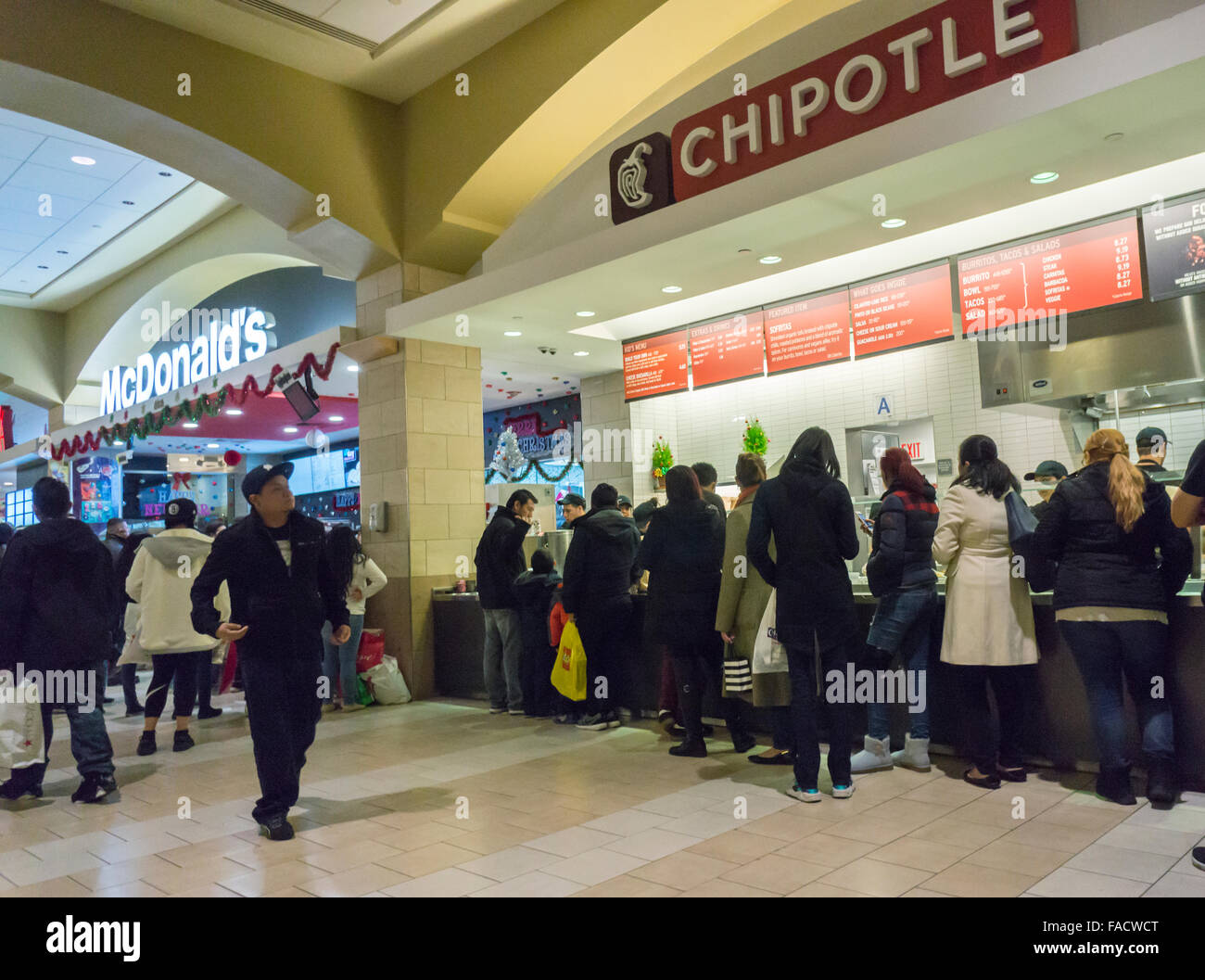
Understanding the McDonald’s and Chipotle Relationship: A Corporate History
The relationship between McDonald’s and Chipotle Mexican Grill is rooted in a significant period of strategic expansion during the late 1990s and early 2000s, during which McDonald’s acted as a major investor and eventually the majorit...
The relationship between McDonald’s and Chipotle Mexican Grill is rooted in a significant period of strategic expansion during the late 1990s and early 2000s, during which McDonald’s acted as a major investor and eventually the majority owner of the burrito chain. Today, the two entities operate as entirely independent, publicly traded corporations with distinct business models, brand identities, and operational strategies.
Contents
The Origins of the Partnership
In 1998, McDonald’s Corporation made its first minority investment in Chipotle Mexican Grill, which was founded by Steve Ells in Denver, Colorado, just five years earlier. At the time, McDonald’s was aggressively seeking to diversify its portfolio beyond its core hamburger business. The "Made for You" kitchen system and the company's robust supply chain expertise were seen as assets that could help scale the rapidly growing fast-casual concept.
For McDonald’s, the investment was part of a larger diversification strategy that included stakes in other chains such as Donatos Pizza and Aroma Café. The goal was to capitalize on the emerging "fast-casual" segment, which offered higher-quality ingredients and a more refined dining experience than the traditional quick-service model.
Expansion Under Corporate Ownership
Following the initial investment, McDonald’s increased its stake in Chipotle consistently. By 2001, McDonald’s had become the majority owner, holding a significant controlling interest in the company. During this period of ownership, Chipotle underwent a period of rapid physical growth.
McDonald’s provided the capital necessary for Chipotle to expand its footprint from a regional player to a national chain. This era saw the store count jump from fewer than 20 locations at the time of the initial investment to nearly 500 locations by the time of the divestiture. McDonald’s provided operational support, real estate acquisition expertise, and supply chain logistics, which helped streamline Chipotle’s growth while allowing it to maintain its "Food with Integrity" brand positioning.
The Strategic Divestiture
By 2006, the strategic alignment between the two companies had shifted. McDonald’s management, under then-CEO Jim Skinner, determined that the company needed to refocus on its core brand to drive global performance. The diversification experiment—which had involved multiple non-burger acquisitions—was deemed a distraction from the primary mission of serving high-volume, quick-service food globally.
In October 2006, McDonald’s completed its full divestiture of Chipotle through a highly successful initial public offering (IPO). McDonald’s sold its remaining shares, effectively severing the corporate ties between the two entities. Since the IPO, Chipotle has operated as a completely autonomous company, governed by its own board of directors and executive leadership team.
Operational and Business Model Differences
While the two companies share a common history, their modern operations differ significantly, reflecting the evolution of the fast-food and fast-casual landscapes.
| Feature | McDonald’s (Quick Service) | Chipotle (Fast Casual) |
|---|---|---|
| Service Model | Transactional, high-speed, drive-thru focused | Assembly line, customizable, dine-in/takeout |
| Supply Chain | Highly centralized, global standardization | Sourcing-focused, "Food with Integrity" branding |
| Menu Complexity | Extensive, varied, regional variations | Minimal, focused on limited core ingredients |
| Growth Strategy | Global franchising model | Primarily corporate-owned store model |
McDonald’s relies heavily on a franchising model where the vast majority of its thousands of global locations are owned and operated by independent entrepreneurs. This allows for massive, standardized global scale. Conversely, Chipotle has historically maintained a strict corporate-ownership model for its restaurants. This allows the company to maintain tighter control over food preparation, ingredient sourcing, and the customer experience, which is central to its value proposition.
Long-Term Impacts of the Relationship
The influence of the McDonald’s era on Chipotle remains a subject of analysis by industry experts. Supporters of the partnership note that without the capital infusion and real estate prowess of McDonald’s, Chipotle might never have achieved its national scale so efficiently. The early involvement of a global titan helped professionalize Chipotle’s operations and created the infrastructure required to transition from a startup to a publicly traded corporation.
Critics at the time, however, feared that McDonald’s "fast-food" culture would dilute Chipotle’s commitment to high-quality ingredients and sustainable sourcing. Ultimately, Chipotle managed to retain its distinct brand identity post-divestiture, largely by doubling down on the marketing of its ingredient quality, which became a key differentiator in the fast-casual market throughout the 2010s and 2020s.
Frequently Asked Questions
Does McDonald’s still own any part of Chipotle? No. McDonald’s fully exited its position in Chipotle in 2006 through a stock buyback and subsequent public offering. There is no ongoing equity stake, board overlap, or operational partnership between the two companies.
Why did McDonald’s sell Chipotle? McDonald’s sold Chipotle to streamline its business operations. The company determined that focusing on its core brand, improving the customer experience in its existing restaurants, and expanding its global footprint was more profitable than managing a diverse portfolio of unrelated food brands.
Did McDonald’s change the food at Chipotle during their ownership? While McDonald’s provided operational support and logistical expertise, Chipotle maintained its core menu and sourcing philosophy. The "Food with Integrity" initiative began during the time McDonald’s was an investor, and the company was largely allowed to operate with significant autonomy regarding its menu and food quality standards.
Are there any shared supply chain connections between the two? No. While they may occasionally share food suppliers in a general industry sense (e.g., purchasing from the same large-scale agricultural distributors), they operate under entirely separate procurement, distribution, and logistics contracts.
What was the most significant contribution McDonald’s made to Chipotle? The most significant contribution was capital for infrastructure and real estate. McDonald’s helped Chipotle secure premium locations and provided the operational discipline required to rapidly scale from a regional restaurant group to a national power.
Future Perspectives
In 2026, the two companies occupy very different spaces in the consumer market. McDonald’s continues to focus on technology integration, digital ordering, and the efficiency of its global franchising machine. Chipotle continues to focus on the high-end fast-casual segment, emphasizing fresh preparation and brand loyalty programs. The historical connection between them serves as a notable case study in corporate diversification and the strategic benefits—and eventual limitations—of incubated growth within a larger enterprise. Investors and analysts often look back at this period as a rare example of a quick-service giant successfully helping to birth a future market leader before allowing it to fully stand on its own.
Image Gallery